

The Authority in Global Agricultural Chemistry & Bio-Resources
Heavy Duty Processing Explained: What It Includes and Which Materials It Fits
Heavy Duty Processing Explained: What It Includes and Which Materials It Fits
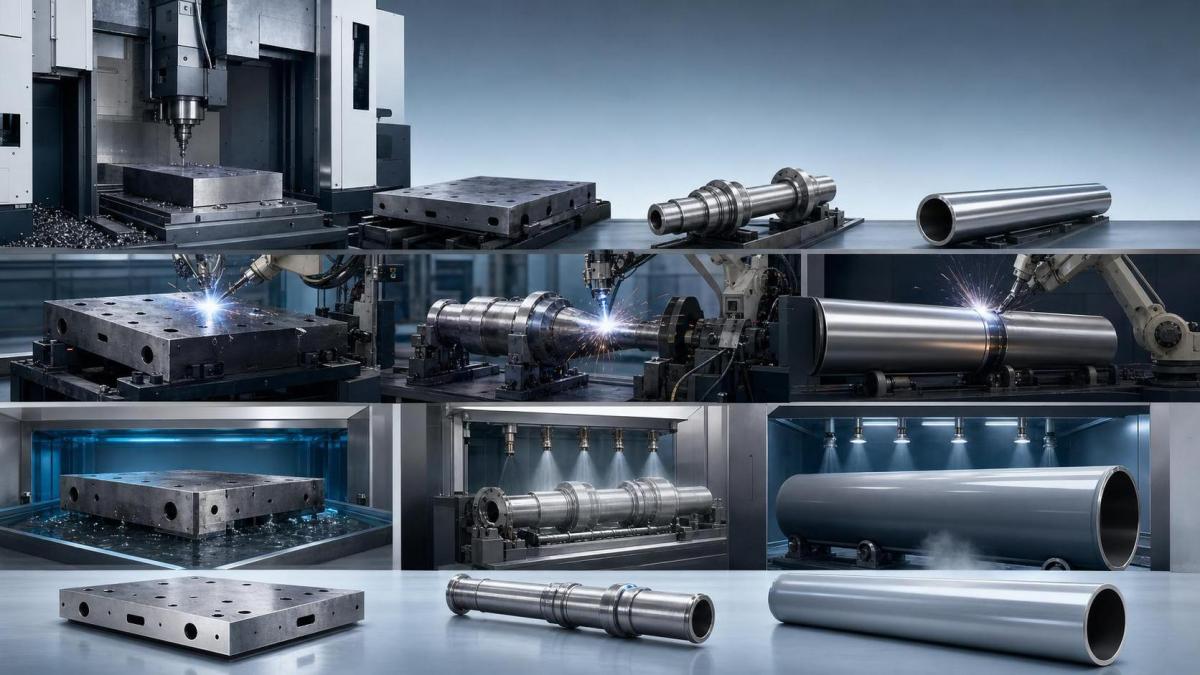
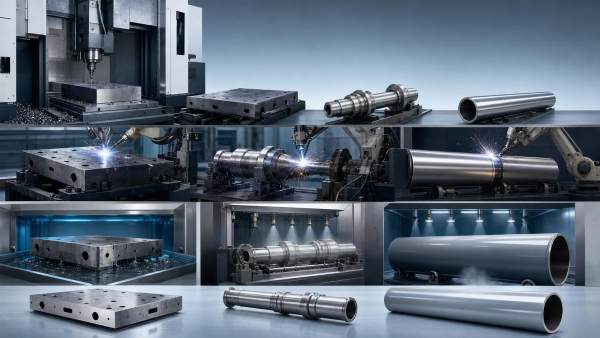
Heavy duty processing is not simply large-scale production. It is a controlled manufacturing approach for parts, structures, and surfaces that must survive stress, heat, wear, impact, and corrosion.
That distinction matters when evaluating industrial equipment, chemical systems, agricultural machinery, and primary processing assets. Performance failures usually begin with a mismatch between process route, material grade, and service environment.
In practical terms, heavy duty processing combines forming, machining, joining, heat treatment, surface engineering, inspection, and compliance control. Each step affects durability, maintenance intervals, and total lifecycle cost.
For sectors covered by AgriChem Chronicle, heavy duty processing often sits behind crushers, reactors, conveyors, tanks, feed lines, marine frames, and high-duty drive assemblies. The process choice is rarely cosmetic. It is operationally decisive.
A clear review starts with two questions. What does heavy duty processing actually include? And which materials fit the duty profile without creating avoidable risk?
What Heavy Duty Processing Usually Includes
The term covers a sequence of manufacturing operations designed for thick sections, high loads, difficult geometries, or severe service conditions. The exact route changes by application, but the core stages are consistent.
1. Material preparation and cutting
Heavy duty processing begins with plate, bar, forging, casting, pipe, or structural stock. Material traceability is established early because certification often matters as much as the shape itself.
Cutting methods may include plasma, laser, waterjet, sawing, or oxy-fuel cutting. Selection depends on thickness, edge quality, heat-affected zone tolerance, and downstream welding or machining needs.
2. Forming and shaping
This stage turns raw stock into workable geometry. Common methods include rolling, press braking, forging, stamping, deep drawing, extrusion, and heavy plate bending.
For thick or high-strength materials, forming windows can be narrow. Springback, microcracking, and residual stress become real concerns, especially where dimensional stability matters later.
3. Machining and tolerance control
Heavy duty processing often requires CNC milling, turning, boring, drilling, grinding, and thread cutting. These operations create functional surfaces, fit-critical dimensions, and assembly-ready interfaces.
In high-load systems, small tolerance errors can accelerate vibration, seal wear, shaft misalignment, or bearing failure. That is why machining capability should be reviewed alongside the design.
4. Welding and joining
Many heavy assemblies depend on welding. Typical processes include SMAW, GMAW, FCAW, GTAW, submerged arc welding, and specialized cladding techniques.
The heavy duty processing review should look at preheat control, filler compatibility, weld procedure qualification, distortion management, and post-weld inspection. Joint integrity is central to structural reliability.
5. Heat treatment and stress relief
Heat treatment changes hardness, toughness, ductility, and dimensional stability. Depending on the alloy, heavy duty processing may involve normalizing, quenching, tempering, annealing, carburizing, or stress relieving.
This is especially important for wear parts, pressure equipment, drive components, and large welded structures. Without the right thermal cycle, the final product may pass inspection but fail early in service.
6. Surface treatment and finishing
Heavy duty processing frequently ends with blasting, galvanizing, passivation, coating, plating, thermal spray, rubber lining, or hardfacing. Surface engineering protects the base material from actual field conditions.
In corrosive or abrasive duty, surface failure usually comes first. That makes finishing a technical decision, not a cosmetic one.
7. Testing, documentation, and compliance
No serious heavy duty processing program ends at fabrication. It closes with dimensional checks, non-destructive testing, load validation, material certification, and quality records.
Depending on the application, that may involve UT, RT, MT, PT, pressure testing, hardness testing, coating thickness checks, or weld map review. Standards discipline is part of the product.
Which Materials Fit Heavy Duty Processing Best
Material fit depends on the load case and environment. There is no universal best option. The right choice balances strength, corrosion resistance, weldability, formability, cost, and standard availability.
Carbon steel
Carbon steel remains a common heavy duty processing material for frames, hoppers, bases, structural supports, and non-corrosive process equipment. It is widely available, economical, and workable at scale.
Its limits are equally clear. Bare carbon steel performs poorly in wet, chemical, or marine exposure unless coatings and maintenance programs are robust.
Alloy steel
Alloy steels suit heavy duty processing when higher hardness, fatigue resistance, or elevated temperature performance is required. Shafts, gears, wear parts, pressure components, and power transmission elements often fall here.
The tradeoff is tighter process control. Heat treatment response, weldability, and crack sensitivity can become more demanding than with standard carbon grades.
Stainless steel
For sanitary, wet, corrosive, or chemical-facing systems, stainless steel is a strong heavy duty processing candidate. It is common in tanks, piping, mixers, extraction systems, fishery equipment, and API-related handling hardware.
Grade selection matters. Austenitic grades resist corrosion well, while duplex and super duplex grades support stronger chloride resistance and higher mechanical performance in marine or aggressive environments.
Aluminum alloys
Aluminum is relevant to heavy duty processing when weight reduction is more valuable than maximum hardness. It appears in transport structures, modular platforms, selected marine assemblies, and some equipment housings.
It machines well and resists atmospheric corrosion, but it can lose performance under high heat, repeated impact, or abrasive contact unless the design is carefully engineered.
Nickel alloys and specialty metals
When heat, oxidation, or chemical attack is severe, heavy duty processing may shift to nickel alloys, titanium, or specialty corrosion-resistant grades. These are less common, but critical in extreme environments.
The benefits are substantial, though fabrication complexity and procurement cost are much higher. That makes application fit and supplier capability especially important.
Engineered plastics and composites
Not every heavy duty processing decision ends with metal. UHMWPE, FRP, PTFE-lined systems, and technical composites can perform well where corrosion, chemical compatibility, or weight reduction dominates.
These materials are useful in liners, guards, ducts, marine components, and chemically exposed assemblies. Their limits usually involve impact behavior, temperature range, and repair strategy.
How to Match Heavy Duty Processing to Real Operating Conditions
A strong technical review looks beyond nominal material strength. Heavy duty processing should always be matched to the real duty cycle, not the brochure specification.
- Define the dominant failure mode first: wear, corrosion, fatigue, creep, deformation, contamination, or fracture.
- Check whether the process route supports the geometry at required tolerances and section thickness.
- Confirm compatibility between base material, weld filler, coating system, and cleaning chemicals.
- Review inspection scope, traceability, and relevant standards before approving the build.
- Assess maintenance access, field repairability, and spare part realism across the asset lifecycle.
This is where heavy duty processing becomes a procurement and risk question, not only a manufacturing question. A lower-cost material can become the expensive option once downtime, recoating, or premature replacement is included.
Standards and Verification Points That Matter
In regulated or export-driven sectors, heavy duty processing must be supported by defensible records. Technical quality is only half the requirement. Documented conformity is the other half.
In actual buying decisions, documentation quality often separates capable suppliers from risky ones. Heavy duty processing without traceability creates uncertainty that technical teams later have to absorb.
Common Mistakes in Heavy Duty Processing Selection
Several errors appear repeatedly across industrial projects. They are easy to avoid when the evaluation framework is disciplined.
- Choosing by tensile strength alone and ignoring corrosion or fatigue exposure.
- Assuming a high-grade alloy automatically improves service life.
- Overlooking weldability, field repair constraints, or heat treatment capacity.
- Treating coatings as a universal fix for poor base material selection.
- Accepting weak quality records in applications that require long-term traceability.
More often than not, heavy duty processing succeeds when the manufacturing route is selected as a system. Material, geometry, joining, finish, and compliance need to work together.
A Practical Way to Evaluate Fit
A useful evaluation path is simple. Start with service conditions. Map the likely failure mode. Then test whether the proposed heavy duty processing route directly addresses that risk.
Next, review the supplier’s evidence. Look for process capability, not just catalog claims. That includes machine range, welding control, heat treatment access, inspection depth, and documentation quality.
Finally, compare lifecycle value. The best heavy duty processing option is usually the one that balances uptime, compliance, maintainability, and predictable replacement intervals.
In other words, heavy duty processing is best understood as a reliability strategy. When process scope and material fit are evaluated together, procurement decisions become far more defensible and far less reactive.
Related Intelligence
- Heavy Agri MachineryHow Does Market Forecasting Help Plan Farm Machinery Procurement?How does market forecasting help agri procurement planning? Discover how to time machinery purchases, protect cash flow, and reduce delivery risks before critical farm deadlines.
- Heavy Agri MachineryIs It Safe to Source Farm Machinery from Emerging Markets?Is it safe to source agri machinery from emerging markets? Discover how to verify suppliers, check compliance, and secure parts support to protect your farm and avoid costly buying mistakes.
- Heavy Agri MachineryHow to Size a Combine Harvester for Acreage, Crop Mix, and Harvest WindowsCombine harvesters sized for your acreage, crop mix, and harvest window: calculate real field capacity, match headers, and avoid costly bottlenecks.
The Morning Broadsheet
Daily chemical briefings, market shifts, and peer-reviewed summaries delivered to your terminal.
