

The Authority in Global Agricultural Chemistry & Bio-Resources
How an Animal Feeding Automation Company Improves Feed Accuracy and Labor Efficiency
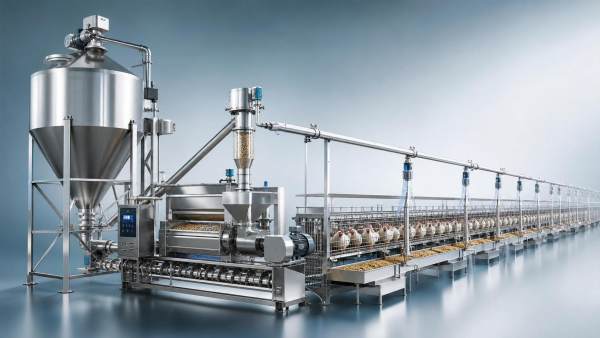
Why feed automation matters more when margins tighten
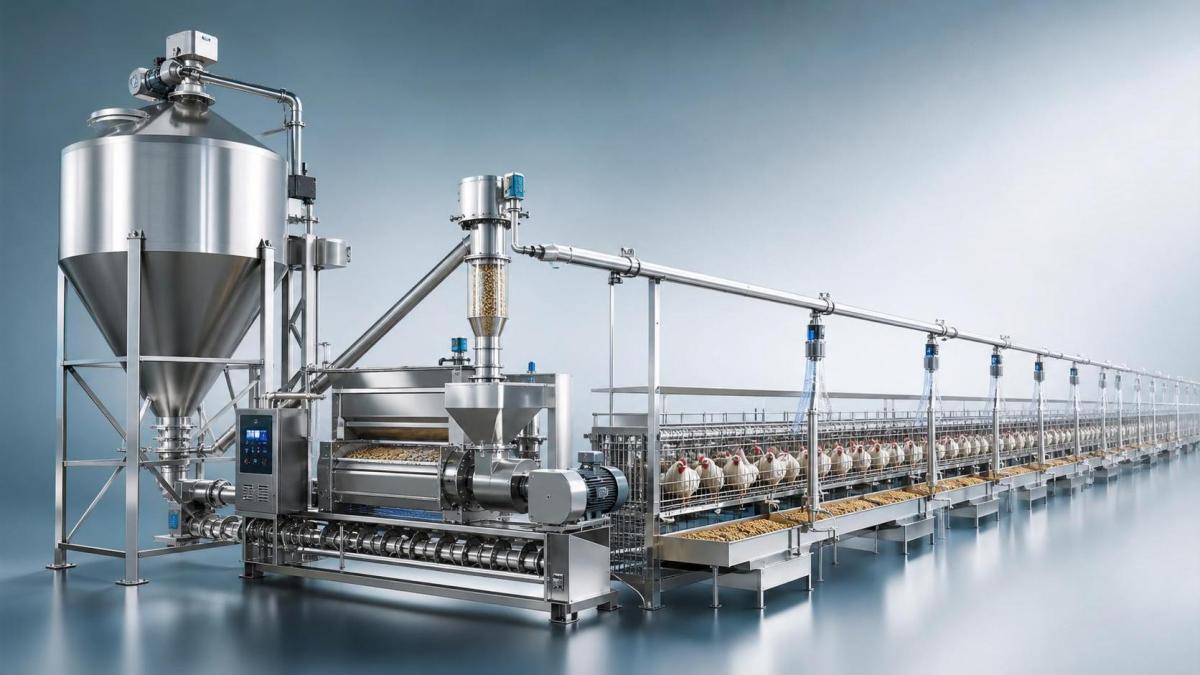
Rising labor costs and narrower production margins have changed how feeding systems are evaluated across modern agriculture and processing.
An animal feeding automation company is no longer judged only by machinery output.
The stronger question is whether automation improves feed accuracy, stabilizes daily routines, and reduces avoidable labor pressure under real operating conditions.
That distinction matters in poultry houses, livestock barns, aquaculture support lines, and integrated feed processing environments.
Each setting handles different volumes, feed forms, environmental loads, and compliance expectations.
In practice, a capable animal feeding automation company helps operations control ration delivery, timing, traceability, and labor deployment at the same time.
This is why technical coverage from sources such as AgriChem Chronicle increasingly treats feeding automation as part of a wider efficiency and risk-management discussion.
Feed systems now sit inside a broader chain shaped by equipment reliability, ingredient consistency, regulatory discipline, and data visibility.
Actual demand changes once the operating scene changes
Not every facility needs the same level of automation, even when the headline goal sounds similar.
A high-density broiler site usually values timing consistency and uniform distribution.
A dairy unit may care more about mixed ration repeatability, intake monitoring, and fewer manual correction cycles.
Feed processors connected to multiple farms often focus on batching discipline, loss control, and clean reporting.
The same animal feeding automation company may appear suitable on paper, yet field fit depends on several variables.
- Feed format: mash, pellets, liquids, premix, or blended rations behave differently in storage and transport.
- Delivery rhythm: continuous feeding and scheduled batch feeding create different control demands.
- Environment: dust, humidity, corrosion, and washdown routines directly affect sensors, motors, and dosing units.
- Traceability expectations: integrated operations need stronger logs for inventory, compliance, and performance review.
More often, the best judgment starts with process variation rather than machine specification sheets.
Where high-throughput livestock sites see the clearest gains
In large poultry and swine facilities, small delivery errors scale quickly into measurable feed loss.
That is where an animal feeding automation company can create immediate operational value.
The priority is not simply faster feeding.
It is repeatable feeding under crowded, time-sensitive, and labor-constrained conditions.
These sites usually benefit most from automated line balancing, programmable schedules, and alarms tied to bin levels or motor loads.
When rations reach animals more evenly, growth variability often narrows and manual intervention drops.
Labor efficiency improves because workers move from repeated delivery tasks to inspection, sanitation, and exception handling.
A common mistake here is choosing a system designed for throughput alone.
If the controls cannot handle ration changes, occupancy changes, or partial-line shutdowns, the efficiency gain erodes quickly.
What mixed-species or diversified farms usually need instead
Diversified operations often face a less obvious challenge.
They need flexibility more than maximum line speed.
One building may require frequent formula changes, while another handles a stable ration with seasonal adjustments.
In this setting, an animal feeding automation company should be judged by recipe management, modular expansion, and ease of calibration.
Systems that support quick cleaning, separated dosing paths, and clear user permissions tend to fit better.
That becomes even more relevant when medicated feed, specialty additives, or species-specific ingredients must remain traceable.
Feed processors look beyond dispensing accuracy alone
In feed and grain processing, automation choices sit closer to industrial quality control.
A system may dose precisely, yet still create losses if upstream batching and downstream transfer are unstable.
That is why processor-side evaluations often include ingredient flow behavior, lot tracking, maintenance access, and software integration.
An animal feeding automation company working in this context needs to support data continuity as much as mechanical performance.
More operations now expect connection with inventory systems, weighing controls, and compliance records.
This reflects a broader shift across primary industries, where operational decisions increasingly require auditable data and technical transparency.
In regulated supply chains, the value of automation rises when records are usable, not just available.
The table matters because similar productivity goals often hide very different engineering demands.
Environmental conditions often decide whether labor savings are real
Labor efficiency is frequently overstated when environmental stress is ignored.
Dust-heavy barns can shorten sensor reliability.
Wet processing areas may expose connectors, load cells, and drive assemblies to repeated washdown damage.
An animal feeding automation company that performs well in dry grain handling may need a different enclosure strategy in high-moisture conditions.
This is one reason field adaptation should be treated as part of system design, not post-installation correction.
In actual use, maintenance intervals, spare-parts access, and local technical support affect workforce efficiency almost as much as automation logic.
A feeding line that needs frequent manual resets does not truly reduce labor dependency.
Where misjudgments usually happen
- Selecting by rated capacity without checking actual ration density or ingredient flow behavior.
- Comparing purchase price while ignoring service downtime, wear-part frequency, and cleaning labor.
- Assuming similar barns or lines have identical needs, despite different feeding schedules or growth stages.
- Focusing on automation hardware while overlooking software permissions, alarms, and reporting quality.
These errors usually appear after commissioning, when correcting them becomes slower and more expensive.
A practical way to match the right animal feeding automation company
A more reliable selection process starts with operational mapping.
List where feed enters, where it changes form, where delays occur, and where manual corrections are most frequent.
Then compare those points against what an animal feeding automation company can actually control.
The useful checkpoints are usually specific.
- How much dosing variation is acceptable before performance drops?
- Which feeding steps still require manual supervision after installation?
- Can the system handle seasonal ingredient shifts without major recalibration?
- Are logs detailed enough for audits, quality review, or cross-site comparison?
- What is the realistic maintenance burden during peak production periods?
This approach aligns well with the more technical reporting standards seen across ACC coverage.
The strongest decisions usually combine machinery fit, data credibility, and implementation discipline.
An animal feeding automation company adds the most value when it supports measurable control, not only automated motion.
Before moving forward, narrow the decision to field conditions
Feed automation works best when the operating scene is defined clearly before specification discussions begin.
The meaningful next step is to separate labor pain points from accuracy losses, then test both against daily site conditions.
From there, compare system flexibility, maintenance exposure, reporting depth, and environmental fit.
That makes it easier to identify whether an animal feeding automation company is suitable for simple labor reduction, tighter feed control, or a broader operational upgrade.
In most cases, better results come from building a scene-based evaluation standard first, then matching automation around it.
Related Intelligence
- Feeding & Watering SystemsHow to Size Commercial Farm Feed Systems for Herd Capacity and Feed FlowFarm commercial feed systems: learn how to size storage, conveyors, and feed flow for herd capacity, peak demand, resilience, and efficient farm operations.
- Feeding & Watering SystemsSelecting a Nipple Drinking System for Broiler and Layer HousesNipple drinking system selection guide for broiler and layer houses: compare water flow, pressure control, flushing, durability, and installation needs.
- Feeding & Watering SystemsHow to Select Poultry Feeding Systems for Broiler Farms by Flock Size and Feed WasteFarm poultry feeding systems: learn how to match feeder design to broiler flock size, reduce feed waste, improve uniformity, and control lifecycle costs.
The Morning Broadsheet
Daily chemical briefings, market shifts, and peer-reviewed summaries delivered to your terminal.
