

The Authority in Global Agricultural Chemistry & Bio-Resources
Wear Resistant Feed Equipment: Which Materials and Parts Matter Most in Daily Operation?
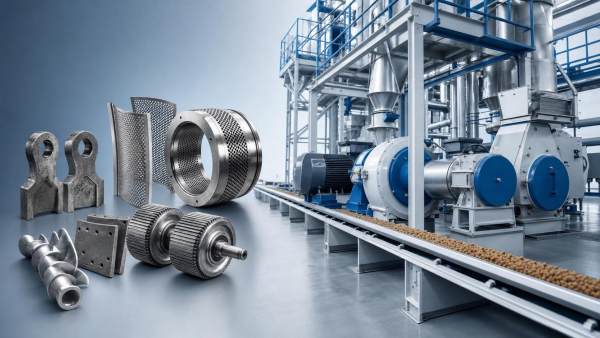
Wear Resistant Feed Equipment: Which Materials and Parts Matter Most in Daily Operation?
In daily production, wear resistant feed equipment directly affects output stability, pellet quality, and maintenance rhythm.
When wear is underestimated, plants usually pay twice. First through lower efficiency, then through emergency shutdowns and rushed spare-part replacement.
That is why material selection matters as much as machine design. The right wear surface can protect capacity, energy use, and downstream consistency.
In practical terms, not every component wears the same way. Impact, sliding abrasion, corrosion, heat, and contamination all attack different parts.
This article looks at the parts that matter most in wear resistant feed equipment and explains which materials perform best in real operating conditions.
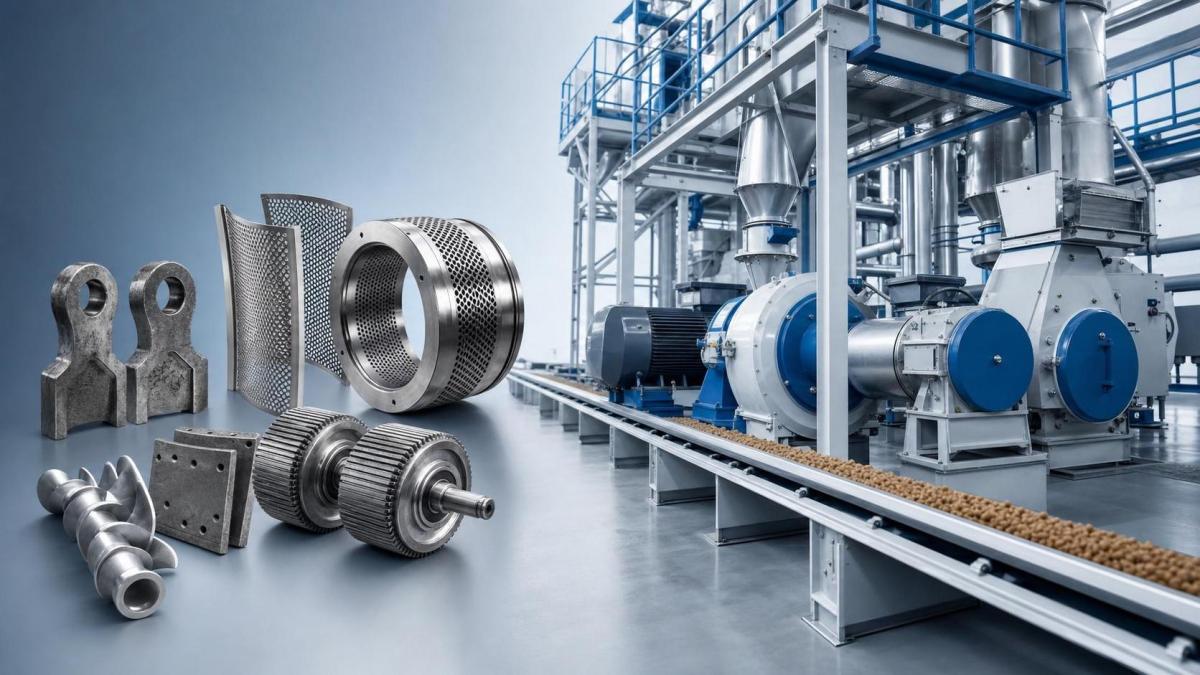
Why wear behavior changes across the feed line
A feed plant rarely handles one uniform material. Corn, soybean meal, minerals, premixes, and additives create very different wear patterns.
High-fiber formulas often increase friction. Mineral-rich recipes can be even harsher because silica and micro-grit act like grinding media.
Moisture also changes the picture. Wet mash may reduce dust, but it can accelerate corrosion and material buildup on critical surfaces.
For this reason, wear resistant feed equipment should be evaluated by process zone, not by a single machine label.
A hammer mill faces impact and abrasion. A pellet die sees pressure, heat, and continuous extrusion. A screw conveyor suffers sliding wear and edge loss.
Once these mechanisms are separated, material decisions become much easier and far more cost-effective.
The highest-wear parts in wear resistant feed equipment
Most operating teams focus on motors and bearings first. In reality, wear parts usually determine line uptime more directly.
1. Hammer mill hammers and screens
These components take repeated impact from incoming raw material. Edge rounding reduces grinding efficiency before visible failure appears.
As hammers wear, particle size distribution becomes wider. That affects mixing quality, conditioning performance, and pellet durability later in the line.
2. Pellet mill dies and rollers
Dies are central to wear resistant feed equipment because they define throughput and final pellet shape.
Rollers wear differently. They lose surface geometry, reduce gripping efficiency, and create unstable pressure across the die face.
3. Screw flights and mixer paddles
These parts are exposed to constant sliding abrasion. The flight edge gradually thins, and material movement becomes less predictable.
In mixers, worn paddles increase dead zones. That means weaker batch uniformity and a longer mix time to hit the same quality level.
4. Liners, chutes, and transfer points
These are often overlooked. Yet transfer sections in wear resistant feed equipment can lose material thickness quickly, especially at impact angles.
Once liners thin out, the base structure becomes exposed. Repair costs then rise sharply because damage reaches the machine body.
5. Conveyor chains, buckets, and casings
Conveying sections see continuous abrasion and occasional foreign-body impact. The result is elongation, cracking, leakage, and alignment problems.
Which materials perform best under daily wear
No single alloy solves every wear problem. Good wear resistant feed equipment uses different materials for different stress conditions.
Hardened carbon steel
This is common for hammers, blades, and some liner applications. It offers solid hardness at a manageable price.
Its weakness is corrosion and brittle behavior under the wrong heat treatment. It performs best where impact resistance is balanced correctly.
Alloy steel with chromium or molybdenum
For dies, rollers, and high-pressure parts, alloy steels usually deliver better fatigue life and surface stability.
Chromium improves hardness and wear resistance. Molybdenum helps maintain strength under load and temperature variation.
Stainless steel
Stainless steel is not always the hardest option, but it is valuable where moisture, additives, or washdown conditions are involved.
In wear resistant feed equipment, it often makes sense for contact surfaces that face both abrasion and corrosion risk.
Ceramic-lined and carbide-enhanced surfaces
These are useful in extreme abrasion zones, such as mineral-heavy feed handling and high-velocity chutes.
They can significantly outlast plain steel. However, installation quality and impact exposure must be checked carefully.
UHMW-PE and polymer liners
These materials reduce sticking, noise, and some sliding wear. They are especially useful in bins and low-impact transfer points.
They are not ideal for hot, sharp, or heavy impact areas. Still, in the right spot, they improve flow and reduce maintenance cleaning.
How to match material choice with process conditions
A useful rule is simple: first identify the dominant wear mode, then choose the material.
If impact dominates, avoid overly brittle surfaces. If sliding abrasion dominates, prioritize hardness and edge retention.
If moisture and additives are aggressive, corrosion resistance should move higher in the selection process.
For wear resistant feed equipment, these operating factors should always be reviewed before purchase or retrofit:
- Formula composition, especially ash, fiber, minerals, and premix content
- Moisture level and conditioning temperature
- Throughput target and run hours per day
- Cleaning method, including chemical washdown exposure
- Foreign material risk from intake and upstream storage
This approach prevents a common mistake: buying the hardest part available, even when toughness or corrosion resistance matters more.
Practical checks that reveal wear before failure
Daily operation gives early warning signs. The problem is that many of them look like process variation at first.
In wear resistant feed equipment, several signals deserve quick attention:
- Grinding current rises while output stays flat
- Pellet quality drops without formula changes
- Transfer points begin dusting or leaking
- Mix time increases to achieve previous uniformity
- Noise profile changes in conveyors or mills
- Hot spots appear near dies, rollers, or screw edges
Simple thickness checks, surface photos, and replacement history logs can go a long way here.
Even a basic trend sheet helps compare actual wear life against supplier claims and standard operating windows.
A quick comparison of common part and material choices
What better wear decisions look like in daily operation
Better wear performance is rarely about one premium part. It usually comes from matching material, operating load, and inspection discipline.
In wear resistant feed equipment, the biggest gains often come from a few focused actions:
- Rank parts by replacement frequency and downtime impact.
- Separate abrasion issues from corrosion and impact issues.
- Standardize approved materials for each high-wear zone.
- Track service life by formula type, not by calendar only.
- Review failures with suppliers using actual wear evidence.
That discipline turns wear resistant feed equipment from a reactive maintenance issue into a controllable operating standard.
When materials and high-wear parts are selected with process reality in mind, service life becomes more predictable, maintenance gets calmer, and production stays on schedule.
Related Intelligence
- Feeding & Watering SystemsHow to Size Commercial Farm Feed Systems for Herd Capacity and Feed FlowFarm commercial feed systems: learn how to size storage, conveyors, and feed flow for herd capacity, peak demand, resilience, and efficient farm operations.
- Feeding & Watering SystemsSelecting a Nipple Drinking System for Broiler and Layer HousesNipple drinking system selection guide for broiler and layer houses: compare water flow, pressure control, flushing, durability, and installation needs.
- Feeding & Watering SystemsHow to Select Poultry Feeding Systems for Broiler Farms by Flock Size and Feed WasteFarm poultry feeding systems: learn how to match feeder design to broiler flock size, reduce feed waste, improve uniformity, and control lifecycle costs.
The Morning Broadsheet
Daily chemical briefings, market shifts, and peer-reviewed summaries delivered to your terminal.
