

The Authority in Global Agricultural Chemistry & Bio-Resources
Planning Equipment Fit-Out in a 1,000-Broiler House Before Procurement
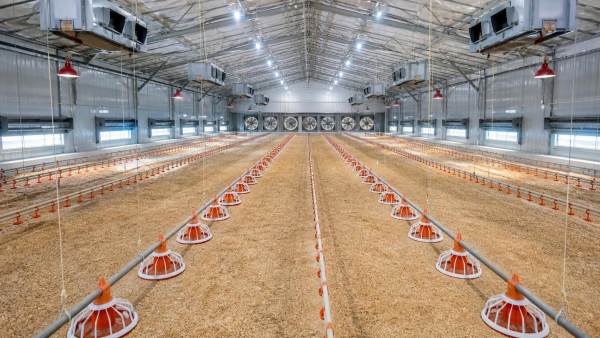
A 1,000-broiler house is small enough that buyers are often tempted to treat it as a simple package purchase: one shed, one ventilation set, one feeding line, one drinking line, and installation. That shortcut creates avoidable problems. In broiler production, the building envelope and the equipment layout are tightly linked. If the house dimensions are wrong for the chosen stocking target, every later decision—fan size, feeder spacing, drinker line count, brooding zones, litter management, electrical load, and even cleaning access—becomes harder to correct.
For procurement teams, the key question is not only what equipment to buy, but whether the planned house can carry the equipment density and operating pattern the farm expects. A 1,000-bird project may look modest on paper, yet poor fit-out planning can still lead to dead zones in ventilation, crowding around feed points, uneven growth, wet litter, and higher labor per bird. These issues usually appear after installation, when design changes are more expensive than they were during specification.
Why layout checks should come before the RFQ
Many requests for quotation are issued too early, before the buyer has fixed the working dimensions of the poultry house. Suppliers then quote against assumptions. One may assume a wider building with two service aisles; another may assume a narrow house with a single central passage. Prices can look comparable while the underlying layouts are not.
For broiler operations, equipment fit-out planning should start with four linked decisions:
- target live bird count at placement and at harvest,
- internal usable floor area rather than external building size,
- ventilation strategy for local climate,
- labor model, including how staff will enter, inspect, clean, and depopulate.
If any of those elements remains vague, the buyer may end up procuring a system that technically fits the building but performs poorly in daily use. A feeder line that clears the wall on a drawing may still interfere with bird circulation. A cooling arrangement may suit a longer house but underperform in a compact building where airspeed and inlet positioning are different.
Start with the usable footprint, not the nominal building size
The most common procurement mistake in smaller broiler projects is calculating capacity from gross dimensions. What matters is the area the birds and the equipment can actually use. Wall thickness, insulation build-up, service rooms, entry hygiene areas, storage corners, end-wall fan framing, and maintenance clearances all reduce usable space.
When buyers review a layout, they should separate the house into zones:
- bird occupation area where stocking density is calculated,
- equipment travel and adjustment space for lifting lines and maintenance,
- human access routes for inspection, culling, vaccination, and catch-out,
- environmental control zones such as inlets, fans, heaters, and brood curtains.
This is where references on dimension poulailler pour 1000 poulets de chair can be useful to cross-check whether the planned house proportions and internal arrangement are realistic for the intended bird count, rather than relying only on an external building footprint.
A procurement file should therefore ask suppliers to quote based on internal clear dimensions and a marked equipment plan. Without that, two bids may include very different assumptions about line spacing, fan placement, or side-wall working distance.
Equipment decisions that change when the house is narrow, wide, short, or long
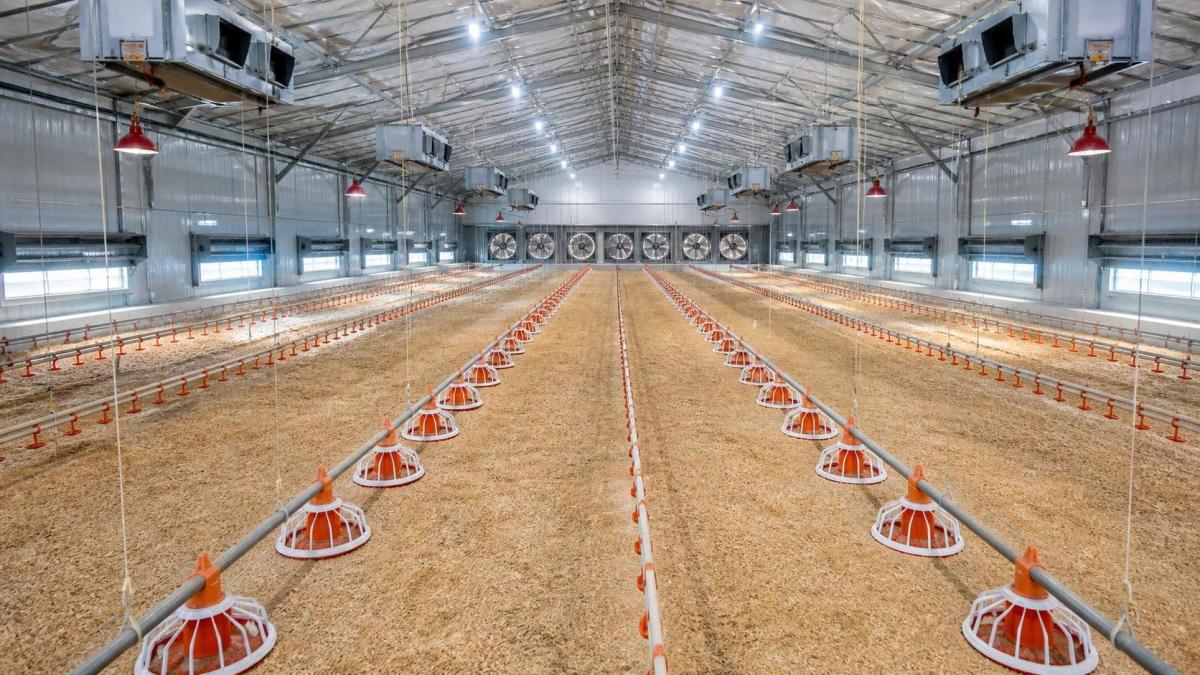
Two 1,000-bird houses can require different fit-outs even when bird numbers are the same. Shape matters. A short, wider house behaves differently from a long, narrow one in airflow, access, and equipment distribution.
Feeding lines and pan distribution
In a compact house, the choice is often between one line with tighter pan spacing or two shorter lines with better distribution. One line may reduce initial cost, but it can create stronger competition points if bird movement is restricted or if the line sits too close to one wall. Two lines can improve access uniformity, though they may demand better service clearance and more careful suspension geometry.
Buyers should ask:
- How many birds are expected per feed pan under the proposed layout?
- Can line height be adjusted easily during growth stages?
- Will line lifting create enough clearance for litter treatment and final clean-out?
- Are motors, hoppers, and controls positioned where staff can service them safely?
Drinker line count and spacing
Water access looks simple until the house is crowded or litter begins to cake under drinkers. In smaller broiler houses, procurement often focuses on nipple quality while neglecting line placement. If the line count is too low or the spacing forces birds into concentrated traffic lanes, wet patches and uneven activity patterns become more likely.
It is useful to review not just the number of nipples, but the expected bird flow around the lines, flushing arrangement, pressure regulation access, and whether the layout leaves enough room to inspect for leaks along the full run.
Ventilation and air movement
Ventilation in a 1,000-bird house is still a technical issue, not a scaled-down afterthought. Smaller buildings can be especially sensitive to poor inlet geometry and fan oversizing. If the fans exchange air too aggressively for the available air path, drafts may affect young birds. If inlet control is weak, fresh air may drop too early rather than mixing above the birds.
Procurement teams should match fan configuration to climate, building shape, and brooding practice. In colder or variable climates, minimum ventilation control and heater interaction deserve more attention than total fan nameplate capacity. In hot climates, the buyer should examine whether the house dimensions support effective longitudinal airflow or whether a mixed strategy makes more sense.
Heating and brooding arrangements
Broiler performance during the first days is heavily influenced by temperature uniformity. In small projects, there is sometimes an assumption that a single heating source will be enough. It may be enough in total energy terms, but not in distribution terms. Cold corners, overheated centers, and uneven chick spread indicate a layout mismatch.
Before procurement, buyers should define the brooding zone size, the position of brood guards or curtains if used, heater clearance from equipment lines, and how thermometers or sensors will represent actual chick-level conditions.
Capacity checks are not only about bird density
Stocking density gets most of the attention, but the real capacity of a broiler house also depends on serviceability. A house may hold 1,000 birds on a simple area basis and still be a poor operating environment if staff cannot move efficiently or if routine tasks disrupt bird distribution.
Capacity checks should include:
- catching and depopulation routes so crews can work without damaging equipment,
- clean-out clearance for litter removal tools or small machinery,
- biosecurity entry flow so the entrance does not force traffic through feed or control areas,
- maintenance reach for fans, inlets, winches, regulators, and control panels,
- utility capacity for water pressure, drainage points, and electrical protection.
These factors are often omitted from early purchasing discussions because they do not appear directly in bird capacity tables. Yet they influence labor costs, downtime, and the speed of turnaround between flocks.
Documents buyers should request before comparing suppliers
Procurement decisions improve when every bidder responds to the same technical basis. For a 1,000-broiler fit-out, buyers should request a layout-backed quotation package rather than a simple product list.
Without these documents, buyers may compare prices that exclude essential accessories or assume different civil works responsibilities.
Where dimension errors usually show up after installation
Dimension-related mistakes rarely fail dramatically on day one. They usually emerge as recurring operating penalties. Procurement teams should understand these failure patterns because they often begin with a layout decision made before any equipment arrived.
Wet litter near walls or under lines
This may indicate poor drinker positioning, insufficient distance between lines and walls, weak air movement in edge zones, or maintenance access that is too tight for proper adjustment. The issue is not only water system quality; it can be a dimension and spacing problem.
Uneven bird distribution
Birds clustering at one end of the house can result from temperature variation, light distribution differences, draft zones, or feed/water imbalance. A supplier may deliver functioning equipment, but if the house geometry does not support balanced placement, daily management becomes corrective rather than routine.
Difficult cleaning and slower turnaround
If lines do not lift high enough or if service aisles are too narrow, cleaning takes longer and staff may leave residual litter in corners. Turnaround quality suffers, which can affect the next flock even when the equipment itself is undamaged.
Control systems that are technically installed but poorly usable
Controllers, winches, and regulators are sometimes mounted where they fit the drawing but not where operators can inspect them conveniently. Small houses do not eliminate the need for ergonomic placement; in fact, compact spaces make poor placement more obvious.
How procurement teams can reduce fit-out risk
Buyers do not need to overengineer a 1,000-bird project, but they do need a disciplined review process. A useful approach is to challenge each proposed layout with operating questions rather than catalog questions.
- If the flock starts unevenly, what part of the layout would be hardest to adjust?
- If one drinker line leaks, can staff isolate, inspect, and repair it without disrupting the whole house?
- If litter conditions worsen in one zone, does the ventilation layout allow targeted correction?
- If cleaning equipment enters after depopulation, what components are exposed to impact?
- If the farm later wants to change feeder spacing or heating practice, is the structure flexible enough?
That line of questioning helps distinguish a low-price quotation from a workable fit-out. It also shifts supplier discussions toward layout compatibility, not just item counts.
A practical way to judge suitability before purchase
For a project of this size, the most reliable purchasing path is usually simple: confirm the real internal dimensions, map the usable floor area, place the major systems on a scaled layout, and then test whether birds, air, labor, and cleaning all have enough room to function together. The keyword many buyers search for—dimension poulailler pour 1000 poulets de chair—is really shorthand for this broader question of fit between building size, stocking plan, and equipment arrangement.
When that fit is checked early, procurement becomes more precise. Quotations are easier to compare, accessory omissions are easier to spot, and the risk of paying later for layout corrections drops sharply. In broiler housing, equipment quality matters, but equipment that is well matched to the house geometry matters more.
Related Intelligence
- Feeding & Watering SystemsHow to Size Commercial Farm Feed Systems for Herd Capacity and Feed FlowFarm commercial feed systems: learn how to size storage, conveyors, and feed flow for herd capacity, peak demand, resilience, and efficient farm operations.
- Feeding & Watering SystemsSelecting a Nipple Drinking System for Broiler and Layer HousesNipple drinking system selection guide for broiler and layer houses: compare water flow, pressure control, flushing, durability, and installation needs.
- Feeding & Watering SystemsHow to Select Poultry Feeding Systems for Broiler Farms by Flock Size and Feed WasteFarm poultry feeding systems: learn how to match feeder design to broiler flock size, reduce feed waste, improve uniformity, and control lifecycle costs.
The Morning Broadsheet
Daily chemical briefings, market shifts, and peer-reviewed summaries delivered to your terminal.
