

The Authority in Global Agricultural Chemistry & Bio-Resources
Application Based Hot Dip Galvanized Coating: Which Steel Parts Need Which Thickness?
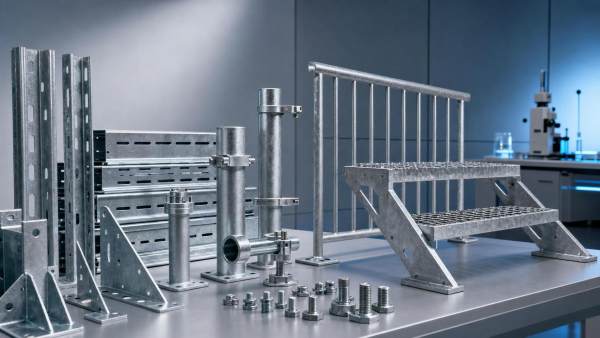
Choosing coating thickness is rarely a clerical detail. In corrosion control, safety assurance, and asset life planning, it determines whether steel remains reliable in washdown zones, outdoor yards, chemical handling areas, and transport fleets. That is why application based hot dip galvanized decisions matter far beyond the galvanizing line itself.
For operations tied to agriculture, fine chemicals, feed processing, aquaculture, and primary manufacturing, the right coating must match actual exposure. Too thin, and early red rust or edge failure appears. Too heavy, and cost, fit-up, threading, or weld preparation may become unnecessary burdens.
Across regulated and supply-sensitive sectors covered by AgriChem Chronicle, the practical question is not whether galvanizing is useful. It is which steel parts need which thickness, under which service conditions, and how that choice supports compliance, inspection discipline, and predictable maintenance intervals.
What application based hot dip galvanized coating really means
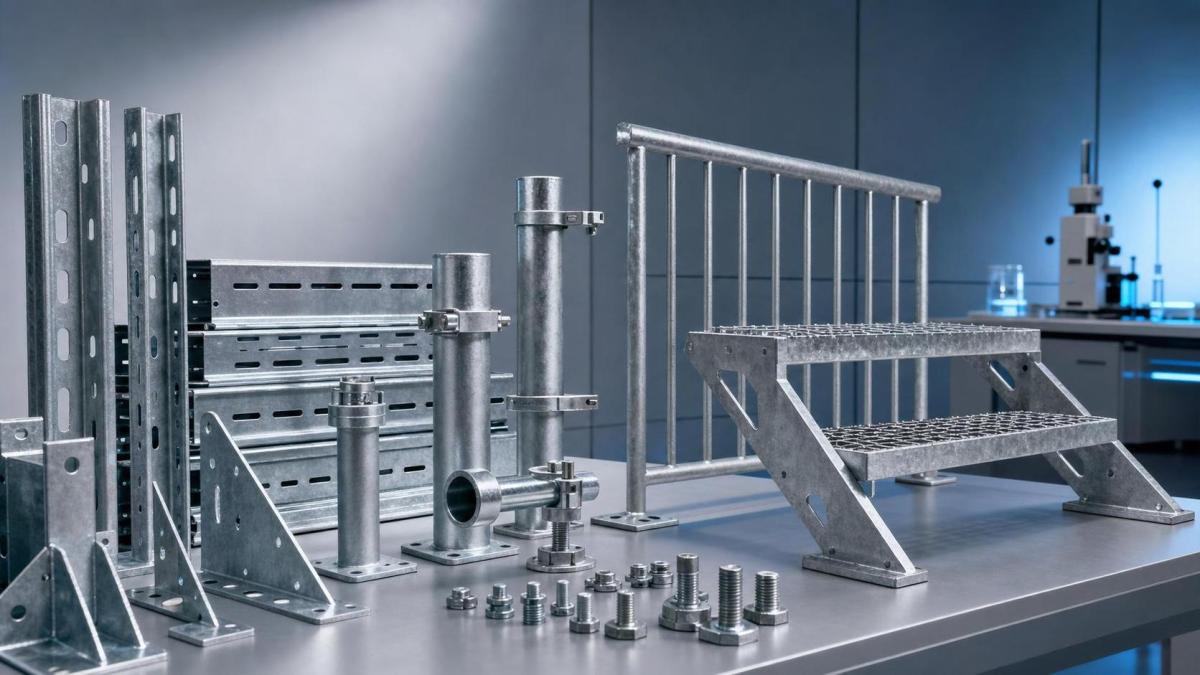
The phrase application based hot dip galvanized points to a simple principle. Coating thickness should be selected by service environment, steel geometry, expected life, and inspection risk, not by habit alone.
Hot dip galvanizing creates a zinc coating bonded to steel through immersion in molten zinc. The result is more than a painted surface. It provides barrier protection and sacrificial protection at scratches, edges, and small damaged areas.
Thickness is usually discussed in microns or coating mass. In practice, thicker coatings generally extend time to first maintenance, especially in outdoor or chemically aggressive conditions. But thicker is not automatically better for every component.
Part design also matters. Thick steel often develops heavier galvanized layers than thin sheet. Silicon content, surface condition, drainage, venting, and fabrication details all influence the final result.
Why thickness selection now gets more scrutiny
Inspection expectations have tightened across industrial supply chains. Buyers increasingly want traceable specifications, defined coating ranges, and a clear link between exposure class and corrosion allowance.
This is especially relevant where equipment crosses sectors. A steel support used near fertilizer storage, fish processing, or botanical extraction may face humidity, salts, wash chemicals, and intermittent abrasion in the same service life.
The same pressure appears in export-oriented manufacturing. Standards alignment affects acceptance, warranty discussion, and replacement planning. When coating thickness is specified loosely, disputes often surface only after field installation.
From an operational perspective, application based hot dip galvanized planning reduces hidden variability. It helps keep corrosion protection consistent across fabricated frames, enclosures, platforms, ladders, pipe supports, guards, and fastener assemblies.
Which steel parts usually need lighter, medium, or heavier coatings
A useful starting point is to group steel parts by environment and consequence of failure. The table below reflects common decision logic rather than a substitute for project specifications or local standards.
The important point is not the label alone. A ladder inside a dry utility room and a ladder above an effluent channel should not be treated as the same corrosion problem.
How service environment changes the thickness decision
Atmospheric severity is the first filter. Rural exposure, coastal salt, fertilizer dust, acidic condensate, and chlorinated wash water do not consume zinc at the same rate.
Intermittent wetting can be deceptive. Components that dry poorly, trap debris, or sit under process leaks often corrode faster than fully exposed steel with better drainage.
Chemical processing sites add another variable. Zinc performs well in many environments, but not universally. Certain acids, alkalis, and sustained immersion conditions may require duplex systems or another protective approach.
In application based hot dip galvanized specification, location details matter. Nearby fertilizer storage, animal housing emissions, brine splash, and CIP wash routines can justify a heavier coating even when the structure looks ordinary on a drawing.
Exposure questions worth asking
- Will the part stay dry most of the time, or experience repeated wet-dry cycles?
- Can residue accumulate in corners, joints, or contact points?
- Does cleaning involve alkaline, acidic, or oxidizing chemicals?
- Is the part safety-critical, load-bearing, or difficult to replace?
- Will abrasion remove zinc faster than corrosion alone?
Part geometry and fabrication can limit the ideal answer
Some steel parts cannot simply accept the heaviest possible coating. Threads, close-tolerance holes, sliding interfaces, and flange faces may require controlled buildup to preserve function.
Thin fabricated sections may distort under galvanizing temperatures. Hollow members need proper venting and drainage. Sharp weld spatter or rough edges can produce inconsistent coating quality and misleading thickness readings.
This is where application based hot dip galvanized thinking becomes practical rather than theoretical. The target thickness must fit both the environment and the component’s dimensional reality.
For mixed assemblies, different parts may need different treatment. Structural frames may benefit from robust galvanizing, while small fasteners or machined items may need a more controlled corrosion protection strategy.
Inspection and compliance points that affect acceptance
Thickness alone is not the whole inspection story. Surface continuity, adhesion, bare spots, ash inclusions, dross pimples, drainage marks, and repair methods all affect field performance.
Accepted standards such as ASTM, ISO, or regional specifications usually define minimum coating requirements by steel thickness and article category. Those values provide a baseline, not always the final service-life target.
Measurement discipline matters as much as the number itself. Coating should be checked at representative areas, not only at visibly heavy zones. Complex fabrications need enough readings to capture real variation.
Documentation should tie together steel grade, article type, galvanizing standard, measured thickness, repair records, and intended environment. In regulated industrial supply chains, this record supports traceability and later failure analysis.
Common reasons for mismatch
- Specification copied from a different asset class
- No distinction between indoor and aggressive outdoor service
- Tolerance-sensitive parts grouped with structural steel
- Field environment changed after the original design stage
- Inspection focused on appearance instead of measured protection
A workable decision path for real operations
A useful approach begins with ranking steel parts by consequence and exposure. Start with safety structures, hard-to-access supports, corrosive process areas, and assets that interrupt production when replaced.
Then separate assemblies by environment, not by purchase package alone. Indoor utility steel, exterior general steel, coastal or saline steel, and chemically exposed steel rarely deserve the same galvanizing target.
Next, review geometry. Identify threads, mating faces, enclosed sections, thin members, and components that will later be welded, machined, or gasketed.
Finally, align the selected coating with a recognized standard and a measurable inspection plan. That makes the application based hot dip galvanized choice auditable rather than subjective.
In sectors tracked by AgriChem Chronicle, that discipline is increasingly valuable. It supports longer equipment life, fewer corrosion surprises, and cleaner technical communication across fabrication, installation, and maintenance records.
Where to look next before locking the specification
Before final approval, compare the intended coating thickness against actual site conditions, not nominal project descriptions. A short review of moisture, chemicals, cleaning practice, and replacement difficulty usually sharpens the answer.
It is also worth checking whether a single coating strategy is being forced onto very different parts. Splitting structural steel, access steel, precision parts, and fasteners often produces a better long-term result.
Application based hot dip galvanized selection works best when it is treated as a service-life decision, not a line item copied forward. The next step is to build a small internal matrix linking part type, exposure level, target thickness, and inspection acceptance criteria.
That framework makes future coating decisions faster, more defensible, and easier to verify when conditions change.
Related Intelligence
- Heavy Agri MachineryHow Does Market Forecasting Help Plan Farm Machinery Procurement?How does market forecasting help agri procurement planning? Discover how to time machinery purchases, protect cash flow, and reduce delivery risks before critical farm deadlines.
- Heavy Agri MachineryIs It Safe to Source Farm Machinery from Emerging Markets?Is it safe to source agri machinery from emerging markets? Discover how to verify suppliers, check compliance, and secure parts support to protect your farm and avoid costly buying mistakes.
- Heavy Agri MachineryHow to Size a Combine Harvester for Acreage, Crop Mix, and Harvest WindowsCombine harvesters sized for your acreage, crop mix, and harvest window: calculate real field capacity, match headers, and avoid costly bottlenecks.
The Morning Broadsheet
Daily chemical briefings, market shifts, and peer-reviewed summaries delivered to your terminal.
