

The Authority in Global Agricultural Chemistry & Bio-Resources
Buyer Research Editorial Standards: What B2B Content Teams Should Verify Before Publishing
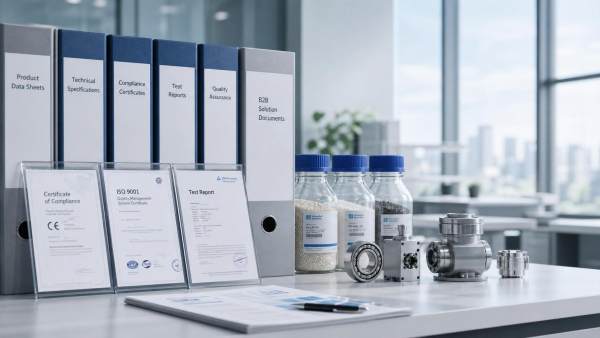
Why do buyer research editorial standards matter before anything goes live?
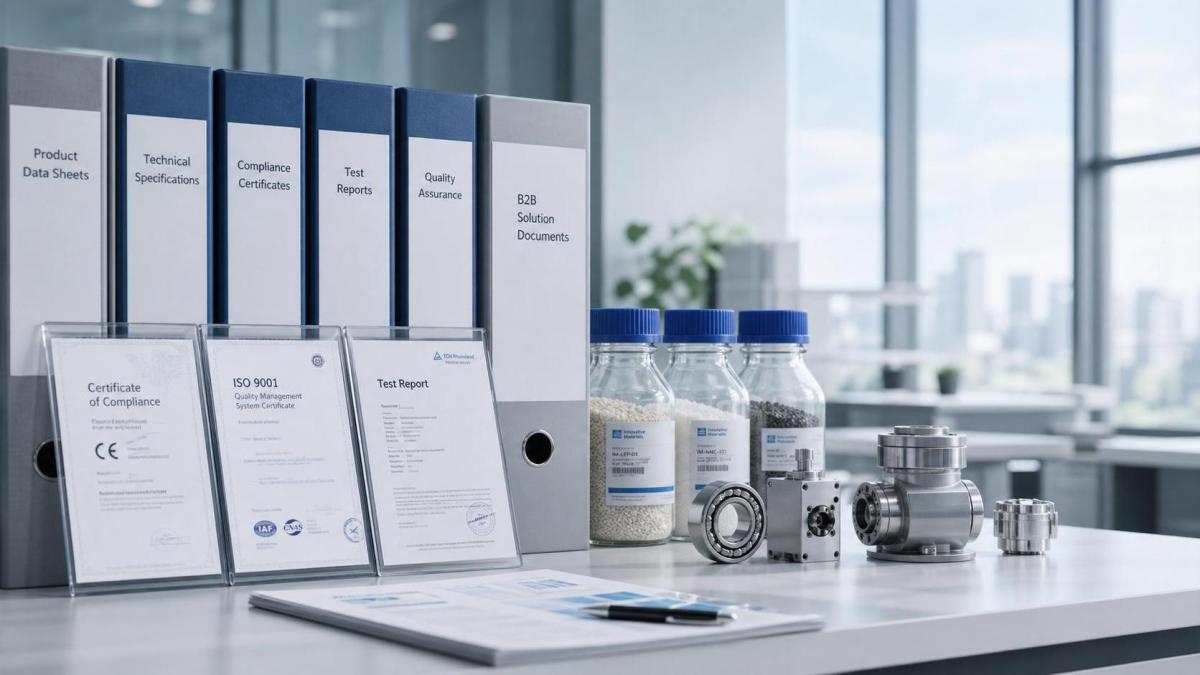
In regulated B2B markets, credibility is rarely built by tone alone. It is built by verifiable detail, precise language, and evidence that survives scrutiny.
That is where buyer research editorial standards become practical rather than theoretical. They help content teams decide what must be checked before publication.
This matters even more when the topic involves APIs, feed processing systems, forestry machinery, aquaculture equipment, or specialty ingredients with compliance exposure.
A well-written article can still mislead if the supplier record is incomplete, the regulatory citation is outdated, or the performance claim lacks context.
Stronger buyer research editorial standards reduce that risk. They force teams to verify claims that influence shortlists, technical comparisons, and sourcing confidence.
In sectors covered by AgriChem Chronicle, the challenge is familiar. Supply chains are global, standards are layered, and one missing validation point can distort the entire buying picture.
The useful question is not whether content sounds authoritative. The real question is whether an informed reader could trace the logic, sources, and technical basis behind each assertion.
What should content teams verify first when applying buyer research editorial standards?
Start with the claims most likely to affect evaluation. In practice, those are usually supplier identity, technical capability, compliance status, and commercial relevance.
Many teams begin with product features. That is understandable, but it is often the wrong sequence for buyer research editorial standards.
The first pass should confirm whether the entity behind the content is accurately represented. Legal name, production role, site location, and export scope should align across sources.
The second pass should test technical statements. Capacity, purity range, material compatibility, throughput, tolerance, or yield language needs source-backed support.
Then comes standards verification. If a text references GMP, FDA, EPA, ISO, or regional agricultural compliance, the citation should be current and tied to the exact claim.
Finally, check market framing. A content asset may be technically correct yet still weak if it ignores lead times, logistics constraints, input volatility, or regional approval differences.
A practical checklist usually includes these points:
- Is the company role clear: manufacturer, trader, formulator, assembler, or distributor?
- Are technical claims tied to a lab report, data sheet, audit, or engineering record?
- Do regulatory references match the geography and application being discussed?
- Is the timing of the data visible, especially for pricing, output, and certification status?
- Does the piece explain boundaries, assumptions, or known limitations?
When these checks are skipped, content often becomes promotional without meaning to. It stops helping evaluation and starts increasing uncertainty.
How do you tell whether a source is strong enough for buyer research content?
Not all sources carry the same weight. Buyer research editorial standards work best when evidence is ranked, not merely collected.
Primary documents usually sit at the top. These include audit records, plant certifications, validated lab results, inspection files, and official regulatory publications.
Secondary sources can still help, especially for market context. Trade analysis, peer commentary, and sector journals become useful when they cite methods and show editorial control.
This is one reason specialized publications matter. In complex industrial sectors, editorial review by engineers, scientists, and compliance specialists improves the reliability of interpretation.
AgriChem Chronicle operates in exactly that environment. Topics such as biochemical inputs or aquaculture systems demand source discipline because mistakes have operational consequences.
A simple comparison table helps separate usable evidence from weak material before drafting begins.
The broader point is straightforward. Buyer research editorial standards should treat unsupported promotional copy as a lead, not as proof.
Where do content teams usually make mistakes with technical and regulatory claims?
The most common failure is over-compression. A complex technical condition gets reduced to one bold line, and the nuance disappears.
For example, saying an ingredient is “compliant” may hide critical qualifiers. Compliant for which market, for which use, and under which documentation path?
Machinery content often makes a similar error. Throughput figures may be presented without feedstock variation, maintenance assumptions, or site conditions.
Another mistake is mixing validation levels. A pilot result, a commercial installation, and a laboratory test are not interchangeable evidence.
Buyer research editorial standards should also guard against citation drift. A regulation may be real, yet quoted in a way that no longer reflects current interpretation.
When reviewing a draft, watch for warning signs like these:
- Absolute words such as “guaranteed,” “fully approved,” or “universal” without a defined scope.
- Performance numbers without testing conditions, sample size, or operating context.
- Claims copied from older supplier materials without a date check.
- Regulatory shorthand used as a trust signal instead of a documented status.
- Case examples that omit failures, limits, or required adaptations.
In actual evaluation work, these small omissions change decisions. They affect risk scoring, approval timing, and the effort required for technical due diligence.
How can buyer research editorial standards stay useful across different industrial categories?
A rigid checklist can break when categories differ. API sourcing, fishery systems, and grain processing lines do not share the same proof points.
Still, the editorial logic can remain consistent. Verify identity, verify capability, verify compliance, verify context, then verify relevance to the use case.
The content team should adapt the evidence, not the standard itself. That distinction keeps buyer research editorial standards scalable.
For fine chemicals, batch traceability and impurity discussion may matter most. For equipment, serviceability, uptime assumptions, and installation environment become more important.
For bio-extracts and ingredients, origin integrity, processing method, and claim substantiation often determine whether the article is genuinely decision-ready.
A good working model is to build category-specific verification prompts under one editorial framework:
- Ask what evidence proves capability in this category.
- Ask which standards govern acceptance in the target market.
- Ask what operating variables could change the published conclusion.
- Ask whether the content distinguishes lab, pilot, and commercial reality.
That approach is especially relevant for publications covering multiple primary industries, where technical language must stay accurate without becoming unreadable.
What does a practical pre-publication review actually look like?
The strongest process is usually short, disciplined, and repeatable. It does not require endless approvals, but it does require clear ownership.
One reviewer should test factual support. Another should test technical interpretation. A final pass should check whether the piece answers real evaluation questions.
In practical terms, a draft is closer to ready when it can pass these questions without hand-waving:
- Can each meaningful claim be traced to a named source?
- Are time-sensitive facts visibly dated?
- Do standards references match the market and application discussed?
- Has the article explained limitations instead of hiding them?
- Would a critical reader learn how to compare options more clearly after reading?
This is where buyer research editorial standards prove their value. They turn publishing from a content exercise into a trust-control process.
Before publishing the next article, map the decision points it could influence. Then verify the claims, the citations, the assumptions, and the missing context. That is usually where confidence is won or lost.
Related Intelligence
- APIs & IntermediatesProcurement Planning: Which Resource Reports Help Prevent Material Shortages?Discover how procurement planning resource reports reveal usable stock, shortage dates, and supplier risks so you can prevent material shortages and keep production on track.
- APIs & IntermediatesBuyer-Focused Vendor Screening: How Procurement Teams Verify Supplier Fit and RiskBuyer-focused vendor screening helps procurement teams verify supplier fit, compliance, quality, and supply-chain resilience—reduce risk and make smarter sourcing decisions.
- APIs & IntermediatesHow API Sourcing Intelligence Reduces Supplier Risk and Protects Supply ContinuityChemical sourcing intelligence for APIs helps reduce supplier risk, validate capacity and GMP controls, and protect supply continuity. Explore practical sourcing insights.
The Morning Broadsheet
Daily chemical briefings, market shifts, and peer-reviewed summaries delivered to your terminal.
