

The Authority in Global Agricultural Chemistry & Bio-Resources
Greenhouse Technology Response Time: Which Alerts and Controls Matter Most in Daily Operations?
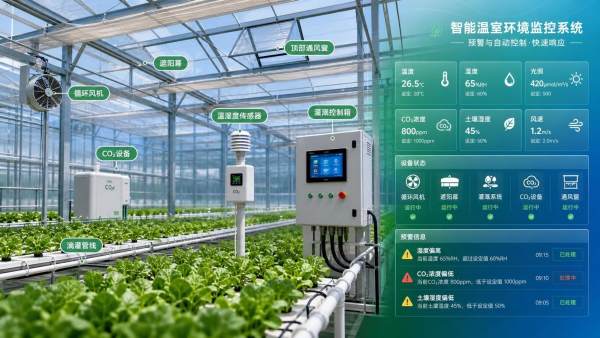
Greenhouse Technology Response Time: Which Alerts and Controls Matter Most in Daily Operations?
In daily greenhouse operations, greenhouse technology response time shapes far more than comfort on a dashboard.
It affects crop stress, labor use, irrigation waste, disease pressure, and the consistency of harvest quality.
The problem is rarely a lack of data.
Most sites already collect plenty of readings.
What usually breaks down is response discipline.
Some alerts arrive too late, some arrive too often, and some controls react slower than conditions change.
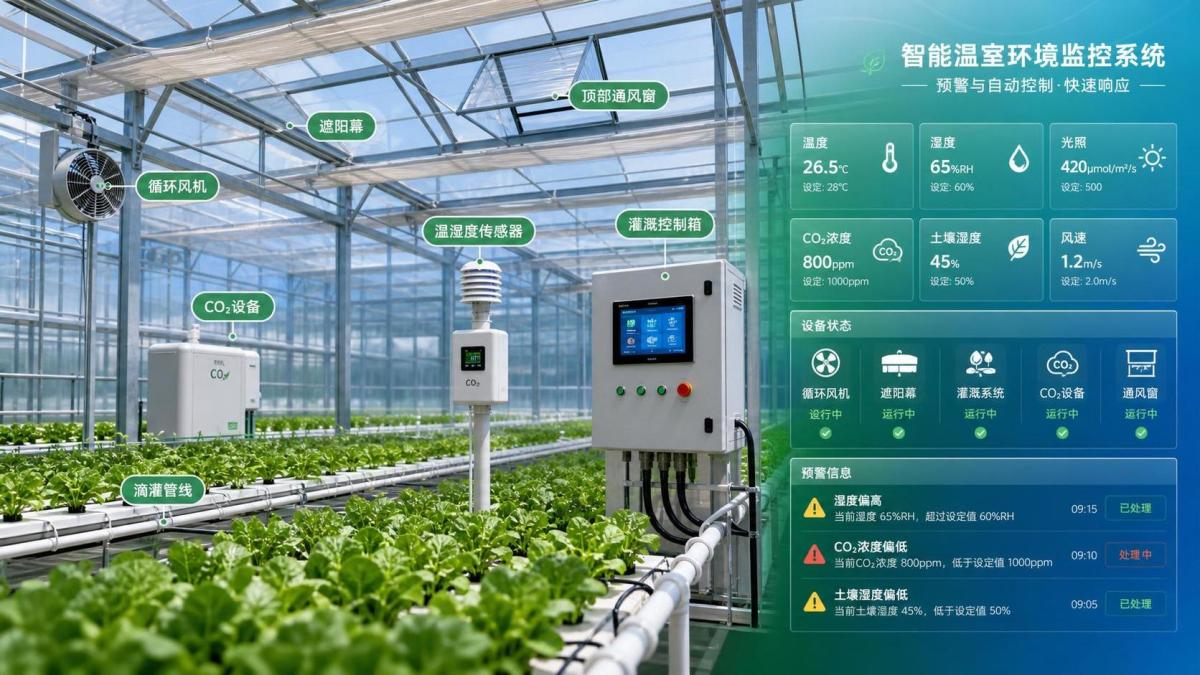
That is why greenhouse technology response time should be measured around operational decisions, not only around device speed.
In practical terms, the best systems shorten the gap between detection, decision, and corrective action.
This is where alert design and automated control logic matter most.
Why Greenhouse Technology Response Time Is an Operations Metric
A greenhouse can drift from stable to risky in minutes.
Solar load rises fast, vents lag, humidity spikes, and irrigation timing slips under pressure.
When greenhouse technology response time is slow, operators often compensate with manual routines.
That may work briefly, but it increases labor dependency and makes outcomes harder to repeat.
A faster response model reduces three common losses:
- Hidden climate stress before visual symptoms appear
- Excess water, fertilizer, and energy from delayed corrections
- Confused staff action during overlapping alarms
From a management perspective, response time is a control quality issue.
From a production perspective, it is a crop protection issue.
That distinction matters because not every alarm deserves the same urgency.
Which Alerts Deserve the Fastest Response
The most useful greenhouse technology response time strategy starts by ranking alerts by crop impact and recovery window.
A simple priority structure usually works better than a dense alarm tree.
1. High-temperature excursion alerts
These often need the fastest greenhouse technology response time in daytime operations.
Heat stress can escalate quickly, especially under strong radiation and limited air exchange.
The alert should trigger before the crop reaches a damaging threshold.
2. Humidity and condensation risk alerts
Humidity alarms matter when they point to disease pressure, not just a number outside a comfort band.
The stronger signal is usually dew point proximity or sustained leaf wetness risk.
This makes greenhouse technology response time more actionable and less noisy.
3. Irrigation failure or missed-cycle alerts
A missed event during peak transpiration can quickly affect substrate balance and nutrient uptake.
For this reason, greenhouse technology response time should be tracked from scheduled event to confirmed water delivery.
4. CO2 delivery interruption alerts
These matter most when enrichment is tied closely to production targets and climate windows.
The loss is often subtle at first, which is why many sites respond too slowly.
5. Equipment fault and communication-loss alerts
These are easy to underestimate.
When a sensor freezes or a controller loses connection, the system may appear calm while conditions drift.
In daily operations, this is often where greenhouse technology response time fails quietly.
Which Automated Controls Deliver the Most Practical Value
Fast alerts help, but automated correction usually creates the bigger operational gain.
The goal is not maximum automation everywhere.
The goal is reliable action where the crop cannot wait for a manual round.
Ventilation and fan staging
This is one of the clearest examples of useful greenhouse technology response time.
A well-tuned sequence can smooth short spikes before they turn into prolonged heat stress.
The key is staged logic rather than abrupt full-capacity switching.
Shade screen deployment
Screen control can protect crop temperature and reduce cooling load.
But delayed movement reduces value sharply.
Good greenhouse technology response time here depends on light trend detection, not only air temperature.
Irrigation trigger automation
This control matters when linked to substrate moisture, solar accumulation, or crop phase logic.
The most practical systems confirm execution and flag partial delivery failures immediately.
Fogging or misting control
Used well, this can reduce peak stress during sharp daytime swings.
Used poorly, it raises humidity risk and adds disease pressure.
That is why greenhouse technology response time must be paired with stop conditions, not only start thresholds.
How to Judge Whether Response Time Is Actually Good
Many sites assume their system is fast because the interface updates quickly.
That is not enough.
Operational greenhouse technology response time should be measured in steps.
This framework reveals whether the issue is hardware, configuration, staffing, or process discipline.
It also turns greenhouse technology response time into something teams can improve week by week.
Common Reasons Response Time Falls Short
In real operations, poor greenhouse technology response time usually comes from a few recurring causes.
- Thresholds are copied between zones with different crop sensitivity
- Too many low-value alerts hide truly urgent events
- Sensors are not cleaned, calibrated, or cross-checked regularly
- Actuators respond slowly because maintenance is deferred
- Night and weekend escalation paths are unclear
- Automation rules are active, but confirmation feedback is missing
More often than not, the issue is not a total system failure.
It is a chain of small delays that adds up at the wrong moment.
A Practical Checklist to Improve Daily Response
A stronger greenhouse technology response time setup does not always require a major platform change.
In many cases, better configuration and operating habits create the first gains.
- Rank alerts by crop damage risk, not by device category.
- Set pre-alerts before hard limits are reached.
- Measure response in detection, alert, action, execution, and recovery stages.
- Remove repeat alarms that do not change decisions.
- Add confirmation feedback after every critical automated action.
- Review sensor placement in zones with recurring instability.
- Test fault alerts during off-hours, not only during staffed periods.
- Link maintenance planning to slow actuator performance trends.
This kind of review makes greenhouse technology response time visible as an operating discipline rather than a vague technical promise.
Final Takeaway for Daily Greenhouse Stability
The most important greenhouse technology response time improvements usually come from a narrow set of priorities.
Respond fastest to heat, humidity risk, irrigation failure, and hidden control faults.
Automate where minutes matter, especially ventilation, screens, and verified irrigation events.
Then measure the full chain from detection to recovery.
That approach keeps greenhouse technology response time tied to crop outcomes, labor efficiency, and more reliable daily decisions.
When response logic is clear and controls are tuned to real risk, stability becomes easier to maintain across every shift.
Related Intelligence
- Smart GreenhouseGreenhouse Equipment for Vertical Farming: Choosing Lighting and VentilationChoose greenhouse equipment for vertical farming with confidence. Compare lighting, airflow, and moisture control to improve crop uniformity and manage costs. Explore the guide.
- Smart GreenhouseSelecting Greenhouse Propagation Equipment for Hot, Humid Southeast Asian NurseriesGreenhouse propagation equipment Southeast Asia: discover how to select resilient irrigation, ventilation, benches, and automation for hot, humid nurseries.
- Smart GreenhouseWhat Are the Biggest Challenges in Agri-Tech Adoption in 2026?What are the biggest challenges in agri tech adoption for 2026? Explore cost, data, connectivity, skills, compliance, and ROI barriers.
The Morning Broadsheet
Daily chemical briefings, market shifts, and peer-reviewed summaries delivered to your terminal.
