

The Authority in Global Agricultural Chemistry & Bio-Resources
How Does Compact Greenhouse Technology Improve Yield in Space-Limited Growing Environments?
How Does Compact Greenhouse Technology Improve Yield in Space-Limited Growing Environments?
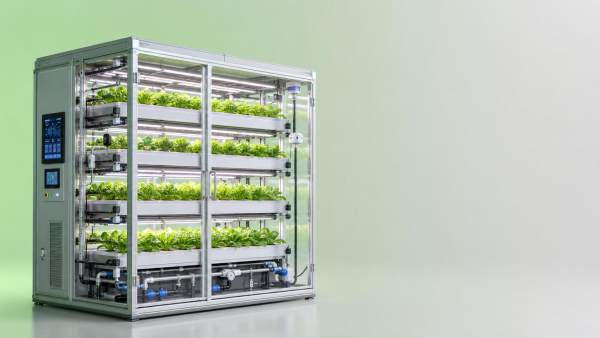
In space-constrained production settings, compact greenhouse technology is reshaping how growers maximize output without expanding their footprint. By combining controlled climate management, vertical layout efficiency, and precision resource use, these systems help improve crop consistency, reduce waste, and support year-round cultivation. For researchers and industry buyers evaluating scalable solutions, understanding the yield advantages of compact greenhouse technology is essential to making informed, future-focused growing decisions.
If you are looking at a compact greenhouse for yield improvement, start with one uncomfortable truth: not every small greenhouse produces more. Some just concentrate the same problems into a smaller box. The setups that genuinely lift output in limited-space environments usually do three things well at the same time: they stabilize the growing climate, turn unused vertical or corner space into productive canopy, and reduce variation plant to plant.
That is where most buyers get misled. They compare frame size, cover material, or even shelf count, but skip the operating details that actually decide whether yield per square meter goes up or stalls. The checklist below is the one experienced growers tend to build after learning the hard way.
Check the Yield Metric Before You Check the Hardware
Ask what “improve yield” is supposed to mean in your environment. In a rooftop herb unit, it may mean more harvest cycles per year. In a nursery corner inside a mixed-use facility, it may mean higher survival and more uniform transplants. In a research setup, it may mean repeatable biomass under controlled conditions. Those are not the same target, and compact greenhouse technology should be judged differently in each case.
- Use yield per usable growing area, not just floor area.
- Track crop losses, not only harvested weight.
- Separate first-quality output from total output if appearance matters.
- If labor is tight, include labor hours per kilogram or per tray.
A compact system can look efficient on paper while producing awkward access, uneven irrigation, and more handling damage. That kind of “high-density” design often disappoints after the first few cycles.
Look for Climate Uniformity, Not Just Climate Control
This is the point that most directly affects yield. Small enclosed structures heat up fast, cool down fast, and develop microclimates faster than operators expect. A unit can have fans, vents, and sensors and still grow uneven crops if air distribution is poor.
What you want to know is simple: does the system keep leaf-zone conditions reasonably consistent across the full crop area? If the top shelf is hot, the lower tier stays damp, and one corner gets stagnant air, the plants will tell you long before the monitoring dashboard does.
- Check sensor placement. One sensor hung in a convenient spot is not enough.
- Ask whether airflow has been mapped across all tiers or benches.【待核实】
- Watch for condensation zones. Persistent surface moisture usually means disease pressure later.
- Review how the system handles hot days and cold nights, not just average conditions.
In compact greenhouses, a mild temperature difference from one level to another can translate into noticeably different growth rates. If uniformity matters, and it usually does, ask to see performance data from the crop zone rather than only equipment specifications.
Do Not Waste Vertical Space, But Do Not Overbuild It Either
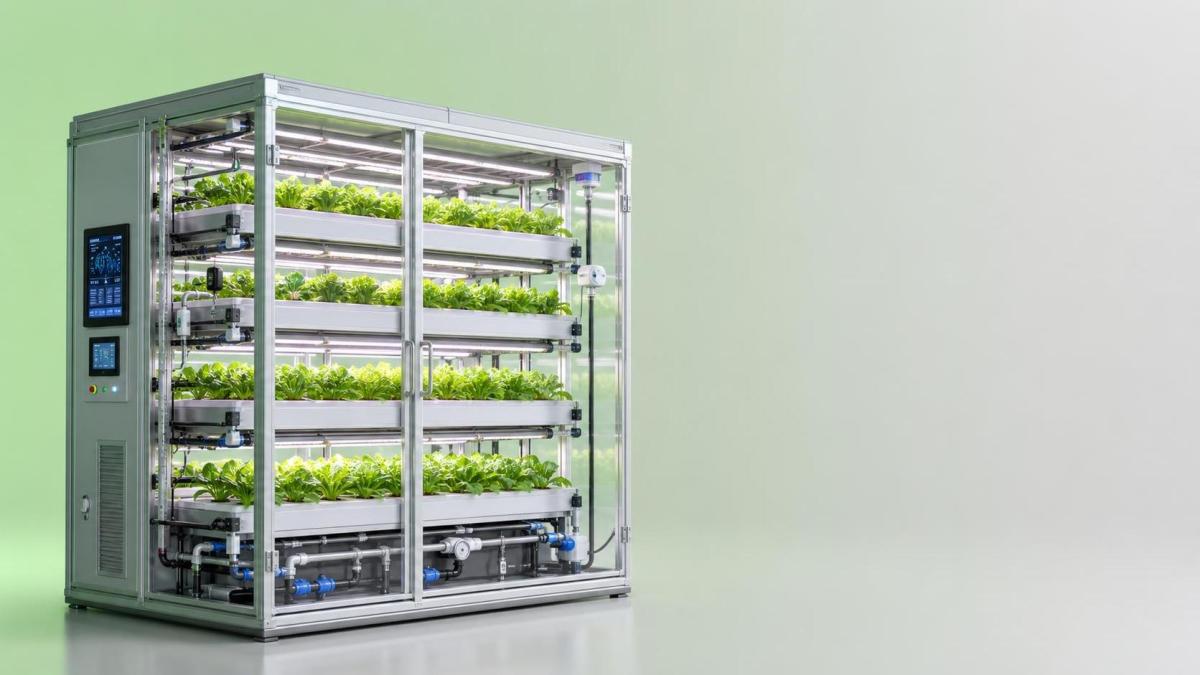
One of the clearest ways compact greenhouse technology improves yield is by making more of the cubic volume productive. Vertical racks, tiered benches, hanging channels, and narrow-profile circulation layouts can increase output where floor expansion is impossible.
But there is a limit. More tiers only help if each layer still gets adequate light, air movement, irrigation access, and room for crop handling. It is common to see ambitious layouts that look productive in renderings and become maintenance-heavy in daily use.
A quick field rule: if routine tasks like pruning, scouting, cleaning, or harvesting require awkward reach or repeated tray movement, your theoretical density may come back as labor drag and plant stress. In real operations, usable density beats maximum density.
Match the Covering and Light Strategy to the Crop, Not the Sales Sheet
Yield gains in small greenhouses often come from better light management, but this is highly crop-specific. Leafy greens, propagation crops, culinary herbs, ornamentals, and fruiting plants do not respond the same way. A compact unit that performs well for seedlings may underdeliver for mature fruiting crops if light penetration and canopy clearance are weak.
When evaluating glazing, covers, and supplemental lighting, check these practical points:
- Will the cover diffuse light well enough for even canopy development?
- Does shelf spacing reduce effective light before the crop reaches saleable size?
- If LEDs are included, can output be adjusted by crop stage rather than running one fixed setting?
- Are shadows from frame members, irrigation lines, or dense rack geometry likely to matter?
Do not assume more lighting always means more yield. In compact environments, heat load and plant morphology matter. A lighting upgrade that boosts one crop may create unnecessary energy cost or stress in another. Without crop-level validation, keep claims cautious.
Water Delivery Is Where Many “Efficient” Systems Break Down
Small systems are often sold on water efficiency, and sometimes rightly so. Recirculation, drip precision, capillary methods, and closed-loop fertigation can reduce waste. But yield improvement depends less on headline water savings and more on whether every plant gets the intended volume at the intended interval.
Check emitter consistency, drainage behavior, and how easy it is to detect clogging. In tight installations, one blocked line can quietly reduce yield in a whole section before anyone notices. If the system recirculates nutrient solution, ask about cleaning protocols, filtration, and biofilm risk. Those are operational issues, not minor housekeeping.
Where food production is involved, sanitation and water contact materials should also be reviewed against the buyer’s own compliance requirements. The exact standard depends on market and use case, so that part should be verified against current regional obligations rather than assumed.
Automation Helps Yield When It Reduces Variability
There is a tendency to treat automation as a premium add-on. In compact greenhouse technology, it often has a more basic role: reducing inconsistency caused by delayed human response. Timed venting, irrigation triggers, lighting schedules, and alarm notifications can protect a small growing zone from rapid swings that would be manageable in a larger structure but damaging in a compact one.
The useful question is not “Is it automated?” It is “What failure or variation does the automation actually prevent?” A simple alert for temperature spikes may matter more than a complex dashboard no one checks.
Be Honest About Crop Selection
Some crops are naturally well suited to compact greenhouse systems: seedlings, transplants, microgreens, many herbs, and certain leafy greens. Others can work, but only if the structure supports their height, pollination needs, trellising, light demand, and harvest access. The mismatch is common. Buyers choose a compact footprint for a crop that really wants more headroom or more lateral working space, then blame the technology for disappointing yields.
If the crop changes seasonally, check how quickly the system can be reconfigured. A compact greenhouse that handles one crop beautifully but becomes cumbersome during turnover may be less productive over a full year than a slightly simpler setup.
Review Biosecurity, Cleaning Access, and Disease Pressure Early
Tighter environments can protect crops, but they can also accelerate disease spread if moisture, airflow, and sanitation access are poorly designed. This matters more than many early-stage buyers expect. A compact greenhouse with crowded access points, absorbent surfaces, or hard-to-clean joints can lose yield through recurring sanitation issues long before structural wear becomes visible.
Inspect whether staff can actually clean behind benches, under channels, around tanks, and inside drain paths. If they cannot, they usually will not. That is not a staffing problem; it is a design problem.
For Buyers, the Real Question Is Repeatability
When procurement teams evaluate compact greenhouse technology, the strongest signal is not a single strong trial. It is repeatable performance under the same operating routine. Ask suppliers or integrators for evidence of repeatability, maintenance requirements, replacement part availability, and operator training expectations. If those details are vague, yield projections should be treated cautiously.
For regulated or institutionally managed environments, also confirm whether any electrical, water treatment, material contact, or environmental control components must meet site-specific approval or documentation requirements. The applicable standard depends on jurisdiction and intended use, so it should be checked against current local and sector rules rather than inferred from general marketing language.
A practical final screen is this: can the system hold stable conditions, use vertical space without compromising access, deliver water and light evenly, and be cleaned without heroic effort? If the answer is yes, compact greenhouse technology usually has a credible path to better yield in space-limited growing environments. If one of those pieces is weak, the shortfall tends to show up in uniformity, crop loss, or labor friction before it shows up anywhere else.
That is the difference between a compact greenhouse that simply fits into a small footprint and one that actually earns its space.
Related Intelligence
- Smart GreenhouseGreenhouse Equipment for Vertical Farming: Choosing Lighting and VentilationChoose greenhouse equipment for vertical farming with confidence. Compare lighting, airflow, and moisture control to improve crop uniformity and manage costs. Explore the guide.
- Smart GreenhouseSelecting Greenhouse Propagation Equipment for Hot, Humid Southeast Asian NurseriesGreenhouse propagation equipment Southeast Asia: discover how to select resilient irrigation, ventilation, benches, and automation for hot, humid nurseries.
- Smart GreenhouseWhat Are the Biggest Challenges in Agri-Tech Adoption in 2026?What are the biggest challenges in agri tech adoption for 2026? Explore cost, data, connectivity, skills, compliance, and ROI barriers.
The Morning Broadsheet
Daily chemical briefings, market shifts, and peer-reviewed summaries delivered to your terminal.
