

The Authority in Global Agricultural Chemistry & Bio-Resources
What Are the Biggest Challenges in Agri-Tech Adoption in 2026?
What Are the Biggest Challenges in Agri-Tech Adoption in 2026?
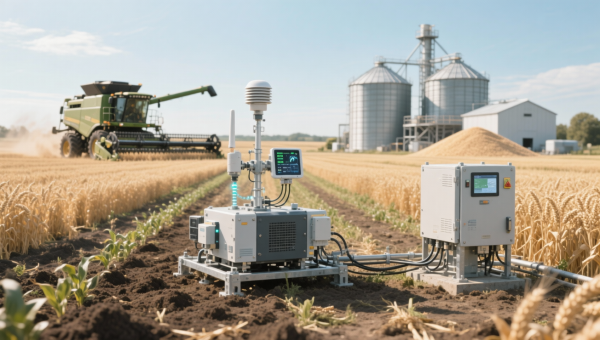
As agriculture enters a more data-driven era, many operators are asking: what are the biggest challenges in agri tech adoption for 2026? From high capital costs and fragmented data systems to connectivity gaps, workforce skills, regulatory compliance, and uncertain ROI, adoption barriers extend far beyond the technology itself. The central issue is rarely whether a sensor, autonomous machine, farm-management platform, or processing control system can work in principle. It is whether it can work reliably within a specific production environment, fit the operator’s cash flow, connect to existing assets, and produce evidence that supports a better decision.
That question applies across field agriculture, forestry, aquaculture, feed milling, grain handling, ingredient extraction, and the wider supply chains that connect primary production with industrial buyers. A large grain processor may be evaluating traceability software alongside moisture monitoring and inventory controls. A fish farm may be considering water-quality automation but lack stable communications at remote sites. A chemical or API procurement team may need more detailed origin, handling, and quality documentation from agricultural feedstocks before changing suppliers. These are connected problems, but they do not have one universal technology answer.
In 2026, adoption will be shaped less by novelty than by operational fit. Buyers are becoming more cautious about pilots that never reach scale, systems that produce dashboards without changing field practice, and equipment that depends on support capabilities unavailable during a critical production window.
Capital Cost Is Only the Visible Part of the Investment
The purchase price of agri-tech is often the first barrier discussed, but it is rarely the full cost. A precision application system, automated grading line, aquaculture monitoring network, or connected forestry machine may also require installation work, communications infrastructure, calibration, data subscriptions, software integration, maintenance, operator training, and replacement parts. In some settings, the technology also changes the work itself: staff must inspect exceptions, verify data quality, or intervene when automated controls reach their limits.
This makes return-on-investment analysis difficult. A supplier may demonstrate that a system can reduce input use, prevent a quality loss, or improve labour deployment. Yet the financial outcome depends on local variables such as crop mix, stocking density, seasonal labour availability, water conditions, energy costs, machinery utilization, and the buyer’s ability to act on the information produced. A useful technology can still be a poor investment if its benefits arrive outside the operator’s planning horizon or if the site is too small to absorb fixed costs.
Procurement teams should therefore separate the economic case into three questions: what cost is avoided, what additional revenue or quality protection is plausible, and what new operating burden is introduced? The third question receives too little attention. Systems that require frequent manual reconciliation, specialist servicing, or multiple paid interfaces can erode the value expected from automation.
Interoperability Remains a Practical, Not Theoretical, Problem
Many agricultural businesses do not lack data; they lack usable continuity between data sources. Machinery telematics, yield maps, laboratory results, weather records, feed formulations, pond sensors, quality-control systems, and ERP platforms often sit in separate environments. Files may be exportable, but exportability is not the same as integration. If data requires manual cleaning before it can be compared, it is unlikely to support timely decisions during planting, harvest, disease events, or processing disruptions.
The risk is especially acute when a new platform becomes the latest layer in an already fragmented operation. Before approving a system, buyers need to identify what it must exchange data with, who owns the resulting records, how long the records remain accessible, and what happens if the vendor changes pricing, discontinues a product line, or is acquired. This is not merely an IT concern. For regulated or quality-sensitive supply chains, incomplete or inconsistent records can complicate audits, investigations, supplier qualification, and batch-level traceability.
A more disciplined approach begins with a narrow operational decision. Instead of buying “a digital farm platform,” define the decision that needs improvement: irrigation scheduling for a defined block, feed conversion monitoring for a specific production unit, incoming raw-material verification, or predictive maintenance for a bottleneck machine. The required data model becomes clearer when the decision is clear.
Connectivity and Physical Conditions Still Limit Deployment
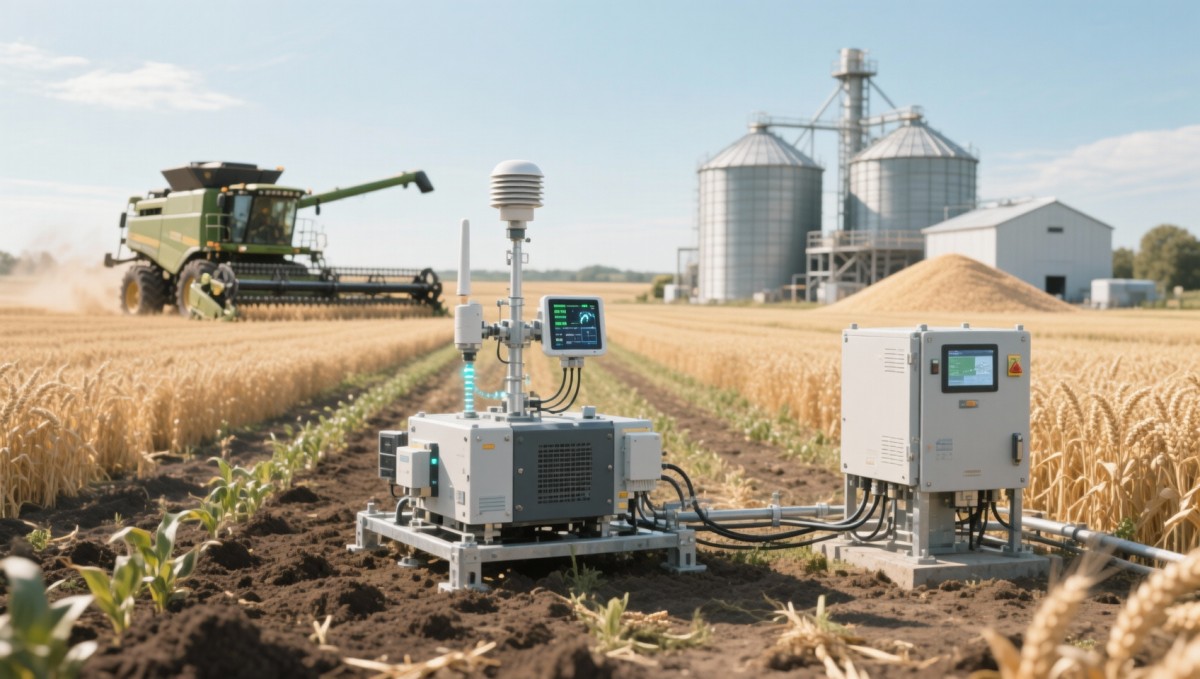
The assumption that every operation can move easily to cloud-connected management is still flawed. Farms, forests, hatcheries, ports, grain storage sites, and remote processing facilities may face inconsistent broadband, weak mobile coverage, power interruptions, or difficult terrain. In those environments, a system designed around continuous connectivity can become unreliable precisely when it is most needed.
Physical durability matters just as much. Agricultural technology must operate around dust, moisture, vibration, temperature swings, corrosion, animal activity, washdown procedures, and seasonal work patterns. A sensor that performs well in a controlled demonstration may require a different enclosure, mounting method, cleaning regime, or calibration schedule in commercial use. Aquaculture equipment can face biofouling and saltwater exposure; grain-processing environments may demand attention to dust management and equipment safety; field machinery has to tolerate shock loads and variable operator practice.
For this reason, technical evaluation should include a site-readiness review rather than a simple feature comparison. Buyers should ask whether the technology can operate offline, how it stores data during communications loss, what manual fallback procedure is available, and who can repair or replace essential components locally. A robust fallback process is not evidence of technological failure. It is evidence that the operating reality has been understood.
Skills, Trust, and Workflow Change Can Determine Whether a Project Survives
The workforce challenge is often reduced to a shortage of digital skills. That is true, but incomplete. Adoption also depends on whether operators trust the recommendation, understand its limitations, and have authority to act on it. A crop adviser may question a model that cannot explain why it recommends a treatment change. A maintenance manager may ignore predictive alerts if previous alerts produced too many false positives. A farm supervisor may resist a platform if it adds reporting tasks without reducing paperwork elsewhere.
Technology introduces new responsibilities: checking sensor integrity, validating unusual readings, managing user permissions, protecting devices, and documenting exceptions. These tasks need named owners. In many failed deployments, the system was installed, but no one was responsible for deciding what to do with its output on a daily or weekly basis.
Training should therefore be tied to real operating decisions, not only to software navigation. Teams need to know what action follows an alert, when an automated recommendation should be overridden, and how those decisions are recorded. In high-consequence settings, including food, feed, biochemical inputs, and regulated manufacturing interfaces, human review remains essential. Automation may improve consistency, but it does not remove accountability.
Compliance Is Becoming More Intertwined With Technology Design
Regulatory obligations vary by geography, commodity, processing stage, and end market. There is no single compliance checklist for agri-tech. However, more connected systems are being asked to support records relevant to environmental controls, product claims, worker safety, food and feed quality, chemical handling, biosecurity, and supply-chain due diligence. That creates a demanding question: can the system produce records that are accurate, attributable, retrievable, and understandable when reviewed later?
Where pharmaceutical, fine chemical, or high-specification ingredient supply chains are involved, documentation requirements may be particularly strict. GMP expectations, FDA requirements, EPA-related obligations, and other applicable local rules should never be treated as labels that technology automatically satisfies. Their relevance depends on the product, jurisdiction, process, and intended use. A sensor log or blockchain record may support traceability, but it does not independently establish compliance, product quality, or valid supplier qualification.
Cybersecurity belongs in this discussion. Connected irrigation controls, cold-chain systems, feeding equipment, and processing assets can create operational exposure if access rights are poorly managed. Buyers should clarify where data is hosted, how user access is controlled, whether activity logs can be reviewed, how updates are managed, and what support is available after a security incident. These questions are more practical than abstract debates about digital transformation.
The Problem With Pilots Is Usually Scale, Not Curiosity
Pilot projects are valuable when they test a defined uncertainty. They become unhelpful when success is loosely defined or when the pilot environment bears little resemblance to normal operations. A trial may be staffed by the vendor’s technical team, run on a well-connected demonstration site, or use unusually clean historical data. Once expanded across diverse fields, multiple ponds, contractor-operated equipment, or different processing lines, the same system may behave differently.
A credible pilot should establish the baseline before installation, identify the operational metric that matters, state who will use the output, and define the conditions for continuation or termination. The measure does not always need to be financial. It might be time to identify a fault, completeness of traceability records, accuracy of stock reconciliation, reduction in manual sampling, or consistency of a control step. What matters is that the measure is connected to a real operational problem.
Scaling also requires commercial clarity. Can the supplier provide installation capacity, spare parts, training, data migration, and technical support across all intended locations? Can the operation exit the arrangement without losing years of essential records? These questions should be considered before the pilot is declared a success, not after an enterprise-wide commitment has been made.
A Better Adoption Framework Starts With the Constraint
Rather than beginning with a technology category, operators can begin with the constraint that is hardest to manage. It may be inconsistent raw-material quality, machinery downtime, water-quality volatility, labour availability, poor inventory visibility, energy-intensive drying, or the inability to demonstrate product origin to a downstream buyer. Technology is useful when it reduces uncertainty around that constraint or enables a response that was previously too slow, expensive, or unreliable.
This perspective is relevant across the sectors examined by AgriChem Chronicle: agricultural and forestry machinery, aquaculture and fishery technology, feed and grain processing, bio-extracts and ingredients, and fine chemicals and APIs. The boundaries between these sectors are increasingly porous. A quality event in agricultural production can become a procurement issue for an ingredient buyer; inadequate machinery records can weaken traceability; unreliable storage data can affect both commercial planning and product integrity.
For institutional buyers and industrial operators, credible intelligence must connect technical capability with compliance context and supply-chain reality. That is why peer-level analysis, verified manufacturing information, laboratory findings, and practical trade-compliance interpretation matter more than broad claims about innovation. The decision is not whether to digitize agriculture. It is which risks should be reduced first, which records must withstand scrutiny, and which systems can still function when the season, site, or supply chain does not behave as planned.
The biggest challenges in agri-tech adoption in 2026 are therefore not separate obstacles to be solved one at a time. Cost, connectivity, data governance, people, compliance, and scale interact. A sound investment case should make those interactions visible before equipment is ordered or software is rolled out. If a proposed solution cannot explain its operating requirements, ownership model, data pathway, support plan, and measurable decision value, it is not yet ready for a serious deployment decision.
- Fine Chemicals
- Bio-Extracts
- APIs
- Grain Processing
- Grain Storage
- Agri Tech
- Grain Handling
- aquaculture equipment
- fishery technology
- Industrial Buyers
- Aquaculture
- Feed and Grain
- Agricultural and Forestry Machinery
- Feed and Grain Processing
- Bio-Extracts and Ingredients
- Forestry Machinery
- Commercial Planning
- Agricultural technology
- what are the biggest challenges in agri tech adoption for 2026
Related Intelligence
- Smart GreenhouseGreenhouse Equipment for Vertical Farming: Choosing Lighting and VentilationChoose greenhouse equipment for vertical farming with confidence. Compare lighting, airflow, and moisture control to improve crop uniformity and manage costs. Explore the guide.
- Smart GreenhouseSelecting Greenhouse Propagation Equipment for Hot, Humid Southeast Asian NurseriesGreenhouse propagation equipment Southeast Asia: discover how to select resilient irrigation, ventilation, benches, and automation for hot, humid nurseries.
- Smart GreenhouseWhat Are the Biggest Challenges in Agri-Tech Adoption in 2026?What are the biggest challenges in agri tech adoption for 2026? Explore cost, data, connectivity, skills, compliance, and ROI barriers.
The Morning Broadsheet
Daily chemical briefings, market shifts, and peer-reviewed summaries delivered to your terminal.
