

The Authority in Global Agricultural Chemistry & Bio-Resources
How to Build Data-Driven Procurement Resource Plans That Cut Waste and Improve Forecasting

To build effective data-driven procurement resource plans, teams need more than spend reports and historical averages. They need a working model that connects demand signals, supplier constraints, inventory policy, and risk exposure so procurement can cut waste without creating shortages.
For buyers in agriculture, chemicals, and industrial processing, the real value is practical: better forecast accuracy, cleaner ordering patterns, fewer emergency purchases, and stronger control over working capital. The best plans are not complicated dashboards. They are disciplined planning systems that turn procurement data into decisions people can act on.
What data-driven procurement resource planning is actually trying to solve
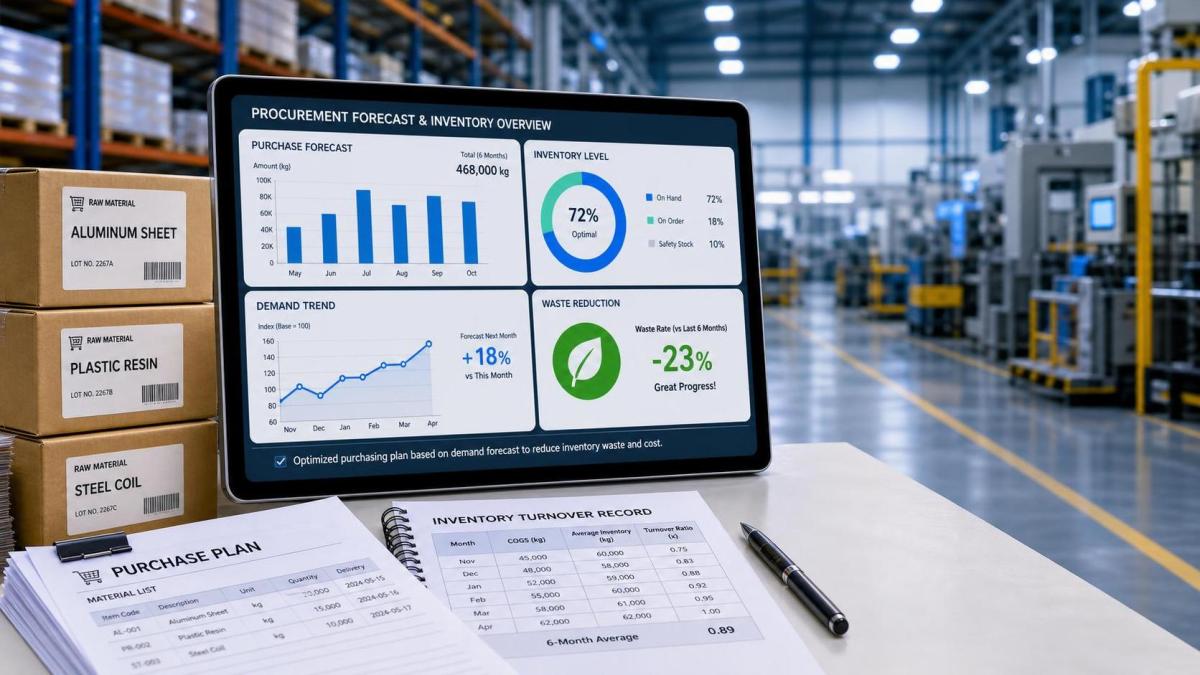
Most procurement waste comes from the same few problems: buying too early, buying too much, reacting too late, or using poor assumptions about demand. Data-driven procurement resource plans are built to reduce those errors and make forecast assumptions visible.
For procurement leaders, the question is not whether data exists. It is whether the team can use it to size resources correctly, match buying cycles to actual consumption, and avoid overcommitting budget or warehouse space. That is where planning becomes a business control function.
In practice, the strongest plans combine demand history, supplier lead times, service levels, seasonality, minimum order quantities, and inventory targets. When those variables are reviewed together, patterns appear that simple spend analysis usually misses.
Which data matters most for procurement decisions
Not every metric deserves equal weight. The most useful resource plans usually start with consumption history, forecasted demand, lead time reliability, and exception data such as rush orders, stockouts, and delayed deliveries.
Consumption data shows what the business actually uses, not just what it buys. Forecast data shows where demand is expected to move. Lead time and supplier performance data show how much buffer the team really needs to stay operational without excess stock.
Exception data is often the most valuable. Repeated emergency buys, order splits, or late deliveries often point to planning issues, not supplier failures alone. That makes them a direct input to resource planning, not just a service report.
How to build a plan that procurement teams can use
Start by grouping materials into planning categories. High-value critical items, seasonal items, and stable repeat purchases should not be managed the same way. Each group needs its own rules for forecast frequency, safety stock, and approval thresholds.
Next, establish a baseline demand model from historical consumption, then adjust it for business changes that the past cannot reflect. New contracts, production expansions, regulatory changes, and crop cycles can all distort a simple average if they are ignored.
After that, align the plan with supplier realities. If a supplier is reliable, the team can hold less buffer. If lead times vary widely, the plan should reflect that volatility instead of assuming best-case delivery performance.
The final step is governance. Assign ownership for forecast review, data validation, and exception management. A plan fails when no one is responsible for updating it after demand changes or supply disruption.
Where waste usually hides in procurement operations
Waste rarely appears as one obvious mistake. It usually shows up in smaller leaks such as expired materials, duplicated safety stock, rushed freight, overbought packaging, or units purchased in the wrong quantity because the forecast lacked detail.
In agriculture and processing supply chains, those leaks can be expensive because demand is often seasonal and storage is limited. Buying ahead of need may look efficient on paper, but it can create handling costs, spoilage risk, or cash tied up in slow-moving inventory.
Data-driven procurement resource plans expose these leaks by comparing planned versus actual usage, supplier performance, and inventory turnover. That comparison helps teams identify whether waste is caused by forecasting, policy, or execution.
How better forecasting improves planning quality
Forecasting improves when procurement stops treating it as a single number and starts treating it as a range of likely outcomes. A strong plan uses scenario-based thinking: base case, high-demand case, and disruption case.
This matters because procurement teams often have to balance service continuity against cost. If forecast confidence is low, the plan should protect supply on critical items and stay flexible on noncritical ones. That is a smarter use of resources than applying one blanket stock policy everywhere.
Cross-functional input also matters. Sales, operations, production, and maintenance teams often hold signals that procurement never sees in spend data alone. Bringing those signals into the planning cycle improves forecast credibility and reduces last-minute changes.
How to judge whether your procurement plan is working
A useful plan should be measurable. Track forecast accuracy, stockout frequency, emergency purchase rate, inventory turns, and supplier on-time delivery. Those indicators show whether the plan is reducing waste or simply adding reporting overhead.
It is also worth measuring planning discipline itself. Are forecasts reviewed on schedule? Are exceptions closed? Are buyers following the same assumptions? If not, the problem may be process consistency rather than data quality.
Procurement teams should look for a simple outcome: fewer surprises. If the plan consistently reduces volatility in ordering, improves supplier coordination, and lowers rushed spend, it is doing its job.
What procurement buyers should ask before adopting a planning model
Before committing to any resource planning approach, buyers should ask whether the data is current, whether the forecast assumptions are documented, and whether the model reflects supplier and operational constraints. A sophisticated tool cannot compensate for weak input discipline.
They should also ask how quickly the plan can adapt. In regulated and supply-sensitive sectors, conditions change fast. The best model is not the most complex one; it is the one that can be updated without delay when demand, compliance, or logistics conditions shift.
Finally, buyers should assess ownership. If procurement, operations, and finance are not aligned on the same planning logic, the model will not hold up under pressure. Shared accountability is what turns data into reliable decisions.
Conclusion: planning is the control point
Data-driven procurement resource plans work when they connect historical usage, forecast assumptions, supplier behavior, and inventory policy into one practical decision system. That is how teams cut waste without weakening supply resilience.
For procurement professionals managing complex industrial or agricultural supply chains, the real advantage is clearer judgment. Better planning does not eliminate uncertainty, but it makes uncertainty manageable, measurable, and far less costly.
Related Intelligence
- APIs & IntermediatesHow to Define a Modular System Specification for Interface Control and ExpansionModular system specification guide: define interface control, safety ownership, data rules, and scalable expansion for reliable integration and lifecycle confidence.
- APIs & IntermediatesQuotation Planning for Strategic Sourcing: How Buyers Compare Supplier BidsQuotation planning sourcing helps buyers compare supplier bids beyond price. Learn to assess scope, compliance, lead times, risk, and total cost for smarter sourcing decisions.
- APIs & IntermediatesHow to Qualify a Purified Bioprocess Materials Supplier for GMP ManufacturingPurified bioprocess materials supplier qualification guide for GMP manufacturing: assess traceability, contamination control, change notification, and supply reliability.
The Morning Broadsheet
Daily chemical briefings, market shifts, and peer-reviewed summaries delivered to your terminal.
