

The Authority in Global Agricultural Chemistry & Bio-Resources
How to Compare GMP-Compliant Suppliers for APIs and Intermediates
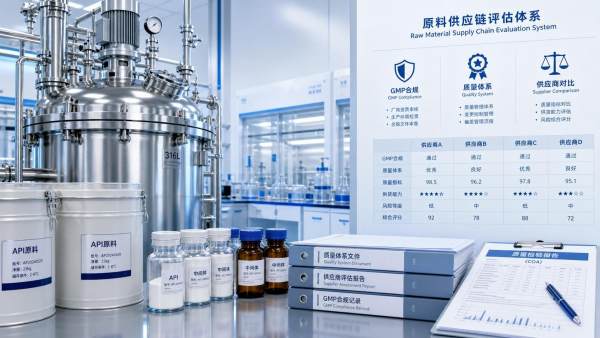
For procurement teams sourcing APIs and intermediates, supplier comparison is rarely a simple compliance checklist. On paper, several manufacturers may appear equally qualified: valid certifications, acceptable prices, standard product dossiers, and a willingness to sign quality agreements. In practice, however, the gap between a supplier that claims GMP alignment and one that can consistently support regulated commercial supply is often substantial.
This matters more than ever. API and intermediate supply chains have become more global, more specialized, and more exposed to regulatory scrutiny. Buyers are now expected to assess not only quality systems, but also data integrity discipline, site-level manufacturing control, raw material traceability, change management, and the supplier’s ability to remain inspection-ready under commercial pressure. A low-cost source that fails during a customer audit, experiences unexplained batch deviations, or cannot support registration updates can become far more expensive than a higher-priced but operationally mature partner.
For that reason, effective supplier comparison under GMP standards should be treated as a risk-ranking exercise, not a price negotiation exercise. The central question is not whether a supplier has a certificate. It is whether the supplier’s quality system, technical capability, and operating discipline are strong enough for your intended market, dosage form, regulatory pathway, and continuity requirements.
Why “GMP-compliant” is not a sufficient comparison point
One of the most common procurement mistakes is treating GMP status as binary. In reality, GMP capability exists on a spectrum. Two suppliers may both state compliance with applicable standards, yet differ significantly in the robustness of their systems.
For APIs, buyers typically look at alignment with internationally recognized expectations such as ICH Q7 for active pharmaceutical ingredients, alongside local or market-specific regulatory requirements. For intermediates, the assessment is more nuanced. Not every intermediate facility operates under full API-grade GMP, and not every intermediate requires the same level of control depending on its criticality in the synthesis route and the buyer’s quality framework. Procurement teams therefore need to distinguish between:
- formal certification or registration status;
- actual implementation of GMP principles at site level;
- fitness of that implementation for the buyer’s end market.
A supplier comparison GMP standards exercise should therefore begin with a practical filter: what level of GMP evidence is commercially and regulatorily necessary for this material? An early-stage intermediate for non-sterile use may be assessed differently from a late-stage intermediate used in a registered human pharmaceutical product. If procurement does not align this threshold with QA and regulatory affairs from the outset, supplier screening can become either too loose or unnecessarily restrictive.
Start with market and application context, not supplier brochures
Before comparing suppliers, procurement teams need internal clarity on the intended use of the API or intermediate. This defines the evidence standard.
Questions that materially change supplier evaluation include:
- Is the material intended for regulated human pharmaceuticals, veterinary products, or non-pharma industrial use?
- Will the supplier support DMF/CEP-linked business, or only merchant supply?
- Is the product a critical starting material, advanced intermediate, or final API?
- Which regulatory markets are in scope: FDA-facing, EU-facing, PIC/S-influenced, or domestic-only?
- Is dual sourcing required for business continuity, or is the product difficult to qualify across multiple sites?
Without these answers, comparison tends to collapse into superficial metrics: lead time, assay, and unit price. Those are commercial variables, but they do not tell you whether the supplier can support an inspection, handle deviations transparently, or maintain validated process consistency over time.
What procurement should examine beyond the certificate
Certificates and audit summaries are useful entry points, but they should not be the main decision basis. A credible comparison should assess at least five operational areas.
1. Quality system maturity
The strongest suppliers usually demonstrate not just documented procedures, but a functioning quality culture. Procurement may not perform the technical audit itself, but it should know what signs distinguish a mature system from a paper-based one.
Useful indicators include:
- clear deviation, CAPA, and change control workflows;
- defined release procedures with QA independence;
- document version control and traceability;
- internal audit routines and management review mechanisms;
- training systems linked to job function and process risk.
When suppliers provide only broad statements such as “we follow GMP strictly,” without showing system structure, procurement should treat that as incomplete evidence rather than reassurance.
2. Data integrity and documentation discipline
In regulated supply, poor documentation can be as serious as poor chemistry. A supplier may produce acceptable material but still create compliance exposure if records are incomplete, inconsistent, or difficult to verify.
Procurement teams should pay attention to whether the supplier can reliably provide:
- batch records and certificates of analysis with consistent formatting;
- method references and specification histories;
- traceable raw material sourcing records;
- controlled deviation reports where needed;
- timely responses to documentation requests during qualification or investigation.
Delays, unexplained data gaps, frequent document corrections, or inconsistent answers from sales and QA often point to deeper control weaknesses. This is especially important when comparing overseas suppliers where language, time zone, and documentation conventions can already slow qualification work.
3. Process consistency and manufacturing control
For commercial buyers, batch-to-batch consistency is more important than a single strong sample. Qualification samples are often produced under ideal conditions. The real test is whether the supplier can maintain quality under routine scheduling, variable raw material supply, and larger campaign production.
Relevant comparison points include:
- number of commercial batches produced annually;
- process validation status where applicable;
- control of critical process parameters and critical quality attributes;
- handling of reprocessing, rework, and out-of-specification events;
- history of major process changes in recent years.
Intermediates deserve special attention here. Buyers sometimes assume that because an intermediate is not the final API, process consistency is less important. In reality, variability in an intermediate can create downstream yield loss, impurity profile shifts, or additional purification burden at the API stage. Procurement should therefore involve technical teams early when comparing intermediate suppliers, especially for multi-step synthesis programs.
4. Regulatory and inspection history
A supplier’s audit history is one of the most useful risk signals available, although it must be interpreted carefully. A site with repeated inspections is not automatically safer than a less-exposed site, but a transparent record of inspection outcomes, corrective actions, and follow-up can help buyers judge operational seriousness.
Where information is available, procurement should review:
- customer audit outcomes;
- regulatory inspection history by relevant authorities;
- major observations, warning trends, or import-related issues where publicly known;
- response quality to past audit findings;
- scope of approved products and manufacturing areas.
Public regulatory databases may provide partial visibility in some markets, but interpretation should be coordinated with QA or regulatory colleagues. Procurement should avoid overconfidence based on marketing claims such as “exported globally” unless those claims are supported by concrete regulatory experience.
5. Supply reliability under commercial conditions
GMP capability is necessary, but it does not guarantee supply performance. Some technically acceptable suppliers become weak commercial partners when demand increases or when a raw material disruption occurs.
That is why supplier comparison should include operational resilience factors such as:
- single-site versus multi-site manufacturing exposure;
- dependence on key starting materials from one source;
- utilities redundancy and EHS operating stability;
- campaign planning flexibility and available capacity;
- shipment performance and deviation communication discipline.
For many procurement teams, the highest-cost failures are not failed initial audits but unstable routine supply. A supplier that passes qualification yet cannot maintain delivery reliability during market tightness creates strategic vulnerability.
How to compare APIs and intermediates differently
APIs and intermediates should not be evaluated using exactly the same weighting model. That is another common source of weak decisions.
For APIs, emphasis typically falls on formal GMP adherence, validation depth, impurity control, regulatory support, and readiness for customer or authority scrutiny. Documentation expectations are higher, and the supplier’s ability to support lifecycle changes matters more.
For intermediates, procurement should focus more sharply on the role of the intermediate in the overall synthesis and on how upstream variability affects downstream performance. In some cases, an intermediate supplier with limited formal certification may still be acceptable if quality controls, traceability, and technical consistency are strong enough for the buyer’s quality risk model. In other cases—especially late-stage or highly critical intermediates—the buyer may need controls approaching API expectations.
The practical implication is that procurement should not use a generic questionnaire alone. It should use a material-specific comparison framework agreed with QA, technical operations, and regulatory teams.
Warning signs that should lower a supplier’s ranking
Some risk signals are easy to miss because they do not always appear in the initial quotation stage.
Experienced buyers usually treat the following as caution points:
- sales teams answering quality questions without QA involvement;
- reluctance to disclose manufacturing site details early in qualification;
- frequent revisions to CoA format or specifications without clear explanation;
- overly broad claims of compliance unsupported by audit evidence;
- unwillingness to discuss change notification timelines;
- limited transparency about subcontracted testing or production steps;
- sample quality that is strong, but commercial batch history that is thin.
None of these points alone proves non-compliance. But together they often indicate a supplier that is not yet ready for the documentation burden and discipline expected in regulated global supply.
Why lowest price can distort supplier comparison
Price remains important, particularly for mature APIs and widely available intermediates. But procurement teams should normalize pricing against quality and continuity risk, not compare quotations in isolation.
A lower quoted price may reflect:
- weaker quality overhead;
- less extensive documentation support;
- limited change control rigor;
- higher dependence on spot raw material purchasing;
- less capacity buffer for demand swings.
In other words, price often embeds operating assumptions. Buyers who do not test those assumptions may believe they are purchasing efficiently while actually importing future deviation costs, delayed approvals, extra analytical work, or requalification burden.
For institutional procurement, the more useful metric is total supplier risk-adjusted cost. That includes not just unit price, but qualification effort, audit frequency, complaint handling burden, registration maintenance support, and the cost of potential disruption.
Building a practical comparison model
A workable comparison model does not need to be complicated, but it does need cross-functional alignment. Procurement should generally build a weighted evaluation with input from QA, regulatory, and technical operations.
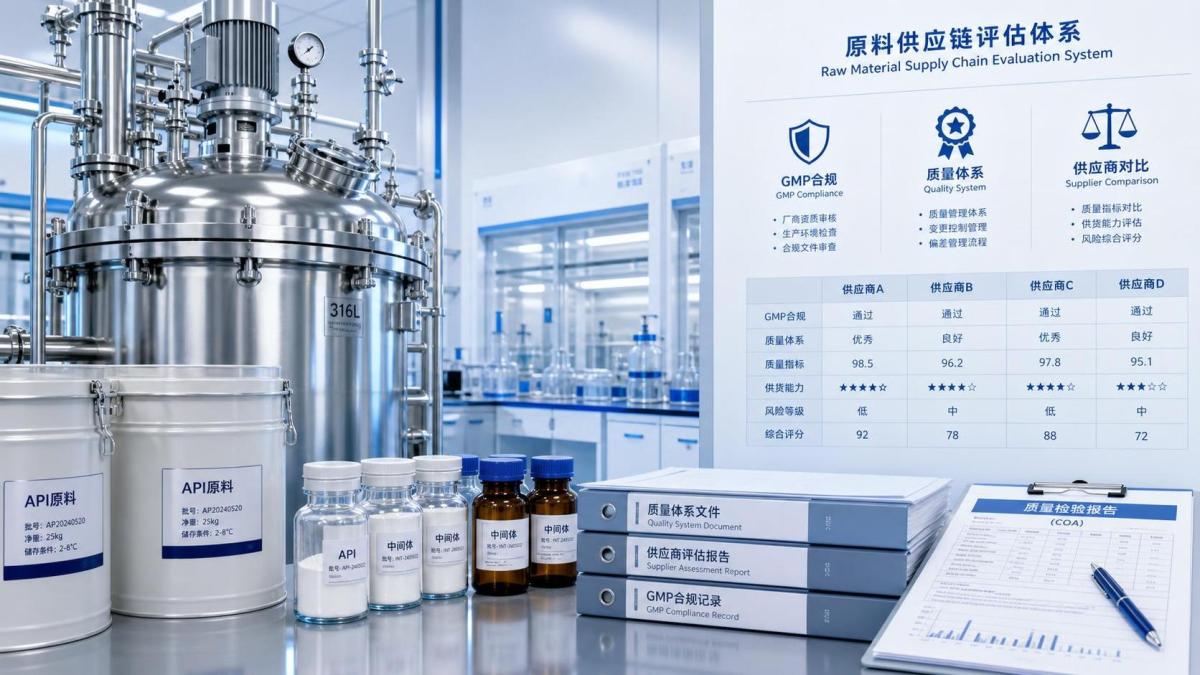
A typical model may score suppliers across:
- GMP and quality system evidence;
- documentation integrity;
- technical fit for the material;
- audit and inspection profile;
- commercial reliability and capacity;
- cost competitiveness;
- responsiveness and governance.
The weighting should change by product criticality. For strategic APIs in regulated markets, quality and regulatory support usually outweigh minor price differences. For earlier intermediates with broader supply options, commercial flexibility may receive greater weight—provided technical risks are still controlled.
Most importantly, procurement should document why a supplier ranks well. A defendable sourcing decision is not just useful for internal governance; it also helps when business conditions change and the company needs to explain why a site was approved, second-sourced, or excluded.
The procurement view: compare suppliers as long-term control systems
The strongest buying organizations no longer evaluate API and intermediate suppliers as transactional vendors. They evaluate them as external control systems that must remain reliable over years of regulatory, market, and operational change.
That shift matters. A supplier may be acceptable today but become high-risk after capacity expansion, key personnel turnover, solvent sourcing disruption, or a change in regulatory exposure. Procurement therefore needs a comparison process that is dynamic rather than one-time. Initial qualification is only the entry point. Ongoing scorecard review, change notification tracking, audit follow-up, and commercial performance monitoring are what preserve supply integrity over time.
When viewed this way, supplier comparison GMP standards work becomes less about checking compliance language and more about identifying which manufacturers can sustain disciplined performance when conditions are no longer ideal. For procurement teams responsible for regulated supply continuity, that is the distinction that matters most.
Related Intelligence
- APIs & IntermediatesQuotation Planning for Strategic Sourcing: How Buyers Compare Supplier BidsQuotation planning sourcing helps buyers compare supplier bids beyond price. Learn to assess scope, compliance, lead times, risk, and total cost for smarter sourcing decisions.
- APIs & IntermediatesHow to Qualify a Purified Bioprocess Materials Supplier for GMP ManufacturingPurified bioprocess materials supplier qualification guide for GMP manufacturing: assess traceability, contamination control, change notification, and supply reliability.
- APIs & IntermediatesEnzyme-Based Process Engineering: Designing Robust Biocatalytic Scale-UpEnzyme based process engineering for robust biocatalytic scale-up: optimize reactor control, transfer limits, recovery, and GMP-aligned manufacturing.
The Morning Broadsheet
Daily chemical briefings, market shifts, and peer-reviewed summaries delivered to your terminal.
