

The Authority in Global Agricultural Chemistry & Bio-Resources
EU PPWR Takes Full Effect on August 12

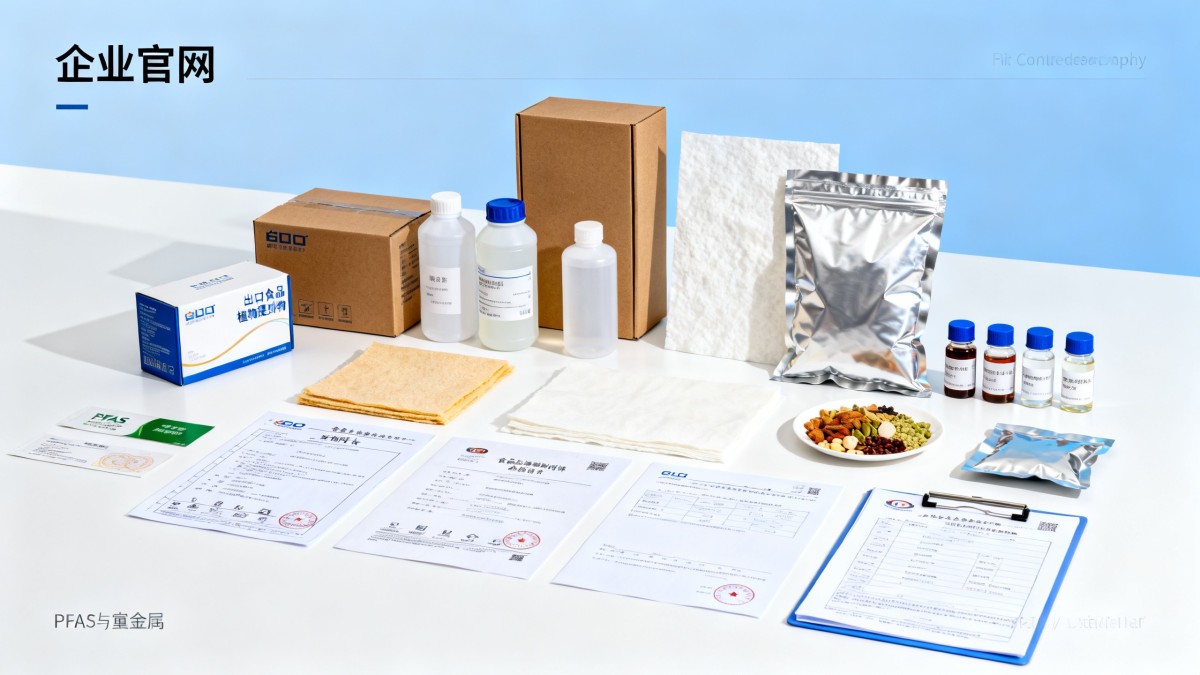
On 2026-08-12, the EU’s Packaging and Packaging Waste Regulation (PPWR, EU 2025/40) enters full application across all 27 member states. For exporters of prepackaged food, ingredients, natural ingredients, and botanical extracts, the more immediate signal is not only broader packaging compliance, but also tighter control on PFAS in food-contact packaging and unchanged heavy-metal limits that now need to be checked through the full packaging chain.
What the regulation now requires
The PPWR becomes directly applicable as a unified regulation in all 27 EU member states on 2026-08-12. According to the provided information, it places end-to-end compliance requirements on prepackaged food exporters. In food-contact packaging, the PFAS thresholds are set at 25 ppb for an individual non-polymeric PFAS, 250 ppb for the total of PFAS excluding polymers, and 50 ppm as the overall limit for PFAS including polymeric PFAS. The combined heavy-metal limit for Pb, Cd, Hg, and Cr6+ remains at 100 mg/kg.
Where the pressure will be felt along the chain
Exporters handling packaged food and ingredients
Companies shipping prepackaged foods, ingredients, natural ingredients, and botanical extracts into the EU are the most directly exposed. The compliance burden sits not only on the finished product, but also on packaging selection and the documentation needed to support market access. Packaging materials that were previously acceptable under fragmented national practices may now require re-checking against the new PFAS and heavy-metal thresholds.
Packaging and material suppliers
Suppliers of food-contact packaging materials will likely be pulled into stronger screening requirements by downstream buyers. From an industry perspective, the issue is not just the material itself, but whether suppliers can provide stable declarations and test support that align with the new thresholds. Any gap in supplier traceability can delay purchasing decisions and increase audit pressure.
Procurement and quality teams
Procurement teams will need to compare packaging options more carefully, while quality and regulatory teams will need to review supplier qualifications, test records, and declaration materials. What deserves closer attention is the interface between packaging sourcing and compliance paperwork: if the packaging file is incomplete, shipment readiness can be affected even when the product formulation itself is unchanged.
What companies should be checking now
Packaging selection needs a compliance review, not just a cost review
For affected exporters, packaging decisions should be evaluated against the PFAS thresholds and the heavy-metal ceiling stated in the regulation. That means asking whether the current packaging structure, coatings, inks, or related food-contact materials can be supported by suitable compliance evidence.
Supplier due diligence should move to the center
Analysis shows that supplier review is no longer a back-office formality. Companies may need to verify whether their packaging vendors can provide usable technical documents, declarations, and test information relevant to the PPWR requirements. The practical issue is not only whether a supplier claims compliance, but whether that claim can be documented and maintained.
Declarations and customer communication need to be aligned
For export businesses, preparation of CE conformity-related materials and customer-facing compliance documents becomes part of the commercial workflow. The policy signal here is clear: compliance evidence needs to be organized before shipment planning, not after a customer requests it. This matters especially for categories where packaging choices are tied closely to export continuity.
How to read this signal
Observably, this is more than a short-term procedural update. It is a concrete regulatory milestone that turns packaging compliance into a cross-functional issue for food exporters and their supply chains. At the same time, it should not be overstated beyond the confirmed facts: the provided information establishes the legal thresholds and the date of full application, but not the market-wide operational outcome. The more appropriate reading is that companies now need to treat EU packaging compliance as an active, document-driven requirement that touches sourcing, testing, and customer delivery at the same time.
What this means going forward
The main significance of this development is that PPWR now applies in a single, binding form across the EU, with specific limits on PFAS in food-contact packaging and unchanged heavy-metal thresholds. For Chinese exporters in food, ingredients, natural ingredients, and botanical extracts, the current priority is to reassess packaging options, tighten supplier checks, and prepare conformity documentation against the new rules. This is best understood as a regulatory transition that demands immediate operational attention, while the broader downstream effects still need continued observation.
Source note
This article is based on the title, event date, and summary provided by the user. Typical source types for this kind of regulatory update include official EU announcements, legal texts, industry association notices, compliance guidance, and authoritative media coverage. Specific official source links were not provided in the input and should be verified continuously before use in commercial or compliance work.
Related Intelligence
- Botanical ExtractsChoosing Botanical Extracts for Pharmaceuticals: Potency, Purity, and ComplianceBotanical extracts for pharmaceuticals: learn how to assess potency, purity, traceability, and GMP compliance for confident, regulatory-ready supplier selection.
- Botanical ExtractsBotanical Extracts Market Outlook: Supply, Pricing, and Buyer RisksBotanical extracts market insights on supply, pricing, quality control, and buyer risks—compare suppliers confidently and protect your sourcing strategy.
- Botanical ExtractsEurope Botanical Extracts Market: Key Growth Drivers, Risks, and OpportunitiesEurope botanical extracts market insights: explore growth drivers, regulatory risks, supply-chain challenges, and scalable opportunities for compliant, high-value ingredients.
The Morning Broadsheet
Daily chemical briefings, market shifts, and peer-reviewed summaries delivered to your terminal.
