

The Authority in Global Agricultural Chemistry & Bio-Resources
CO2 Removal in RAS: How Sizing, Degassing Method, and Water Load Affect Performance
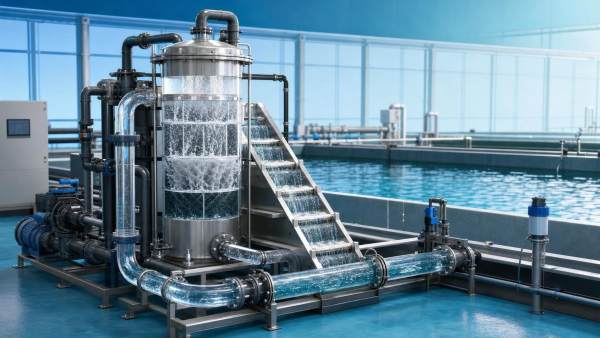
In recirculating aquaculture systems, carbon dioxide control is often treated as a supporting function, yet it shapes the entire biological and mechanical balance of production. Strong CO2 removal RAS performance depends on more than choosing a degasser from a catalog. Sizing, degassing method, and water load interact continuously, influencing fish respiration, alkalinity behavior, oxygen transfer, and overall energy efficiency. In a sector where technical validation and compliance matter as much as output, that interaction deserves closer attention.
Why CO2 removal has become a design priority
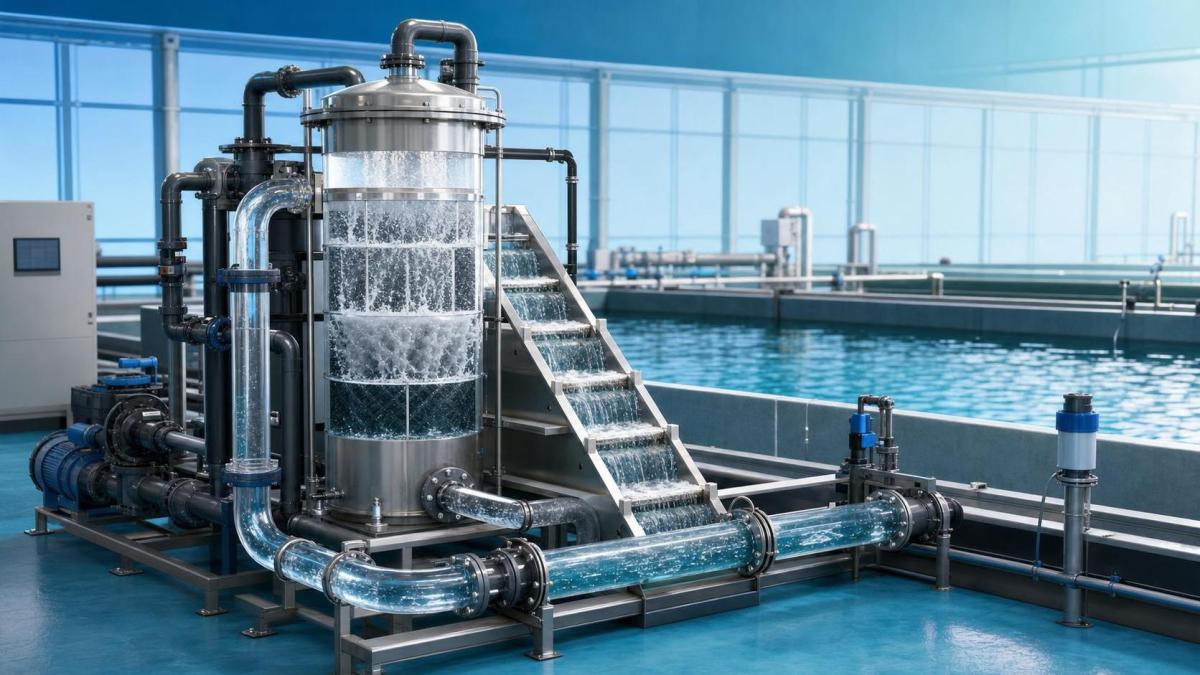
Commercial RAS facilities are being pushed toward higher stocking densities, tighter biosecurity, and more predictable water reuse. That changes the margin for error.
Carbon dioxide accumulates naturally through fish metabolism and microbial activity. When removal lags behind generation, performance losses appear before catastrophic failure does.
Typical warning signs include reduced feed conversion, stress-related behavior, unstable pH management, and weaker oxygen utilization. These are operational symptoms, not isolated water chemistry numbers.
This is one reason CO2 removal RAS design now receives more scrutiny in technical due diligence. It affects system resilience, expansion planning, and cost per kilogram produced.
From a wider industry perspective, aquaculture equipment evaluation increasingly resembles other regulated process industries. Assumptions must be documented, load conditions must be realistic, and performance claims must hold outside controlled demonstrations.
What CO2 removal in RAS is really solving
A degassing stage is not only removing a gas. It is restoring the water’s capacity to support life and process stability.
In practice, the objective is to keep dissolved CO2 within a range that does not impair fish physiology or complicate downstream control. That range varies by species, temperature, salinity, and production intensity.
The relevant question is not whether a unit removes CO2 under ideal conditions. The question is whether it maintains acceptable levels under expected and peak loads.
This distinction matters because many systems appear adequate during commissioning, then struggle when biomass rises, feeding increases, or hydraulic patterns shift.
Reliable CO2 removal RAS design therefore starts with mass balance thinking. How much CO2 is being produced, where does it accumulate, and what operating window is acceptable?
Sizing is where many projects quietly gain or lose reliability
Undersizing is common because nameplate capacity is often interpreted too literally. A degasser rated for one flow and one influent concentration may behave differently in real operation.
Effective sizing must account for more than nominal recirculation flow. It should reflect peak biomass, feed rate, temperature profile, target CO2 concentration, and hydraulic variability across production stages.
Headloss and bypass risk also matter. A properly selected unit can still underperform if water distribution is uneven or if short-circuiting reduces gas transfer contact time.
Oversizing is not automatically safer either. It can add unnecessary capital cost, increase pumping or fan demand, and create a misleading sense of robustness if instrumentation is weak.
A more dependable approach is to size around operating envelopes rather than a single design point. That is how mature process sectors evaluate scrubbers, separators, and gas transfer equipment.
Key sizing inputs worth checking
- Expected dissolved CO2 entering the degassing stage at average and peak biomass.
- Required outlet concentration for the species and production objective.
- Total recirculating flow, including seasonal or stage-based variation.
- Available hydraulic head and the energy cost of additional aeration or air movement.
- Allowance for fouling, maintenance intervals, and partial-load operation.
Degassing method changes both performance and operating behavior
Several methods are used for CO2 removal RAS applications, and each has different strengths. Packed columns, cascade aerators, low-head oxygenators with stripping function, and forced-air degassers are not interchangeable in every setting.
Packed columns typically offer strong gas transfer efficiency where sufficient head and air exchange are available. They fit systems seeking high removal performance in a compact footprint.
Cascade structures can be mechanically simple and accessible, but they depend heavily on layout, drop height, and uniform flow distribution.
Forced-air designs may improve stripping rates, especially where passive exchange is limited. They also introduce more components, power demand, and maintenance points.
The best method is usually the one that aligns with the site’s hydraulic logic and operating discipline. High theoretical efficiency means little if access, cleaning, or control integration are poor.
Water load is the variable that exposes weak assumptions
Water load is often discussed as flow volume alone, but that is incomplete. In RAS, load includes hydraulic rate, dissolved gas burden, suspended solids interaction, and biological activity.
A system may handle a given flow when biomass is low, then lose CO2 stripping efficiency as feeding intensifies. The water is not just moving faster. It is carrying a heavier process burden.
This is why peak feeding windows deserve close analysis. Carbon dioxide generation can rise sharply, while concurrent solids and biofilm issues reduce effective gas exchange surfaces.
Temperature also changes the equation. Warmer water can increase metabolic activity and tighten oxygen management, making CO2 removal RAS capacity more critical during specific seasons or production phases.
In practical terms, water load tells evaluators whether the degassing system has real process depth or only acceptable performance at comfortable averages.
Questions that help reveal true load tolerance
- Was performance tested at projected end-of-cycle biomass?
- How does removal change during peak feed and peak temperature periods?
- What happens when solids capture is less than ideal?
- Is there enough measurement data to separate CO2 issues from oxygen or pH symptoms?
Reading performance claims in a more disciplined way
Vendor data can be useful, but only when test conditions are transparent. Removal percentages without influent concentration, airflow, temperature, and flow regime have limited value.
A stronger review asks for context. What was the incoming CO2 level? Was the water fresh, saline, or mixed? What fouling allowance was assumed? How often was the unit cleaned?
This mirrors the editorial discipline used by AgriChem Chronicle across aquaculture and other process-driven sectors. Technical decisions are more durable when operational claims are tied to verifiable conditions.
Where possible, performance should be evaluated through mass transfer logic, monitored operating data, and sensitivity analysis. That is more reliable than relying on a single headline efficiency number.
Where CO2 removal RAS decisions create business value
The value of better degassing is not confined to fish welfare. It extends into planning certainty, utility cost control, and scalability.
When CO2 is managed well, oxygen systems operate more predictably, pH correction becomes less reactive, and biological filtration tends to run within a steadier envelope.
That can reduce hidden instability costs, especially in facilities targeting consistent output and documented environmental performance. In regulated markets, stable operation also supports reporting confidence.
For expansion projects, CO2 removal RAS capability should be treated as a constraint check. If biomass increases faster than gas stripping capacity, new tanks can expose old design limits very quickly.
A practical framework for the next evaluation step
A useful review starts by mapping current and future CO2 loads, not by comparing equipment brochures. That creates a clearer basis for method selection and sizing validation.
Then compare degassing options against site realities: available head, footprint, energy pricing, maintenance access, monitoring quality, and planned production density.
Finally, test assumptions at stressed conditions. Average-case design is rarely enough for commercial RAS. Peak load behavior is where the real decision gets made.
For any upcoming review, it is worth establishing a short parameter list: influent and effluent CO2, flow range, biomass stage, temperature band, airflow or head availability, and cleaning interval. With that baseline, CO2 removal RAS comparisons become far more meaningful and easier to defend.
Related Intelligence
- RAS SystemsSustainable Aquaculture Practices That Cut Feed Waste and Protect Fish Farm Water QualitySustainable aquaculture for fish farms: reduce feed waste, protect water quality, and build resilient, efficient systems with practical strategies.
- RAS SystemsDrum Filter System Price: How Flow Rate, Micron Rating, and Automation Affect CostDrum filter system price depends on flow rate, micron rating, automation, materials, and lifecycle costs. Compare quotes confidently and choose the right system.
- RAS SystemsHow to Specify Large-Scale Fish Farming Equipment for High-Output RAS ProjectsLarge scale fish farming equipment guide for high-output RAS projects—specify tanks, filtration, oxygen, automation, and redundancy for reliable growth.
The Morning Broadsheet
Daily chemical briefings, market shifts, and peer-reviewed summaries delivered to your terminal.
