

The Authority in Global Agricultural Chemistry & Bio-Resources
What Are Bioactive Compounds in Powder Form Used For in Food and Supplement Products?

Bioactive compounds in powder form sit at the intersection of food science, fine chemicals, and health product development. In practical terms, they are concentrated functional ingredients processed into stable powders for use in foods, beverages, capsules, tablets, sachets, and premixes.
That matters because modern formulations are being judged on more than label appeal. Stability, traceability, dosage accuracy, regulatory fit, and supply continuity now shape whether a product can move from concept to commercial scale.
Across the sectors tracked by AgriChem Chronicle, this is no longer a niche topic. It reflects a broader shift toward standardized bio-extracts, measurable functional performance, and tighter control over ingredient quality in regulated global supply chains.
What bioactive compounds powder form actually means
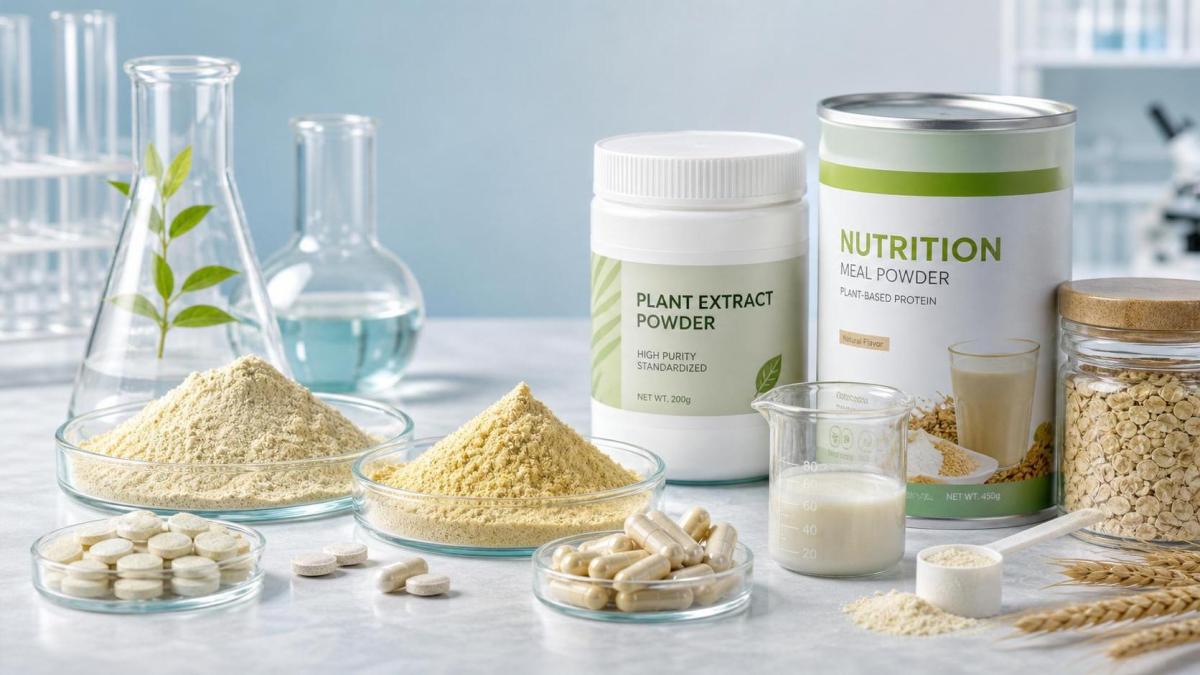 In food and supplement products, bioactive compounds powder form refers to biologically active substances that are dried, milled, or encapsulated into a powder for easier handling and formulation.
These compounds may come from plants, algae, fermentation, marine sources, or controlled chemical processing. Common examples include polyphenols, flavonoids, carotenoids, peptides, probiotics, fibers, phytosterols, and selected amino acid derivatives.
The powder format is not just a packaging choice. It changes how an ingredient behaves during storage, blending, transport, dosing, and final delivery inside a finished product.
A liquid extract may degrade quickly, separate in processing, or require cold-chain logistics. Powdered forms are often easier to standardize, easier to ship internationally, and easier to integrate into industrial production lines.
Why the powder format draws attention now
The current interest in bioactive compounds powder form is tied to three pressures. Products are becoming more function-driven, regulations are becoming more demanding, and supply networks are becoming more complex.
Food brands want ingredients that support claims linked to immunity, gut health, cognition, energy balance, healthy aging, and sports recovery. Supplement brands want higher active loading without compromising shelf life or manufacturing efficiency.
At the same time, buyers increasingly need evidence that a powder ingredient is consistent from batch to batch. Variability in active concentration, contamination risks, and poor documentation can quickly undermine commercial viability.
This is where industry intelligence becomes important. ACC’s focus on bio-extracts, fine chemicals, and primary processing reflects the reality that ingredient performance depends on upstream decisions, not just finished-product marketing.
What these powders are used for in food products
In food applications, bioactive compounds powder form is mainly used to add functional value without making production unnecessarily complicated. The goal is usually controlled enrichment rather than dramatic reformulation.
Functional fortification
Powdered bioactives are commonly added to cereal blends, dairy alternatives, protein snacks, meal replacements, bakery mixes, and powdered beverages. They help introduce targeted nutritional or physiological effects in a measurable way.
Shelf-life support
Some bioactive powders are used for antioxidant protection. In certain formulations, they help reduce oxidation, protect sensitive nutrients, or preserve sensory quality during storage.
Process compatibility
Powders are often easier to meter into dry blends and premixes. That makes them attractive for high-throughput operations where liquid handling adds cleaning demands, contamination risks, or inconsistency in dispersion.
A useful distinction is that food inclusion levels are often constrained by taste, color, texture, and heat exposure. An effective bioactive must work within a sensory system, not outside it.
How supplement products use powdered bioactives
Supplement applications are usually more direct. Here, bioactive compounds powder form is valued for dosage precision, standardization, formulation flexibility, and compatibility with multiple delivery systems.
Many of these products depend on powders with clearly defined assay values. A botanical extract labeled at a certain percentage of active markers performs very differently from a generic powder with uncertain composition.
This is why the phrase bioactive compounds powder form often appears in sourcing and technical review discussions. It signals attention to concentration, bioavailability, and formulation reliability rather than a simple raw material listing.
The commercial value behind the ingredient choice
Choosing bioactive compounds powder form can create business value in several ways, but only when the technical basis is sound.
- Longer usable shelf life than many liquid or fresh-source actives.
- More efficient storage and transport, especially across export markets.
- More consistent dosing in automated production environments.
- Simpler blending into dry food systems and powdered supplement formats.
- Better fit for technical documentation, testing, and compliance review.
Still, the commercial upside depends on whether a powder remains stable under real processing conditions. Heat, humidity, oxygen, light, and pH can all reduce active performance before the product reaches the market.
That is why serious evaluation goes beyond brochure claims. It looks at analytical methods, residual solvents, carrier systems, particle size, microbiological limits, and packaging compatibility.
Where quality questions usually appear
Not all powdered bioactives are equal, even when the source plant or active name looks familiar. The most common problems arise in standardization, contamination control, and proof of efficacy.
Standardization gaps
A powder may be marketed under the same ingredient name while delivering very different active concentrations. Without a clear assay or marker specification, product comparisons become misleading.
Carrier and excipient confusion
Some powdered extracts rely on carriers such as maltodextrin or gum systems. These can improve handling, but they also affect purity, dosing calculations, and label interpretation.
Regulatory mismatch
A bioactive accepted in one jurisdiction may face claim restrictions or novel food review elsewhere. In cross-border trade, documentation must align with the target market, not only the origin market.
Bioavailability assumptions
High potency on paper does not guarantee biological effect. Solubility, encapsulation, release profile, and interaction with the final matrix can change how much of the active is actually absorbed.
How to assess a powder before using it
A practical review of bioactive compounds powder form should combine technical, commercial, and compliance checks. Looking at one dimension alone usually creates avoidable risk.
This framework is especially relevant in sectors where ACC tracks procurement and compliance signals. Powdered bioactives are part ingredient, part processing decision, and part documentation exercise.
What deserves closer attention next
The real question is not simply whether bioactive compounds powder form is useful. It is which powder format, source, and specification fit the intended product, market, and evidence standard.
A sensible next step is to map the intended application first. That includes dose target, processing conditions, shelf-life requirement, jurisdiction, and the type of substantiation needed for product positioning.
After that, compare technical dossiers rather than headline claims. Review assay data, carrier content, stability evidence, and compliance records side by side. That usually reveals more than promotional language ever will.
For anyone tracking developments across food ingredients, fine chemicals, and regulated supply systems, bioactive compounds powder form is best understood as a decision category. It connects science, manufacturing, market access, and long-term product credibility.
Related Intelligence
- Natural IngredientsBotanical Ingredient Prices in Europe: Comparing Quotes by Grade and Order VolumeCompare Europe botanical ingredients price quotes by grade and order volume. Discover how potency, testing, delivery, and inventory costs reveal real savings before you buy.
- Natural IngredientsMayonnaise vs. Salad Dressing: Ingredient and Texture DifferencesMayonnaise vs. salad dressing: discover key ingredient, texture, stability, and application differences to choose the right product for every recipe.
- Natural IngredientsIndustrial-Scale Agricultural Sourcing: Key Criteria for Reliable SupplyIndustrial scale agri sourcing made reliable: assess supplier capacity, traceability, landed cost, logistics, and resilience to protect production continuity.
The Morning Broadsheet
Daily chemical briefings, market shifts, and peer-reviewed summaries delivered to your terminal.
