

The Authority in Global Agricultural Chemistry & Bio-Resources
Feed Enzyme Index Jumps 11.3% as Supply Tightens

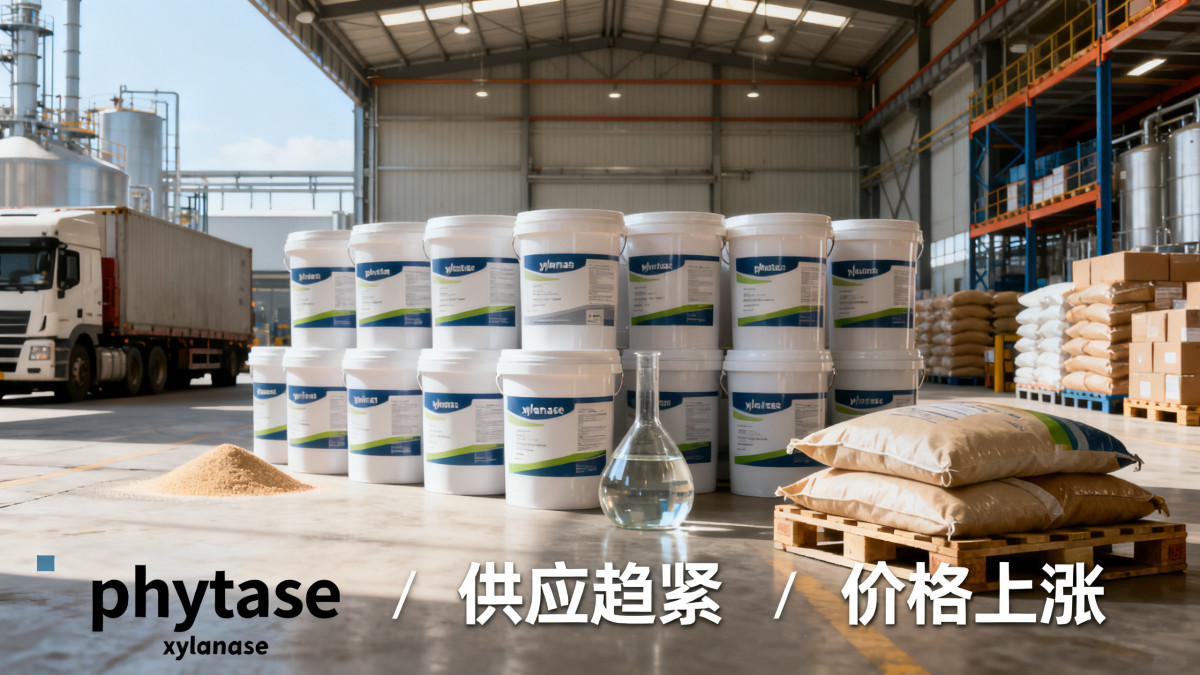
The timing of the underlying market shift was not clearly specified in the available information, but the latest GFEI weekly report released on 2026-07-05 points to a sharp change in pricing and supply conditions for food-grade feed enzymes. With average FOB China prices for products such as phytase and xylanase reaching $28.4/kg, up 11.3% week on week, this update deserves close attention from traders, procurement teams, manufacturers, and supply-chain operators that depend on stable enzyme sourcing and predictable order costs.
 What the latest weekly report confirms
According to the latest weekly report from the Global Feed Enzyme Index (GFEI), average FOB China prices for food-grade feed enzymes reached $28.4/kg. The reported weekly increase was 11.3%.
The report attributes this movement to two stated factors: reduced output of soybean protease raw materials in Brazil and maintenance affecting fermentation capacity in Europe.
The information provided also states that leading suppliers have already started stepwise price adjustments, and that new orders from July are carrying a premium of 5% to 8%.
Where the pressure may be felt first
Procurement decisions are likely to face faster repricing
From an industry perspective, buyers of phytase, xylanase, and related food-grade feed enzymes may be affected first because the reported increase is already reflected in FOB China averages and new-order premiums. The immediate business impact is most likely to appear in quotation review, purchase timing, and contract discussions.
Traders and distributors may need to watch margin movement closely
Analysis shows that trading and distribution businesses may face pressure where inventory was priced under earlier assumptions but replenishment is now being quoted at higher levels. What deserves closer attention is whether supplier step pricing changes the speed of offer updates, customer negotiations, and short-cycle resale decisions.
Manufacturing and formulation teams may need to monitor supply continuity
For processors and manufacturers using these enzyme products as part of production or formulation planning, the issue is not only price. Observably, supply tightness linked to raw material reduction and fermentation maintenance may also affect lead-time expectations, order sequencing, and internal coordination between procurement and production schedules.
Supply-chain service providers may need to track order execution risk
Logistics and supply-chain service providers may not be exposed to the price move directly, but they may still be affected if customers adjust shipment timing, split orders, or revise procurement cycles. The practical point to monitor is whether changing supplier terms alter booking patterns or delivery coordination.
What companies should focus on now
Separate current quotations from historical price assumptions
Companies should review whether existing budgets, customer offers, or internal cost models still reflect current market conditions. The reported 11.3% weekly increase and the stated 5% to 8% premium on new July orders suggest that older reference prices may no longer be reliable for active transactions.
Check which product lines are most exposed
The provided information specifically mentions food-grade feed enzymes such as phytase and xylanase. Businesses should identify whether these categories are central to their current orders, customer commitments, or production planning, because exposure is unlikely to be uniform across all enzyme-related purchasing.
Review supplier terms and delivery commitments carefully
Because leading suppliers have begun stepwise price adjustments, procurement and commercial teams should pay close attention to validity periods, quotation terms, order confirmation conditions, and delivery commitments. This is especially relevant where pricing and supply discussions are moving at different speeds.
Prepare customer and internal communication in advance
Where pricing revisions may affect downstream contracts or delivery expectations, teams should prepare clear internal and external communication. Analysis shows that the key issue is not only cost increase, but also how quickly businesses can align sales, purchasing, and fulfilment decisions around updated supplier conditions.
How this update is best understood at this stage
Observably, this development should not yet be treated as a fully settled long-term market result based on the limited information provided. What it does show clearly is that supply-side constraints and upstream production disruptions are now visible in weekly pricing.
It is more appropriate to understand this as a strong short-term signal that may carry wider implications if similar conditions persist. From an industry perspective, the combination of raw material reduction and fermentation capacity maintenance matters because both factors affect supply availability rather than demand sentiment alone.
At the same time, continued observation is still necessary. The current information confirms a price jump, named causes, and supplier repricing behavior, but it does not establish how long these conditions will last.
Why the market should keep watching
This update matters because it links a measurable weekly price rise with identifiable supply constraints and immediate supplier action on new orders. That combination is more meaningful than a price change in isolation.
For the industry, the most balanced reading is that this is a near-term market tightening signal with direct commercial relevance, especially for buyers and intermediaries managing active enzyme orders. It should be tracked as an ongoing development rather than assumed to be either a one-week anomaly or a confirmed long-cycle trend.
Basis of this article and what still needs verification
This article is based on the user-provided news title, the note that the event timing was not clearly specified, and the supplied event summary referring to the latest GFEI weekly report released on 2026-07-05.
For this type of industry update, relevant source categories would usually include official announcements, company statements, industry association information, authoritative media coverage, and standard-setting or market-monitoring documents. However, a specific official source link was not provided in the input, so the underlying details still require ongoing verification.
Further follow-up should focus on whether supplier pricing actions continue beyond July, whether quoted premiums remain within the stated 5% to 8% range, and whether the reported supply constraints show signs of easing or extending.
Related Intelligence
- Food Grade EnzymesWhat Drives Industrial Enzyme Costs? Activity, Format, and Supply Risk ExplainedIndustrial enzyme cost factors explained: compare activity, formulation, shelf life, documentation, and supply risk to reduce process costs and improve purchasing decisions.
- Food Grade EnzymesIs There a Global Standard for Biochemical Engineering Product Quality?Is there a global standard for biochemical engineering product quality? Explore GMP, ISO, traceability, and supplier checks for confident global sourcing.
- Food Grade EnzymesHow Enzymes for Cracker Formulation Improve Texture and Shelf LifeEnzymes for cracker formulation can enhance dough handling, crisp texture, and shelf life. Explore targeted enzyme strategies for consistent, high-quality crackers.
The Morning Broadsheet
Daily chemical briefings, market shifts, and peer-reviewed summaries delivered to your terminal.
