

The Authority in Global Agricultural Chemistry & Bio-Resources
FDA Tightens Import Rule for Food-Grade Enzyme Reports
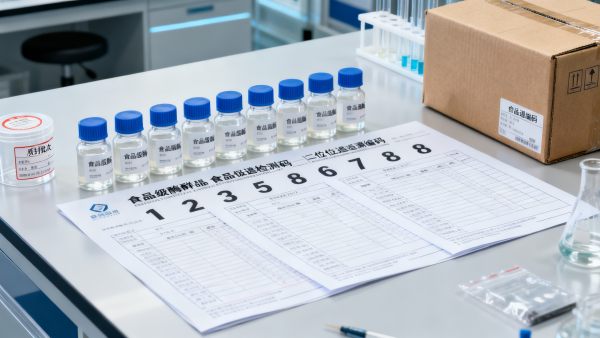
Effective on July 1, 2026, the FDA’s updated import guidance for food-grade enzymes introduces a new documentary requirement tied directly to import clearance: third-party enzyme activity reports for imported food-grade enzyme preparations must now carry an 8-digit TraceID issued by an FDA-recognized laboratory. Because the code is intended to link the report to raw material batches, production processes, and GMP audit records, the change is relevant not only to importers, but also to manufacturers, testing providers, procurement teams, and supply-chain operators involved in shipment preparation and compliance review.
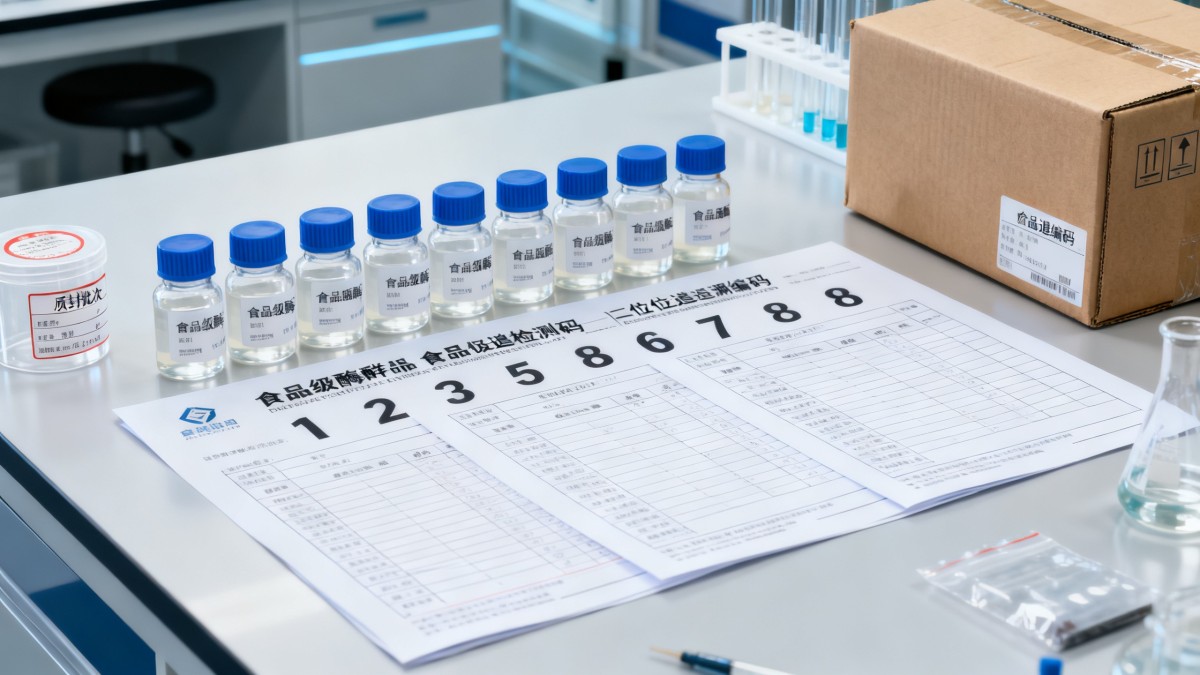
What the revised FDA guidance now requires
The confirmed change is limited but operationally specific. According to the provided event summary, the FDA’s new Food Grade Enzymes import enforcement guidance took effect on July 1, 2026. Under that guidance, all imported food-grade enzyme preparations must be accompanied by a third-party enzyme activity test report containing an 8-digit TraceID issued by an FDA-recognized laboratory.
The stated purpose of the TraceID is to bind the report to raw material batch information, production process information, and GMP audit records. The same summary also states that a report without a TraceID will trigger the FDA’s automatic return procedure.
Where the operational pressure is likely to appear first
Import documentation moves from supportive evidence to shipment-critical evidence
From an industry perspective, direct trading companies and import-side entities are likely to feel the most immediate impact because the rule is attached to the entry documentation itself. The practical issue is not only whether a test report exists, but whether the report carries the required TraceID in the required form. That shifts attention toward document completeness before shipment and before customs-facing submission workflows begin.
Manufacturing and batch release records become more exposed to cross-checking
For processing and manufacturing companies supplying imported food-grade enzyme preparations, the TraceID requirement matters because the code is described as linking the report to raw material batches, production processes, and GMP audit records. Analysis shows that this increases the need for internal consistency across batch files, process records, and compliance documentation, even though the detailed FDA verification method was not provided in the input.
Laboratory coordination becomes part of delivery readiness
Testing service providers and the companies relying on them may also face a more formal role in shipment readiness. The confirmed fact is that the TraceID must be issued by an FDA-recognized laboratory. What deserves closer attention is whether exporters and importers have aligned in advance on laboratory selection, report format, and document timing, since a missing TraceID is described as a trigger for automatic return.
Procurement and supply-chain teams may need to recheck vendor readiness
Procurement functions, supply-chain service providers, and buyers are likely to be affected where lead times depend on complete pre-shipment paperwork. Observably, the rule does not change only the test report itself; it can also affect purchase scheduling, supplier qualification checks, and handoff timing between production, testing, and logistics teams. For these roles, the immediate concern is whether suppliers can provide compliant reports consistently for each shipment lot.
What companies should review now
Check whether report templates already support the TraceID field
Analysis shows that one of the first practical checks is document format control. Companies handling imported food-grade enzyme preparations should review whether their current third-party enzyme activity reports include a dedicated and verifiable TraceID field, and whether the report issuer is an FDA-recognized laboratory as required by the provided summary.
Reconfirm the link between testing records and batch documentation
Because the TraceID is intended to connect testing output with raw material batches, production processes, and GMP audit records, businesses should pay attention to how these files are organized and retrieved. This should be understood as a compliance readiness issue rather than proof of any new audit outcome, since the input does not provide the detailed enforcement workflow.
Revisit shipment release gates in trade and logistics workflows
For exporters, import coordinators, and logistics-facing teams, it is more appropriate to understand this as a pre-dispatch control point. If the absence of a TraceID report leads to automatic return, then shipment release decisions may need an added compliance checkpoint covering laboratory status, report completeness, and alignment of the TraceID with the shipment file set.
Watch for downstream changes in tender, purchasing, and acceptance documents
Observably, companies should also monitor whether customers, distributors, or internal compliance teams begin reflecting the new requirement in purchasing specifications, technical document lists, or acceptance conditions. The input does not confirm that such downstream document changes have already occurred, so this remains an area to watch rather than a confirmed market-wide outcome.
Why this looks like an execution signal, not just a policy note
Analysis shows that the most consequential element in this update is the combination of traceability and enforcement. A new reporting field by itself might remain an administrative adjustment, but the stated automatic return consequence gives the requirement immediate operational weight. At the same time, it would be premature to treat all implementation details as settled, because the provided information does not include fuller guidance on review procedures, formatting standards, or how consistently downstream market participants will mirror the requirement in contracts and procurement documents.
From an industry perspective, this is better understood as a rule already in force with direct compliance implications at the import stage, while the exact execution rhythm across documentation review, supplier coordination, and market practice still warrants continued observation.
How to read the change at this stage
The current significance of this development lies in its narrow but enforceable nature. The FDA update does not merely add background traceability language; based on the provided summary, it creates a specific documentary condition for imported food-grade enzyme preparations and links non-compliance to automatic return. A balanced reading is that the rule has already crossed into practical execution, but the broader industry response, including how procurement standards and supporting compliance routines adjust around it, still needs to be tracked carefully.
Basis of this article and what still needs verification
This article is based on the user-provided news title, event date, and event summary. For events of this type, source categories commonly relevant to later verification include official regulatory notices, releases from supervisory authorities, customs or trade administration information, industry association updates, standards-related documents, and reporting by established professional media. No specific official source link was provided in the input, so the underlying official publication path still needs to be verified on an ongoing basis.
Further observation should focus on any additional FDA wording, execution interpretations, recognized laboratory-related clarification, changes in tender or purchasing documentation, and industry feedback on how the TraceID requirement is being implemented in practice.
Related Intelligence
- Food Grade EnzymesWhat Drives Industrial Enzyme Costs? Activity, Format, and Supply Risk ExplainedIndustrial enzyme cost factors explained: compare activity, formulation, shelf life, documentation, and supply risk to reduce process costs and improve purchasing decisions.
- Food Grade EnzymesIs There a Global Standard for Biochemical Engineering Product Quality?Is there a global standard for biochemical engineering product quality? Explore GMP, ISO, traceability, and supplier checks for confident global sourcing.
- Food Grade EnzymesHow Enzymes for Cracker Formulation Improve Texture and Shelf LifeEnzymes for cracker formulation can enhance dough handling, crisp texture, and shelf life. Explore targeted enzyme strategies for consistent, high-quality crackers.
The Morning Broadsheet
Daily chemical briefings, market shifts, and peer-reviewed summaries delivered to your terminal.
