

The Authority in Global Agricultural Chemistry & Bio-Resources
SCA Tightens Checks on RAS Shipments, Adding 11 Days

On July 2, 2026, the Suez Canal Authority (SCA) introduced a temporary inspection change for RAS Systems shipments that contain electronic control units and water treatment modules, adding new document requirements tied to CE-EMC, EN14175-3, and marine salt-spray packaging verification. For exporters, distributors, procurement teams, and logistics coordinators connected to aquaculture equipment trade, the issue is not only the extra review step itself, but also the immediate effect on delivery timing and document readiness across the shipment process.
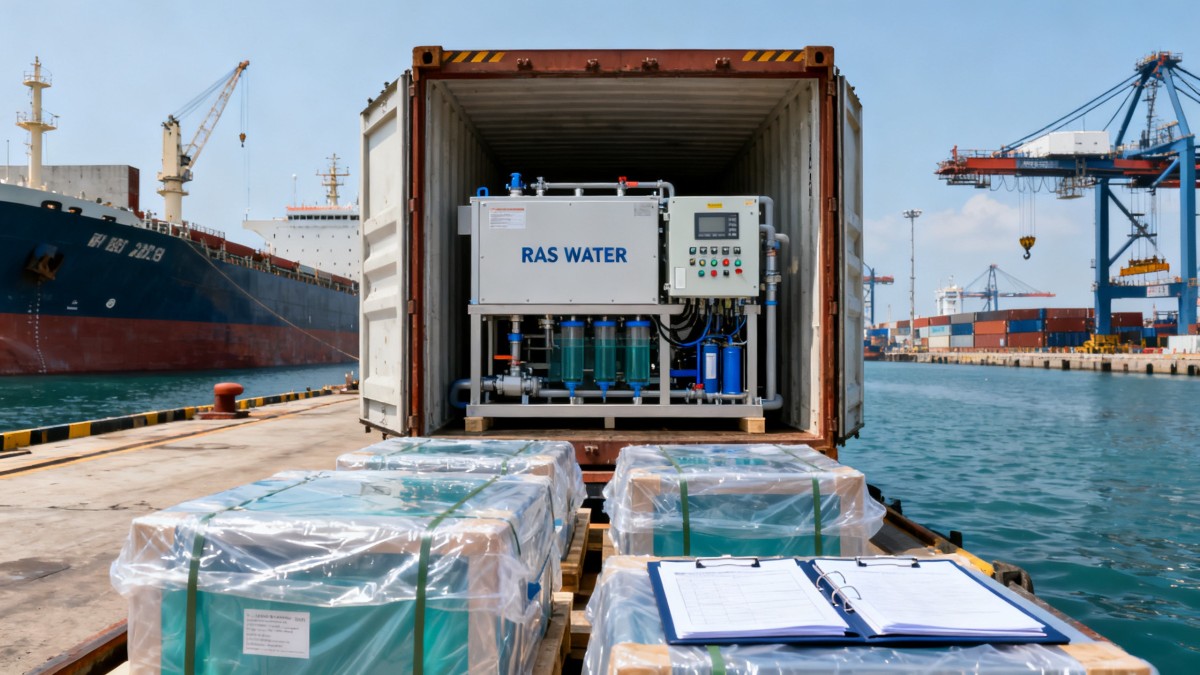
A temporary control measure is now affecting RAS transport modules
According to the provided event summary, the SCA announced in the early hours of July 2, 2026 that all RAS Systems containing electronic control units and water treatment modules would be subject to a temporary Tier-2 security inspection with immediate effect.
The announced requirement adds two specific document items: a declaration of conformity covering CE-EMC and EN14175-3, and a verification report for marine salt-spray-resistant packaging.
The same input states that the measure has already extended the average delivery cycle on the Shanghai-Rotterdam route by 11 days, and that multiple European aquaculture equipment distributors have urgently adjusted their Q3 procurement schedules.
Where the pressure is likely to show across the chain
For exporters and equipment manufacturers, document readiness becomes part of shipment timing
From an industry perspective, suppliers shipping RAS-related modules may be affected first at the pre-shipment stage. The reason is straightforward: once additional inspection is triggered by product configuration, compliance declarations and packaging verification records become operational documents rather than background files. The business impact is likely to appear in document collection, internal review, shipment release timing, and handover coordination with logistics providers.
What deserves closer attention is whether technical files and shipment documents are aligned well enough to avoid repeat queries during inspection. For affected businesses, the immediate focus is less about broad policy interpretation and more about whether the required declarations and packaging evidence can be presented in a form acceptable to the new control process.
For distributors and procurement teams, delivery planning is becoming less predictable
European distributors have already adjusted Q3 procurement schedules, which indicates that the rule change is being treated as an operational issue rather than a distant compliance note. Analysis shows that buyers and channel operators may see the impact in replenishment planning, project delivery commitments, receiving schedules, and supplier coordination.
The practical concern here is not only a longer transit window, but also whether procurement timelines, inbound expectations, and contract milestones need to reflect the new inspection-related delay. Where shipments include the affected modules, procurement teams should pay closer attention to compliance paperwork status before finalizing dispatch expectations.
For logistics and compliance service teams, the burden shifts to verification and exception handling
For freight coordinators, trade compliance staff, certification support providers, and testing-related service teams, the change may create more work in document verification and shipment exception management. Observably, once a temporary inspection measure names specific technical and packaging documents, service providers become more involved in checking completeness, consistency, and submission timing.
The main business exposure is likely to sit in the handoff between exporter files, packaging validation records, and carrier or route planning. Even without more detailed execution guidance in the input, the rule change signals that missing or unclear supporting materials can now have a more direct effect on delivery performance.
What companies should review now
Check whether existing conformity files match the shipment scope
Analysis shows that companies moving affected RAS modules should first review whether their available CE-EMC and EN14175-3 declarations are current, shipment-relevant, and internally consistent with the actual goods being moved. This is a document control issue as much as a compliance issue.
Recheck packaging records tied to marine transport conditions
The added requirement for a marine salt-spray packaging verification report puts attention on packaging validation, not only product performance. Businesses involved in export packing, supplier qualification, and shipment release should closely review whether existing packaging evidence is complete and easy to retrieve if questioned.
Adjust procurement and delivery assumptions around the added 11-day cycle
Since the provided information already points to an average 11-day extension on the Shanghai-Rotterdam route, affected companies should treat lead-time assumptions with more caution. This does not by itself define a permanent delivery norm, but it is a concrete operational signal for current planning.
Track how the requirement is reflected in follow-up documents and market practice
The input does not provide detailed implementation language beyond the temporary Tier-2 inspection requirement and the added documents. Because of that, companies should continue watching for how the requirement is reflected in follow-up official wording, customer documentation requests, tender materials, and supplier onboarding checks. It would be premature to assume a fully stabilized execution standard from the current input alone.
Why this matters beyond a single delay notice
Observably, this development is more than a transport disruption update. It links route security pressure with technical conformity and packaging evidence, which means the effect reaches into documentation, purchasing rhythm, and shipment preparation. Analysis shows that the market should read this less as a generic logistics slowdown and more as an execution signal that certain RAS transport modules are now being reviewed through a tighter compliance lens during transit.
At the same time, it is more appropriate to understand this as a live rule-development signal rather than a fully settled long-term framework. The current facts confirm immediate application and measurable delivery impact, but they do not yet establish a complete picture of future enforcement consistency or duration.
How the market may need to interpret the change
The most reasonable reading at this stage is that the measure represents an already effective control change with immediate operational consequences for affected RAS shipments. Its significance lies in the way document sufficiency, packaging verification, and delivery planning are now more tightly connected.
From an industry perspective, this should be treated neither as a routine paperwork update nor as a basis for broad conclusions beyond the provided facts. It is better understood as an active compliance and logistics signal that deserves close monitoring as execution practice, buyer response, and supporting document expectations continue to develop.
Basis of this article and what still needs verification
This article is based on the user-provided news title, event date, and event summary. For events of this kind, relevant source categories typically include official notices, regulator releases, customs or trade authority information, industry association updates, standards-related documents, and reporting by established trade media.
No specific official source link was provided in the input, so the exact official source reference remains to be verified on an ongoing basis. Further observation is still needed on detailed implementation language, certification interpretation, document acceptance practice, tender document changes, market feedback, and how affected companies are executing against the new requirement.
Related Intelligence
- RAS SystemsSustainable Aquaculture Practices That Cut Feed Waste and Protect Fish Farm Water QualitySustainable aquaculture for fish farms: reduce feed waste, protect water quality, and build resilient, efficient systems with practical strategies.
- RAS SystemsDrum Filter System Price: How Flow Rate, Micron Rating, and Automation Affect CostDrum filter system price depends on flow rate, micron rating, automation, materials, and lifecycle costs. Compare quotes confidently and choose the right system.
- RAS SystemsHow to Specify Large-Scale Fish Farming Equipment for High-Output RAS ProjectsLarge scale fish farming equipment guide for high-output RAS projects—specify tanks, filtration, oxygen, automation, and redundancy for reliable growth.
The Morning Broadsheet
Daily chemical briefings, market shifts, and peer-reviewed summaries delivered to your terminal.
