

The Authority in Global Agricultural Chemistry & Bio-Resources
ANVISA Opens 8-Day GMP Fast Track for China Agrochemicals
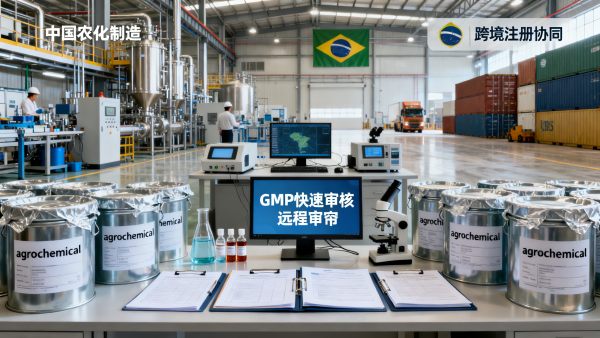
On July 1, 2026, Brazil’s health regulator ANVISA launched a remote audit fast-track program for agrochemicals under the name FastTrack-26, giving Chinese technical material and formulation manufacturers a shorter path to obtain a temporary GMP certificate. For companies planning to enter Brazil through distributor-led product registration, the change is worth close attention because it directly affects approval timing, launch sequencing, and the preparation standard required before filing.
What ANVISA Confirmed on July 1
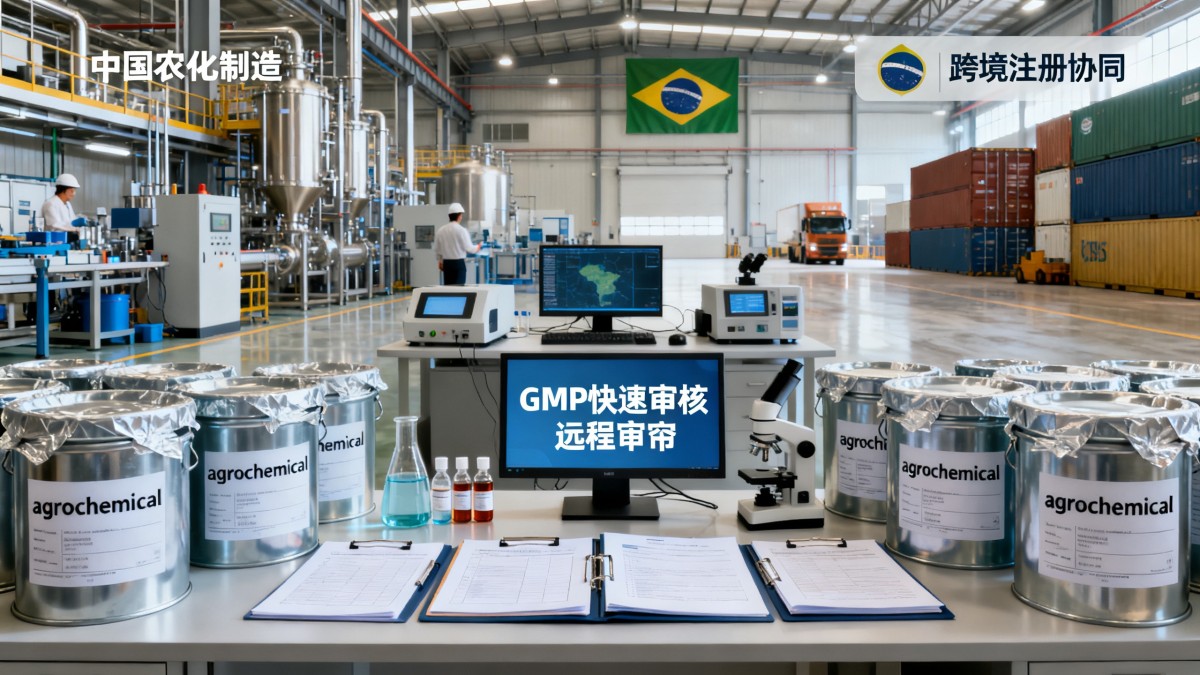
According to the information provided, ANVISA started the Agrochemicals GMP remote audit program FastTrack-26 on 2026-07-01. The expedited channel is open to Chinese manufacturers of agrochemical technical materials and formulations.
Under the stated conditions, when application materials are complete, the time from acceptance to issuance of a temporary GMP certificate is 8 working days, compared with the previous 60-day cycle. The mechanism applies to agrochemical products intended for registration in Brazil through Brazilian distributors.
Where the Immediate Operational Impact May Appear
For Chinese manufacturers preparing Brazil entry
From an industry perspective, the most direct effect falls on producers of active ingredients and formulations that are using Brazilian distributors for market access. The practical impact is likely to appear in filing preparation, plant documentation readiness, and internal coordination around remote audit requirements. What deserves closer attention is that the accelerated timeline does not reduce the importance of complete materials; it raises the cost of incomplete submission.
For Brazilian distributors managing registrations
Distributors involved in product registration may feel the effect in project scheduling and communication with overseas suppliers. Analysis shows that when the GMP step shortens from 60 days to 8 working days under complete-document conditions, coordination pressure may shift toward earlier document collection, submission timing, and alignment with manufacturers on audit readiness.
For supply chain and regulatory service teams
Service providers handling registration support, documentation flow, and cross-border regulatory coordination may also see workflow changes. Observably, a shorter certification window can compress review preparation cycles and increase the importance of document accuracy, response speed, and handoff discipline between manufacturer, distributor, and support teams.
What Companies Should Watch Now
Whether complete materials become the real gate
The official summary provided makes the 8-working-day timeline conditional on complete documentation. For companies, this means the headline speed should be read together with submission quality. In practice, the first point to monitor is whether internal records, plant information, and supporting files are organized well enough to benefit from the fast-track path.
The difference between policy access and business execution
Analysis shows that opening an expedited channel and completing a smooth market-entry process are not the same thing. Companies should distinguish between the availability of FastTrack-26 and their own operational ability to use it effectively through Brazilian distributor-led registration.
How distributor communication may need to change
Because the mechanism applies to products registered through Brazilian distributors, supplier-distributor coordination becomes a more immediate business issue. What deserves closer attention is whether both sides can align on document lists, submission timing, and temporary certificate expectations without creating delays outside the formal review period.
Follow-up wording and implementation signals
Companies should continue watching for any further official wording, procedural clarification, or implementation detail related to the remote audit process. The current information confirms the launch, scope, and stated timeline, but operational interpretation still depends on how the mechanism is applied in live cases.
How This Update Is Best Interpreted
Observably, this development should first be understood as a concrete procedural acceleration in one regulatory step rather than as a full conclusion about Brazil market access overall. It signals that ANVISA is allowing a faster remote audit route for eligible Chinese agrochemical manufacturers, but the broader commercial outcome still depends on document readiness and execution through distributor-based registration.
Analysis shows that the update carries both short-term and watch-list significance. In the short term, it may alter planning assumptions for companies already preparing Brazil filings. As a longer-term signal, it suggests that approval timing in this channel is becoming a more active factor in competitive planning, although the durability and practical consistency of the mechanism still need continued observation.
Why the Market Should Keep This on the Radar
The importance of this update lies less in headline speed alone and more in what it changes inside the approval calendar. A reduction from 60 days to 8 working days for temporary GMP certification, when materials are complete, can affect launch sequencing, internal preparation discipline, and the timing expectations shared between manufacturers and distributors.
At this stage, it is more appropriate to understand the development as a meaningful regulatory operating change with immediate relevance for affected agrochemical businesses, while keeping some caution around implementation details that have not been further documented in the input.
Basis of This Article and What Still Needs Verification
This article is based on the user-provided news title, event date, and event summary. No specific official source link was provided in the input, so the exact official publication path still requires ongoing verification.
For this type of industry update, relevant source categories usually include official regulator notices, company disclosures, industry association updates, authoritative media reporting, and regulatory or standards-related documents. Continued follow-up should focus on any subsequent ANVISA clarification, process wording, and implementation signals related to FastTrack-26 remote audits for agrochemicals.
Related Intelligence
- AgrochemicalsWhat Are the Main Risks of Non-Transparent Agricultural Supply Chains?what are the main risks of non transparent agri supply chains? Explore traceability, compliance, contamination, disruption, and cost risks—plus practical controls.
- AgrochemicalsGrain Production: Key Practices for Improving Yield While Protecting Soil HealthGrain production strategies to improve yield, protect soil health, manage nutrients, reduce compaction, and build resilient fields for lasting results.
- AgrochemicalsHow Do New FDA Rules Affect Agri-Chemical Sourcing Strategies?How do new FDA rules impact agri chemical sourcing strategies? Explore practical supplier screening, traceability, contaminant control, and risk-based compliance steps.
The Morning Broadsheet
Daily chemical briefings, market shifts, and peer-reviewed summaries delivered to your terminal.
