

The Authority in Global Agricultural Chemistry & Bio-Resources
Battery Cage System for Layers: Price, Capacity and Buying Guide
By ACC Editorial Desk | Published July 1, 2026
For many Nigerian layer farmers, the first cage question is about price. That is reasonable. A cage system is often one of the largest early investments in a commercial egg farm. But the real cost of a battery cage system is not only the number written on a quotation. It also depends on bird capacity, cage type, wire quality, automation level, shipping, installation, and how well the system fits the poultry house.
This guide explains how buyers can read a cage quotation more carefully. It is written for farm owners, procurement teams, and new investors comparing battery cage price in Nigeria for layer projects. It does not give one fixed price, because real quotations change with steel cost, exchange rate, freight, farm size, and configuration. Instead, it shows what makes one cage system more expensive or more valuable than another.
Why Battery Cage Prices Vary in Nigeria
Two suppliers may quote very different prices for what appears to be the same cage capacity. In practice, the systems may not be the same at all. One may use heavier wire. Another may include feeding troughs, drinkers, water pipes, frame accessories, and installation support. A third quote may only cover the basic cage body.
The main price factors usually include:
- cage type and structure
- number of tiers
- birds per set
- wire diameter and frame thickness
- galvanizing or anti-rust treatment
- feeding and drinking accessories
- manual or automatic manure removal
- egg collection option
- packing method and shipping volume
- installation guidance and after-sales support
This is why Nigerian buyers should avoid comparing quotations only by the final total. A lower price may simply mean a smaller scope of supply.
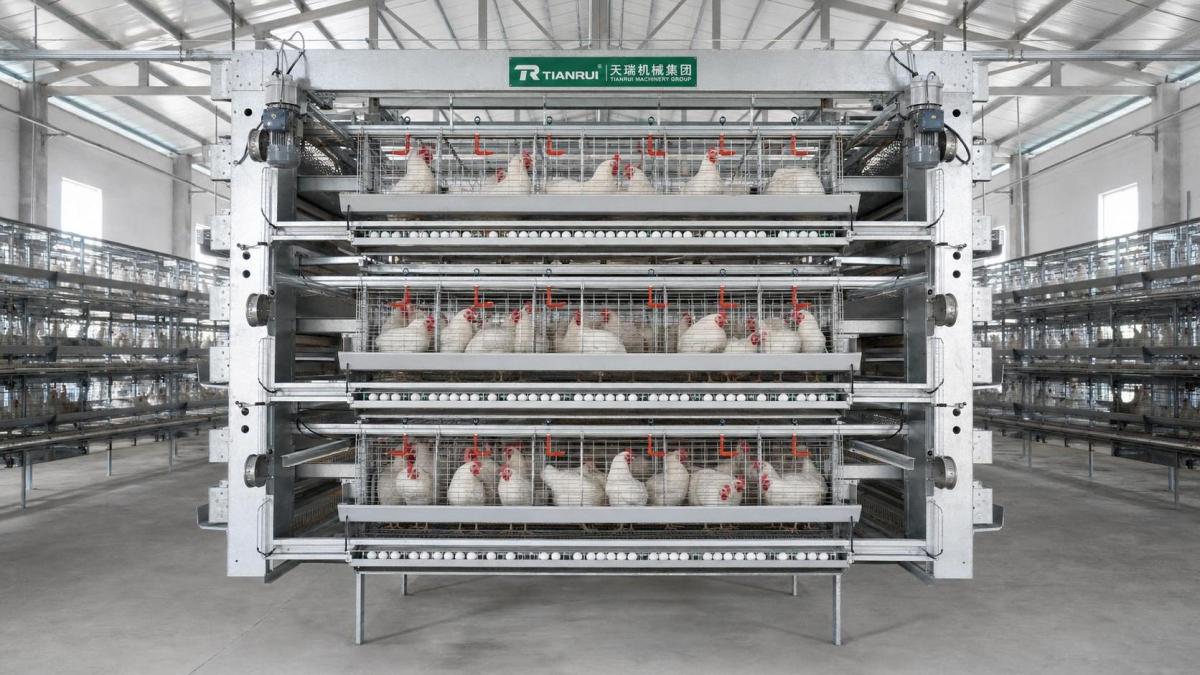
A-Type and H-Type Layer Cages
Most layer cage discussions start with A-type and H-type structures. Both can be used for egg production, but they suit different farm plans.
A-type cages are common in small and medium farms. They are easier to inspect, easier to ventilate, and usually simpler to install. They can be a practical choice when labor is available and the farm does not need very high bird density.
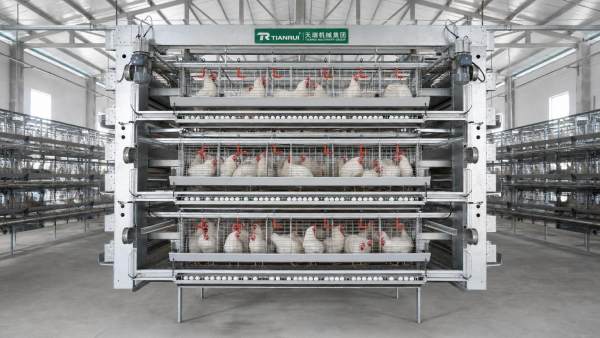
H-type cages are more suitable for farms that want higher capacity in a limited house area. They are usually built in multiple tiers and often work with automatic feeding, manure belts, and egg collection systems. The starting cost is higher, but the system can reduce labor pressure and support larger commercial production.
The better choice depends on land, house height, ventilation design, labor cost, and expansion plans. A farm planning 2,000 birds and a farm planning 50,000 birds should not use the same buying logic.
Capacity Is More Important Than Cage Count
Some buyers ask for the price of a cage set before confirming the required bird capacity. That can lead to confusion. A cage set may hold different numbers of birds depending on design, cell size, tier arrangement, and local stocking rules.
A serious quotation should state:
- birds per cage cell
- birds per set
- number of sets required
- total bird capacity
- cage dimensions
- row layout in the poultry house
- aisle width for workers and equipment
Capacity also affects ventilation, manure cleaning, feeding line length, and water supply. If a house is packed with cages without proper airflow, the farm may face heat stress, ammonia problems, or uneven production. A low cage price is not useful if the final layout makes the house hard to manage.
Material and Anti-Rust Treatment
Battery cages work in a tough environment. Moisture, manure, ammonia, cleaning water, and daily movement all test the cage material. For Nigerian farms, anti-rust performance is especially important in humid regions or houses with weak ventilation.
Buyers should ask about:
- wire diameter
- frame thickness
- welding quality
- galvanizing method
- surface smoothness
- expected service life
- spare parts availability
Hot-dip galvanized cages usually cost more than lighter or poorly coated cages, but they can offer better corrosion resistance. Cheaper cages may look acceptable at delivery, yet rust faster after repeated cleaning and long-term exposure to manure gases.
Manual, Semi-Automatic, or Automatic System
Automation changes the price more than many first-time buyers expect. A manual cage system may include cages, troughs, drinkers, and basic accessories. A semi-automatic or automatic system may add feeding machines, manure belts, egg collection lines, controllers, motors, and stronger structural support.
Manual systems can work for smaller farms. They cost less at the beginning, but they require more daily labor. Automatic systems require higher investment, but they can improve feeding consistency, reduce manure-cleaning work, and make large farms easier to manage.
The decision should be based on labor cost, flock size, management skill, power supply, and long-term production goals. For a growing layer farm, it may be better to plan for future automation even if the first stage starts with a simpler configuration.
What Nigerian Buyers Should Check in a Quotation
A clear battery cage quotation should show more than a total price. It should help the buyer understand exactly what is included.
If a quotation does not explain these points, ask for clarification before comparing it with another supplier.
Shipping and Landed Cost
For imported poultry cages, the factory price is only part of the budget. Nigerian buyers also need to consider sea freight, port charges, customs duties, inland transport, and unloading. Exchange-rate movement can also change the final cost.
Packing efficiency matters. A cage design that loads more capacity into one container may reduce freight cost per bird. Strong packaging also helps protect wire panels and accessories during long-distance shipping.
When comparing suppliers, ask whether the quote is EXW, FOB, CIF, or another trade term. A price that looks cheaper may exclude freight or port-related costs.
Installation and Farm Layout
Installation quality affects how well the cage system works. Cage rows must be straight. Drinkers must be aligned. Feeding troughs should be easy to access. Manure belts, if included, need correct tension and motor setup. Poor installation can create daily problems even when the equipment itself is acceptable.
Before ordering, buyers should prepare the poultry house dimensions. Useful details include house length, width, height, door position, ventilation plan, power supply, and whether the floor is already finished. With this information, the supplier can suggest a better row layout and capacity plan.
Price Should Be Judged by Long-Term Farm Value
The cheapest cage is not always the most economical cage. A better system may reduce bird injury, make egg collection easier, improve house hygiene, and lower repair frequency. Those savings are not always visible in the first quotation, but they matter over several production cycles.
For buyers reviewing battery cage price in nigeria, the practical question is not only "How much is one set?" A stronger question is: "What will this system cost and save over five to ten years of use?"
Buyer Checklist Before Placing an Order
Before paying a deposit, review the project with a simple checklist:
- total bird capacity is clearly written
- cage type and tier number match the house plan
- wire and frame specifications are confirmed
- drinkers, troughs, and accessories are included
- automation items are listed separately
- packing and shipping terms are clear
- spare parts are available
- installation support is agreed in writing
- supplier has relevant poultry cage project experience
This step may take extra time, but it reduces misunderstanding and protects the farm budget.
Final Thoughts
Battery cage systems can help Nigerian layer farms improve space use, flock management, egg collection, and daily hygiene. But a cage purchase should not be rushed by looking at price alone. Capacity, material, automation, shipping, and installation all shape the real cost.
A good supplier should be able to explain the cage configuration, show how the system fits the poultry house, and help the buyer understand what is included in the quotation. When the equipment list is clear, the farm owner can compare prices with much more confidence.
FAQ
What affects battery cage price in Nigeria the most?
The main factors are cage type, bird capacity, material thickness, galvanizing quality, automation level, accessories, shipping cost, and installation support.
Is an H-type cage better than an A-type cage?
H-type cages are better for farms that need higher capacity and stronger automation. A-type cages may be more practical for smaller farms that want simpler management and lower starting cost.
Should buyers choose the cheapest battery cage quotation?
Not automatically. A very low quotation may exclude accessories, use lighter material, or provide limited support. Buyers should compare cage specifications, included parts, shipping terms, and after-sales service before deciding.
Related Intelligence
- Climate Control & VentilationHow to Specify Modular Control Panels for Poultry House Ventilation SystemsModular control panels for poultry ventilation: learn how to specify reliable I/O, sensors, alarms, variable-speed fans, and future-ready expansion.
- Climate Control & VentilationWhat Variable Speed Insights Matter Most When Optimizing Greenhouse Ventilation?Variable speed insights reveal how fan speed affects humidity, airflow, stability, and energy use in greenhouse ventilation. Learn what to adjust first for smarter, more reliable climate control.
- Climate Control & VentilationPoultry Ventilation for Broilers: How to Balance Airflow, Temperature, and Litter QualityPoultry ventilation for broilers made practical: learn how to balance airflow, temperature, humidity, and litter quality to improve flock health, growth, and house performance.
The Morning Broadsheet
Daily chemical briefings, market shifts, and peer-reviewed summaries delivered to your terminal.
