

The Authority in Global Agricultural Chemistry & Bio-Resources
Poultry Ventilation for Broilers: How to Balance Airflow, Temperature, and Litter Quality
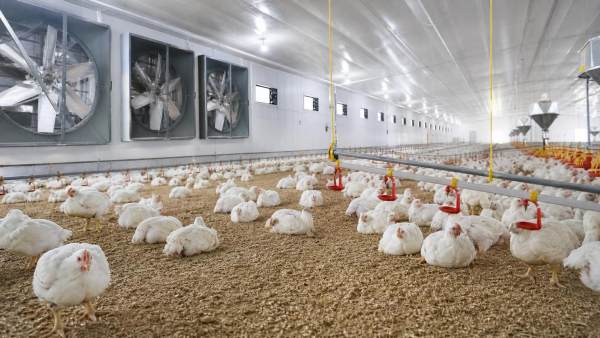
Poultry Ventilation for Broilers: How to Balance Airflow, Temperature, and Litter Quality
Effective poultry ventilation for broilers is the foundation of flock health, feed efficiency, and consistent house performance. For operators managing daily conditions, the challenge is not simply moving air, but balancing airflow, temperature, and litter moisture to reduce stress, support growth, and prevent costly welfare issues. This guide explains the practical principles behind stable broiler-house ventilation and how small adjustments can deliver measurable results.
If a broiler house feels “mostly okay,” that is usually where problems start. Birds can keep eating while litter is slowly getting wet, ammonia is building in dead spots, or night temperatures are drifting enough to hurt feed conversion. Good poultry ventilation for broilers is less about one perfect setting and more about a repeatable checking routine. Operators who do this well are usually watching the birds, the floor, and the air together rather than staring at one controller number.
Start with bird behavior, not the panel
Before changing fan stages or inlet openings, walk the house. Broilers tell you quickly when airflow and temperature are out of balance. If birds are spreading away from sidewalls, bunching under inlets, or clustering in warmer zones, the system may be technically running but not delivering usable conditions where the flock lives.
- Even distribution usually suggests acceptable comfort.
- Birds avoiding a section often means draft, cold floor, stale air, or wet litter.
- Panting and wing spreading point to heat stress, but check humidity too. High moisture often makes moderate heat feel worse.
- Quiet underperformance is easy to miss: birds may eat, but growth rate and uniformity slip when air quality stays marginal for days.
This is where experienced operators separate symptom from cause. A cold flock and a damp flock can look similar in the first pass. The fix is different.
Check litter by touch, not by color alone
Litter quality is one of the best field indicators of whether ventilation is actually balanced. Dry-looking top crust can hide moisture underneath, especially around drinker lines and low-air-movement areas. Pick up a handful from several zones, squeeze it, and break it apart. If it cakes easily or feels cool and sticky below the surface, moisture is not leaving the house fast enough.
Wet litter is rarely “just a litter problem.” It often points to one of four operational issues:
- Minimum ventilation rate is too low for bird age and stocking density.
- Inlets are not throwing air across the ceiling, so fresh air drops too early and chills the floor.
- Drinkers are contributing excess water through leakage, pressure mismatch, or poor line height.
- House temperature is being protected at the expense of moisture removal.
That last point matters in cool weather. Many houses get into trouble because operators are understandably trying to save heat. The result is damp litter, higher ammonia, dirtier feathers, and footpad damage risk. Once litter condition declines, recovery usually costs more than the fuel saved.
Minimum ventilation is where most avoidable mistakes happen
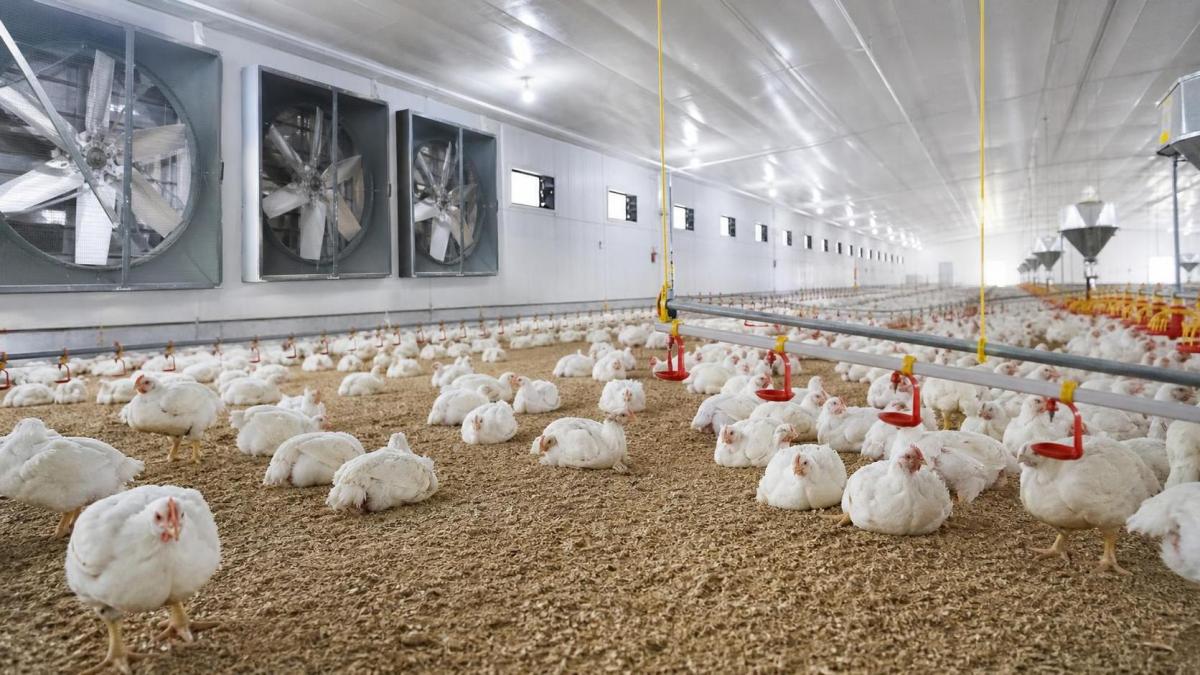
In broiler production, minimum ventilation is not optional background airflow. It is the main tool for removing moisture, carbon dioxide, and airborne contaminants when the house does not need full cooling. If the timing cycles are too short, too infrequent, or poorly matched to fan capacity, the house can look calm while air quality quietly deteriorates.
A useful field check is simple: after fans cycle on, does the incoming air travel along the ceiling before mixing down? If not, cold outside air may be dropping directly onto birds or litter. That usually means the inlet opening is wrong for the fan pressure being created. Exact pressure targets depend on house design, equipment, and climate, so they should be verified against the manufacturer’s guidance and site records rather than guessed.
When operators say, “We have enough fans, so ventilation should be fine,” they are often describing installed capacity, not delivered performance. Fan belts, shutters, dust buildup, and worn motors all change output. If you have not checked actual operation recently, treat the controller settings with caution.
Air speed needs to match bird age and house mode
Young chicks and older broilers do not need the same air movement across the body. Too much direct air on young birds can chill them even when average room temperature looks acceptable. On the other hand, heavy birds in warm conditions often need meaningful air speed to keep effective temperature under control.
This is where one-number management fails. A house can show the “right” dry-bulb temperature and still be wrong for the birds if air speed is off. Tunnel ventilation, transitional ventilation, and minimum ventilation all create different bird-level effects. Treat them as different operating modes, not as the same system running harder or softer.
If performance drops during seasonal swings, review the transition points between these modes. That handoff period is a common trouble spot, especially during mild days and cool nights.
Do not manage temperature without watching relative humidity
Humidity gets neglected because operators understandably focus on temperature alarms first. But high relative humidity changes how broilers experience heat, slows litter drying, and makes the house feel stale long before there is an obvious crisis. In many houses, the practical problem is not that temperature is wildly off; it is that moisture removal lags for several days.
A few practical reminders help here:
- If windows, ceilings, or equipment surfaces are collecting condensation, the house is already telling you moisture is not under control.
- If litter worsens overnight, fan cycle strategy may need adjustment even when daytime conditions look acceptable.
- If birds are panting on humid days, increasing air movement may help more than chasing one lower temperature setpoint.
The exact humidity range you target should follow your integrator guidance, breed recommendations, equipment design, and local climate realities. If those references conflict, flag it for review rather than forcing a generic target across all seasons.
Ammonia is a lagging warning, not an early one
If you can smell ammonia clearly at bird level, you are already late. By then, litter has usually been wet long enough to start affecting welfare and working conditions. Formal exposure limits depend on jurisdiction and workplace rules, so site teams should follow local occupational and animal welfare requirements and verify any internal trigger levels they use. Do not invent comfort thresholds.
What matters operationally is the pattern. If ammonia is strongest in corners, near drinkers, or in sections with weak bird distribution, ventilation is not uniform. Increasing total airflow may help, but often the real fix is correcting inlet performance, repairing circulation issues, or addressing water management at the same time.
Water systems and ventilation have to be checked together
Operators sometimes blame ventilation for litter problems that are being driven by drinker management. If nipple height is off, pressure is uneven, or flushing has changed line behavior, moisture load rises quickly. Ventilation then gets asked to solve a water problem.
When litter is deteriorating around lines, run a paired check:
This kind of paired diagnosis usually saves time. Otherwise teams can spend days adjusting fans while the root cause is still dripping onto the floor.
Sensor readings are useful, but house mapping is better
One sensor at controller height does not represent a full broiler house. Temperature and humidity can vary significantly between brood area, sidewall, tunnel end, and drinker zones. If there is a recurring issue, walk the house with a handheld meter and map conditions at bird level. That gives you something actionable: not “the house is off,” but “the back third is retaining moisture at night” or “the left sidewall is colder under minimum ventilation.”
For operations under stricter welfare programs, processor requirements, or customer audits, this documented mapping can also support maintenance decisions. It is not a substitute for formal compliance records, but it is often what helps explain why one house repeatedly underperforms.
Maintenance problems often look like management problems
A surprising amount of broiler ventilation trouble comes from basic mechanical drift. Inlets stick. Static pressure tubes clog. Fan shutters do not fully open. Belt-driven fans lose output. Curtain leaks change the airflow pattern. None of this is dramatic on day one, which is why it gets missed.
A practical pre-flock or weekly checklist usually includes fan operation, inlet movement, controller calibration status, sensor cleanliness, and verification that the house can still achieve the expected pressure response. If you are operating multiple houses, compare them. A house that needs noticeably different settings to achieve similar bird comfort often has a maintenance issue hiding inside a management conversation.
What to fix first when the house goes off track
When conditions slip, the order matters. Start with the factor causing the most immediate bird stress, then correct the underlying moisture and airflow pattern.
- If birds are showing clear heat stress, restore effective cooling and air speed immediately.
- If birds are being chilled by incoming air, correct inlet behavior before increasing cycles further.
- If litter is wet but birds look comfortable, review minimum ventilation runtime and water system performance together.
- If one zone stays problematic, inspect airflow delivery and equipment condition in that zone rather than changing the whole house blindly.
That is usually the difference between a correction and a chase. Broad setting changes can mask symptoms for a few hours and create a new problem by morning.
The most reliable approach to poultry ventilation for broilers is still a disciplined routine: watch bird spread, feel the litter, confirm air throw, check humidity trends, and keep the water system in the same conversation. Do that consistently and you catch trouble while it is still cheap to fix. Leave ventilation on autopilot, and the house will eventually hand you the bill through poor uniformity, wet floors, and birds working harder than they should.
Related Intelligence
- Climate Control & VentilationHow to Specify Modular Control Panels for Poultry House Ventilation SystemsModular control panels for poultry ventilation: learn how to specify reliable I/O, sensors, alarms, variable-speed fans, and future-ready expansion.
- Climate Control & VentilationWhat Variable Speed Insights Matter Most When Optimizing Greenhouse Ventilation?Variable speed insights reveal how fan speed affects humidity, airflow, stability, and energy use in greenhouse ventilation. Learn what to adjust first for smarter, more reliable climate control.
- Climate Control & VentilationPoultry Ventilation for Broilers: How to Balance Airflow, Temperature, and Litter QualityPoultry ventilation for broilers made practical: learn how to balance airflow, temperature, humidity, and litter quality to improve flock health, growth, and house performance.
The Morning Broadsheet
Daily chemical briefings, market shifts, and peer-reviewed summaries delivered to your terminal.
