

The Authority in Global Agricultural Chemistry & Bio-Resources
What Variable Speed Insights Matter Most When Optimizing Greenhouse Ventilation?
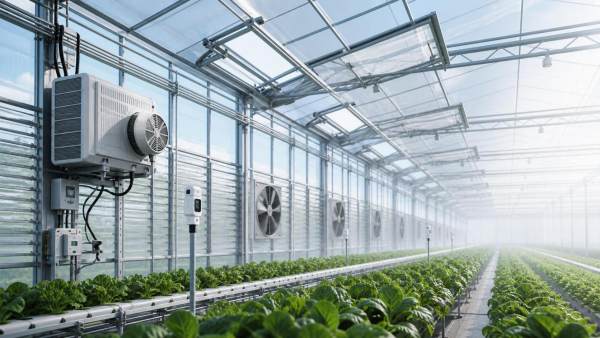
Greenhouse ventilation usually becomes a problem long before anyone calls it one. The first signs are often indirect: one zone dries faster than expected, another stays damp into the afternoon, leaf surfaces behave differently from bench to bench, or heating and cooling equipment seems to run harder than the crop conditions suggest they should. In many facilities, the fans are working, the vents are opening, and the control system appears normal, yet the environment still drifts. That is where variable speed decisions stop being a control-room detail and start affecting production planning, maintenance timing, and energy budgeting.
A common mistake is to treat fan speed as a simple comfort setting: lower for savings, higher for quick correction. In practice, the most useful variable speed insights come from understanding how speed changes alter airflow patterns, moisture removal, pressure relationships, and equipment wear at the same time. If you are trying to optimize greenhouse ventilation without creating instability elsewhere, it helps to stop asking “Are the fans running?” and start asking “Are they running at the right speed for this exact condition, and do the other systems respond the way we expect?”
Where the trouble usually starts
Many growing environments inherit ventilation logic in pieces. One expansion adds more exhaust capacity. Another adds circulation fans. A later upgrade brings a variable frequency drive or revised climate controls. Individually, each change makes sense. Together, they can create a system that reacts too aggressively in one weather pattern and too slowly in another.
One recurring scenario is the greenhouse that holds temperature reasonably well but struggles with humidity after irrigation, during cool mornings, or when outside air is usable but not ideal. Operators raise fan speed to remove moisture faster, then discover the temperature overshoots, vents cycle more often, and some crop areas experience excessive air movement while others remain stagnant. The opposite scenario happens too: fan speeds are capped to save energy, but moisture lingers, disease risk increases, and the environment becomes uneven enough that production staff start compensating manually.
These are the moments when variable speed insights matter most. Not because speed control is new, but because small changes in speed can have outsized effects when they interact with vent position, pad systems, heating loops, shading, and greenhouse layout.
Not every unstable climate problem is a “fan problem”
It is tempting to solve ventilation complaints by focusing only on the motor and drive. Sometimes that works, but often the real issue is the relationship between systems. A fan at 80% speed means little on its own. The useful question is whether 80% at that moment supports the target vapor removal rate without pulling the rest of the climate strategy out of balance.
Three misunderstandings show up often:
- Assuming higher speed always improves uniformity. In some layouts, more speed increases short-circuiting between intake and exhaust paths and leaves sheltered crop zones under-ventilated.
- Assuming lower speed always saves money. If slower operation extends the time needed to correct humidity or heat buildup, the wider system may work longer and erase the intended savings.
- Assuming one ideal speed exists. Greenhouses rarely behave that neatly. Dawn recovery, midday solar gain, foggy weather, and post-irrigation periods each create different ventilation demands.
The practical lesson is that variable speed should be treated as a responsive operating range, not a fixed preferred setting.
Start with the environmental symptom, not the equipment menu
When teams begin optimization, they often open the control interface first. A better approach is to trace the symptom in the growing space. Is the main problem heat accumulation near the roof, slow humidity pull-down after watering, inconsistent stem movement, condensation near perimeter glazing, or pressure imbalance at doors and service corridors? Each symptom points to a different speed strategy.
If the concern is humidity that lingers despite active ventilation, the issue may not be insufficient peak speed. It may be poor airflow distribution, delayed ramping, or ventilation logic that waits too long before increasing extraction. If the concern is crop stress from drafts, the answer may not be lowering all speeds; it may be staging circulation differently or narrowing the speed band during specific periods.
This matters because the best variable speed insights are contextual. They come from matching a climate symptom to an airflow response instead of making blanket adjustments.
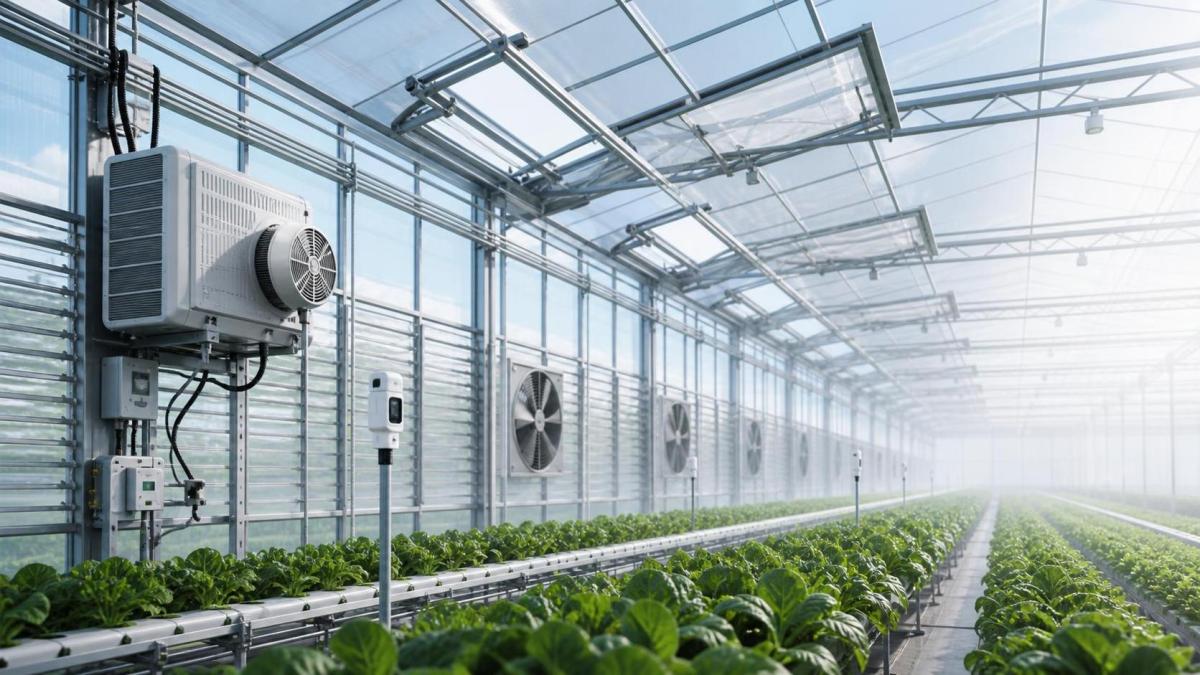
Questions worth answering before changing speed bands
Before revising setpoints, it helps to gather observations from both the mechanical side and the crop side. Not a giant audit, just enough to avoid changing the wrong variable.
1. When does the instability appear?
Pin down whether the issue shows up after sunrise, during irrigation cycles, in low-wind weather, during shoulder seasons, or only when cooling and dehumidification demands overlap. Timing reveals whether the speed profile is too flat, too delayed, or too reactive.
2. Is the problem uniform across the greenhouse?
Broad environmental averages can hide local trouble. If one section consistently behaves differently, the speed strategy may be exposing an airflow path issue rather than a capacity issue. In that case, raising the whole house fan speed may worsen the imbalance.
3. Do speed changes produce the expected environmental response?
If fan speed increases but humidity drop is weak or delayed, something else may be limiting effectiveness: blocked airflow, poor intake conditions, vent coordination, sensor placement, or stratification. Variable speed control only works as well as the feedback around it.
4. Is the equipment operating smoothly across the range?
Some systems perform well near the upper range but become noisy, unstable, or less predictable at low speed. Others are oversized and spend too much time hunting around narrow setpoints. An optimization plan should respect the usable operating window, not just the theoretical one.
Where variable speed delivers the most value
For greenhouse ventilation, speed control matters most in transitional conditions. Full output is easy to understand; minimum output is easy to justify. The difficult part is the middle ground, where outside conditions are changing, crop moisture load is shifting, and the system needs to respond without overcorrecting.
That middle range affects several things at once:
- Temperature stability. Gradual speed modulation can limit overshoot compared with abrupt on/off behavior.
- Humidity balance. Better ramping can remove moisture earlier, before condensation or prolonged leaf wetness becomes a recurring issue.
- Air movement consistency. Appropriate speed bands help reduce dead spots and prevent excessive drafts in sensitive areas.
- Equipment stress. Avoiding unnecessary hard starts and abrupt cycling can improve operating smoothness and simplify maintenance planning.
These gains are not automatic. They depend on whether the speed strategy matches the greenhouse’s physical layout and crop timing.
Adjusting the control logic without creating new problems
When a system underperforms, the instinct is often to widen the fan speed range immediately. That can work, but it can also mask coordination problems. A more reliable path is to adjust in layers.
First, review the trigger conditions for speed increase. If fan speed only ramps after the greenhouse is already outside the desired humidity or temperature range, the system will always feel reactive. Earlier, smaller adjustments often produce steadier conditions than delayed, larger ones.
Next, look at ramp rate. Speed changes that are too sharp can create swings, especially when other devices respond on different time scales. Heating, vent movement, evaporative components, and shading do not all react instantly. If the fan outruns the rest of the system, you can end up chasing your own corrections.
Then consider minimum speed. In some houses, a slightly higher minimum maintains enough background air exchange to prevent moisture accumulation and reduce the need for large corrective events later. In others, keeping the minimum too high disrupts temperature retention or creates unnecessary movement over the crop. The correct choice depends on the space, season, and crop sensitivity.
Finally, confirm that sensors are telling the truth that the crop would tell. A perfectly tuned variable speed sequence based on poorly located temperature or humidity readings can still produce weak results. If one sensor sits in a favorable airflow path, the control system may think the whole house is corrected when it is not.
Choosing between aggressive control and stable control
Project teams often face a quiet tradeoff: do you want the fastest possible correction, or the most stable operating profile over time? In greenhouse ventilation, the better answer is usually “stable enough to protect the crop, fast enough to prevent buildup.” That sounds obvious, but it changes how variable speed settings should be judged.
An aggressive speed profile may look impressive on a trend graph because it drags conditions back quickly. But if it repeatedly causes temperature dips, vent oscillation, or uneven airflow at canopy level, it is not truly optimized. On the other hand, a very gentle profile may look efficient while allowing humidity to remain elevated too long.
The best variable speed insights sit between those extremes. They help define a control band that acts early, ramps predictably, and respects the response time of the full greenhouse system.
When layout matters more than control theory
There are situations where no amount of speed tuning fully corrects the issue. Long bays, mixed crop heights, obstructions near intakes, uneven fan placement, and compartment transitions can all distort airflow. In those cases, variable speed optimization still matters, but it should be paired with a realistic view of the physical limits of the space.
If one section remains chronically different, do not assume the controls are poorly programmed. The greenhouse may simply need airflow redistribution, revised zoning, or better separation between areas with different moisture loads. Speed control is powerful, but it cannot always compensate for geometry.
This is also why commissioning and post-adjustment review matter. A technically correct fan curve on paper may behave differently once real crops, wet surfaces, solar load, and service traffic enter the picture.
A practical way to test changes
Instead of revising many parameters at once, change one part of the sequence and observe it across several representative operating windows. Watch for more than setpoint attainment. Look at how long the system stays stable afterward, whether one correction causes another, and whether staff still feel the need to intervene manually.
Useful observations include:
- Whether humidity begins dropping earlier in the event rather than only after a large deviation appears
- Whether temperature remains more even during ventilation response
- Whether certain zones continue lagging behind the rest
- Whether fans spend less time jumping between extremes
This kind of review is often more informative than chasing an ideal number. It ties speed decisions back to operational behavior, which is what optimization is really about.
Questions that come up during greenhouse ventilation tuning
Should fan speed follow temperature only?
Usually no. Temperature-only logic can miss moisture problems or react too late to them. In most greenhouse settings, speed decisions are more useful when they reflect both thermal load and humidity behavior, with attention to timing after irrigation and during weather transitions.
Is it better to keep fans running continuously at low speed?
Sometimes, but not as a universal rule. Continuous low-speed operation can help prevent stagnant conditions, yet it may be wasteful or counterproductive in cooler periods if it increases heat loss or disturbs crop microclimate. The question is whether the low-speed baseline improves overall stability enough to justify it.
Can variable speed compensate for poor sensor placement?
Not reliably. If the control system receives a distorted picture of the greenhouse environment, even well-designed speed logic will make the wrong decision at the wrong time. Sensor review is often part of ventilation optimization, not a separate task.
When should the issue be treated as a design problem instead of a tuning problem?
If repeated control changes fail to fix persistent zone differences, short-circuit airflow, or canopy-level stagnation, the limitation may be physical. That is the point where airflow path, fan arrangement, zoning, or intake design deserves closer attention.
For anyone responsible for keeping greenhouse systems dependable under changing conditions, the real value of variable speed control is not the feature itself. It is the ability to shape airflow with enough precision that climate targets, energy use, and equipment behavior stop fighting each other. The most important variable speed insights are the ones that reveal when to respond earlier, when to ramp more gently, and when the ventilation issue is not speed at all. Once that becomes clear, optimization turns from trial-and-error into a more disciplined operational decision.
Related Intelligence
- Climate Control & VentilationHow to Specify Modular Control Panels for Poultry House Ventilation SystemsModular control panels for poultry ventilation: learn how to specify reliable I/O, sensors, alarms, variable-speed fans, and future-ready expansion.
- Climate Control & VentilationWhat Variable Speed Insights Matter Most When Optimizing Greenhouse Ventilation?Variable speed insights reveal how fan speed affects humidity, airflow, stability, and energy use in greenhouse ventilation. Learn what to adjust first for smarter, more reliable climate control.
- Climate Control & VentilationPoultry Ventilation for Broilers: How to Balance Airflow, Temperature, and Litter QualityPoultry ventilation for broilers made practical: learn how to balance airflow, temperature, humidity, and litter quality to improve flock health, growth, and house performance.
The Morning Broadsheet
Daily chemical briefings, market shifts, and peer-reviewed summaries delivered to your terminal.
