

The Authority in Global Agricultural Chemistry & Bio-Resources
Germany Enforces IoT Carbon Monitoring Rule for Ventilation Imports
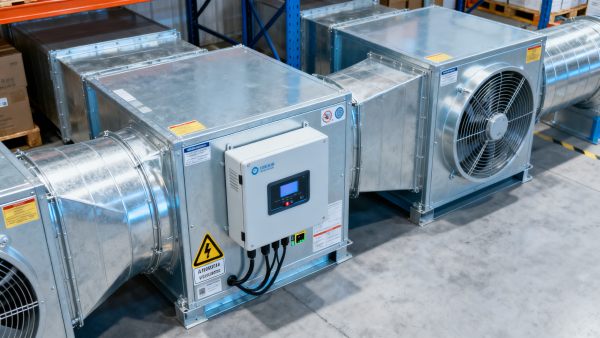
On July 11, 2026, Germany brought the 2026 Green Device Act (BGD-2026) into force, introducing a market-access requirement for imported Climate Control & Ventilation equipment. The immediate point of attention for manufacturers, importers, distributors, procurement teams, and supply-chain service providers is that product compliance is no longer limited to physical equipment performance alone: the law ties import eligibility to an embedded IoT carbon footprint monitoring function aligned with EN 15804:2026+A2:2026 and to remote reporting capability for the German Environment Agency (UBA) platform. Because non-compliant products are barred from Germany and Austria and excluded from public agricultural subsidy procurement, this development deserves close attention across both sales planning and compliance execution.
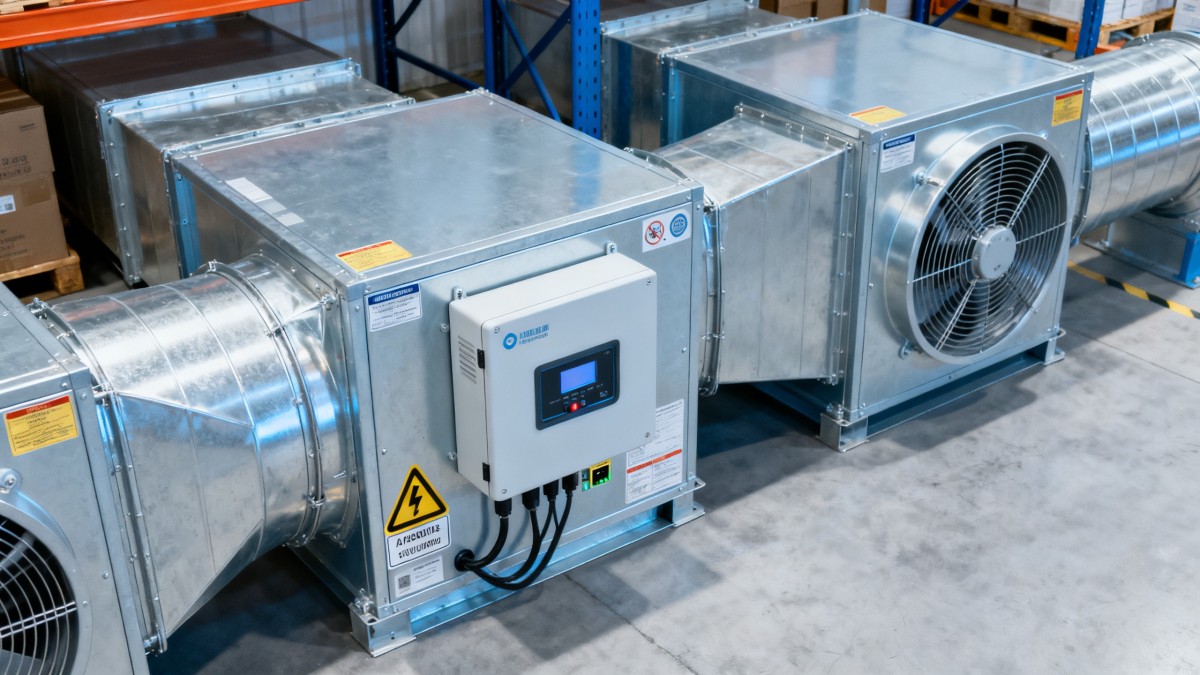
What the law now requires
According to the provided information, Germany's 2026 Green Device Act (BGD-2026) officially took effect on July 11, 2026. The rule applies to all imported Climate Control & Ventilation equipment.
The law requires these imported products to include an IoT carbon footprint monitoring module that complies with EN 15804:2026+A2:2026. It also requires support for remote upload to the German Environment Agency (UBA) platform.
The stated consequence for non-compliance is clear: affected products cannot enter the German and Austrian markets, and they are also ineligible to participate in procurement tied to public agricultural subsidy programs.
Where the commercial impact is likely to appear first
Import and market-entry operations face an immediate compliance gate
From an industry perspective, direct trading companies and import-focused businesses are likely to feel the impact first because the requirement is linked to market entry. The main business effect is likely to appear in product qualification, customs-related readiness, shipment planning, and customer acceptance preparation. What deserves closer attention is whether imported models already include the required monitoring function and whether the supporting compliance materials are ready for review.
Manufacturing and product configuration teams may need to reassess export-ready models
Analysis shows that manufacturers supplying Climate Control & Ventilation equipment into Germany or Austria may be affected at the product design and configuration stage. The key issue is not only whether the equipment can be sold, but whether the imported version integrates an IoT carbon footprint monitoring module aligned with the cited standard and supports remote upload to the UBA platform. For manufacturing and OEM teams, the likely pressure point is the gap between existing product specifications and the legal requirement now attached to imported units.
Channel partners and distributors need to watch inventory and sell-through risk
For distributors and channel operators, the likely impact is tied to portfolio selection, inventory exposure, and contractual delivery commitments. If a product cannot legally enter Germany and Austria, the effect can extend beyond new orders to broader sales planning and customer communication. What deserves closer attention is whether current or planned product lines for these markets can still be positioned, delivered, and documented without disruption.
Procurement-side buyers may tighten technical and documentation screening
Procurement teams, especially those connected to public agricultural subsidy projects, are also likely to adjust their screening criteria. Observably, the rule does not only affect suppliers; it also changes what buyers need to verify before purchase decisions or tender participation. The practical impact may show up in supplier qualification, tender documentation, and pre-award checks tied to compliance status.
Practical points companies should track now
Separate legal text from operational readiness
Analysis shows that one of the most important distinctions is between a legal requirement taking effect and a company being operationally ready to meet it. Businesses should closely track whether their products, technical documents, and reporting capability actually match the requirement for embedded monitoring and remote upload, rather than assuming market continuity based on prior product approvals or established customer relationships.
Review product scope for Germany- and Austria-bound shipments
Companies with exposure to Germany and Austria should pay particular attention to which Climate Control & Ventilation products are imported into those markets and whether any shipment, launch, or tender pipeline depends on models that may not yet meet the stated requirement. This is especially relevant where sales commitments and delivery schedules were built before the law took effect.
Check supplier qualification and supporting records
For importers, distributors, and procurement teams, supplier communication is likely to become a practical priority. What deserves closer attention is whether upstream suppliers can clearly confirm conformity with EN 15804:2026+A2:2026, the presence of the required IoT module, and compatibility with remote upload to the UBA platform. In business terms, this is likely to affect documentation review, purchase conditions, and delivery assurance.
Prepare for customer and tender-side clarification requests
Companies serving regulated buyers or subsidy-linked procurement should expect more detailed compliance questions from customers. Observably, the commercial risk is not limited to border entry; it can also appear during tender evaluation, project qualification, and account-level vendor review. Teams handling sales, bids, and after-sales coordination should be ready to align internal compliance statements with the legal requirement already in force.
How this development is best understood at this stage
As an editorial observation, this development is more than a routine technical update because it connects product access, carbon monitoring functionality, and remote reporting into a single market-entry condition. At the same time, it is more appropriate to understand this as a concrete compliance signal than as a complete picture of wider market outcomes. The confirmed fact is that the rule is already effective and non-compliance carries explicit restrictions; the broader commercial consequences across categories, suppliers, and procurement channels still need continued observation.
From an industry perspective, the strongest signal here is that carbon-related data capability is being treated as part of product admissibility, not merely as a voluntary sustainability add-on. That makes this relevant both as a short-term operational issue for affected shipments and as a longer-term indicator of how compliance expectations may be structured in future equipment trade.
What the industry can reasonably conclude now
The immediate industry meaning of this update is straightforward: for imported Climate Control & Ventilation equipment targeting Germany and Austria, compliance now appears tied to embedded IoT-based carbon footprint monitoring and remote reporting capability. The business consequence is direct enough that companies cannot treat this as a background policy item.
At the same time, a balanced reading is still necessary. It is more appropriate to understand this development as an effective regulatory change with immediate market-access implications, while continuing to watch how implementation details, procurement practice, and supplier responses evolve in real business settings.
Basis of this article and what still needs verification
This article is based on the user-provided news title, event date, and event summary concerning Germany's 2026 Green Device Act (BGD-2026), its effective date of July 11, 2026, the requirement for imported Climate Control & Ventilation equipment to include an IoT carbon footprint monitoring module compliant with EN 15804:2026+A2:2026, the requirement for remote upload to the UBA platform, and the stated market and procurement consequences for non-compliance.
For this type of industry update, relevant source categories would typically include official government announcements, environmental agency notices, company compliance statements, industry association releases, authoritative media reporting, and standards organization documents. A specific official source link was not provided in the input, so continued verification is still necessary. Follow-up attention should focus on any official wording updates, implementation clarifications, and procurement-side application details related to the rule.
Related Intelligence
- Climate Control & VentilationHow to Specify Modular Control Panels for Poultry House Ventilation SystemsModular control panels for poultry ventilation: learn how to specify reliable I/O, sensors, alarms, variable-speed fans, and future-ready expansion.
- Climate Control & VentilationWhat Variable Speed Insights Matter Most When Optimizing Greenhouse Ventilation?Variable speed insights reveal how fan speed affects humidity, airflow, stability, and energy use in greenhouse ventilation. Learn what to adjust first for smarter, more reliable climate control.
- Climate Control & VentilationPoultry Ventilation for Broilers: How to Balance Airflow, Temperature, and Litter QualityPoultry ventilation for broilers made practical: learn how to balance airflow, temperature, humidity, and litter quality to improve flock health, growth, and house performance.
The Morning Broadsheet
Daily chemical briefings, market shifts, and peer-reviewed summaries delivered to your terminal.
