

The Authority in Global Agricultural Chemistry & Bio-Resources
PLC Climate Control Selection Guide: Key Inputs, Outputs, and Sensor Integration
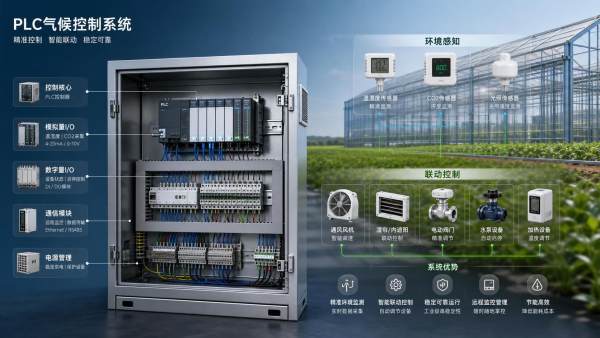
PLC Climate Control Selection Guide: Key Inputs, Outputs, and Sensor Integration
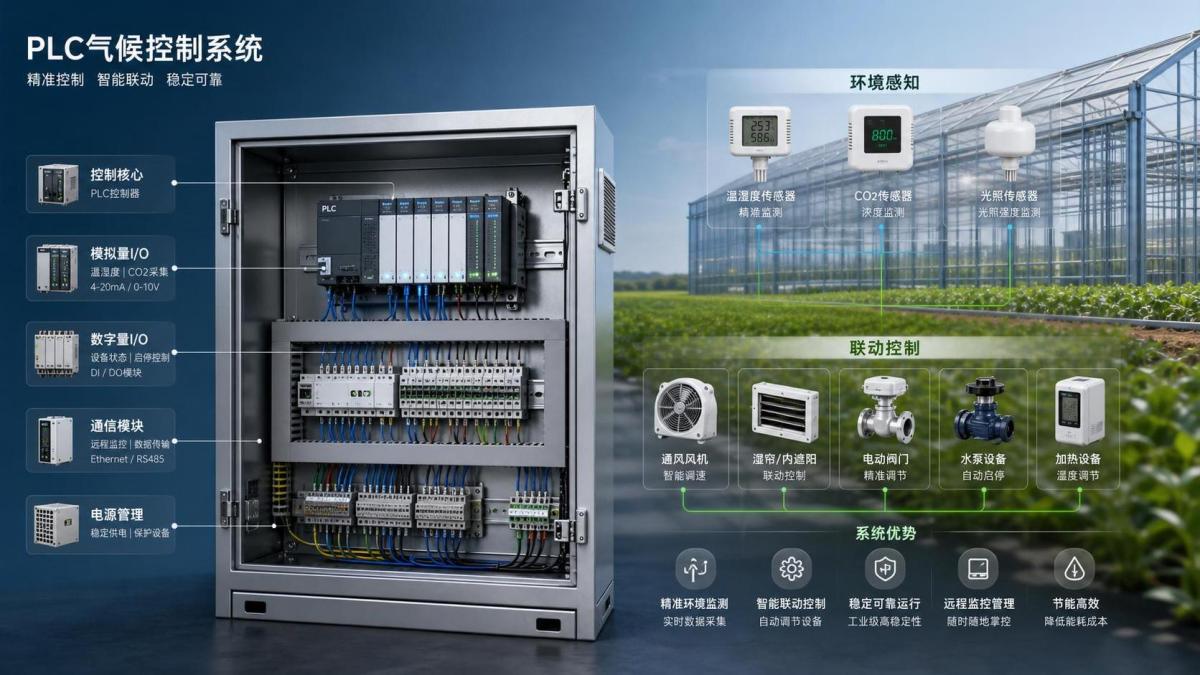
Selecting a PLC climate control platform is rarely just about temperature regulation. It is a system architecture decision that shapes uptime, compliance, energy use, and expansion options.
In practical terms, a strong PLC climate control design must balance sensor fidelity, control speed, wiring complexity, and maintenance demands. That balance looks different in every facility.
For greenhouse operators, feed processors, clean production rooms, and storage environments, the wrong controller often creates hidden instability before obvious alarms appear.
A selection process should therefore begin with operating conditions, not with brand preference. Inputs, outputs, and sensor integration define whether a PLC climate control system actually fits the job.
This guide reviews the evaluation points that matter most when comparing PLC climate control options for industrial and agricultural environments with strict process expectations.
Start with the Real Environmental Load
Before checking I/O counts, define what the climate system must actually control. That sounds basic, but it prevents major oversizing or dangerous under-specification.
A PLC climate control application may manage temperature, humidity, air exchange, pressure, CO2, fluid circulation, or staged heating and cooling. Each variable changes controller requirements.
More importantly, these variables rarely move independently. High humidity can reduce cooling efficiency. Ventilation can affect pressure balance. CO2 dosing can conflict with fresh-air strategies.
That is why PLC climate control selection should map interactions, not just devices. A controller that handles isolated loops well may struggle with coupled environmental logic.
- Define the target range for each climate variable.
- Record the acceptable deviation and recovery time.
- Identify seasonal and daily load swings.
- Note any compliance thresholds tied to the environment.
From a decision perspective, this first step filters out many unsuitable PLC climate control platforms before detailed vendor comparison begins.
How to Size Inputs for a PLC Climate Control System
Input planning is one of the most underestimated parts of PLC climate control evaluation. The number of sensor points matters, but input type matters even more.
Most systems combine digital and analog inputs. Digital points capture state changes such as door open, fan status, filter switch, or safety interlock.
Analog inputs usually carry the real environmental data. Examples include RTD temperature probes, 4-20 mA humidity transmitters, pressure sensors, and CO2 analyzers.
When reviewing a PLC climate control controller, ask whether high-resolution analog input modules are standard or optional. Low-grade analog handling can undermine a premium sensor package.
Signal isolation also deserves close attention. Electrical noise from motors, drives, and switching devices can distort climate readings and trigger unstable control behavior.
In facilities with long cable runs, distributed I/O may be more reliable than central panel wiring. That often improves service access and reduces installation complexity.
- Count current sensor points by type.
- Add spare capacity for planned process expansion.
- Check resolution, isolation, and sampling speed.
- Confirm compatibility with existing field instruments.
A good rule is simple. If the application depends on stable analog feedback, treat input quality as a core PLC climate control selection criterion, not a secondary specification.
Evaluate Output Logic Around Actual Equipment Behavior
Outputs define how the PLC climate control system influences the environment. This is where theoretical control strategy meets real actuators and mechanical limits.
Some applications only need basic relay outputs for heaters, exhaust fans, dampers, and alarms. Others require analog outputs for variable frequency drives, valve positioning, or modulating dampers.
The distinction matters because output logic affects control smoothness, energy use, and equipment wear. A staged relay design may be acceptable in one facility and too coarse in another.
For example, a greenhouse PLC climate control setup may tolerate stepped ventilation. A controlled production room may require finer modulation to avoid overshoot and drift.
Also review fail-safe behavior. On power loss or sensor fault, outputs should move to a defined safe state aligned with process risk.
The strongest PLC climate control designs match output type to equipment behavior instead of forcing every load into the same control method.
Sensor Integration Is Where Selection Quality Shows
Many PLC climate control systems look similar on paper until sensor integration is reviewed in detail. That is usually where performance differences become visible.
Sensor integration includes more than wiring compatibility. It also covers calibration handling, signal validation, fault detection, redundancy logic, and data traceability.
In regulated or quality-sensitive environments, sensor drift can become a business risk. A PLC climate control platform should support clear maintenance alerts and calibration workflows.
Look closely at how the controller handles implausible readings. A failed humidity transmitter should not trigger aggressive dehumidification without validation logic.
This becomes more important in large agricultural or chemical processing sites, where harsh conditions shorten sensor life and create uneven field performance.
Better PLC climate control systems often support:
- Multi-sensor averaging for zone stability
- Redundant probes for critical variables
- Out-of-range filtering and fault substitution
- Native support for common industrial protocols
- Historical trending for validation and troubleshooting
If sensor integration is weak, even a well-specified PLC climate control panel will produce unstable decisions from unreliable field data.
Check Scalability, Communications, and Serviceability
A PLC climate control purchase should serve the next operating phase, not only the current one. Expansion tends to arrive faster than original project teams expect.
That expansion may involve added zones, remote buildings, new compliance records, or tighter integration with SCADA, BMS, MES, or energy management platforms.
A controller with limited communication support can become expensive later. Protocol flexibility matters, especially where mixed-vendor equipment is already installed.
Serviceability matters just as much. The best PLC climate control system is easier to diagnose, document, and maintain across shifts and contractor changes.
Ask practical questions during evaluation:
- Can I/O be expanded without replacing the CPU?
- Are Modbus, BACnet, Ethernet/IP, or Profinet supported?
- Is remote diagnostics available and secure?
- Can local teams service the platform without proprietary barriers?
In real procurement work, lifecycle support often separates a durable PLC climate control investment from a system that performs well only during commissioning.
Use a Practical Selection Matrix Before Final Approval
Final selection should not rest on price, brand familiarity, or isolated technical claims. A weighted decision matrix produces a clearer and more defendable result.
Score each PLC climate control option against the factors that drive actual operating value. Keep the scoring tied to measurable plant needs.
This kind of framework also helps internal teams explain why one PLC climate control solution is technically stronger, even if its upfront cost is slightly higher.
Conclusion: Select for Stability, Not Just Specification
The best PLC climate control choice is the one that matches environmental complexity, equipment behavior, and operational risk with the least compromise.
That usually means looking beyond brochure data. Input integrity, output strategy, and sensor integration have more impact than headline processing power alone.
In current industrial and agricultural settings, climate stability is tied directly to quality consistency, compliance readiness, and energy performance. Selection errors become expensive quickly.
A disciplined PLC climate control evaluation should therefore test how each candidate performs under real site conditions, abnormal signals, and likely expansion scenarios.
Use that evidence to narrow options, validate architecture, and move toward a system that stays accurate, maintainable, and scalable long after installation.
Related Intelligence
- Climate Control & VentilationHow to Specify Modular Control Panels for Poultry House Ventilation SystemsModular control panels for poultry ventilation: learn how to specify reliable I/O, sensors, alarms, variable-speed fans, and future-ready expansion.
- Climate Control & VentilationWhat Variable Speed Insights Matter Most When Optimizing Greenhouse Ventilation?Variable speed insights reveal how fan speed affects humidity, airflow, stability, and energy use in greenhouse ventilation. Learn what to adjust first for smarter, more reliable climate control.
- Climate Control & VentilationPoultry Ventilation for Broilers: How to Balance Airflow, Temperature, and Litter QualityPoultry ventilation for broilers made practical: learn how to balance airflow, temperature, humidity, and litter quality to improve flock health, growth, and house performance.
The Morning Broadsheet
Daily chemical briefings, market shifts, and peer-reviewed summaries delivered to your terminal.
