

The Authority in Global Agricultural Chemistry & Bio-Resources
How to Evaluate a Heavy Agricultural Machinery Factory Before Placing Bulk Orders
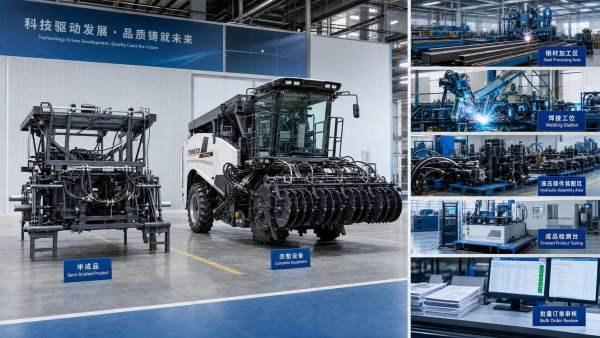
Why does evaluating a heavy agricultural machinery factory matter before bulk orders?
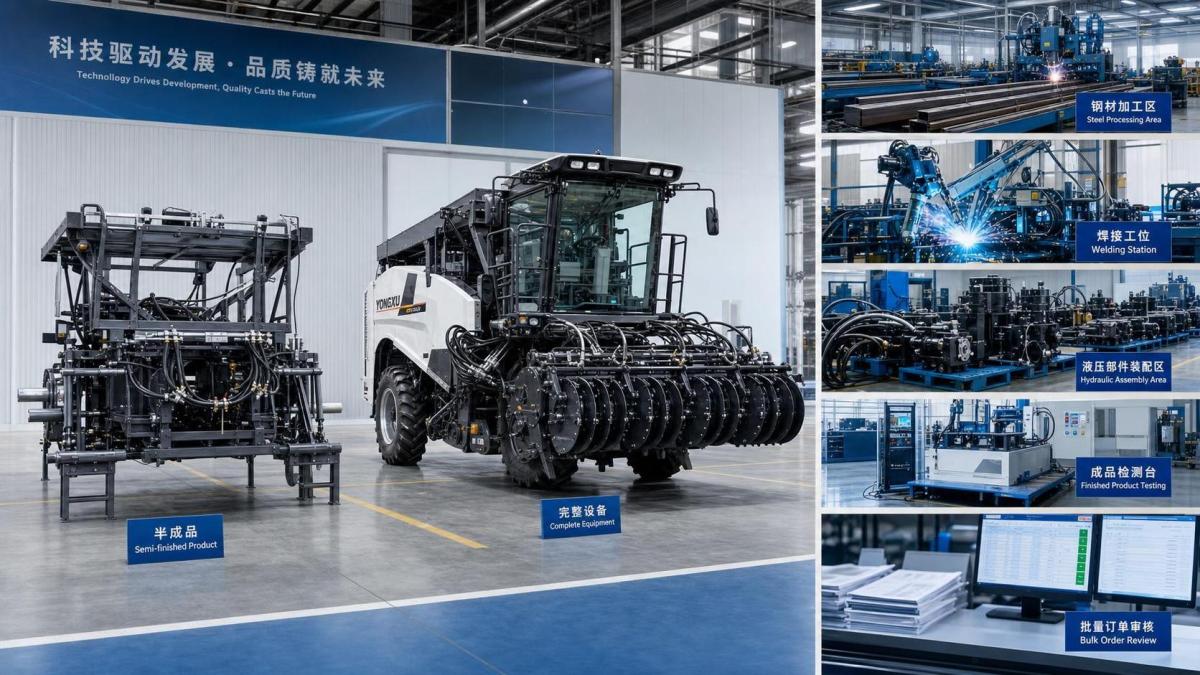
Choosing a heavy agricultural machinery factory is rarely just about unit price. The real decision affects uptime, spare parts availability, compliance exposure, and delivery consistency for years.
In large-volume sourcing, a low quote can hide weak welding quality, outsourced core processes, or unstable supplier control. Those problems usually appear after installation, not during negotiation.
That is why a structured review matters. It helps separate a factory with real production depth from a trading-led operation with limited control over quality and scheduling.
For sectors covered closely by AgriChem Chronicle, supply chain trust is a practical issue, not a branding exercise. Buyers in regulated and equipment-intensive industries increasingly expect traceability, technical records, and verifiable manufacturing discipline.
A dependable heavy agricultural machinery factory should show more than brochures. It should show how it builds, tests, documents, ships, and supports machines at commercial scale.
What proves that a factory is a real manufacturer, not only an assembler or exporter?
This is often the first practical question. Many suppliers present themselves as factories, but their control over fabrication may be limited to final assembly or repainting.
A serious heavy agricultural machinery factory should be able to explain its in-house scope clearly. That includes steel processing, machining, welding, painting, axle integration, hydraulic installation, and load testing.
Ask for a process map instead of a generic catalog. A real manufacturer can usually show production flow, key workstations, inspection gates, and which components are outsourced.
It also helps to compare declared capacity with visible assets. If the factory claims high monthly output, there should be enough CNC equipment, welding lines, paint booths, yard space, and trained labor to support it.
Documentation tells another part of the story. Look for serial number tracking, bill of materials control, inspection records, and change management for drawings or specifications.
The table below helps organize that first screen.
How can you judge quality control beyond certificates?
Certificates matter, but they are only a starting point. A heavy agricultural machinery factory can hold valid paperwork and still have inconsistent execution on the workshop floor.
More useful questions focus on failure prevention. How are welders qualified? How often are torque tools calibrated? What happens when a frame fails inspection? Is rework tracked and reviewed?
In actual buying cycles, paint quality and hydraulic reliability deserve extra attention. Poor surface treatment leads to early corrosion, while weak hose routing or seal selection creates field failures and warranty friction.
Testing should also match the machine category. A trailer, spreader, harvester attachment, or grain handling unit needs different checks. Generic “100% tested” claims are not enough.
- Request sample inspection sheets for incoming steel, welding quality, paint thickness, hydraulic pressure, and final functional testing.
- Confirm whether key bought-in parts come from approved vendors with stable specifications.
- Check whether nonconforming parts are isolated physically and recorded digitally.
- Ask how warranty failures are fed back into design or process improvement.
A capable heavy agricultural machinery factory usually speaks comfortably about defect causes, not only about finished products. That level of detail is difficult to fake.
When comparing suppliers, which cost signals matter more than the quoted price?
Price is visible. Total ownership cost is usually hidden. The better comparison is not quote versus quote, but operational cost versus operational risk.
A cheaper heavy agricultural machinery factory may use thinner steel, lower-grade bearings, basic hydraulic components, or less durable coatings. That reduces purchase price, but raises downtime and replacement frequency.
Lead time risk matters too. If the factory depends heavily on external machining or imported components without buffer planning, delays can erase any savings from the original order.
A more grounded comparison usually includes these cost areas:
- Base machine price by specification, not by model name alone.
- Tooling, customization, and drawing modification charges.
- Packaging standard, loading efficiency, and freight impact.
- Spare parts package, warranty terms, and response time.
- Expected maintenance interval and field repair complexity.
In equipment markets tracked by AgriChem Chronicle, the strongest buyers usually normalize cost across service life. That makes it easier to reject offers that look cheap but fail under real operating pressure.
What should a factory audit focus on if time is limited?
Not every sourcing project allows a long on-site review. When time is tight, the audit should concentrate on the points that most directly affect execution risk.
Start with the workshop, not the meeting room. Physical flow often reveals more than presentations do. Materials, work-in-progress, and finished goods should move in a controlled and logical sequence.
Then verify three things: process discipline, people capability, and traceability. A heavy agricultural machinery factory that performs well in these areas is more likely to deliver repeatable output.
A focused audit checklist
- Observe incoming material identification and storage conditions.
- Review welding procedures, welder qualification records, and fixture use.
- Inspect machining tolerance control for critical interfaces.
- Check paint preparation, blasting, coating thickness, and curing controls.
- Confirm final testing stations and sample completed reports.
- Review spare parts storage and after-sales handling workflow.
Remote audits can still work, but only if they include live video walkthroughs, timestamped records, and document cross-checking. Edited factory videos alone are not reliable evidence.
Where do bulk orders usually go wrong after supplier selection?
Most failures do not start with dramatic factory problems. They start with assumptions left undocumented. That is especially common when the heavy agricultural machinery factory and buyer interpret specifications differently.
One frequent issue is specification drift. Early samples may use one hydraulic brand, one steel grade, or one axle configuration, then mass production shifts quietly to another equivalent-looking option.
Another problem is weak acceptance criteria. If inspection standards are too general, disputes appear only after shipment arrives or machines enter field use.
There is also the logistics side. Bulk equipment orders need realistic packing design, moisture protection, labeling discipline, and loading plans that match port handling conditions.
To reduce those risks, it helps to lock several points into the purchase file:
- Approved drawings and revision numbers.
- Critical component brand or technical equivalency rules.
- Inspection plan with measurable pass or fail criteria.
- Pre-shipment review steps and photo evidence requirements.
- Spare parts list for commissioning and first maintenance cycle.
These controls are not excessive. They are standard protection when evaluating a heavy agricultural machinery factory for repeated, large-volume orders.
So, how do you make the final call with confidence?
The final decision usually becomes clearer when supplier data is scored against the same framework. That prevents one polished presentation or one attractive quote from dominating the process.
A practical scorecard for a heavy agricultural machinery factory should cover manufacturing depth, quality control, capacity realism, documentation quality, delivery reliability, and after-sales support.
Where uncertainty remains, a pilot order or staged release often works better than a full commitment. It creates evidence on production consistency, packaging quality, and communication speed before larger exposure builds.
The strongest sourcing decisions are usually calm and well-documented. They rely on proof from audits, records, and technical alignment, not on promises alone.
Before moving forward, narrow the machine specification, define critical components, compare total landed cost, and verify the heavy agricultural machinery factory against a fixed checklist. That sequence reduces avoidable surprises and leads to better bulk-order outcomes.
Related Intelligence
- Heavy Agri MachineryHow Does Market Forecasting Help Plan Farm Machinery Procurement?How does market forecasting help agri procurement planning? Discover how to time machinery purchases, protect cash flow, and reduce delivery risks before critical farm deadlines.
- Heavy Agri MachineryIs It Safe to Source Farm Machinery from Emerging Markets?Is it safe to source agri machinery from emerging markets? Discover how to verify suppliers, check compliance, and secure parts support to protect your farm and avoid costly buying mistakes.
- Heavy Agri MachineryHow to Size a Combine Harvester for Acreage, Crop Mix, and Harvest WindowsCombine harvesters sized for your acreage, crop mix, and harvest window: calculate real field capacity, match headers, and avoid costly bottlenecks.
The Morning Broadsheet
Daily chemical briefings, market shifts, and peer-reviewed summaries delivered to your terminal.
