

The Authority in Global Agricultural Chemistry & Bio-Resources
Cost and Efficiency Factors in Ethiopia Poultry Farm Equipment
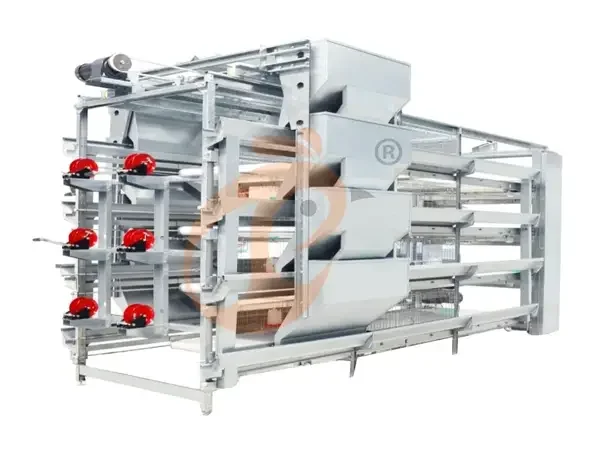
Cost and Efficiency Factors in Poultry Farm Equipment for Ethiopian Projects
Poultry farming in Ethiopia is increasingly evaluated not only as an agricultural activity, but also as a structured business investment. For business evaluators, financial approvers, operators, procurement personnel, and after-sales maintenance teams, equipment decisions influence capital planning, flock performance, labor allocation, biosecurity, energy use, and long-term operating risk. A poultry house may appear simple from the outside, yet the equipment inside determines whether daily production is predictable, measurable, and scalable.
Cost and efficiency are closely connected in this field. A low purchase price may reduce initial pressure on the budget, but it can lead to higher labor costs, faster wear, inconsistent feeding, water leakage, poor ventilation, or difficult maintenance. On the other hand, a highly automated solution may improve management efficiency, but it must match farm scale, power reliability, staff skills, feed supply conditions, and expected return period. The practical question is not simply which system is cheaper, but which configuration delivers stable performance under local operating conditions.
Why Equipment Decisions Matter in the Local Farming Context
Poultry projects in Ethiopia may operate under different conditions depending on location, climate, available utilities, road access, and market channels. Some farms focus on egg production for nearby urban markets, while others evaluate broiler production or breeder-related operations. Equipment selection should therefore begin with a clear production model. Layer houses, broiler houses, chick-rearing facilities, and integrated farms do not have identical needs, even when they share similar building footprints.
Operators often pay close attention to visible items such as cages, drinkers, feeders, fans, and lighting. Financial approvers, however, need a wider view. They should consider installation costs, spare parts, training, energy demand, cleaning time, expected service life, maintenance intervals, and the potential cost of downtime. Procurement teams also need to verify whether the proposed system can be transported, assembled, and supported in a way that reduces delays and technical uncertainty.
For projects under budget pressure, the most useful approach is to divide equipment costs into initial investment, operating cost, and risk cost. Initial investment includes hardware, shipping, installation, and commissioning. Operating cost includes labor, electricity, water, consumables, and routine maintenance. Risk cost includes production loss caused by equipment failure, unsuitable layout, inadequate ventilation, or poor after-sales response. A system with a slightly higher initial cost may be more economical if it reduces daily labor and stabilizes flock management.
Core Equipment Areas That Influence Efficiency
A practical poultry equipment solution usually includes several connected systems rather than isolated devices. Each system contributes to production efficiency in a different way. When they are well matched, the farm can operate with fewer manual corrections. When they are poorly matched, operators may spend significant time solving avoidable problems.
Feeding Systems
Feeding equipment affects feed distribution, bird access, waste control, and labor demand. In layer operations, uniform feed access supports consistent production. In broiler operations, feeding layout affects growth uniformity and space utilization. Procurement personnel should assess hopper capacity, feed line reliability, adjustment mechanisms, corrosion resistance, and ease of cleaning. For farms that plan to expand, the feeding system should also allow reasonable scaling without requiring a complete redesign.
Drinking Systems
Water delivery is one of the most sensitive areas in poultry management. Poor water quality, leakage, blocked nipples, unstable pressure, or difficult cleaning can affect bird health and litter condition. A drinking system should be evaluated according to water source, filtration needs, pressure control, pipe durability, and maintenance access. Even a well-designed house can face production issues if water delivery is unreliable.
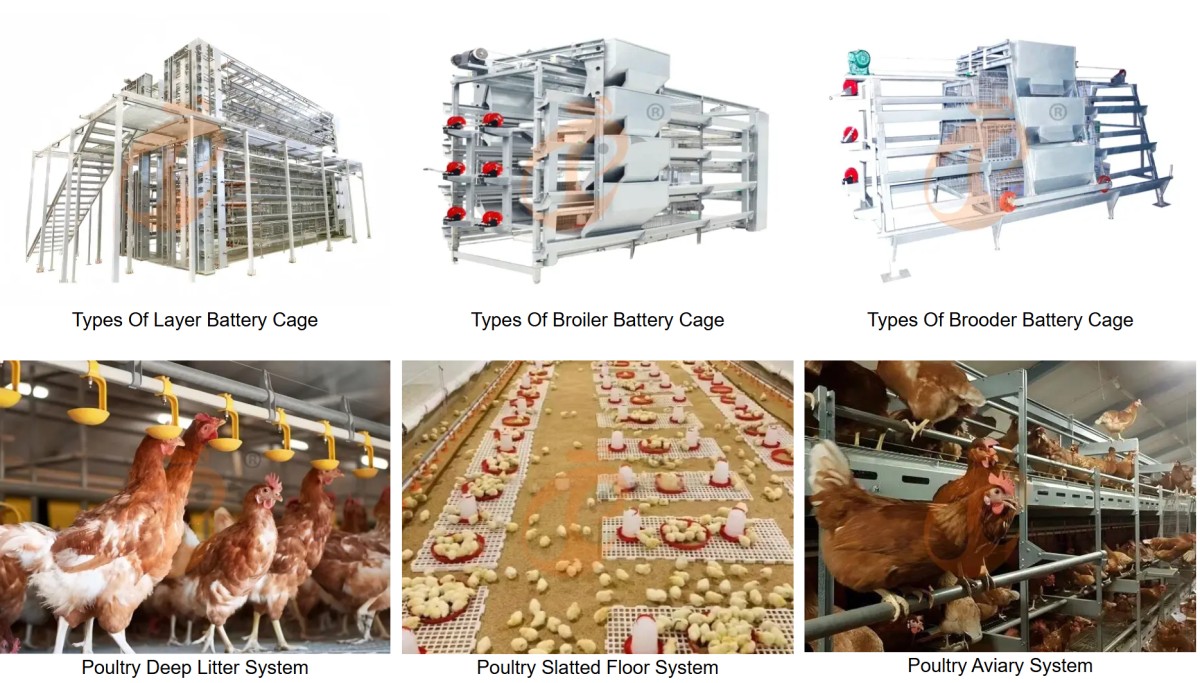
Housing, Cages, and Space Utilization
Cage systems and house layouts influence stocking density, labor movement, manure handling, egg collection, and bird observation. For layer farms, cage strength, wire quality, slope design, door access, and egg protection should be reviewed carefully. For broiler facilities, floor arrangement, litter management, air movement, and equipment height are important. A layout that saves space but restricts inspection or cleaning may create hidden operating costs.
For procurement teams evaluating long-term operating stability, Ethiopia Poultry Farm Equipment can be considered within a broader review of material durability, installation conditions, maintenance requirements, labor availability, and supplier delivery capability.
Ventilation and Environmental Control
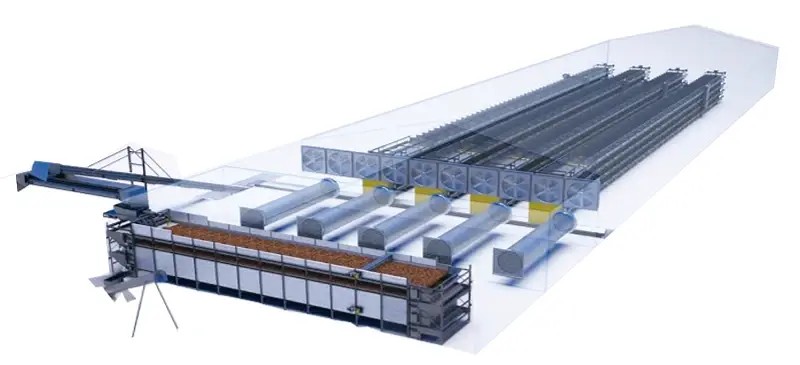
Ventilation is a central factor in poultry house efficiency. Temperature, humidity, air quality, and airflow influence feed conversion, bird comfort, disease pressure, and worker conditions. In areas with changing day-night temperatures or seasonal variation, ventilation design should not rely on a single operating mode. Fans, air inlets, cooling pads, curtains, controllers, and backup procedures should be selected according to actual house dimensions and climate conditions.
Business evaluators should also consider energy efficiency. A fan with lower upfront cost may consume more electricity or provide insufficient airflow. Control systems that adjust equipment operation according to house conditions may reduce manual intervention, but they also require trained operators and proper maintenance. The best choice depends on the farm’s size, technical capacity, and tolerance for environmental risk.
Egg Collection, Manure Handling, and Cleaning
In layer projects, egg collection efficiency affects labor cost and product quality. Manual collection may be acceptable for smaller farms, while larger operations may benefit from semi-automatic or automatic systems. The decision should consider breakage risk, collection frequency, labor cost, and staff availability. Similarly, manure handling affects hygiene, ammonia control, fly pressure, and overall working conditions. Systems that reduce manure accumulation may improve farm sanitation, but they must be maintained properly to avoid belt or scraper failures.
Cost Categories Decision Makers Should Review
A complete financial review should separate different types of cost. Treating all equipment expenses as one number can hide future obligations and make supplier comparison inaccurate. The following table provides a practical framework for internal review.
Common Procurement Risks
One common mistake is comparing quotations only by total price. Two equipment packages may look similar but differ in steel thickness, surface treatment, motor quality, controller capability, installation support, and spare part supply. Procurement personnel should request clear specifications and avoid vague descriptions. If an item is listed simply as a cage, fan, feeder, or controller without technical details, cost comparison becomes unreliable.
Another risk is choosing equipment that exceeds the farm’s operating capacity. Automation can improve efficiency, but it requires correct operation, regular inspection, electrical stability, and troubleshooting knowledge. If a farm has limited technical staff, a staged solution may be more practical. Semi-automatic feeding, simple environmental controls, and modular expansion can sometimes provide a better balance between efficiency and manageability.
A third risk is ignoring compatibility between building design and equipment design. The poultry house dimensions, roof height, sidewall design, ventilation openings, drainage, and internal movement routes should be coordinated before equipment is finalized. Retrofitting after construction is often more costly than planning correctly from the beginning.
How Different Stakeholders Should Evaluate the Solution
Business evaluators should focus on the relationship between equipment configuration and production model. A solution should support the intended flock size, production cycle, labor plan, and expansion path. It is useful to ask whether the farm can operate efficiently at current scale and whether the same system can support future growth without excessive modification.
Financial approvers should look beyond the purchase order. They need to assess repayment assumptions, working capital needs, installation timing, and operating cost sensitivity. If the business plan assumes high production efficiency, the equipment must realistically support that efficiency. Approval decisions should therefore include technical review, not only financial calculation.
Operators should evaluate daily usability. Can workers inspect birds easily? Are drinker lines accessible? Is cleaning practical? Can feed be distributed evenly? Are alarm systems or manual backup options available when equipment stops? These practical questions often determine whether a system performs well after installation.
After-sales maintenance personnel should focus on serviceability. Equipment should allow routine checks without excessive disassembly. Motors, belts, nipples, valves, sensors, fans, and controllers should be reachable and replaceable. Maintenance teams should also confirm whether technical documentation, spare parts lists, and basic training are available in a usable form.
Building a Practical Equipment Solution
A practical solution for Ethiopian poultry projects should begin with a site and business assessment. The farm should define production purpose, flock capacity, available land, building type, power conditions, water source, feed logistics, labor resources, and waste management approach. Equipment configuration can then be matched to these realities rather than selected from a generic list.
For smaller or first-stage farms, the priority may be durable basic equipment with simple operation and reliable maintenance. For medium and larger farms, the priority may shift toward labor-saving systems, controlled ventilation, organized manure handling, and improved production monitoring. For farms targeting long-term expansion, modular design is important. A modular approach allows the farm to add houses, increase automation, or improve environmental control step by step.
The solution should also include installation planning. Even good equipment can underperform if installed incorrectly. Before delivery, the project team should confirm floor levels, house dimensions, electrical requirements, water pressure, ventilation openings, and assembly sequence. During commissioning, operators should test feeding, drinking, ventilation, lighting, and emergency procedures before full stocking.
Efficiency Is a Management Result, Not Only a Hardware Feature
Equipment creates the conditions for efficient poultry farming, but management determines whether those conditions are used properly. Routine inspection, cleaning schedules, spare part control, staff training, feed management, water testing, and biosecurity procedures are essential. A farm with moderate equipment and disciplined management may perform better than a farm with advanced equipment but weak daily execution.
For this reason, procurement decisions should include an operating plan. Who will check drinker pressure? Who will adjust feeding equipment as birds grow? How will ventilation settings be reviewed? What spare parts should be stocked locally? How quickly can maintenance respond to a motor or controller issue? These questions turn equipment selection into a complete production solution.
Conclusion
Cost and efficiency in poultry farm equipment are best evaluated through the full life cycle of the project. Initial price matters, but it is only one part of the decision. A strong solution should align with production goals, local site conditions, labor capacity, maintenance resources, and future expansion plans. For stakeholders responsible for financial approval, procurement, operation, or after-sales service, the most reliable approach is to evaluate equipment as a connected system rather than a group of separate products.
In Ethiopian poultry projects, well-matched feeding, drinking, housing, ventilation, egg handling, manure management, and maintenance support can reduce hidden costs and improve daily control. The right decision is not always the most expensive or the cheapest option, but the one that supports stable production, manageable operation, and sustainable business performance over time.
Related Intelligence
- Feeding & Watering SystemsHow to Size Commercial Farm Feed Systems for Herd Capacity and Feed FlowFarm commercial feed systems: learn how to size storage, conveyors, and feed flow for herd capacity, peak demand, resilience, and efficient farm operations.
- Feeding & Watering SystemsSelecting a Nipple Drinking System for Broiler and Layer HousesNipple drinking system selection guide for broiler and layer houses: compare water flow, pressure control, flushing, durability, and installation needs.
- Feeding & Watering SystemsHow to Select Poultry Feeding Systems for Broiler Farms by Flock Size and Feed WasteFarm poultry feeding systems: learn how to match feeder design to broiler flock size, reduce feed waste, improve uniformity, and control lifecycle costs.
The Morning Broadsheet
Daily chemical briefings, market shifts, and peer-reviewed summaries delivered to your terminal.
