

The Authority in Global Agricultural Chemistry & Bio-Resources
Solution Lessons from Ethiopia Poultry Farm Equipment Projects
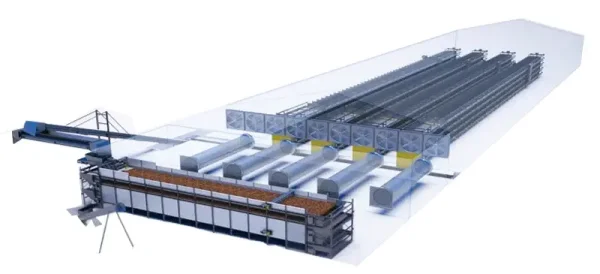
Solution Lessons from Ethiopia Poultry Farm Equipment Projects
Poultry production in Ethiopia is drawing closer attention from farm investors, feed suppliers, equipment manufacturers, and regional food distributors. Demand for affordable animal protein, the growth of urban retail channels, and the need for more predictable farm output are all pushing poultry farms to modernize. For project managers and engineering leads, equipment selection is no longer a simple purchasing task. It has become a full project decision involving site design, bird welfare, power reliability, maintenance capacity, labor planning, and long-term operating costs.
Lessons from poultry farm equipment projects in Ethiopia show that successful outcomes usually depend less on buying the most advanced machinery and more on matching the system to local conditions. A farm with limited technical staff, unstable power supply, or difficult access roads may require a different configuration from a farm located near a major market with stronger infrastructure. This is why procurement teams, operators, and after-sales maintenance teams need to evaluate equipment as part of an integrated solution rather than as isolated products.
Why Equipment Planning Matters in Ethiopia’s Poultry Sector
Poultry farms face a combination of biological and mechanical risks. Birds are sensitive to temperature, ventilation, feed availability, water quality, lighting, and stocking density. Equipment supports these conditions, but it also introduces operational responsibilities. A poorly installed feeding line, an undersized ventilation system, or a water system that is hard to clean can reduce production consistency and increase labor pressure. In practical farm management, equipment reliability is directly connected with flock health and commercial performance.
For Ethiopia-based projects, planning must also consider the diversity of operating environments. Some farms are built for broilers, others for layers, breeders, or smaller mixed operations. Climate conditions vary by location, and the availability of spare parts, skilled technicians, and stable electricity may differ from one region to another. These factors make early-stage design review especially important. Decisions made during layout planning often determine whether the farm can expand, maintain biosecurity, and control daily operating costs.
Common Project Challenges Seen in the Field
One frequent challenge is the mismatch between project ambition and practical operating capacity. Investors may plan a large poultry house with automated feeding, drinking, ventilation, and egg collection systems, but the management team may not yet have enough training to operate and maintain those systems. In such cases, automation can improve efficiency only if the farm team understands routine inspection, calibration, cleaning, and emergency response.
Another challenge is underestimating installation conditions. Equipment that performs well in theory still needs accurate civil works, proper alignment, correct electrical connections, and careful commissioning. Small errors at the installation stage can lead to uneven feed distribution, water leakage, motor overload, or weak airflow. Engineering leads should therefore treat installation quality as a core project milestone, not as a secondary task after procurement.
Supply chain timing also affects project results. Poultry projects often involve house construction, equipment delivery, water and power preparation, feed sourcing, labor recruitment, and chick placement schedules. If any one element is delayed, the entire production calendar can be disrupted. A realistic project schedule should include customs clearance, inland transport, installation labor, spare parts preparation, and commissioning tests before birds are introduced.
Solution Lesson 1: Start with Farm Objectives, Not Equipment Lists
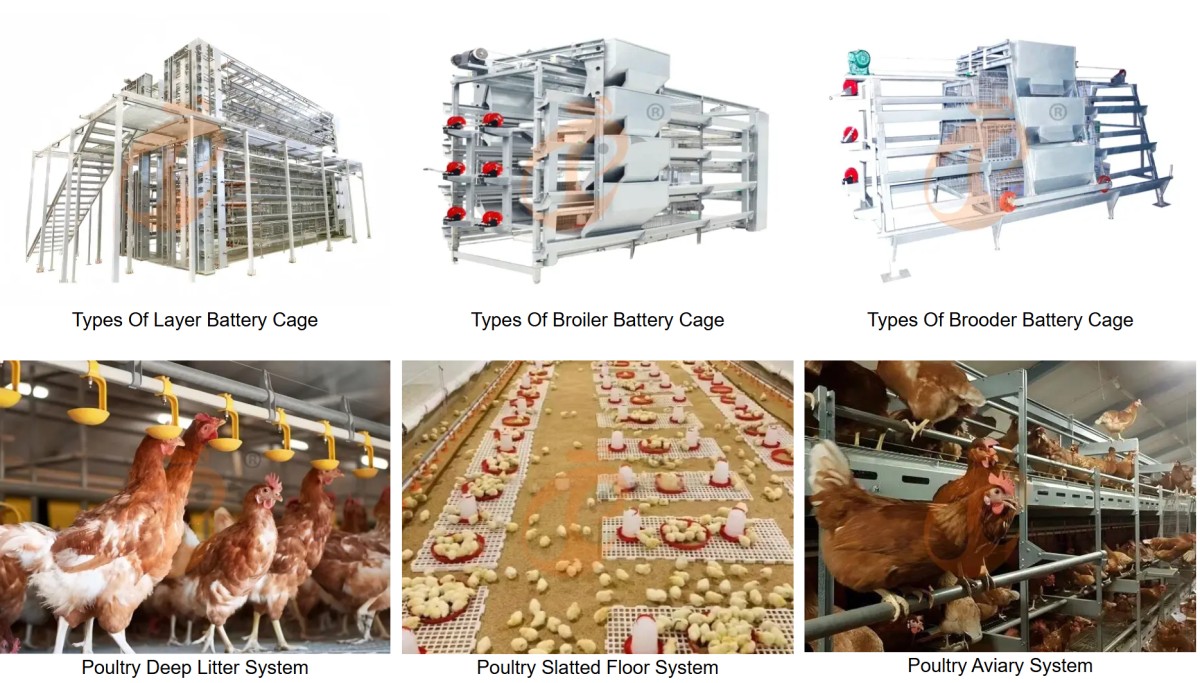
A well-designed poultry farm begins with production objectives. The team should define the bird type, planned capacity, target market, expected expansion path, management model, and acceptable labor intensity. Only after these points are clear should the project team compare cages, feeding systems, drinkers, ventilation devices, lighting, manure handling, and environmental control options.
For example, a layer farm focused on stable egg supply will place high importance on cage layout, egg collection convenience, manure management, and long-term bird comfort. A broiler farm may prioritize air exchange, litter condition, feeding access, and fast turnaround between flocks. A smaller farm may prefer simpler systems that are easier to repair locally, while a larger operation may justify higher automation to reduce labor dependency. The most suitable choice depends on the business model, not only on equipment specifications.
Solution Lesson 2: Treat Ventilation and Climate Control as Core Systems
Ventilation is one of the most important technical areas in poultry housing. It influences temperature, humidity, ammonia levels, dust, oxygen supply, and bird comfort. In many farm environments, natural ventilation alone may not provide consistent results throughout the year. Mechanical ventilation, fans, air inlets, cooling pads, and environmental control panels may be considered depending on local climate and building design.
Engineering teams should avoid selecting fans only by unit price or motor power. The better approach is to assess house dimensions, stocking density, seasonal temperature range, air speed requirements, inlet placement, and emergency ventilation needs. A ventilation system that is too weak can create heat stress and poor air quality. A system that is not properly balanced can cause drafts, uneven bird distribution, or unnecessary power consumption.
Solution Lesson 3: Feeding and Drinking Systems Need Daily Practicality
Feeding equipment should deliver feed evenly, reduce waste, and remain easy to inspect. In poultry projects, inconsistent feed access can lead to uneven growth, lower egg production, or flock stress. Procurement teams should examine hopper design, feed line stability, motor protection, chain or auger quality, and cleaning convenience. Operators should also confirm whether the system allows simple adjustment as birds grow or as feed formulation changes.
The drinking system deserves equal attention. Water lines, nipples, pressure regulators, filters, and flushing arrangements must support hygiene and consistent water access. In practical operation, blocked nipples, excessive pressure, poor water quality, or hard-to-clean lines can create serious health risks. A good water system is not only about installation; it requires a maintenance routine that farm staff can follow without complicated tools.
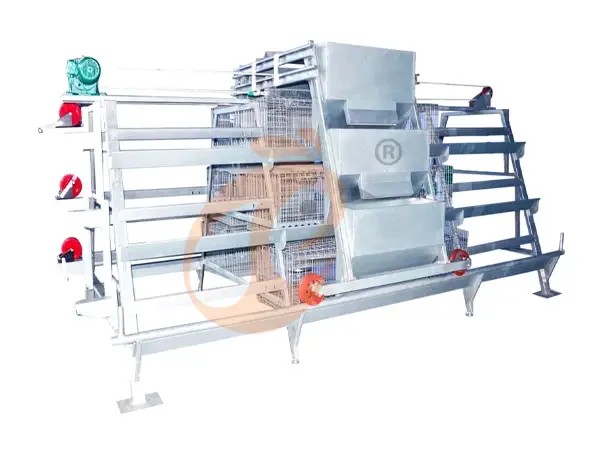
When evaluating integrated poultry house designs, project teams often compare different levels of automation, cage structures, ventilation packages, and after-sales service models. In that wider decision process, Ethiopia poultry farm equipment solutions can be reviewed alongside site conditions, staff capability, spare parts availability, installation support, and expected flock management practices.
Solution Lesson 4: Installation Quality Can Decide Project Success
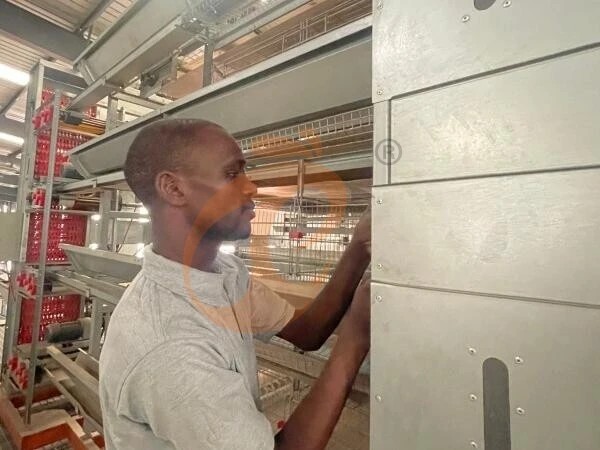
Even suitable equipment can fail to deliver expected results if installation is rushed or poorly coordinated. Cages must be leveled, feed lines aligned, water lines tested, electrical systems protected, and ventilation equipment positioned according to the house design. Commissioning should include dry runs, water pressure checks, motor tests, feeding trials, and emergency procedures. These steps help identify problems before the farm receives birds.
Project managers should build a clear handover process between installation teams and farm operators. The handover should cover operating instructions, maintenance schedules, spare parts lists, troubleshooting guidance, and safety precautions. Without this transition, operators may inherit a system they do not fully understand, increasing the risk of avoidable downtime after production begins.
Solution Lesson 5: Maintenance Planning Should Begin Before Purchase
After-sales maintenance teams often become involved only after a breakdown occurs. This is a costly mistake. Maintenance planning should begin during procurement. Buyers should ask which parts are most likely to wear, how often components need inspection, whether spare parts can be stocked locally, and what skills are required for repairs. A system that is technically advanced but difficult to maintain may create more risk than a simpler system with reliable support.
Preventive maintenance is especially important for motors, gearboxes, controllers, fans, drinkers, feeding lines, and lifting systems. Farms can reduce downtime by creating inspection checklists for daily, weekly, and flock-cycle tasks. Maintenance records also help identify recurring problems, operator mistakes, and components that may need replacement before failure occurs.
Procurement Criteria for Better Decision-Making
Procurement teams should look beyond the initial quotation. A lower purchase price may not produce the lowest total cost if the system requires frequent repairs, consumes excessive power, or lacks technical support. A more useful comparison includes durability, installation requirements, operating efficiency, spare parts supply, training, delivery reliability, and compatibility with future expansion.
Practical Success Patterns from Poultry Equipment Projects
Successful poultry equipment projects often share several patterns. First, the owner or project manager defines realistic production goals and does not overbuild beyond management capacity. Second, the engineering team reviews site drawings, ventilation assumptions, water supply, and power arrangements before equipment is shipped. Third, operators receive training before the first flock enters the house. Fourth, a basic spare parts package is prepared in advance rather than after the first breakdown.
In many cases, farms that perform better over time are not those with the most complex systems, but those with the most disciplined routines. They clean water lines, inspect feed delivery, check fan belts or motors, monitor controller settings, and record small problems before they become large failures. This operational discipline turns equipment investment into measurable production stability.
Risks to Avoid During Implementation
- Choosing equipment without a house design: Equipment dimensions and building layout must be coordinated from the beginning.
- Ignoring power reliability: Backup arrangements may be necessary for ventilation, water supply, and environmental control.
- Underestimating cleaning and biosecurity: Equipment should allow practical washing, disinfection, and controlled movement of people and materials.
- Skipping operator training: Automation does not replace the need for skilled daily management.
- Failing to plan spare parts: Small components can stop production if replacements are not available when needed.
What Different Teams Should Prioritize
Project managers should focus on schedule coordination, supplier communication, risk control, and milestone verification. Their role is to make sure building works, equipment delivery, installation, training, and bird placement follow a realistic sequence. Engineering leads should verify technical compatibility, including structure, power, water pressure, ventilation capacity, and equipment layout.
Operators should prioritize usability. They need systems that can be monitored, cleaned, adjusted, and repaired under real farm conditions. Procurement teams should compare suppliers based on total value, not only unit price. After-sales maintenance teams should establish inspection procedures, spare parts lists, and emergency response plans before production starts.
Conclusion
Poultry farm equipment projects in Ethiopia offer practical lessons for anyone involved in agricultural investment, farm engineering, procurement, and operations. The strongest results usually come from integrated planning: matching equipment to the farm’s production model, adapting systems to site conditions, ensuring proper installation, and preparing operators for daily management. Equipment is valuable only when it supports stable birds, efficient labor, controlled costs, and manageable maintenance.
For businesses evaluating new poultry projects or upgrading existing farms, the key is to make decisions with both engineering logic and operating reality in mind. By reviewing climate control, feeding, drinking, housing design, after-sales support, and long-term maintenance together, stakeholders can reduce avoidable risks and build more resilient poultry production systems.
Related Intelligence
- Poultry Housing & CagingHow poultry farming equipment layout affects flock uniformity and feed conversion ratio in broiler housesDiscover how strategic poultry farming equipment layout directly boosts flock uniformity and slashes feed conversion ratio—backed by real-world data and ROI-driven insights.
- Poultry Housing & CagingBeyond Upfront Price: Evaluating Total Cost of Ownership for Automated Broiler Battery Cage Systemsbroiler cage system cost goes far beyond sticker price—discover how TCO analysis reveals true lifetime savings on automated broiler battery cage systems.
- Poultry Housing & CagingHow Cage Dimensions Affect Stocking Density, Welfare Compliance, and Operational Efficiency in Layer FarmsTaiyu(HK) poultry farm equipment: Discover how precise cage dimensions drive welfare compliance, optimal stocking density & operational efficiency in layer farms.
The Morning Broadsheet
Daily chemical briefings, market shifts, and peer-reviewed summaries delivered to your terminal.
