

The Authority in Global Agricultural Chemistry & Bio-Resources
GMP Compliance in Batch Production: Key Control Points for Quality and Audit Readiness
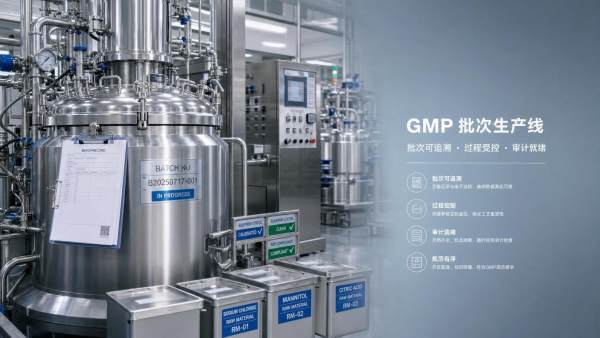
Why does GMP compliance in batch production draw so much attention?
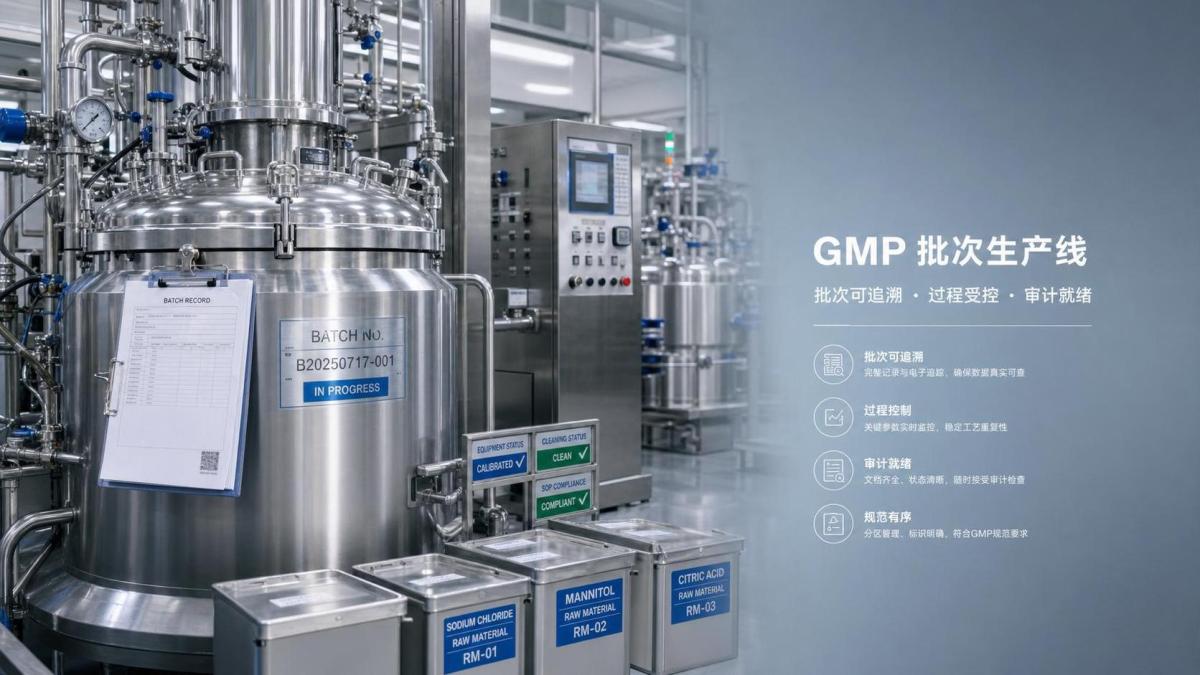
GMP compliance in batch production sits at the center of regulated manufacturing because every batch must be consistent, traceable, and defensible under inspection.
That matters across fine chemicals, APIs, bio-extracts, feed ingredients, and other primary processing activities where one deviation can affect safety, release timing, and market access.
In practical terms, batch production creates repeated chances for variation. Raw material differences, operator decisions, equipment status, and environmental changes can all shift outcomes.
A strong GMP system reduces that variation by defining control points before problems appear. It also makes audit readiness less reactive and more routine.
This is why technical journals such as AgriChem Chronicle often focus on supply chain transparency, validated capability, and regulatory discipline rather than broad claims about quality.
When suppliers operate across agricultural inputs, biochemical processing, and pharmaceutical-linked materials, GMP compliance in batch production becomes both a quality issue and a business continuity issue.
Which control points usually decide whether a batch stays compliant?
Most failures are not caused by a single dramatic error. More often, they start with weak controls at ordinary steps that teams assume are already stable.
The highest-value control points usually include materials, equipment, process parameters, in-process checks, cleaning status, and contemporaneous documentation.
- Material control: supplier qualification, receipt inspection, status labeling, sampling rules, and segregation of approved, quarantined, and rejected stock.
- Equipment control: calibration, preventive maintenance, line clearance, cleaning verification, and use logs that match actual production time.
- Process control: defined batch instructions, critical limits, hold times, mixing order, temperature ranges, and alarm response expectations.
- People control: training effectiveness, access authorization, shift handover quality, and escalation routes for abnormal findings.
- Data control: legible records, approved templates, controlled revisions, deviation links, and audit trails for electronic systems.
A useful way to judge GMP compliance in batch production is to ask one question at every step: can the batch history prove what happened, why it happened, and who confirmed it?
If that answer is uncertain, the control point is weaker than it appears.
A quick judgment table for day-to-day checks
The table below helps translate general GMP expectations into practical review points during routine batch oversight.
Is documentation really the biggest audit risk, or is that overstated?
It is not overstated. Documentation failures remain one of the fastest ways to turn a manageable process issue into a serious compliance observation.
Auditors rarely judge a batch only by final test results. They assess whether the system can demonstrate control from receipt to release.
That is where GMP compliance in batch production becomes visible. A batch may be chemically acceptable, yet still fail compliance expectations if records are incomplete or contradictory.
The risk usually appears in familiar forms: delayed entries, unclear corrections, unofficial worksheets, duplicate templates, and missing links between deviation reports and batch records.
Electronic systems help, but only when permissions, audit trails, and review workflows are properly designed. A digital record with weak governance does not solve a paper-era problem.
A better standard is simple. If an external reviewer can reconstruct the full story without verbal explanation, the record is doing its job.
How do process validation and change control affect batch compliance?
This is where many operations underestimate risk. Validation is not just a startup exercise, and change control is not just a paperwork gate.
GMP compliance in batch production depends on proving that the process can repeatedly deliver a defined result under normal operating conditions.
That proof becomes fragile when teams change raw material grades, suppliers, mixing speeds, software settings, cleaning agents, or packaging components without a structured impact review.
In actual production, small changes often look harmless because output still appears acceptable for a few batches. The hidden issue is that the validated state may already have shifted.
A practical approach is to sort changes by compliance relevance:
- Low impact: editorial document updates with no process effect.
- Moderate impact: equipment component replacement with equivalent specification.
- High impact: new supplier, revised batch size, altered hold time, or modified control software.
High-impact changes usually require requalification, additional sampling, or partial revalidation before routine release decisions should rely on them.
For sectors covered by AgriChem Chronicle, this matters especially where botanical variation, fermentation behavior, moisture sensitivity, or multi-country sourcing can amplify process instability.
What mistakes tend to trigger deviations even in mature facilities?
The most common problems are rarely dramatic. They are routine shortcuts that slowly weaken control until one batch exposes them.
A few examples appear repeatedly across chemical, feed, extract, and regulated primary processing sites:
- Treating experienced operators as a substitute for written instructions.
- Releasing materials based on supplier history rather than current verification.
- Using trend data for reporting, but not for preventive action.
- Closing deviations quickly without a defensible root cause analysis.
- Assuming cleaning validation covers every product changeover scenario.
- Allowing temporary process workarounds to become normal practice.
One useful test is to review the last ten deviations and ask whether the same weakness appears in different language. That pattern often reveals a system problem, not isolated operator error.
In other words, GMP compliance in batch production improves fastest when recurring deviation themes are treated as leading indicators.
What does real audit readiness look like before an inspection starts?
Real audit readiness is not a last-week document chase. It is the condition where records, practices, and people tell the same story every day.
A ready site can retrieve batch records quickly, explain parameter exceptions clearly, show closed-loop CAPA evidence, and demonstrate why released batches met defined criteria.
That level of readiness usually comes from disciplined review routines rather than large annual preparation projects.
A practical pre-audit checklist
- Verify that master documents match current shop-floor practice.
- Check whether every critical instrument has current calibration evidence.
- Confirm that open deviations have risk-based containment actions.
- Review exception trends by product family, line, and supplier source.
- Sample completed batch records for contemporaneous entries and clear corrections.
- Rehearse traceability from incoming lot to finished batch release.
When those basics are stable, GMP compliance in batch production becomes easier to defend because evidence is already organized around risk, control, and repeatability.
The next sensible step is to map batch-critical controls against actual deviation history, then tighten the few points where traceability, validation, or documentation still depend on informal habits.
Related Intelligence
- APIs & IntermediatesProcurement Planning: Which Resource Reports Help Prevent Material Shortages?Discover how procurement planning resource reports reveal usable stock, shortage dates, and supplier risks so you can prevent material shortages and keep production on track.
- APIs & IntermediatesBuyer-Focused Vendor Screening: How Procurement Teams Verify Supplier Fit and RiskBuyer-focused vendor screening helps procurement teams verify supplier fit, compliance, quality, and supply-chain resilience—reduce risk and make smarter sourcing decisions.
- APIs & IntermediatesHow API Sourcing Intelligence Reduces Supplier Risk and Protects Supply ContinuityChemical sourcing intelligence for APIs helps reduce supplier risk, validate capacity and GMP controls, and protect supply continuity. Explore practical sourcing insights.
The Morning Broadsheet
Daily chemical briefings, market shifts, and peer-reviewed summaries delivered to your terminal.
