

The Authority in Global Agricultural Chemistry & Bio-Resources
What Are Encapsulated Bio Extracts Used For in Food, Feed, and Botanical Formulas?
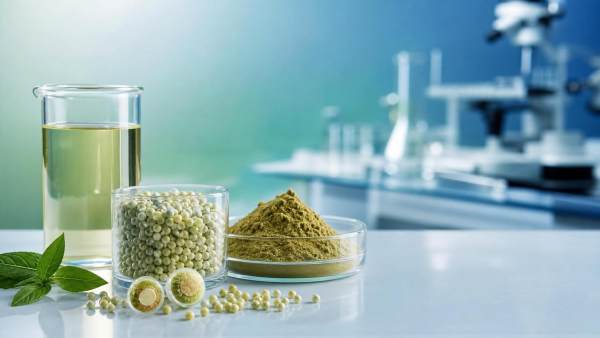
Why are encapsulated bio extracts drawing so much attention now?
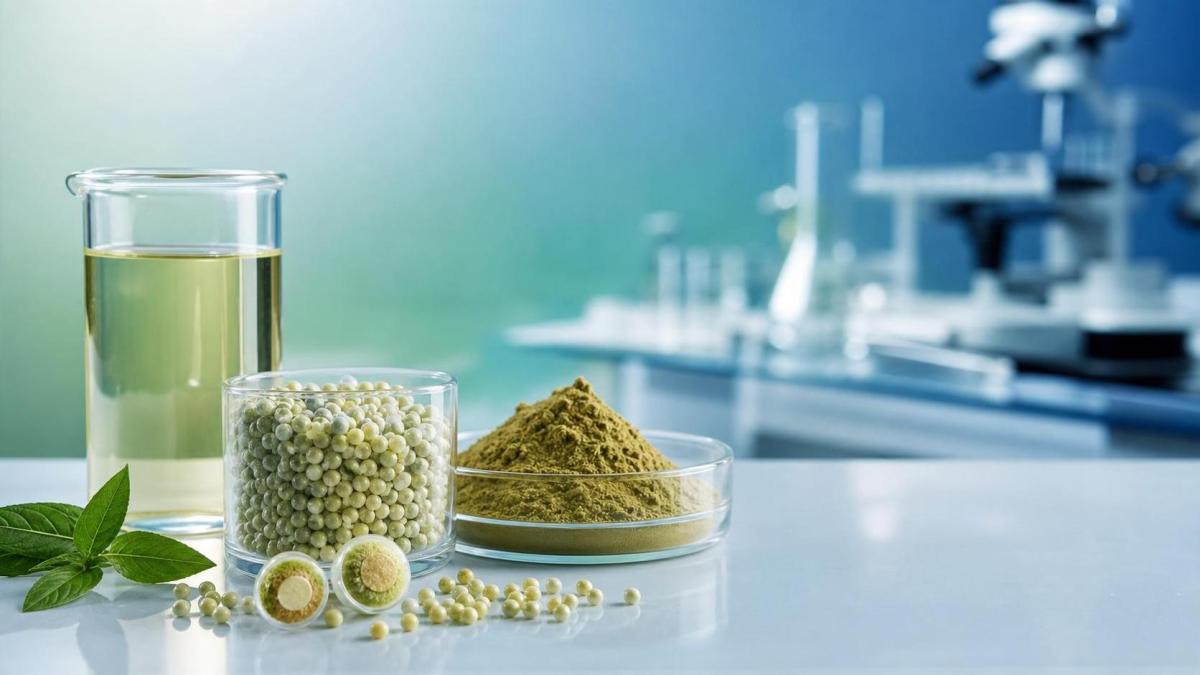
Encapsulated bio extracts sit at the intersection of performance, stability, and compliance.
That matters more today because raw materials travel farther, shelf life targets are tighter, and formulation losses are harder to tolerate.
In simple terms, encapsulation places a bioactive compound inside a protective carrier.
The carrier may be lipid-based, carbohydrate-based, protein-based, or polymer-assisted, depending on the application and release goal.
The main reason formulators use encapsulated bio extracts is not novelty.
It is control.
Sensitive actives can degrade under heat, oxygen, light, moisture, or low pH.
Encapsulation helps reduce that degradation and keeps more of the intended activity available at the point of use.
This is especially relevant in food, feed, and botanical formulas, where a small performance gap can affect taste, efficacy, uniformity, or label consistency.
Across the sectors followed by AgriChem Chronicle, interest is also linked to traceability.
When supply chains are regulated and globally distributed, ingredient behavior has to be documented, reproducible, and technically defensible.
That is why encapsulated bio extracts are often discussed alongside GMP, FDA, and broader quality assurance frameworks.
What are encapsulated bio extracts actually used for in food, feed, and botanical formulas?
The short answer is protection and delivery, but the practical uses vary by matrix.
In food systems, encapsulated bio extracts are often used to stabilize flavors, antioxidants, pigments, probiotics, essential oils, and plant-derived actives.
A beverage, for example, may need oxidation-sensitive extracts to remain stable during filling, transport, and storage.
A bakery product may need heat protection during processing.
In feed, the use case becomes more functional.
Encapsulated bio extracts may carry phytogenics, organic acids, enzymes, or gut-support compounds that should survive pelleting and then release later in the digestive tract.
Without encapsulation, part of the active may be lost before it can deliver value.
Botanical formulas raise a different issue.
Many botanical extracts have volatile aroma compounds, bitter notes, poor solubility, or variable bioavailability.
Encapsulation can mask taste, improve dispersion, and support more predictable release.
That becomes useful in capsules, functional powders, oral strips, herbal beverages, and blended ingredient systems.
More often than not, the value comes from making an extract easier to process at scale, not merely easier to market.
A quick application view
This kind of side-by-side view is often more useful than broad claims about performance.
How do encapsulated bio extracts differ from standard extracts?
A standard extract is usually judged by purity, potency, and source.
Encapsulated bio extracts add another layer: delivery design.
That means two ingredients with the same active content may behave very differently in the same formula.
One may dissolve faster, oxidize sooner, or lose activity during compression or extrusion.
The encapsulated version may cost more per kilogram, yet still reduce total formulation loss.
This is where many comparisons go wrong.
Looking only at unit price can hide the true delivered value.
In actual use, comparison should include recovery after processing, active retention over time, and release behavior in the intended matrix.
It is also worth noting that encapsulation is not a single technology.
Spray drying, coacervation, liposomal systems, beadlets, and fluid-bed coating can all produce very different outcomes.
So when someone asks whether encapsulated bio extracts are better, the real question is better for what process, under what stress, and with what release target.
What should you check before choosing encapsulated bio extracts?
This is usually the turning point between a promising sample and a reliable commercial ingredient.
A useful evaluation starts with the formulation environment, not the brochure headline.
Ask what the extract will face from blending to end use.
- Temperature stress during drying, pelleting, baking, or storage
- Exposure to oxygen, moisture, light, or acidic conditions
- Need for immediate release or delayed release
- Compatibility with carriers, binders, emulsifiers, or excipients
- Regulatory fit for the target market and finished application
The second layer is analytical proof.
A serious review should include active assay, encapsulation efficiency, particle distribution, residual solvents where relevant, and stability data under realistic conditions.
For regulated supply chains, documentation matters almost as much as chemistry.
That is one reason technical journals such as AgriChem Chronicle emphasize manufacturing validation and compliance context, not just ingredient claims.
If traceability is weak, performance data becomes harder to trust.
Need a practical shortcut?
Check whether the supplier can explain not only what the encapsulated bio extracts contain, but why the carrier system was chosen for that use case.
A simple screening table
Where do mistakes usually happen with encapsulated bio extracts?
The most common mistake is assuming encapsulation solves every stability problem.
It does not.
A poor carrier choice can reduce dispersion, alter mouthfeel, clog equipment, or delay release too much.
Another frequent issue is underestimating matrix effects.
An encapsulated extract may behave well in a lab model, then perform differently in a full formula with salts, fats, binders, or competing actives.
Shelf-life assumptions can also be misleading.
A stable encapsulated bio extract still depends on storage conditions, packaging quality, and water activity control.
Cost analysis is another trap.
A lower-cost non-encapsulated option may require higher overages, tighter handling controls, or faster inventory turnover.
That can erase the price advantage.
More careful teams usually compare total system cost instead.
They look at wastage, batch consistency, testing frequency, and reformulation risk.
The final caution is documentation drift.
When raw botanical sourcing, active assay, and encapsulation process records are disconnected, technical review becomes slow and uncertain.
In regulated markets, that delay can matter as much as the ingredient itself.
How should you evaluate next steps if encapsulated bio extracts seem relevant?
Start with the problem you need the extract to solve.
Is the issue oxidation, taste, heat loss, delivery timing, handling safety, or inconsistent performance?
That answer will narrow the right encapsulation approach quickly.
Then build a short checklist for comparison.
- Define the required active level at the point of use
- Set acceptable loss during processing and storage
- Review carrier acceptability for formulation and labeling
- Request release and stability data under relevant conditions
- Compare total delivered cost, not only purchase price
Encapsulated bio extracts are useful because they turn a fragile active into a more manageable industrial ingredient.
Still, usefulness depends on fit.
The better question is not whether encapsulation is advanced.
It is whether the encapsulated system matches the processing route, regulatory setting, and performance target.
For ongoing review, it helps to track technical reporting that connects ingredient science with compliance and supply-chain transparency.
That broader context often reveals why one encapsulated format succeeds while another creates avoidable complexity.
Related Intelligence
- Botanical ExtractsChoosing Botanical Extracts for Pharmaceuticals: Potency, Purity, and ComplianceBotanical extracts for pharmaceuticals: learn how to assess potency, purity, traceability, and GMP compliance for confident, regulatory-ready supplier selection.
- Botanical ExtractsBotanical Extracts Market Outlook: Supply, Pricing, and Buyer RisksBotanical extracts market insights on supply, pricing, quality control, and buyer risks—compare suppliers confidently and protect your sourcing strategy.
- Botanical ExtractsEurope Botanical Extracts Market: Key Growth Drivers, Risks, and OpportunitiesEurope botanical extracts market insights: explore growth drivers, regulatory risks, supply-chain challenges, and scalable opportunities for compliant, high-value ingredients.
The Morning Broadsheet
Daily chemical briefings, market shifts, and peer-reviewed summaries delivered to your terminal.
