

The Authority in Global Agricultural Chemistry & Bio-Resources
FDA Tightens Import Rules for Botanical Extracts
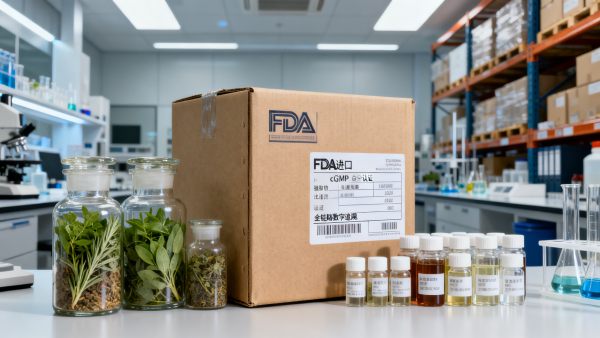
On August 9, 2026, the US FDA released an import compliance update for botanical extracts used in human food and dietary supplements, introducing a combined requirement that links cGMP compliance under 21 CFR Part 111 with end-to-end digital traceability. For exporters, ingredient suppliers, processors, and buyers involved in cross-border botanical extract trade, the change matters because market access is now tied not only to manufacturing controls but also to the ability to present traceable source and testing records in a form acceptable to FDA review.
What the FDA update explicitly requires
The FDA notice, titled Botanical Extracts for Human Food & Dietary Supplements: Import Compliance Update and identified as FDA-2026-IMP-BE-08, was issued on August 9, 2026. According to the information provided, all imported botanical extracts must meet both cGMP 21 CFR Part 111 certification requirements and full-chain digital traceability requirements.
The traceability element specifically includes harvest-site GPS coordinates and the upload of raw solvent residue testing data to the FDA Gateway. The update directly affects exporters in major supplying countries including China, India, and Vietnam. Products that do not meet the stated requirements may face automatic detention and return.
Where the pressure is likely to appear first in the supply chain
Market access risk moves upstream to exporters and source managers
From an industry perspective, exporters are likely to feel the change first because the new requirement is framed as an import entry condition. The impact is not limited to finished shipment documentation; it also reaches upstream collection and sourcing records. What deserves closer attention is whether suppliers can connect harvest-origin information, production compliance status, and laboratory records into one reviewable submission path.
Procurement teams may need to reassess supplier qualification standards
For procurement functions that buy botanical extracts for food or dietary supplement use, the rule change may alter supplier screening criteria. Analysis shows that qualification can no longer be treated as a narrow question of price, specification, or routine quality paperwork alone. Buyers may need to focus more closely on whether a supplier can demonstrate both Part 111 compliance and traceability records that extend back to harvest location and testing data.
Processors and manufacturers face added document coordination pressure
Processing and manufacturing companies that depend on imported botanical extracts may be affected through document readiness, lot traceability, and shipment release timing. Observably, if upstream records are incomplete or inconsistent, the issue may surface at import review rather than only during a private quality audit. That creates a practical compliance concern around batch files, supporting test records, and the consistency of information submitted through the FDA Gateway.
Testing and compliance service providers may see more demand for evidentiary support
The update also has implications for testing laboratories, certification support firms, and other compliance service providers. The reason is straightforward: the requirement refers not only to a compliance outcome but to raw solvent residue test data and digital traceability records. These service roles may become more important in helping exporters and manufacturers prepare records that are complete, usable, and aligned with import review expectations.
Operational issues companies should watch now
Check whether current certification coverage is sufficient
Companies involved in export or sourcing should first verify whether their existing cGMP 21 CFR Part 111 compliance status is current and whether it is documented in a way that supports import review. Analysis shows that this update should not be read as a paperwork-only change, because the requirement is presented together with a traceability obligation rather than as a standalone certification item.
Review whether traceability records are complete at lot level
What deserves closer attention is the practical completeness of traceability data. The information provided highlights harvest-site GPS coordinates and raw solvent residue testing data uploaded to the FDA Gateway, so companies should closely examine whether their present records can connect sourcing, testing, and shipment lots without gaps. If those links are weak, the compliance issue may emerge before or at entry.
Revisit shipping schedules and purchasing plans around September 2026
Because the title of the update indicates implementation from September 2026, exporters, buyers, and supply chain coordinators should pay attention to how this timing affects shipment preparation and purchasing cycles. The provided information does not define detailed enforcement mechanics, so it would be premature to treat every operational consequence as settled. Even so, businesses may need to review document lead times and supplier readiness in advance of shipments intended for the US market.
Watch for further clarification in execution language and supporting documents
The current notice identifies the direction of compliance clearly, but the input provided does not include more detailed execution language beyond the stated requirements and consequences. Observably, companies should continue monitoring official wording, supporting compliance instructions, customer document requests, and any downstream contractual changes tied to import acceptance.
How this update is best understood at this stage
Analysis shows that this is more appropriately understood as an execution signal with immediate compliance relevance, rather than as a general policy discussion. The reason is that the update ties import eligibility to two concrete elements: Part 111 compliance and full-chain digital traceability. At the same time, it is still necessary to observe how consistently the requirement is interpreted in procurement documents, supplier onboarding standards, and shipment review practice, because the input provided does not include broader implementation detail.
From an industry perspective, the practical significance lies in the FDA linking manufacturing compliance and source transparency into one entry requirement. That combination may affect how companies structure supplier management, testing evidence, and shipment files, especially in supply chains where source material passes through multiple collection and processing stages before export.
What the market should take from this development
The update points to a stricter import compliance threshold for botanical extracts entering the United States. It is more appropriate to understand this as a rule change with real trade and documentation implications, especially for exporters and buyers relying on established supply routes from major producing countries. The immediate takeaway is not that all outcomes are already fixed, but that compliance expectations have been stated in a way that can directly affect admissibility, shipment continuity, and supplier qualification decisions.
Source basis and points that still require verification
This article is based on the user-provided news title, event date, and event summary. For developments of this kind, relevant source categories typically include official regulator notices, customs or trade authority releases, industry association updates, standards-related documents, and reporting by established professional media. A specific official source link was not provided in the input, so the underlying publication and any follow-up materials still need ongoing verification.
Further observation is still required regarding detailed enforcement language, certification interpretation, document submission practice, procurement-side implementation, tender or specification changes, industry feedback, and how companies in affected supply chains adapt their compliance processes in response.
Related Intelligence
- Botanical ExtractsChoosing Botanical Extracts for Pharmaceuticals: Potency, Purity, and ComplianceBotanical extracts for pharmaceuticals: learn how to assess potency, purity, traceability, and GMP compliance for confident, regulatory-ready supplier selection.
- Botanical ExtractsBotanical Extracts Market Outlook: Supply, Pricing, and Buyer RisksBotanical extracts market insights on supply, pricing, quality control, and buyer risks—compare suppliers confidently and protect your sourcing strategy.
- Botanical ExtractsEurope Botanical Extracts Market: Key Growth Drivers, Risks, and OpportunitiesEurope botanical extracts market insights: explore growth drivers, regulatory risks, supply-chain challenges, and scalable opportunities for compliant, high-value ingredients.
The Morning Broadsheet
Daily chemical briefings, market shifts, and peer-reviewed summaries delivered to your terminal.
