

The Authority in Global Agricultural Chemistry & Bio-Resources
Bioprocess Engineering in Southeast Asia: Key Growth Drivers and Capacity Outlook
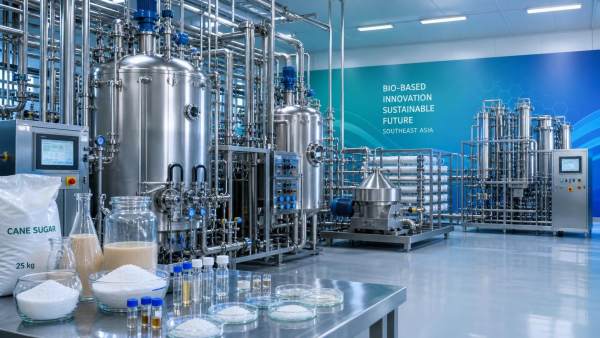
Commercial evaluation teams looking at bioprocess engineering Southeast Asia are no longer studying an emerging possibility. They are assessing a region that is moving from selective pilot activity into more serious manufacturing build-out. That shift matters because bioprocessing sits at the intersection of several industries now under pressure to localize supply, improve process resilience, and meet stricter quality expectations. In Southeast Asia, those pressures are showing up in pharmaceuticals, food and beverage ingredients, enzyme production, agricultural biotechnology, fermentation-based specialty chemicals, and selected waste-to-value applications.
The opportunity, however, is not evenly distributed. Capacity growth in the region is being shaped by a practical mix of factors: regulatory maturity, utility reliability, access to technical talent, proximity to feedstocks, industrial park readiness, and the willingness of governments to support higher-value manufacturing instead of commodity-only exports. For business evaluators, the key question is not whether Southeast Asia will grow in bioprocessing. It is where growth will be easiest to scale, where bottlenecks may delay commercialization, and how regional supply chains will influence project economics over the next few years.
Why Southeast Asia is becoming more relevant in bioprocess engineering
Part of the answer lies in geography, but geography alone does not build fermentation plants or downstream purification lines. Southeast Asia benefits from its role as a manufacturing bridge between China, India, Australia, and major end-use markets across East Asia and the Middle East. It also has a large agricultural base, giving certain countries natural advantages in biomass, starch, sugar, and marine resources that can support bioprocess inputs.
Yet the more decisive driver is industrial upgrading. Governments and private operators across the region are trying to move beyond low-margin processing into technically controlled production environments. That includes biologics-related infrastructure, precision fermentation, microbial processing, functional ingredients, nutraceutical extraction, and process systems that can satisfy multinational customer audits. In practical terms, bioprocess engineering is becoming a strategic capability rather than a niche technical service.
There is also a procurement logic behind the trend. Global buyers in pharmaceuticals, food ingredients, and industrial biotechnology increasingly want secondary and tertiary sourcing options outside a single-country concentration model. Southeast Asia is attractive because it can serve as an alternative manufacturing base while still remaining integrated with wider Asian raw material and equipment ecosystems.
The strongest growth drivers are industrial, not theoretical
Several growth drivers keep appearing in boardroom assessments and feasibility reviews.
First, demand diversification. Bioprocess engineering in the region is no longer tied to one vertical. Fermentation and downstream processing capabilities are relevant to active ingredients, amino acids, organic acids, probiotics, aquaculture inputs, food cultures, plant-derived compounds, and specialty biochemicals. This diversity reduces the risk that a single market slowdown will undermine all investment cases.
Second, feedstock adjacency. Countries with established sugar, cassava, palm, fisheries, and grain industries have a head start in bioprocess-linked value chains. Not every agricultural feedstock translates into a commercially viable biomanufacturing input, but local access can lower logistics complexity and support circular processing models.
Third, regional demand for regulated production. As healthcare, nutrition, and food safety standards rise across Asia, buyers are asking for more consistency, stronger documentation, and cleaner process controls. That creates room for facilities engineered around traceability, validated utilities, contamination control, and better quality systems.
Fourth, state-backed industrial ambition. Investment promotion agencies in several Southeast Asian markets have become more sophisticated about attracting high-specification manufacturing. Instead of simply marketing low labor costs, they are building arguments around biotech parks, customs incentives, export access, and collaboration with academic or technical institutes.
Finally, supply chain resilience. After years of disruption in freight, raw materials, and geopolitical trade assumptions, many operators are reluctant to depend on a single production geography for strategically sensitive inputs. Bioprocess engineering capacity in Southeast Asia is increasingly viewed through that resilience lens.
Which markets stand out, and why capacity will not scale uniformly
It is tempting to speak about Southeast Asia as one integrated bioprocessing market, but evaluation teams know the reality is more fragmented. Capacity outlook depends heavily on country-specific execution.
Singapore remains the region’s benchmark for regulatory credibility, technical workforce depth, and high-value biomanufacturing readiness. It is especially relevant for advanced process development, biologics support infrastructure, and operations where quality assurance and multinational compliance carry unusual weight. Its limitation is cost. For many large-volume applications, Singapore is better suited to high-complexity and coordination-intensive functions than to every form of scale manufacturing.
Malaysia continues to attract interest because it offers a balance of industrial capability, export orientation, and a relatively mature manufacturing environment. It is often examined for food ingredients, specialty chemicals, halal-sensitive production pathways, and selected biotech applications where process quality and logistics both matter.
Thailand has meaningful strengths in food processing, agro-industrial integration, and established manufacturing zones. Its relevance to bioprocess engineering Southeast Asia is closely tied to how effectively companies can convert agricultural output and industrial know-how into higher-value biochemical and fermentation capacity.
Indonesia stands out for scale, feedstock potential, and domestic market size. It is a market that often looks compelling on long-term strategy slides, especially for biomass-linked or consumer-adjacent applications. But procurement and investment teams must weigh infrastructure variability, permitting timelines, and execution complexity very carefully.
Vietnam is attracting attention as its broader industrial base matures and export manufacturing ecosystems deepen. For bioprocess investment, the country’s appeal rests on its ability to keep improving technical operations, utilities, and compliance frameworks fast enough to support more specialized production.
Other markets, including the Philippines, are relevant in narrower contexts, especially where local demand, marine resources, or selected food and biotech applications create a rational niche. But they are less likely to define the region’s near-term capacity story at scale.
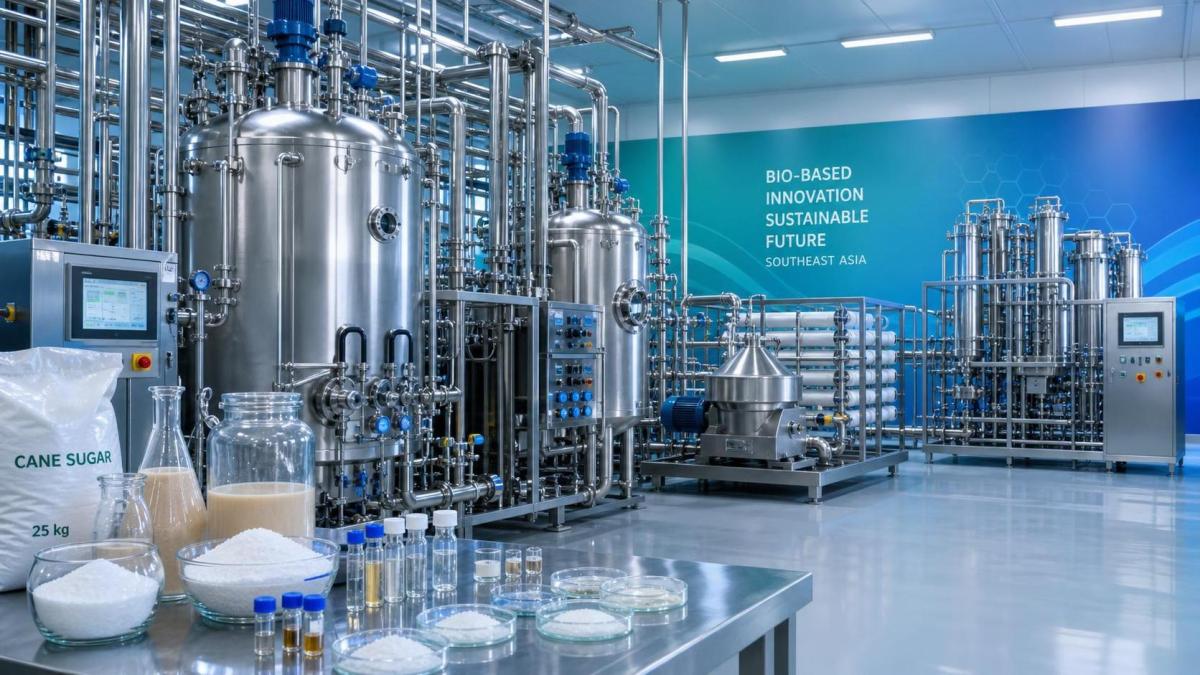
Capacity outlook: where expansion is most likely to happen
Over the near to medium term, capacity in Southeast Asia is likely to expand in layers rather than through one dramatic regional leap. Commercial teams should expect three patterns.
The first is incremental expansion around existing industrial strengths. This includes fermentation and processing facilities tied to food ingredients, feed applications, and agricultural inputs. These projects usually move faster because they can leverage known raw materials, established export routes, and workforces already familiar with process manufacturing.
The second is targeted growth in regulated and higher-specification segments. Facilities serving pharmaceutical intermediates, bio-extracts, selected APIs, or high-purity ingredients require stricter engineering design, stronger clean utility systems, and more reliable quality oversight. Capacity here will grow, but more selectively and often around markets with stronger institutional support.
The third is hybrid models combining local production with imported technical components. In many cases, upstream or feedstock-heavy processing may be localized in one country, while highly sensitive downstream finishing, formulation, or quality release functions are concentrated elsewhere. This model reflects a realistic regional division of labor rather than a weakness.
That means capacity growth should not be measured only by reactor volume or announced plant openings. It should also be assessed by the maturity of process integration: media preparation, sterilization systems, filtration, chromatography or purification capability where relevant, waste handling, cold chain support, digital batch traceability, and audit readiness. A plant with available space but weak utility stability is not the same as a plant capable of consistent commercial performance.
What business evaluators should test before calling a market “ready”
Many early-stage evaluations overemphasize labor cost and tax incentives. In bioprocess engineering, those are secondary if the operating environment cannot support process integrity.
A more disciplined evaluation starts with utilities. Water quality, steam reliability, power stability, wastewater treatment, and environmental permitting all influence cost, throughput, and compliance exposure. Bioprocessing is unforgiving when basic plant systems are inconsistent.
The next test is talent depth. A market may have engineers, but does it have engineers with fermentation, validation, aseptic practice, scale-up, cleaning verification, and process analytics experience? Can a site recruit supervisors who understand deviations, root-cause investigations, and documentation discipline? These questions often determine whether a project ramps in twelve months or struggles for years.
Regulatory alignment is equally important. For companies serving global buyers, the issue is not simply local approval. It is whether a facility can operate in a manner credible under GMP-style expectations, food safety frameworks, environmental controls, and customer audit scrutiny. Markets that can demonstrate predictable enforcement and documentable standards usually command stronger long-term confidence.
Finally, evaluators should examine supplier ecosystems. Equipment integrators, cleanroom contractors, instrumentation support, consumables providers, and qualified maintenance partners all matter. An attractive site can quickly become expensive if every specialized repair, calibration task, or quality-critical component must be imported under delay-prone conditions.
Where supply chains are evolving most visibly
One of the most notable developments in Southeast Asia is the gradual tightening of links between agricultural production, ingredient processing, and higher-value biochemical conversion. This is particularly relevant for readers of AgriChem Chronicle, where the overlap between primary industries and fine chemicals is not theoretical. It is already shaping procurement strategy.
Feed and grain processors are exploring value-added biological outputs. Bio-extract developers are paying closer attention to process standardization and traceability. Industrial buyers that once treated agricultural inputs as commodities are now evaluating them as controlled substrates within more sophisticated manufacturing systems. In parallel, pharmaceutical and nutraceutical sourcing teams are asking tougher questions about origin transparency, contamination risk, and processing consistency.
That shift favors operators able to connect upstream raw material understanding with downstream process discipline. It also explains why regional bioprocess engineering is gaining strategic relevance: the future competitive edge may come less from cheap volume and more from controlled conversion of abundant biological inputs into certifiable products.
Common misreads in the Southeast Asia growth story
One common mistake is assuming that strong agricultural output automatically translates into bioprocess competitiveness. Feedstock helps, but engineering discipline, utilities, quality systems, and market access usually determine whether feedstock becomes commercial advantage or just theoretical potential.
Another misread is treating all biotech-related capacity as interchangeable. Pilot fermentation, contract manufacturing, enzyme production, botanical extraction, and regulated biopharma support each require different infrastructure and risk tolerance. A market that is excellent for one category may be unconvincing for another.
There is also a tendency to underestimate time-to-stability. Even where capital is available, commercial bioprocess operations take time to optimize. Yield variability, contamination control, staff training, and validation cycles can all delay full utilization. For this reason, business cases should model ramp risk, not just installed capacity.
What the next phase likely looks like
The next phase of bioprocess engineering Southeast Asia will probably be defined by disciplined specialization. Some countries will deepen their role in regulated, high-complexity production. Others will expand through agro-linked fermentation, ingredient processing, or industrial biotechnology tied to local feedstocks. A few will try to do both, with mixed results.
For commercial evaluation teams, the best opportunities are likely to emerge where industrial policy, infrastructure, and end-market demand align well enough to reduce execution friction. That does not always mean the lowest-cost market. Often, the more durable investment thesis comes from locations that combine decent economics with technical credibility and dependable operating conditions.
In that sense, Southeast Asia is not a simple cost-arbitrage story. It is becoming a selective growth region for companies that understand how process engineering, compliance expectations, and supply chain realism interact. The businesses that assess it clearly will be better positioned to identify not only where capacity is being built, but where capacity is truly becoming commercially usable.
Related Intelligence
- APIs & IntermediatesProcurement Planning: Which Resource Reports Help Prevent Material Shortages?Discover how procurement planning resource reports reveal usable stock, shortage dates, and supplier risks so you can prevent material shortages and keep production on track.
- APIs & IntermediatesBuyer-Focused Vendor Screening: How Procurement Teams Verify Supplier Fit and RiskBuyer-focused vendor screening helps procurement teams verify supplier fit, compliance, quality, and supply-chain resilience—reduce risk and make smarter sourcing decisions.
- APIs & IntermediatesHow API Sourcing Intelligence Reduces Supplier Risk and Protects Supply ContinuityChemical sourcing intelligence for APIs helps reduce supplier risk, validate capacity and GMP controls, and protect supply continuity. Explore practical sourcing insights.
The Morning Broadsheet
Daily chemical briefings, market shifts, and peer-reviewed summaries delivered to your terminal.
