

The Authority in Global Agricultural Chemistry & Bio-Resources
How API Sourcing Intelligence Reduces Supplier Risk and Protects Supply Continuity
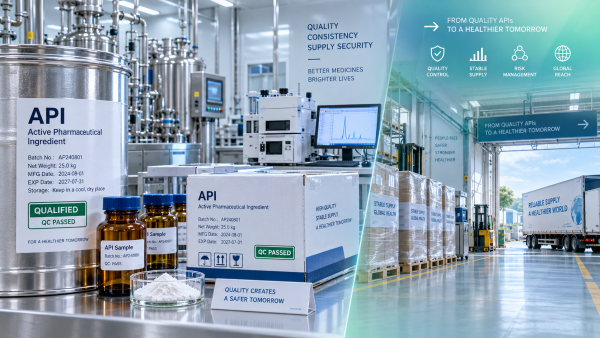
API supply continuity is often lost long before a shipment is delayed. The early warning signs are usually dispersed across audit records, regulatory actions, import patterns, raw-material dependencies, quality correspondence, production changes, and commercial terms. A low quoted price can therefore conceal a higher total exposure when the source has a narrow starting-material base, an unresolved GMP observation, limited batch-release capacity, or dependence on a single export route.
Chemical sourcing intelligence for APIs brings these signals into one qualification and monitoring process. Its purpose is not to predict every disruption. It is to distinguish between a supplier that is inexpensive because its process is efficient and one that appears inexpensive because relevant risks have not yet been priced into the decision. That distinction affects supplier approval, safety-stock planning, dual-source timing, and the cost of responding when a quality or logistics event occurs.
Price comparison needs a supply-continuity context
An API quotation is only comparable when the commercial unit, quality status, delivery basis, and technical scope are aligned. Two offers for the same named molecule may represent very different supply positions. One source may quote material from an established commercial process with a defined impurity profile and documented stability data. Another may be quoting pilot-scale output, a different particle-size distribution, or a route that relies on an intermediate supplied by an external producer. The lower number is not necessarily wrong; it may simply describe a different level of readiness.
Cost exposure also develops after purchase order placement. Rejected batches, extended investigations, repeat analytical testing, delayed release documentation, emergency air freight, and reformulation work can all outweigh a nominal unit-price advantage. Intelligence work should therefore connect price to the conditions required to receive usable material on the agreed schedule.
Supplier identity is not the same as manufacturing control
A trading entity, a contract development and manufacturing organization, a site operator, and the legal holder of a drug master file may all appear in the same supply chain. Treating them as one supplier can obscure who controls synthesis, testing, release, storage, and export documentation. A reliable supplier profile identifies the actual manufacturing site for each relevant stage and records whether the quoted material is made there consistently.
This matters especially where an API route includes a specialized intermediate. The final API plant may have strong facilities and acceptable quality documentation, yet its continuity remains exposed if the intermediate is single-sourced, produced in a region with constrained export routes, or reliant on a reagent with volatile availability. A site visit or audit focused only on the final processing area will not necessarily reveal that dependency.
Useful intelligence separates four questions that are often blended together:
- Who contracts and invoices: the commercial counterparty may not own the production assets or control production scheduling.
- Who performs the chemistry: identify the sites responsible for critical transformations, purification, milling, and drying, rather than relying on a general corporate address.
- Who releases the batch: release authority, laboratory capability, and the handling of deviations determine whether finished material can leave on time.
- Who supplies the critical inputs: a stable final API operation can still be constrained by a single intermediate, solvent, catalyst, or packaging component.
The level of detail should follow the API's clinical and commercial importance. For a high-volume, multi-source molecule with interchangeable qualified sources, deep mapping of every noncritical consumable may add little value. For a narrow-therapeutic-index API, a complex fermentation product, or a molecule with few approved routes, the same exercise can reveal a meaningful single point of failure.
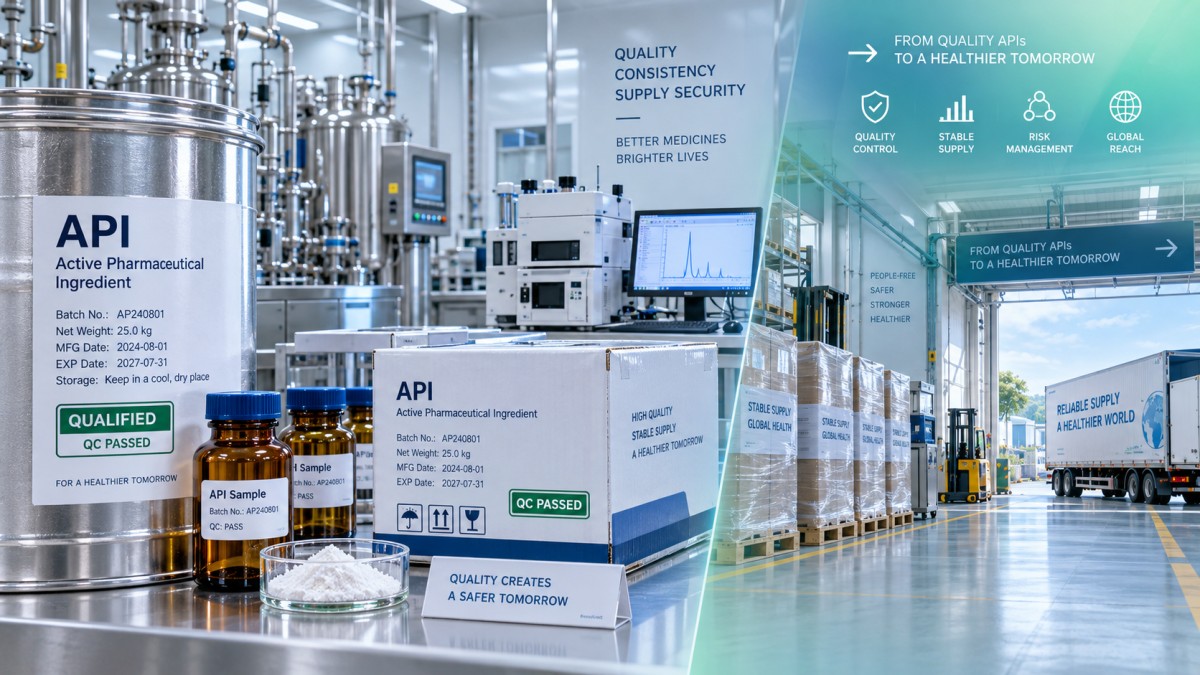
Reading GMP and quality evidence without reducing it to a pass-fail label
GMP status is essential, but a certificate or a successful inspection history is not a complete forecast of supply performance. The practical question is whether quality systems are functioning under the load and change rate of the proposed supply arrangement. A facility can be compliant while still facing extended batch disposition times, laboratory backlogs, recurring documentation corrections, or limited capacity for investigation work.
Quality intelligence should examine the pattern behind available evidence. Recurring observations related to data integrity, cleaning validation, cross-contamination controls, deviation closure, or laboratory controls carry different implications. A documentation gap corrected promptly is not equivalent to an unresolved pattern affecting the reliability of analytical results. Similarly, an inspection outcome from one site should not automatically be assigned to another site under the same corporate group.
Change control deserves particular attention because it is where continuity and regulatory exposure intersect. Changes to starting-material suppliers, synthetic route, catalyst source, crystallization solvent, drying conditions, micronization settings, or packaging can alter material attributes even when the release specification is met. Polymorphic form, residual solvent profile, particle-size distribution, bulk density, flow behavior, and impurity fingerprint may affect downstream formulation performance. For APIs used in solid oral dosage forms, a milling adjustment can influence dissolution behavior; for sterile or highly potent applications, containment and cleaning controls introduce additional operational dependencies.
Before relying on a source as a continuity option, the required notification path should be clear. The issue is not whether all changes are prohibited. A resilient arrangement distinguishes changes that require prior approval, changes that require notification and assessment, and changes that are operationally minor but still need traceable documentation. Ambiguity here creates late-stage rework when a batch has already been made under altered conditions.
Capacity claims must be translated into schedulable output
Installed equipment capacity is an incomplete measure. Actual output depends on batch yield, cycle time, cleaning intervals, campaign sequencing, containment requirements, quality-control throughput, waste handling, and the availability of qualified operators. A multipurpose plant may have enough reactor volume on paper while its annual schedule is constrained by high-value projects, incompatible chemistries, or lengthy cleaning validation between campaigns.
Capacity assessment becomes more credible when it traces the manufacturing sequence. Ask where the bottleneck sits: reaction, filtration, drying, crystallization, micronization, testing, or batch record review. A route with a long reaction is not automatically the limiting step. For some materials, the constraint is the isolation train or the number of laboratory instruments available for release testing. For others, yield variability at a late-stage purification step makes nominal capacity misleading.
Requested volumes should also be placed against production cadence. A supplier producing quarterly campaigns has a different disruption profile from one operating a regular monthly schedule. The former may offer adequate annual volume but leave little recovery time after a failed batch. Where seasonal raw materials, fermentation feedstocks, or hazardous-reagent permits affect scheduling, the timing of a missed campaign can matter more than total annual capacity.
Geographic exposure is broader than country of origin
Country of manufacture is a useful starting point, not a finished risk assessment. Materials can cross borders several times before final API release: key starting materials may originate elsewhere, intermediates may be custom-made in a second location, and finished API may move through a third-country warehouse or port. A disruption at any of these points can affect lead time, customs documentation, freight availability, or temperature-controlled storage arrangements.
Geographic intelligence is most useful when linked to the route of supply. A source close to the final dosage-form plant may still depend on an imported intermediate with a long replenishment cycle. Conversely, a distant source can be dependable when its input base is diversified, shipping lanes are established, packaging is suitable for transit, and release documentation is consistently available before dispatch.
Transport conditions deserve technical review rather than generic logistics scoring. Hygroscopic APIs, light-sensitive compounds, low-temperature materials, and substances shipped under controlled humidity need packaging and lane controls that preserve quality through customs delays and warehouse handling. A supplier's manufacturing quality cannot compensate for an unsuitable liner, inadequate desiccant strategy, or unclear excursion procedure. The relevant question is whether the validated storage condition remains realistic across the full route, including port holds and destination-side clearance.
Risk signals need ownership and a response threshold
A long supplier scorecard often fails because it converts meaningful differences into a single average. A high score for price or audit readiness can mask a serious vulnerability in a sole-source intermediate. Risk should be recorded in a way that preserves the cause, the affected material, the evidence date, the possible consequence, and the action needed to reduce exposure.
Some signals call for monitoring rather than immediate disqualification. A pending site expansion, for example, may improve future capacity but should not be counted as current output until equipment qualification, staffing, and quality-system readiness are established. A new warehouse can shorten distribution time, yet it does not remove upstream concentration. A second production line only improves resilience when it is qualified for the same process and has access to the same controlled raw materials.
Escalation thresholds should be tied to real operational decisions. A late batch release may trigger a review of safety stock. A material change notification may require technical assessment before the next campaign. Evidence that an intermediate has become single-sourced may justify starting an alternate-source qualification before supply is affected. Without predefined thresholds, warning signals are often documented but not acted on until urgency removes the option for orderly qualification.
Using intelligence during qualification and after approval
Initial qualification is the point at which the most expensive misunderstandings can be avoided. The technical package, quality agreement, supply agreement, and manufacturing profile should describe the same material and the same operating reality. Conflicts between them are often revealing: a quote may state a lead time inconsistent with campaign frequency, or a technical document may identify a production site absent from the quality agreement.
After approval, intelligence must be refreshed around events that alter the original risk position. These include site transfers, major route changes, changes in key starting materials, repeated delivery variance, regulatory actions, ownership changes that affect operations, or a shift from dedicated to multipurpose production. Routine monitoring does not require rebuilding the entire file each time. It requires retaining enough visibility to notice when the assumptions behind source selection are no longer valid.
Supply continuity improves when commercial, quality, technical, and logistics records are reviewed as connected evidence. The result is a sourcing decision that recognizes where an API is actually made, what conditions protect its quality, which dependencies could interrupt it, and how much time remains to respond before a disruption reaches production.
Related Intelligence
- APIs & IntermediatesProcurement Planning: Which Resource Reports Help Prevent Material Shortages?Discover how procurement planning resource reports reveal usable stock, shortage dates, and supplier risks so you can prevent material shortages and keep production on track.
- APIs & IntermediatesBuyer-Focused Vendor Screening: How Procurement Teams Verify Supplier Fit and RiskBuyer-focused vendor screening helps procurement teams verify supplier fit, compliance, quality, and supply-chain resilience—reduce risk and make smarter sourcing decisions.
- APIs & IntermediatesHow API Sourcing Intelligence Reduces Supplier Risk and Protects Supply ContinuityChemical sourcing intelligence for APIs helps reduce supplier risk, validate capacity and GMP controls, and protect supply continuity. Explore practical sourcing insights.
The Morning Broadsheet
Daily chemical briefings, market shifts, and peer-reviewed summaries delivered to your terminal.
