

The Authority in Global Agricultural Chemistry & Bio-Resources
Buyer-Focused Vendor Screening: How Procurement Teams Verify Supplier Fit and Risk

A supplier can look credible in a quotation and still be a poor operational fit. The price may be competitive, the product specification may appear acceptable, and the sales team may respond quickly—yet the manufacturer may lack batch traceability, depend on a single raw-material source, have no reliable change-control process, or be unable to support a sudden increase in demand.
That is why buyer-focused vendor screening has become a central procurement discipline rather than an administrative prequalification exercise. For buyers in fine chemicals, active pharmaceutical ingredients (APIs), agricultural machinery, aquaculture systems, bio-extracts, feed processing, and other supply-critical categories, the real question is not simply, “Can this vendor supply us?” It is, “Can this vendor support our technical, regulatory, commercial, and continuity requirements over time?”
Effective screening turns that question into a repeatable evidence-based process. It helps procurement teams compare suppliers on the factors that matter after the purchase order is issued: product consistency, compliance readiness, service response, logistics control, financial resilience, and willingness to operate transparently.
Why Buyer-Focused Vendor Screening Starts With Internal Clarity
Many supplier evaluations fail before the first vendor is contacted. The buying organization issues a broad request—perhaps for an API intermediate, a grain handling line, a water-quality monitoring system, or a botanical extract—without agreeing internally on what “fit” actually means.
Procurement may prioritize landed cost and payment terms. Quality teams may focus on specifications, documentation, and audit access. Operations may care most about lead time, installation support, spare parts, or production continuity. Regulatory personnel may require evidence of GMP alignment, FDA expectations, EPA-related environmental controls, import documentation, or regional registrations. If these priorities are not reconciled, suppliers receive mixed signals and the eventual shortlist becomes difficult to defend.
A buyer-focused model begins with a category-specific requirement profile. Instead of a generic scorecard, define the conditions that would make a supplier acceptable, preferred, conditional, or disqualified. This profile should distinguish between:
- Non-negotiable requirements: required certifications, technical specifications, legal eligibility, traceability expectations, and quality-system controls.
- Risk-sensitive requirements: dual sourcing of critical materials, business continuity planning, geographic exposure, cybersecurity practices, and logistics resilience.
- Value differentiators: engineering support, formulation expertise, responsiveness, innovation capability, training, and post-sale service.
- Commercial considerations: total cost of ownership, pricing stability, minimum order quantities, credit terms, warranty provisions, and contractual flexibility.
This exercise prevents a common mistake: allowing a low quoted price to outweigh a risk that only becomes visible during scale-up, inspection, harvest season, a regulatory review, or a supply interruption.
Screen the Supplier, Not Just the Product
A product sample can pass testing while the supplier behind it remains unsuitable. This distinction is especially important where consistency matters more than a single successful delivery.
For example, an API supplier may provide a compliant laboratory sample but have unclear controls over impurity profiles at commercial scale. A manufacturer of aquaculture aeration equipment may demonstrate solid machinery performance but lack local parts inventory or field-service coverage. A feed ingredient vendor may offer an attractive assay value while providing incomplete origin documentation for a material moving across multiple jurisdictions.
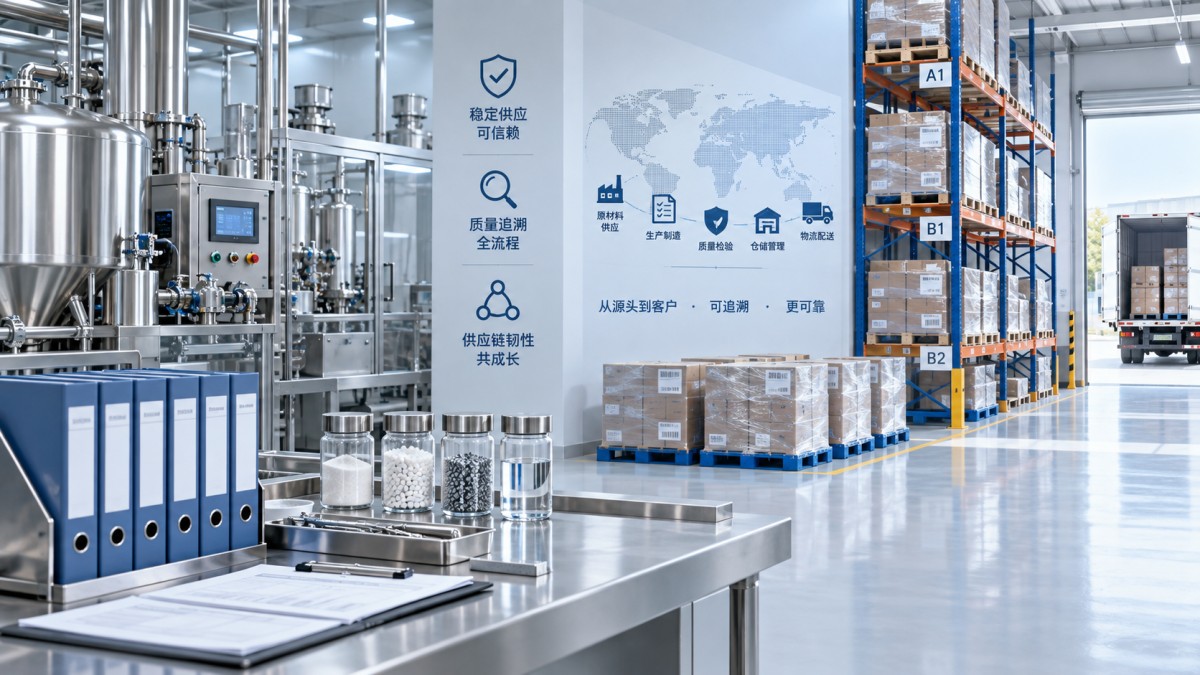
Buyer-focused vendor screening evaluates the supplier as an operating system. It asks whether people, processes, facilities, records, subcontractors, and supply routes can repeatedly deliver the stated promise.
Build the Evidence Trail in Layers
Strong due diligence does not depend on one impressive document or one well-run supplier presentation. It builds confidence through layers of evidence, with each layer either confirming or challenging the vendor’s claims.
1. Identity, Ownership, and Legal Standing
Begin with the basic but essential question of who the organization is. Verify the legal entity that will contract, manufacture, invoice, export, and provide warranty or indemnity support. In multinational supply chains, these parties may not be the same.
Buyers should understand ownership structure, operating locations, years in business, relevant licenses, litigation or sanctions exposure where applicable, and the use of trading companies or intermediaries. A distributor may be entirely appropriate, but the buyer should know whether the distributor controls inventory, provides technical accountability, or simply passes orders to an undisclosed producer.
For regulated chemicals and life-science materials, establish early whether the proposed source is the actual manufacturing site, an approved repacker, a contract manufacturer, or a broker. Ambiguity at this stage can create serious traceability problems later.
2. Technical Capability and Capacity Reality
Technical questionnaires often invite suppliers to state broad capabilities. Procurement teams should push beyond “yes” responses. Ask for information that reveals how capability is achieved: production routes, critical equipment, testing methods, validation status, batch sizes, process controls, formulation limits, and the percentage of capacity already committed to other customers.
Capacity should never be assessed as a single number. Nameplate capacity may differ sharply from available capacity. A plant may technically produce a required volume but be constrained by campaign scheduling, reactor availability, maintenance windows, seasonal demand, energy limitations, or a bottleneck in downstream purification, packaging, or shipping.
For agricultural machinery or processing systems, the equivalent questions concern fabrication capacity, component sourcing, installation crews, commissioning expertise, and spare-parts planning. A vendor able to build a machine is not automatically able to deploy and maintain it in a remote operating environment.
3. Quality Systems and Documentation Discipline
In categories with safety, efficacy, or food-chain implications, documentation quality often predicts operational quality. Buyers should review more than a certificate list. Useful evidence includes standard operating procedures, certificates of analysis, deviation and corrective-action processes, change notifications, complaint handling, calibration controls, retention practices, and supplier qualification procedures.
For API and fine-chemical procurement, the review may extend to GMP-related records, impurity control strategy, analytical method transfer, stability data, data integrity controls, and audit history. For bio-extracts and ingredients, identity testing, contaminant monitoring, solvent controls, adulteration prevention, and botanical origin traceability can be equally consequential.
A vendor that cannot explain how it manages a deviation—or who approves a process change—may not be ready for a buyer whose own quality system is subject to external audit.
Compliance Is Not a Checkbox
Compliance requirements vary by market, product type, intended use, and customer segment. Procurement should resist the temptation to treat a certification as a universal passport. A certificate may be valid, but it may not cover the relevant site, production line, material grade, or destination market.
Buyer-focused vendor screening therefore links compliance evidence to the actual transaction. If a material will enter a pharmaceutical supply chain, what documentation is required for the buyer’s quality agreement and regulatory filing obligations? If an aquaculture system is being installed near sensitive waters, what environmental, discharge, electrical, or local permitting obligations may apply? If a chemical ingredient crosses borders, who is responsible for classification, labeling, safety data sheets, customs documentation, and restricted-substance declarations?
The practical goal is not to turn procurement into a legal department. It is to identify issues early enough that quality, regulatory, environmental, and trade-compliance specialists can make informed decisions before the supplier becomes operationally embedded.
Look for Resilience Where the Supply Chain Is Most Fragile
Supplier risk is rarely evenly distributed. A company may have strong finances but rely on one specialized precursor. It may operate a modern facility but ship through a congested port. It may have multiple factories but use the same regional power grid, subcontractor, or packaging supplier for all of them.
Screening should identify these concentration points. Useful questions include:
- Which raw materials or components are single sourced?
- What is the supplier’s recovery plan for equipment failure, contamination, labor disruption, or transport interruption?
- How quickly can production be reallocated between sites, if at all?
- What inventory is held, where is it held, and who owns it?
- Are critical sub-suppliers qualified and monitored?
- Has the vendor experienced significant quality recalls, delivery failures, or force majeure events, and what changed afterward?
The buyer does not need a supplier with zero risk; such a supplier does not exist. The objective is to understand the risk, determine whether it is proportionate to the category, and decide what controls are needed. Those controls may include safety stock, phased qualification, dual sourcing, a quality agreement, service-level commitments, periodic audits, or a contingency supplier.
Use Site Visits and Audits to Test What Documents Cannot Show
Desktop due diligence is efficient, but it has limits. A remote review may confirm that documents exist; it does not always show whether procedures are consistently followed on the shop floor, in the laboratory, at the warehouse, or in the field.
For strategically important or high-risk vendors, a site visit can reveal operational signals that rarely appear in a tender response: housekeeping standards, segregation of materials, maintenance culture, employee familiarity with procedures, labeling discipline, calibration status, warehouse conditions, and the working relationship between quality and production teams.
An audit should be purposeful rather than theatrical. The questions should reflect the buying risk. An API audit may focus on data integrity and batch controls. A feed processing equipment audit may concentrate on hygienic design, fabrication quality, commissioning capability, and after-sales support. A fishery technology review may examine environmental monitoring, corrosion resistance, field service, and system uptime dependencies.
If an on-site visit is not feasible, buyers can still seek alternatives: live virtual walkthroughs, third-party audit reports, detailed facility photographs with timestamps, sample batch records, reference checks, and structured interviews with quality and operations leaders.
Scorecards Help—When They Do Not Hide Judgment
A weighted supplier scorecard brings discipline to comparison, particularly when several stakeholders are involved. It can show why one vendor is preferred even when another offers a lower unit price. But scorecards become misleading when every criterion is treated as interchangeable.
A supplier should not be able to compensate for a critical compliance gap merely by earning high marks for commercial terms. The best approach is to use a two-step model:
- Gate review: confirm that the supplier meets mandatory legal, technical, quality, and ethical requirements.
- Comparative assessment: rank qualified vendors across cost, service, resilience, innovation, sustainability, and strategic fit.
Weighting should reflect the consequence of failure. For a non-critical packaging item, delivery reliability and cost may dominate. For a sterile-process chemical, auditability, change control, and traceability may rightly carry much greater weight. For capital equipment used during a harvest or production peak, local service coverage and parts availability may be more valuable than a modest purchase-price reduction.
Reference Checks Should Ask About the Difficult Moments
Supplier references are often selected because they are favorable. That does not make them useless, but buyers need better questions than “Were you satisfied?” Ask what happened when a shipment was late, a specification changed, equipment failed, or a quality deviation occurred. Did the vendor communicate early? Did technical staff become available? Were corrective actions documented? Did the relationship improve after the incident?
These conversations often reveal the difference between a vendor that performs well under normal conditions and one that remains dependable when pressure rises. In procurement, that difference can protect production schedules, regulatory standing, customer commitments, and internal credibility.
From Approved Supplier to Managed Relationship
Vendor screening should not end with approval. Conditions change: ownership shifts, raw material sources move, regulations evolve, capacity tightens, and key personnel leave. A supplier that was suitable two years ago may require reassessment today.
Risk-based review cycles keep the process proportionate. High-impact suppliers may require routine performance reviews, updated compliance documents, audit follow-up, and quarterly discussions on capacity and continuity. Lower-risk vendors may need only periodic document renewal and delivery-performance monitoring.
Performance data should be practical and visible: on-time-in-full delivery, quality incidents, response time, corrective-action closure, forecast adherence, service-call resolution, and documentation accuracy. The purpose is not to punish vendors for every exception. It is to create an early-warning system and a more candid working relationship.
A Better Supplier Decision Is a Better Business Decision
Procurement teams are often asked to move quickly, reduce cost, and maintain supply at the same time. Buyer-focused vendor screening creates room for speed without sacrificing judgment because it clarifies what must be proven before commitment.
For organizations sourcing in regulated and technically demanding markets, the strongest supplier is rarely the one with the most polished presentation. It is the one whose capabilities can be verified, whose risks are understood, whose records withstand scrutiny, and whose operating model fits the buyer’s real-world needs.
That standard requires more work at the front end. It also reduces the far more expensive work that follows a failed qualification, rejected shipment, compliance gap, delayed installation, or unexpected supply disruption. In that sense, vendor screening is not simply a procurement control. It is a disciplined way to protect continuity, quality, and confidence across the supply chain.
Related Intelligence
- APIs & IntermediatesProcurement Planning: Which Resource Reports Help Prevent Material Shortages?Discover how procurement planning resource reports reveal usable stock, shortage dates, and supplier risks so you can prevent material shortages and keep production on track.
- APIs & IntermediatesBuyer-Focused Vendor Screening: How Procurement Teams Verify Supplier Fit and RiskBuyer-focused vendor screening helps procurement teams verify supplier fit, compliance, quality, and supply-chain resilience—reduce risk and make smarter sourcing decisions.
- APIs & IntermediatesHow API Sourcing Intelligence Reduces Supplier Risk and Protects Supply ContinuityChemical sourcing intelligence for APIs helps reduce supplier risk, validate capacity and GMP controls, and protect supply continuity. Explore practical sourcing insights.
The Morning Broadsheet
Daily chemical briefings, market shifts, and peer-reviewed summaries delivered to your terminal.
