

The Authority in Global Agricultural Chemistry & Bio-Resources
How to Size a Combine Harvester for Acreage, Crop Mix, and Harvest Windows
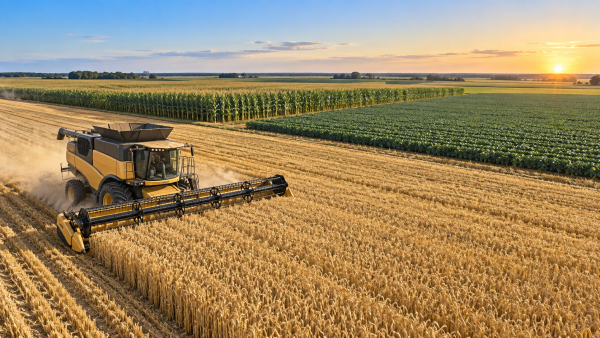
The correct combine size is not the largest machine a budget can support, nor the smallest machine that can physically harvest the farm’s acreage. It is the capacity required to remove each crop within its workable harvest window while accounting for field losses, moisture constraints, transport delays, crop changes, and downtime.
For a procurement decision, acreage is only the starting point. Two operations with the same harvested area can require very different combine harvesters: one may grow a single cereal crop on large, square fields with long dry periods; the other may harvest wheat, maize, soybeans, and oilseed rape across scattered land parcels with short weather windows and frequent header changes. The second operation may need more capacity, better crop adaptability, or stronger service support even if its total acreage is lower.
Start with the harvest window, not nominal horsepower
Combine brochures commonly emphasize engine power, grain-tank volume, or maximum rated throughput. These figures are useful for comparing machine classes, but they do not determine whether a combine can finish harvest on time. The practical sizing question is:
How many acres or hectares must be harvested during the number of hours when the machine can actually work?
Harvest windows are constrained by crop maturity, weather, grain moisture, lodging risk, shattering, quality specifications, labor availability, and access to drying or storage. A nominal three-week harvest period may contain far fewer than 21 workable days. Rain, morning dew, wet soil, excessive grain moisture, and mechanical interruptions reduce the usable hours sharply.
A realistic planning calculation should distinguish between calendar time and productive field time:
Required field capacity = Crop area ÷ Available productive harvest hours
For example, an operation with 1,200 hectares of wheat may identify a 12-day preferred harvest window. If it plans on 8 productive field hours per day after allowing for weather, refueling, unloading, operator breaks, movement, and setup, the combine system must average approximately 12.5 hectares per productive hour. That requirement should then be tested against field conditions and expected crop yield rather than compared only with a manufacturer’s peak capacity claim.
Where several crops overlap, the calculation must be completed crop by crop. A machine that is adequate for wheat may become a bottleneck when maize, soybeans, or oilseed rape require harvesting during the same period. The relevant acreage is therefore not annual acreage alone, but acreage concentrated in the same operational window.
Convert acreage into real field capacity
Theoretical field capacity is determined by working width and travel speed. Actual field capacity is lower because no combine spends every minute cutting crop at a constant speed.
Theoretical capacity (ha/h) = Header width (m) × Travel speed (km/h) ÷ 10
A 10.5 m header operating at 5 km/h has a theoretical capacity of 5.25 ha/h. Actual output must be adjusted for field efficiency:
Effective field capacity = Theoretical capacity × Field efficiency
Field efficiency reflects turns, irregular field shapes, waterways, short rows, unloading interruptions, overlaps, operator variation, crop checks, and road travel within the operation. It is not a fixed machine specification. Large rectangular fields with organized grain-cart support can sustain a much higher effective rate than fragmented plots requiring frequent unloading and maneuvering.
For procurement evaluation, it is safer to model at least three operating conditions:
- Favorable: dry crop, long fields, continuous grain removal, low weed pressure, and limited interruption.
- Expected: typical field geometry, normal unloading stops, variable crop density, and routine setup time.
- Constrained: short fields, lodged patches, damp evenings, reduced travel speed, and intermittent grain transport.
A combine should meet the harvest plan under expected conditions, not only under the favorable scenario. The constrained case is useful for identifying whether a small reserve capacity, a second machine, additional transport equipment, or a wider operational window is necessary.
Header width and separator capacity must be matched
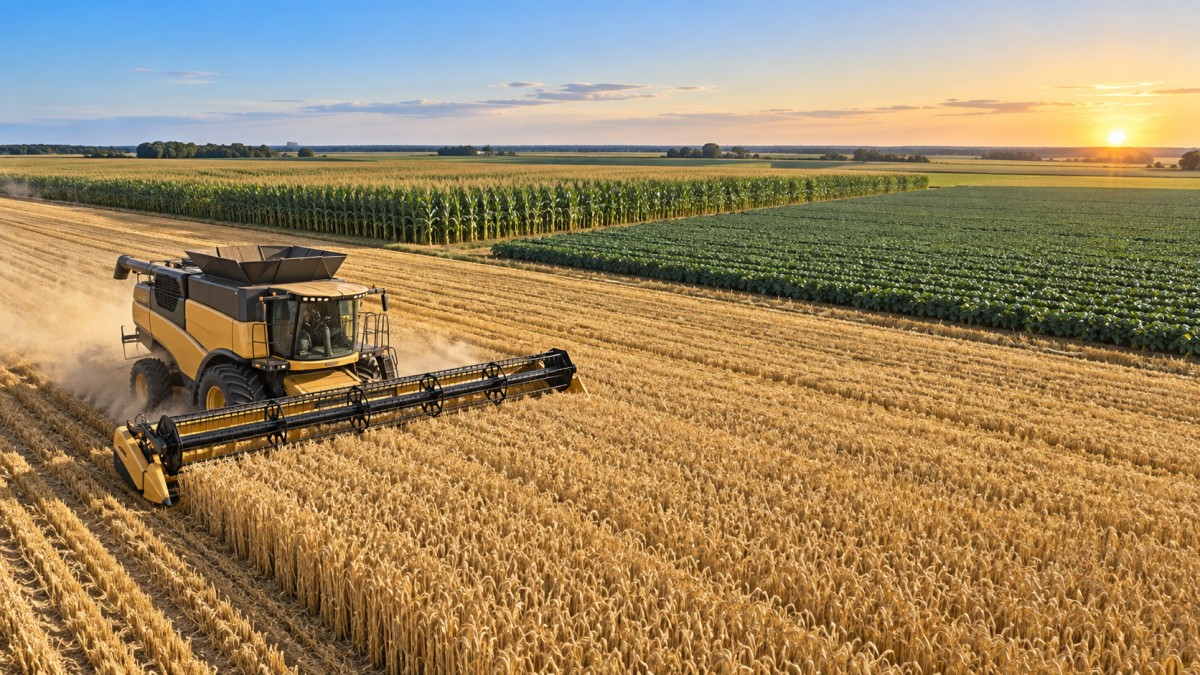
Header width is highly visible in a quotation, but it cannot be selected independently from the combine’s feeding, threshing, separation, cleaning, and residue-management capacity. A wide header can increase theoretical field capacity, yet it will not deliver that output if crop volume forces the operator to reduce speed or causes grain loss, poor separation, damaged grain, or excessive fuel use.
The limiting factor changes by crop and condition:
- In high-yielding cereals, straw volume and separation load can limit forward speed.
- In maize, grain throughput, moisture, stalk condition, and header performance influence productivity.
- In soybeans, low cutting height, terrain following, pod retention, and cutter-bar performance may matter more than engine power.
- In oilseed rape, shatter losses, side-knife configuration, and header extensions can affect the economic result more than headline harvesting speed.
Machine class should therefore be evaluated against expected crop mass flow, not acreage alone. High-yield crops generate more tonnes per hour at the same ground speed and header width. A combine that handles a broad cereal header efficiently in moderate-yield grain may slow substantially in dense, green-stemmed, high-yield material.
Header selection also has a direct effect on logistics and ownership cost. Wider headers can reduce harvesting time but may require transport trailers, more complicated road movement, larger turning headlands, and careful matching with grain-cart capacity. On small, irregular, or remote parcels, a slightly narrower header may produce similar daily output because it turns more easily, loses less time in transport, and can be used across more fields without disruption.
Crop mix changes the definition of a “suitable” combine
A single-crop operation can optimize for a narrow harvesting task. A mixed-crop operation needs a system that can move between crops without sacrificing quality or creating excessive setup burden. The decision is not simply whether a combine can harvest a crop; most modern machines can be configured for multiple crops. The more relevant question is whether the changeover is operationally acceptable during a compressed season.
Before comparing offers, map each crop to its required equipment and settings:
Header compatibility must be confirmed beyond physical attachment. Check hydraulic connections, electrical interfaces, automation functions, transport arrangements, and whether the combine’s control system supports the header’s intended features. A lower-priced machine can become costly if each seasonal change requires third-party modifications, incompatible adapters, or long setup times.
Residue management deserves the same attention. Where straw is baled, chopping and spreading requirements differ from systems where residue must be evenly distributed for minimum tillage or direct drilling. Uneven distribution behind a high-capacity combine can create establishment problems that are not visible in a purchase quotation.
Throughput is a system issue, not just a combine issue
Even a correctly sized combine loses capacity when grain cannot be removed from the field. Grain tank size and unloading rate influence the length and frequency of interruptions, but the main constraint may be the availability of carts, tractors, trucks, drivers, dryers, or storage intake capacity.
Procurement should assess the full harvesting chain at the combine’s planned operating rate. If the machine unloads at a high rate but grain transport arrives inconsistently, the practical result is still idle harvesting time. Conversely, a machine capable of unloading on the move can protect field capacity only if there is a properly matched grain cart and safe operating space in the field.
Drying and storage can also set a hard limit. When wet grain cannot be accepted quickly enough, the combine may be forced to stop or harvest only during narrower moisture conditions. In that case, buying additional combine capacity may not resolve the actual bottleneck. Investment in receiving, drying, handling, or transport may protect harvest timeliness more effectively.
Account for reliability as capacity, not as an afterthought
A combine’s planned output is meaningful only if it can be sustained during the critical weeks of harvest. Reliability should be treated as part of usable capacity. A machine with slightly lower nominal throughput but strong parts access, capable dealer technicians, clear diagnostic support, and proven compatibility with the operation’s crops can be the lower-risk choice.
Evaluation of supplier capability should be specific. General statements about service coverage are not enough. Important questions include:
- Where are the nearest trained technicians located, and what support is available during peak season?
- Which wear parts are stocked locally: belts, chains, bearings, knives, sections, guards, sieves, concave components, sensors, and feeder-house parts?
- What is the process for an urgent in-season parts order, including cut-off times and delivery responsibility?
- Are headers, telematics systems, guidance components, and precision-agriculture subscriptions supported by the same service network?
- What exclusions, labor provisions, and response commitments apply under the warranty?
These questions matter particularly in cross-border procurement. Importing a combine may offer an attractive acquisition price, but value can be eroded by delayed parts, incompatible regional specifications, unavailable software support, language barriers in diagnostics, or uncertainty over who performs warranty work. Verification should cover the exact model and configuration offered, not merely the manufacturer’s global presence.
Use ownership cost, but avoid a false precision model
Capital cost matters, yet purchase price alone does not show the cost of harvesting. A useful comparison includes financing cost, expected annual hours, fuel consumption under representative loading, routine maintenance, wear parts, insurance, storage, operator training, headers, guidance technology, and expected resale value. Downtime exposure should be considered separately because it is difficult to express accurately as a single fixed amount.
Cost per harvested acre or hectare can help compare alternatives, but it should not encourage a machine to be used beyond its sensible annual workload. A combine operated over too few acres may carry excessive fixed cost; one operated over too many acres may incur quality losses, overtime, delayed planting of following crops, and an accelerated wear profile. The best economic point is often where the machine has enough reserve capacity to absorb normal weather disruption without paying for a rarely used peak specification.
Used equipment requires a different form of diligence. Engine hours are relevant but incomplete. Inspection should focus on feeder-house wear, rotor or walker condition, concaves, sieves, elevators, grain-pan components, unloading system condition, hydraulic leaks, bearings, belts, chains, electronics, header driveline wear, and evidence of fire damage or poor repairs. Service records and prior crop use help interpret wear: abrasive conditions, high annual utilization, and maize harvesting can produce a different wear pattern from light cereal use.
Build the specification around a defensible operating plan
A sound purchase specification begins with a crop calendar, acreage by crop, expected yield range, preferred harvest dates, field distances, terrain, field shape, unloading method, storage constraints, and available labor. From that information, calculate required effective field capacity for each overlapping harvest period. Then test whether the proposed combine, headers, grain handling, and service arrangement can deliver it under expected—not ideal—conditions.
The most common sizing error is to select on total acreage and brochure capacity. The more reliable approach is to buy a harvesting system sized for the tightest practical window, the heaviest expected crop load, and the operational interruptions that cannot be eliminated. When the machine, headers, grain logistics, and support network are matched in that way, combine capacity becomes a controlled business decision rather than an optimistic assumption made at purchase.
Related Intelligence
- Heavy Agri MachineryHow Does Market Forecasting Help Plan Farm Machinery Procurement?How does market forecasting help agri procurement planning? Discover how to time machinery purchases, protect cash flow, and reduce delivery risks before critical farm deadlines.
- Heavy Agri MachineryIs It Safe to Source Farm Machinery from Emerging Markets?Is it safe to source agri machinery from emerging markets? Discover how to verify suppliers, check compliance, and secure parts support to protect your farm and avoid costly buying mistakes.
- Heavy Agri MachineryHow to Size a Combine Harvester for Acreage, Crop Mix, and Harvest WindowsCombine harvesters sized for your acreage, crop mix, and harvest window: calculate real field capacity, match headers, and avoid costly bottlenecks.
The Morning Broadsheet
Daily chemical briefings, market shifts, and peer-reviewed summaries delivered to your terminal.
