

The Authority in Global Agricultural Chemistry & Bio-Resources
How Does Market Forecasting Help Plan Farm Machinery Procurement?
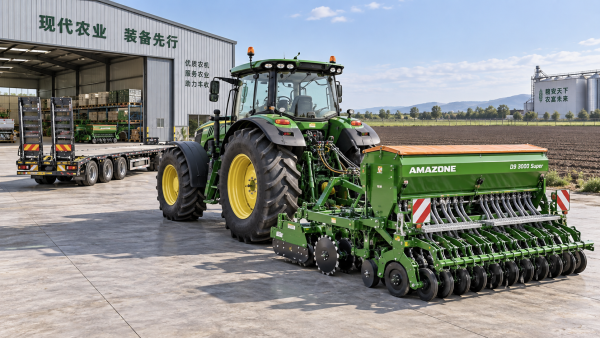
Market forecasting helps farm machinery procurement teams decide when to commit capital, which equipment to prioritize, and how much delivery risk they can accept. Its value comes from connecting expected field workloads with machinery availability, farm income, financing costs, and the consequences of equipment failure. A useful forecast leads to a purchasing decision: order before a deadline, defer a replacement, secure temporary capacity, or change the specification.
The strongest reason to use forecasting is that machinery purchases involve two different clocks. One is the market cycle, which influences prices, credit terms, and supplier capacity. The other is the farm’s operating calendar, which determines when equipment must be ready. A potentially attractive purchase price has limited value if the machine arrives after planting or cannot be commissioned before harvest.
What should a machinery procurement forecast actually cover?
Start with the job the equipment must perform. Expected acreage, crop mix, field conditions, workable hours, and the capacity of the existing fleet establish the operational requirement. Market information then helps determine how that requirement can be met at an acceptable cost and risk.
For example, an expected increase in planted area may support additional planting capacity. But the purchasing decision also depends on whether the existing planter can cover that area within the available window, whether tractor capacity is sufficient, and whether labor or seed logistics will constrain operations. A larger implement will deliver little benefit if another part of the operation remains the bottleneck.
Four groups of information deserve attention:
- Equipment demand and availability: Dealer inventory, production slots, quoted lead times, and the availability of suitable used machines help establish purchasing flexibility.
- Farm cash generation: Crop price scenarios, expected yields, input costs, and payment timing help assess whether the business can fund the acquisition and continue operating.
- Acquisition and financing costs: Equipment quotations, borrowing terms, exchange rates for imported purchases, and transport costs affect the amount and timing of the commitment.
- Operational exposure: Fleet condition, repair needs, seasonal workload, and access to contractors or rental equipment determine how costly a delayed purchase could become.
These inputs serve different purposes. A commodity price outlook informs affordability; it does not establish the required tractor specification. A machinery demand forecast may suggest pressure on availability, but it does not confirm that a particular dealer can deliver. Procurement planning becomes more reliable when each forecast is tied to the decision it can actually support.
How does forecasting help decide whether to buy now or wait?
Forecasting helps compare the possible savings from waiting with the cost of losing purchasing flexibility. Waiting may preserve working capital, allow more information to emerge, or create access to a better offer. It can also reduce the choice of machines, push delivery beyond the operating deadline, or leave the business dependent on an aging asset.
The first step is to work backward from the date the machine must be fully operational. Allow time for delivery, assembly, inspections, implement matching, operator training, and field testing. For imported equipment, include the relevant shipping and clearance stages. The resulting order deadline matters more than a general prediction that equipment prices might fall later in the year.
Delivery to the yard and readiness for fieldwork are separate milestones. A tractor awaiting the correct tires, guidance setup, or implement connections may still be unavailable for the intended task. Procurement teams should define readiness in the purchase agreement and planning schedule as clearly as they define the machine itself.
Consider a hypothetical harvest machine replacement. If the existing machine has a credible maintenance plan and a contractor can provide backup, the business may have room to defer its decision. If a failure would interrupt a narrow harvest window and replacement capacity is difficult to secure, an earlier commitment may be justified even when future prices are uncertain.
Waiting should therefore have an explicit condition and a final decision date. A team might defer while acceptable inventory remains available, then order once the quoted lead time approaches the latest safe purchasing date. This turns a broad market outlook into a manageable rule.
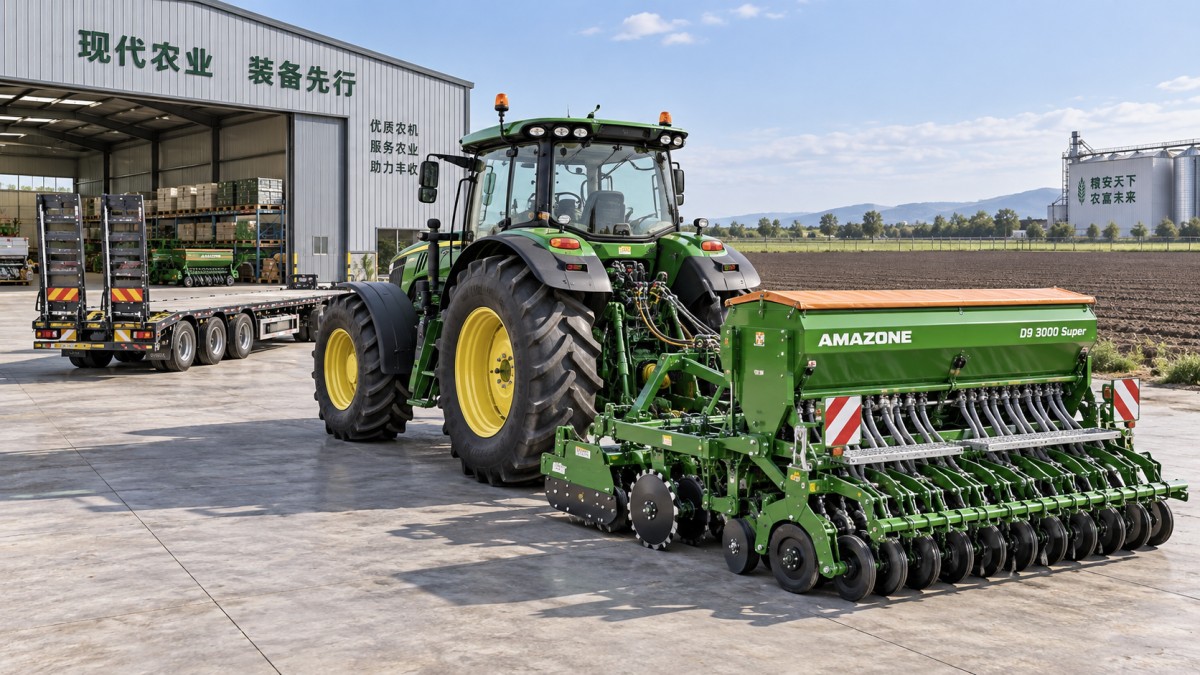
Early ordering also needs discipline. Confirm whether the supplier is offering an allocated production slot, an indicative delivery estimate, or a machine already in stock. Check deposit terms, cancellation rights, price adjustment provisions, and what happens if delivery slips. The benefit of ordering early depends partly on how much uncertainty the agreement actually removes.
How should crop prices and financing forecasts influence the budget?
Crop prices influence purchasing capacity through expected cash flow, but a favorable price forecast should not become an automatic justification for fleet expansion. Revenue also depends on saleable output, quality, marketing arrangements, and the timing of receipts. Input costs and existing obligations may absorb part of an apparent improvement in income.
Build the machinery budget around more than one cash-flow outcome. A base case can reflect the operating plan; a downside case should test whether weaker receipts or higher costs would put pressure on debt service and essential seasonal spending. An upside case can show which optional investments become affordable if conditions improve.
The distinction between essential and discretionary purchases helps here. Replacing a machine that exposes a critical operation to unacceptable downtime may remain necessary under a weaker income scenario. An upgrade aimed mainly at additional comfort or modest efficiency gains may be easier to postpone.
Financing should be evaluated alongside those scenarios. Compare payment schedules, fees, deposit requirements, security obligations, and any final balloon payment. Where borrowing costs can change, assess the effect on future payments. Where purchases or revenues involve different currencies, examine how exchange-rate movements could alter affordability.
A low advertised rate does not settle the comparison. The financed purchase price, mandatory charges, insurance conditions, and repayment timing all affect cash demands. Payments should fit the business’s receipt cycle without forcing it to reduce spending on maintenance, labor, or other requirements needed to operate the equipment.
Forecasting is most useful when it identifies the point at which the purchase becomes financially uncomfortable. That threshold may be a minimum cash reserve, a debt-service limit, or a maximum exposure to uncertain harvest receipts. It gives procurement and finance teams a shared basis for approving, resizing, or deferring the investment.
Can forecasts help choose between buying, leasing, hiring, and repairing?
Yes, particularly when future utilization is uncertain. A machinery demand forecast can support a decision about ownership, provided it is translated into expected hours, acres, or seasonal tasks. The stronger and more persistent the workload, the easier it becomes to justify a long-term capital commitment.
If additional capacity is needed only for a temporary acreage increase, hiring a contractor or renting equipment may preserve flexibility. If the machine supports repeated operations and external capacity cannot be secured reliably, ownership may provide greater control. Leasing can spread cash payments, but its suitability depends on usage limits, maintenance responsibilities, return conditions, and end-of-term obligations.
Compare these options against the same workload and service requirement. An owned machine’s annual cost should include depreciation, finance, insurance, storage, maintenance, and operating expenses. A contractor quotation should be assessed for scope, timing commitments, transport charges, and the consequences of schedule changes. Rental arrangements need similar attention to availability, equipment condition, and support.
Repairing existing equipment can be a rational bridge when replacement demand is uncertain or delivery is distant. The assessment should include the machine’s condition, the availability of parts, the expected repair window, and the remaining capability after the work. Repair expenditure alone is an incomplete measure if reliability remains unsuitable for a critical operation.
Used machinery adds another option, but a favorable market outlook cannot substitute for inspection. Condition, service history, compatibility, parts support, and any immediate refurbishment determine whether the purchase meets the operational need. Forecasts can guide when to search and how much to commit; asset-level evidence determines whether a particular machine is worth buying.
How does market intelligence improve supplier and delivery decisions?
Broad market signals help identify where procurement teams need firmer evidence. If availability appears constrained for a required equipment class, the team can request alternative delivery routes, assess substitute specifications, or reserve temporary capacity. The final decision should still depend on evidence specific to the supplier and machine.
A quoted lead time needs a clear starting point. It may run from order acceptance, deposit receipt, specification approval, or production allocation. Ask what stages remain and which are under the supplier’s control. A delivery estimate becomes more useful when it is linked to identifiable milestones and updated as those milestones are completed.
Evaluate the supplier’s ability to support the machine after delivery as well. Local service capacity, technician availability, access to critical parts, and warranty procedures influence operating risk. A lower purchase price can lose its advantage if a service delay takes the machine out of use during its busiest period.
Market forecasting can also reveal dependencies within a purchase. A tractor and implement may have different delivery schedules. Guidance equipment or specialized attachments may require separate installation. Plan around the date the complete system becomes usable, and consider whether an available substitute would preserve enough performance to meet the field requirement.
Procurement teams should distinguish a market concern from a supplier conclusion. Strong equipment demand does not prove that every manufacturer will miss delivery dates. Weak demand does not guarantee discounts or rapid availability for a specialized configuration. Use the forecast to direct due diligence, then use supplier evidence to approve the commitment.
What happens when the forecast is wrong?
A procurement plan should remain workable across a plausible range of outcomes. Equipment prices may move differently from expectations, crop receipts may weaken, or a delivery date may shift. The appropriate response is to define alternatives before committing, especially where the purchase affects a time-sensitive operation.
For a critical replacement, a practical plan might combine an order with continued maintenance of the existing machine until the new equipment passes acceptance checks. Another business might secure contractor availability while monitoring whether its replacement can arrive on time. These alternatives carry costs, but those costs can be compared with the exposure they reduce.
Use decision triggers that procurement can observe and act on:
- A delivery estimate moves beyond the latest acceptable commissioning date.
- The existing machine’s condition deteriorates enough to change the replacement priority.
- The complete financing offer exceeds the approved cash-flow limits.
- A change in acreage or cropping plans materially alters required capacity.
- A suitable alternative becomes available with acceptable support and delivery terms.
Review frequency should follow the decision window. A long-range fleet plan can tolerate broader assumptions, while an approaching order deadline calls for closer attention to quotations, allocation status, financing validity, and operational changes. Each update should test whether the decision still holds, rather than simply collect more market commentary.
The next procurement meeting should be able to answer three practical questions: what must be ready, by when, and under which financial conditions can the business commit? Market forecasting earns its place when it helps resolve those questions and establishes what would cause the team to change course.
Related Intelligence
- Heavy Agri MachineryHow Does Market Forecasting Help Plan Farm Machinery Procurement?How does market forecasting help agri procurement planning? Discover how to time machinery purchases, protect cash flow, and reduce delivery risks before critical farm deadlines.
- Heavy Agri MachineryIs It Safe to Source Farm Machinery from Emerging Markets?Is it safe to source agri machinery from emerging markets? Discover how to verify suppliers, check compliance, and secure parts support to protect your farm and avoid costly buying mistakes.
- Heavy Agri MachineryHow to Size a Combine Harvester for Acreage, Crop Mix, and Harvest WindowsCombine harvesters sized for your acreage, crop mix, and harvest window: calculate real field capacity, match headers, and avoid costly bottlenecks.
The Morning Broadsheet
Daily chemical briefings, market shifts, and peer-reviewed summaries delivered to your terminal.
