

The Authority in Global Agricultural Chemistry & Bio-Resources
How to Choose Broiler Farm Equipment for Better Feed Conversion and Bird Welfare
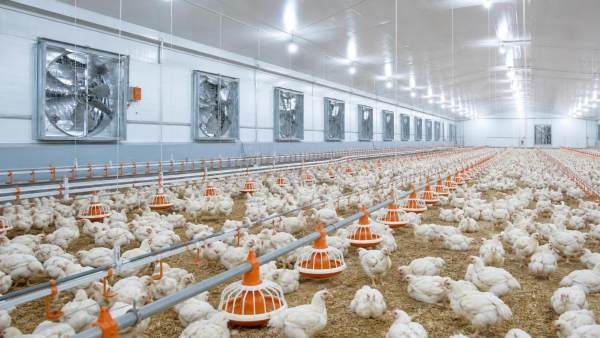
Selecting broiler farm equipment is rarely just a matter of comparing catalog specifications. On a commercial poultry site, small design differences in feeders, drinkers, ventilation, litter handling, or control systems can show up later as poorer feed conversion, uneven bird weights, wet floors, footpad issues, and more labor than originally budgeted. For procurement teams, the real question is not which system looks most advanced on paper, but which one will stay consistent under local farm conditions, flock density, management style, and cleaning routines.
That is why experienced buyers tend to assess broiler farm equipment as an integrated production system rather than a set of isolated machines. Feed efficiency and bird welfare move together more often than people admit. If birds have easy access to feed and clean water, stable temperature, good air quality, and dry litter, they usually convert feed more predictably. When one part of the house underperforms, the feed bill often reveals it before anything else.
Start with the production bottlenecks, not the brand list
A common procurement mistake is to begin with supplier shortlists before defining the actual farm constraints. In broiler production, the same equipment package may perform very differently depending on climate, house width, target slaughter weight, stocking density, water quality, litter material, and local service support. A tunnel-ventilated house in a hot region, for example, places very different demands on airspeed control and cooling integration than a naturally ventilated or cold-climate house.
Before comparing offers, it helps to frame four practical questions:
- Where is feed being lost today: spillage, uneven access, bird competition, or poor growth uniformity?
- What welfare issues are recurring: wet litter, leg problems, heat stress, crowding around drinkers, or excessive culls?
- Which tasks still depend too heavily on manual labor?
- Which failures would be most costly if they happened during peak placement cycles?
The answers usually narrow equipment priorities faster than any sales presentation. This is also the kind of disciplined, cross-sector procurement logic that specialized trade publications such as AgriChem Chronicle often emphasize: buyers in agricultural machinery, feed processing, and regulated industrial supply chains all benefit from evaluating operational risk before product features.
Feeding systems: where feed conversion is won or lost quietly
Feeders deserve more scrutiny than they sometimes get. On many farms, the visible concern is whether birds can reach feed easily, but the hidden issue is how much feed is wasted or sorted out of the pan. Pan design, grill configuration, feed flow adjustment, line height, and drive consistency all affect how birds eat and how much ends up in the litter.
When comparing feeding systems, buyers should look beyond nominal line capacity. Ask how the equipment handles different feed forms, especially if the mill output varies between mash, crumble, or pellets. Some systems are more forgiving than others when particle size is inconsistent. If feed bridging or overfilling occurs, it can lead to both waste and uneven consumption across the house. In practice, that often means one part of the flock finishes strong while another lags behind.
Adjustment range matters too. A feeder that works well in early brooding but is cumbersome to re-set later in the cycle can create management drift. Equipment that allows straightforward height and feed level adjustment, without excessive labor, is usually a better long-term choice than a system that looks robust but is awkward to fine-tune.
Drinking systems influence litter quality more than many buying teams expect
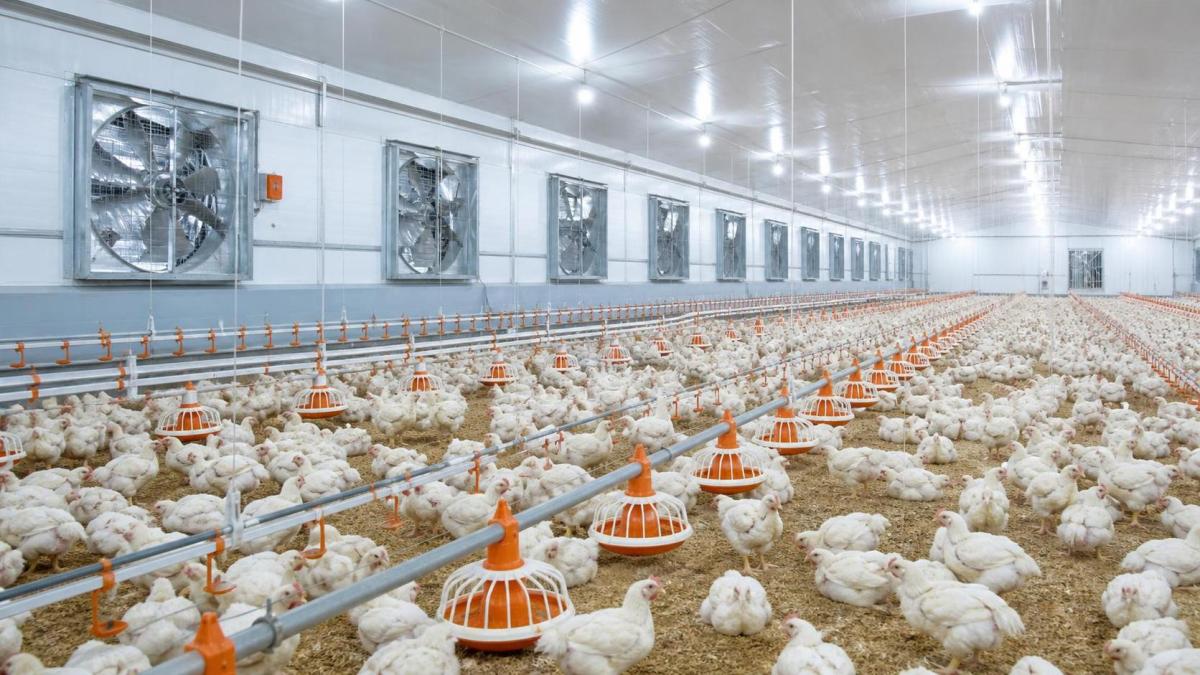
If feed conversion is the headline metric, water delivery is often the supporting actor that determines whether the result holds. Nipple drinker quality, flow consistency, pressure regulation, line flushing, and leak control all have direct effects on litter moisture and bird comfort. Wet litter is not just a housekeeping issue; it can feed into footpad dermatitis, ammonia buildup, and reduced resting quality.
The practical buying question is not simply whether a drinker line is easy to install. It is whether it maintains stable water access from day-old chicks through final live weight, and whether staff can keep it calibrated with minimal guesswork. If a supplier cannot clearly explain regulator performance, flushing procedures, spare parts availability, and the implications of local water hardness, that is worth noticing.
In areas with variable water quality, procurement teams should also examine compatibility with filtration, medication dosing, and sanitation routines. A high-spec line can still become a poor investment if the broader water system was not considered at the same time.
Ventilation and climate control should be evaluated as welfare equipment, not just utility equipment
Bird welfare problems are often blamed on genetics or management, when the root cause is inconsistent house environment. Temperature swings, stale air, excessive humidity, and poor airflow distribution affect feeding behavior quickly. Birds that pant, huddle, avoid certain zones, or spend too much time inactive do not use feed efficiently.
For that reason, fans, inlets, heaters, cooling pads, controllers, and sensors need to be reviewed as one system. Fan quantity alone tells very little. What matters is whether the house can maintain the target environment evenly across bird age stages and seasonal extremes. In hot climates, airspeed and evaporative cooling capacity may dominate the decision. In colder regions, minimum ventilation control and heating uniformity become more important, especially during brooding.
Sensor placement and controller logic also deserve attention. Procurement teams sometimes focus on hardware gauge and motor rating, but day-to-day flock outcomes are strongly affected by how accurately the system reads house conditions and how easily farm staff can adjust setpoints without creating instability.
Welfare-friendly design is usually practical design
There is a tendency to discuss bird welfare as a separate compliance topic. On farm, it is more grounded than that. Good welfare often comes from equipment choices that reduce crowding, slipping, stress, and poor litter conditions. Rounded edges, fewer dead zones around lines, dependable dimming control for lighting, and layouts that allow birds to distribute naturally across the house all contribute to more stable performance.
A useful test during evaluation is to ask: what does this design force birds to do? If feeders encourage aggressive competition, if drinkers create persistent wet patches, if line supports obstruct movement, or if ventilation leaves warm and cold pockets, the system may still be functional but not especially bird-friendly. Welfare is often embedded in these ordinary engineering choices.
Durability, hygiene, and turnaround time deserve equal weight
Buyers under pressure to control capex sometimes overvalue initial purchase price and undervalue washdown time, corrosion resistance, and cleanability. Yet in commercial broiler operations, equipment that is difficult to sanitize can quietly increase turnaround time between flocks or create hygiene weak points that management has to compensate for elsewhere.
Materials matter, but so does design simplicity. Smooth surfaces, accessible line interiors, reliable winching systems, and components that can be removed or inspected without excessive disassembly usually reduce operational friction. The right question is not whether a component is technically washable, but whether it will actually be cleaned properly by the crew under normal time pressure.
Spare parts strategy is part of this conversation. Lead times, local inventory, compatibility across house generations, and technician response speed can be more important than a minor equipment discount. In primary industries, supply chain transparency increasingly matters for procurement credibility, and that applies to machinery and replacement components just as much as it does to chemicals or feed inputs.
Automation is valuable when it reduces variation, not when it adds complexity
Automation can improve consistency in feeding, drinking, lighting, and environmental control, but not every farm benefits equally from the same level of digital integration. A highly automated system is only a good decision if staff can use it confidently, alarms are meaningful rather than excessive, and the farm has dependable technical support. Otherwise, the equipment may be underused or overridden manually, which defeats the purpose.
When evaluating controllers and software, ask suppliers to show how data is presented, how alarm thresholds are configured, and what happens during power loss or sensor failure. Also check whether data export is practical for multi-site management. Procurement teams increasingly want traceable operating records, and that is sensible, but more data does not automatically mean better decision-making.
A practical comparison framework for supplier evaluation
Don’t separate procurement from farm management reality
Some equipment decisions look sensible in the purchasing office and become problematic in the poultry house. That usually happens when procurement, farm managers, nutrition teams, and maintenance staff evaluate options separately. The best buying process is usually a shared one. Managers know where labor gets wasted. Technicians know which components fail first. Production teams know whether a design helps or hinders daily flock observation.
This is especially relevant for institutional buyers and larger operators, where standardization across sites may be a goal. Standardization can simplify parts inventory and staff training, but only if the chosen system suits the range of house types and climates in the portfolio. One “global” specification does not always fit local operating realities.
The better question is total operating fit
The best broiler farm equipment is not necessarily the most automated, the cheapest, or the heaviest-built. It is the one that keeps feed accessible without waste, water clean without leakage, air stable without constant correction, and birds comfortable enough to grow evenly. That combination is what usually shows up later in feed conversion and welfare indicators.
If a supplier discussion stays too focused on unit price or isolated hardware features, push the conversation back toward flock outcomes, cleaning routine, service response, and operating conditions. That is where the real procurement decision sits. In broiler production, equipment earns its value in the small daily details, and those details are exactly what should guide the shortlist.
Related Intelligence
- Poultry Housing & CagingHow Cage Specifications Affect Poultry Housing Costs in NigeriaLocally made poultry cage price in Nigeria: compare cage specifications, housing costs, durability, ventilation, manure systems, and installation factors for smarter poultry investment.
- Poultry Housing & CagingWhat Determines Battery Cage Prices in Nigeria Beyond Bird Capacity?Battery cage price in Nigeria depends on more than capacity. Compare steel, automation, logistics, and installation scope for a smarter poultry investment.
- Poultry Housing & CagingBuilding a Poultry Farm Equipment Solution Around Flock Size and LayoutPoultry farm equipment solution planning for flock size and layout—optimize feeding, water, ventilation, automation, and future expansion.
The Morning Broadsheet
Daily chemical briefings, market shifts, and peer-reviewed summaries delivered to your terminal.
