

The Authority in Global Agricultural Chemistry & Bio-Resources
ECHA Adds Three Botanical Extracts to BPR Authorization
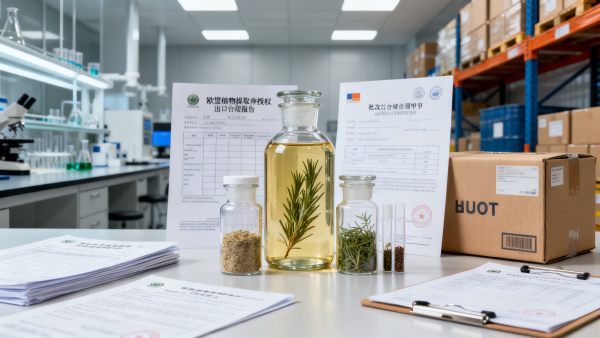
On June 27, 2026, the European Chemicals Agency (ECHA) issued a supplemental notice under the Biocidal Products Regulation (BPR) that changes the compliance baseline for certain Botanical Extracts entering the EU market. The update brings tea tree oil, thymol, and rosmarinic acid into a mandatory authorization list and sets a July 1, 2026 requirement for suppliers exporting these materials to the EU to provide a complete Active Substance Registration (ASR) and batch-level compliance declaration. This matters not only for exporters, but also for procurement, documentation, customs clearance, and delivery planning across the supply chain.
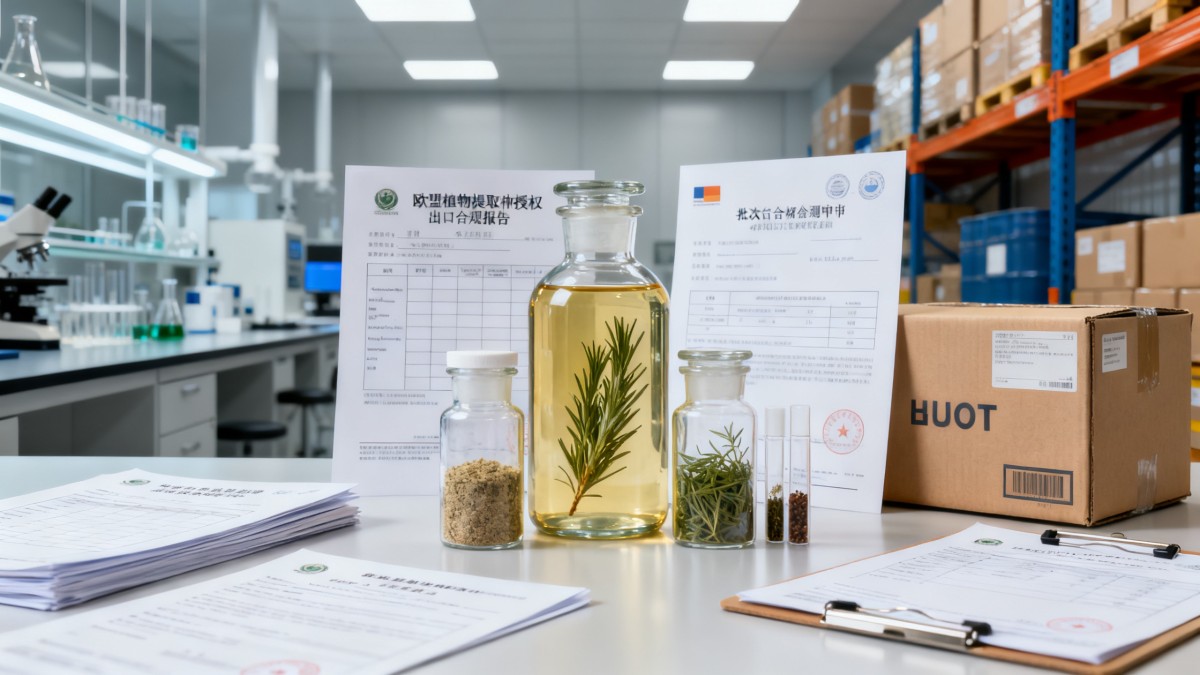
What the New Filing Requirement Confirms
According to the information provided, ECHA released the BPR supplemental notice on June 27, 2026. The notice places three botanical active substances, tea tree oil, thymol, and rosmarinic acid, on a mandatory authorization list.
The same notice requires all Botanical Extracts suppliers exporting to the EU to submit a complete ASR and a batch compliance declaration starting July 1, 2026. The provided information also states that shipments without timely submission of these documents will be refused customs clearance.
Where the Immediate Pressure Will Appear
Export documentation moves to the front of shipment readiness
From an industry perspective, exporters are likely to feel the most direct impact because the rule change is tied to whether goods can clear customs. The practical issue is no longer limited to product description or commercial paperwork; it now includes whether the shipment file contains the required ASR and batch compliance declaration for the affected substances.
What deserves closer attention is the timing. With the filing requirement starting on July 1, export teams may need to review whether existing document packages for EU-bound Botanical Extracts already match the new expectation, especially where these three active substances are involved.
Procurement and supplier qualification may tighten
For procurement teams and raw material buyers, the rule change can affect supplier qualification and order confirmation. If a supplier cannot provide complete authorization proof and batch-level compliance support for affected materials, the purchasing side may face added uncertainty in order scheduling and material acceptance.
Analysis shows that this is less about price movement and more about document reliability. Buyers handling EU-related business may need to check whether supplier files, batch records, and compliance statements can support shipment without interruption.
Processing and delivery planning may face short-cycle adjustments
Manufacturers and processors using Botanical Extracts for EU-directed orders may also need to pay attention. If upstream documentation is incomplete, the disruption may surface later in production release, export packing, or final dispatch rather than at the original purchasing stage.
Observably, the operational impact is concentrated in delivery execution: whether goods can be released on schedule, whether the compliance file matches the batch being shipped, and whether internal traceability can support customs-facing declarations.
Compliance and testing service providers may see a shift in client demand
Certification-related service providers, compliance consultants, and testing support firms may see increased demand for document review and file preparation linked to the three newly listed active substances. The key issue is not a newly confirmed service scope in the provided facts, but the practical likelihood that exporters will need stronger support in checking authorization materials and batch consistency before shipment.
What Companies Should Review Now
Check whether affected products touch the new authorization list
Analysis shows that companies dealing in Botanical Extracts should first identify whether their EU-bound products involve tea tree oil, thymol, or rosmarinic acid. This is the most basic screening step because the provided notice is substance-specific rather than a general statement about all product categories.
Review the completeness of ASR and batch declarations
What deserves closer attention is document completeness. The provided information makes clear that a complete ASR and batch compliance declaration are required from July 1, 2026. Companies should therefore focus on whether existing files are current, internally consistent, and ready to accompany actual export activity.
Recheck shipment timing and handoff points across the supply chain
Observably, the compliance requirement is close to the implementation date given in the notice. Businesses may need to recheck handoff points between supplier, exporter, compliance team, and logistics coordination so that missing documents do not surface only after goods are prepared for shipment.
Watch for further clarification in execution language
The provided information does not include detailed enforcement explanations, review procedures, or format guidance beyond the filing requirement and customs consequence. It is therefore more appropriate to understand the current situation as a rule change with immediate compliance relevance, while still watching for later clarification in official wording and execution practice.
How This Signal Should Be Read
From an industry perspective, this update reads primarily as an execution signal rather than a distant policy discussion. The reason is the short interval between the June 27 notice and the July 1 filing start, combined with the explicit customs clearance consequence for non-submission.
At the same time, analysis shows that the market should avoid assuming details that have not been provided. The available information confirms the added substances, the filing obligation, the required document types, and the customs risk. It does not, on its own, confirm how uniformly the requirement will be interpreted in different operational contexts, so follow-up observation remains necessary.
Why This Matters More as a Compliance Trigger Than a Market Narrative
This development is best understood as a concrete compliance trigger for EU-directed Botanical Extracts trade. Its immediate significance lies in documentation readiness, shipment eligibility, and supplier file integrity rather than in broad claims about demand or long-term market restructuring.
For companies already trading into the EU, the practical question is whether current export and batch documentation can support uninterrupted delivery under the updated BPR notice. For the wider industry, the more rational conclusion is that this is a rule change with near-term operational consequences and a need for continued monitoring of implementation detail.
Basis of This Article
This article is based on the user-provided news title, event date, and event summary. The summary states that ECHA issued a supplemental BPR notice on June 27, 2026, added tea tree oil, thymol, and rosmarinic acid to a mandatory authorization list, and required EU-bound Botanical Extracts suppliers to submit a complete ASR and batch compliance declaration from July 1, 2026, with customs refusal for non-timely submission.
For developments of this kind, relevant source categories typically include official notices, regulatory agency releases, customs or trade administration updates, industry association notices, standards-related documents, and reporting by established trade media. A specific official source link was not provided in the input, so the exact source document still needs to be verified on an ongoing basis.
Further observation should focus on any later official clarification, certification or compliance interpretation, changes in tender or procurement document language, industry feedback, and how companies implement the requirement in actual export operations.
Related Intelligence
- Botanical ExtractsChoosing Botanical Extracts for Pharmaceuticals: Potency, Purity, and ComplianceBotanical extracts for pharmaceuticals: learn how to assess potency, purity, traceability, and GMP compliance for confident, regulatory-ready supplier selection.
- Botanical ExtractsBotanical Extracts Market Outlook: Supply, Pricing, and Buyer RisksBotanical extracts market insights on supply, pricing, quality control, and buyer risks—compare suppliers confidently and protect your sourcing strategy.
- Botanical ExtractsEurope Botanical Extracts Market: Key Growth Drivers, Risks, and OpportunitiesEurope botanical extracts market insights: explore growth drivers, regulatory risks, supply-chain challenges, and scalable opportunities for compliant, high-value ingredients.
The Morning Broadsheet
Daily chemical briefings, market shifts, and peer-reviewed summaries delivered to your terminal.
