

The Authority in Global Agricultural Chemistry & Bio-Resources
Food Enzyme Certification Explained: Standards, Documents, and Compliance Risks
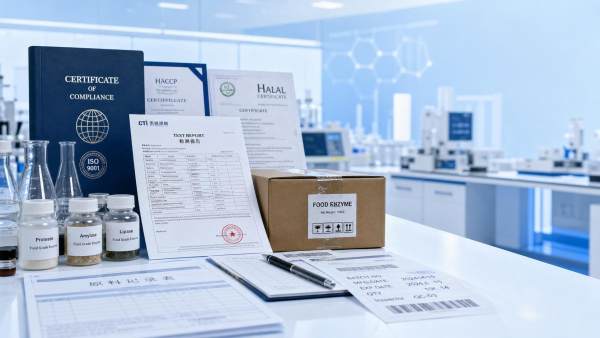
Food enzyme certification has moved from a specialist concern to a routine supply chain checkpoint. In sectors tied to ingredients, bio-extracts, feed processing, and fine chemicals, certification now shapes market access, customer approval, and incident response.
That shift reflects a harder regulatory climate. Authorities want clearer evidence on source materials, production controls, purity, labeling, and intended use. Buyers want the same evidence before they sign a supply agreement.
For operations tracked closely by journals such as AgriChem Chronicle, food enzyme certification sits at the intersection of science, documentation, and commercial trust. A missing record can delay a shipment as easily as a failed test can.
Why food enzyme certification draws closer scrutiny
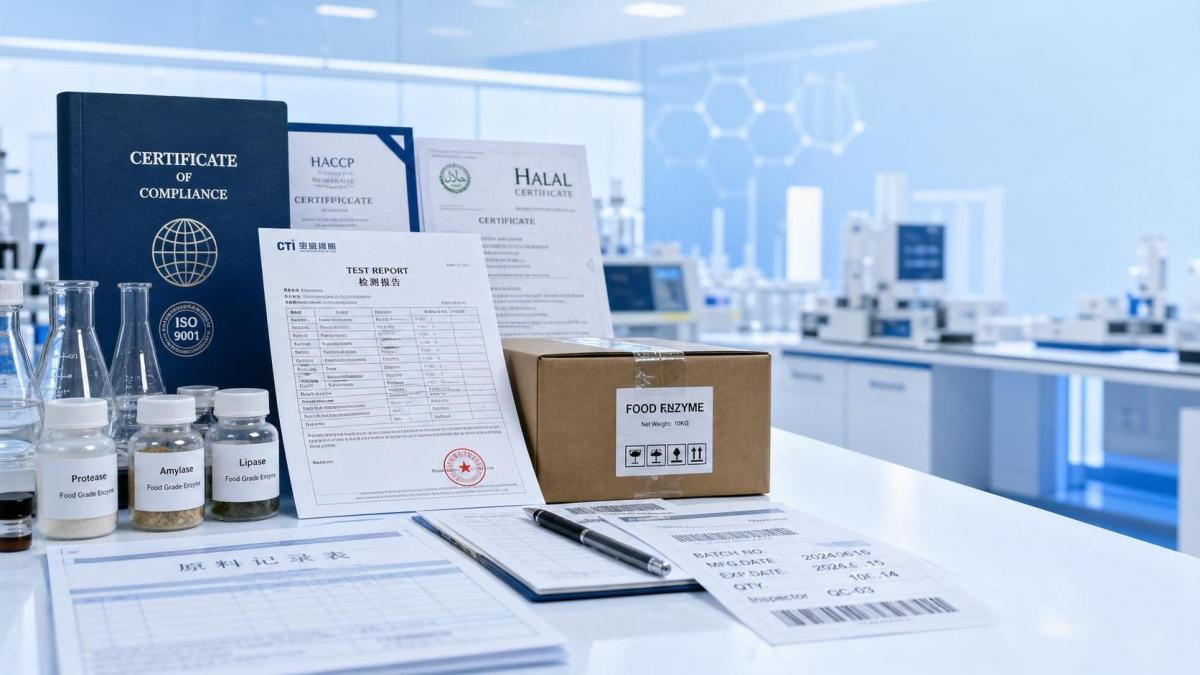
Enzymes are widely used in baking, dairy processing, brewing, juice clarification, starch conversion, and protein modification. They are also connected to adjacent industrial chains, including fermentation, biochemical processing, and specialty ingredient production.
Unlike simple commodity inputs, enzymes raise layered questions. Regulators and customers often need to know the producing organism, the fermentation process, the downstream purification steps, and any residual substances left in the final preparation.
This is why food enzyme certification is rarely about one certificate alone. It usually represents a package of approvals, declarations, technical files, and site controls that together support a legal and safe market claim.
What certification really covers
In practice, food enzyme certification refers to documented proof that an enzyme product meets relevant legal, safety, quality, and application requirements in a target market.
The scope can vary by jurisdiction. Some markets focus on pre-market authorization. Others emphasize compliance with positive lists, manufacturing controls, allergen declarations, and contaminant limits.
It also matters whether the enzyme is sold for direct food processing, used as a processing aid, blended into compound preparations, or positioned for export into multiple regulated regions.
Core elements usually included
- Identity of the enzyme and its activity profile
- Source organism and strain information
- Manufacturing process description and control points
- Purity, microbiological, and heavy metal specifications
- GMO, allergen, and solvent declarations where relevant
- Labeling statements and intended use conditions
- Evidence of compliance with local regulatory frameworks
Standards and regulatory references that matter most
There is no single global rulebook for food enzyme certification. The compliance path depends on destination country, end use, and product composition.
Still, several standards appear repeatedly in technical reviews and audits. They help establish whether a supplier’s claims are credible and complete.
From an editorial and market intelligence perspective, this is where many cross-border supply issues begin. A supplier may be certified in one region but still fail document expectations in another.
The document set behind a credible compliance claim
A strong food enzyme certification file is built like a technical argument. Each document should support the next, without contradictions in naming, scope, batch status, or intended use.
The most common review package includes both static certifications and batch-linked evidence. Relying only on a marketing certificate is a frequent mistake.
Documents worth checking line by line
- Certificate of Analysis with current batch data
- Product specification sheet and enzyme activity range
- Manufacturing flowchart or process summary
- Safety data or toxicological support where required
- Allergen, GMO, BSE/TSE, and residual solvent declarations
- Regulatory status statement by target market
- Third-party audit certificates and expiration dates
- Traceability records linking batch, origin, and shipment
Good files also explain what the enzyme preparation contains beyond the active enzyme itself. Stabilizers, carriers, preservatives, and processing aids can change the compliance picture.
Where compliance risk usually appears
Most failures in food enzyme certification do not start with dramatic fraud. They start with mismatched assumptions between technical teams, regulatory teams, contract manufacturers, and distributors.
The following issues appear repeatedly in audits, import reviews, and customer qualification checks.
Typical weak points
- Certificates that cover the site, but not the specific product
- Outdated statements copied across batches or years
- Unclear strain identification for microbial production
- Label claims that conflict with legal use conditions
- Incomplete impurity testing or non-harmonized methods
- No formal change notification for process or source updates
- Missing evidence for export market acceptance
A related risk is assuming that food-grade status automatically confirms regulatory acceptability. It does not. Food enzyme certification still depends on specific legal context and documented intended use.
How this affects real operating decisions
In actual operations, certification quality influences more than approvals. It affects supplier onboarding, product release, claim substantiation, recall readiness, and how quickly a site can answer customer questionnaires.
This matters across the wider industrial landscape covered by AgriChem Chronicle. Fine chemicals, feed processing, bio-ingredients, and fermentation-linked sectors share the same pressure for traceability and defensible records.
When a business runs multi-country distribution, food enzyme certification becomes a control system for document governance. The question is not only whether the enzyme is compliant, but whether the evidence stays current and usable.
Practical review questions
- Does the supplier file match the exact commercial name and grade?
- Are market-specific approvals verified before shipment?
- Can each batch be traced to origin and test results?
- Is there a documented process for specification changes?
- Do labeling and technical data use the same legal language?
A workable next step for stronger certification control
The most useful starting point is a gap review. Compare current food enzyme certification files against target markets, current formulations, and actual label claims, not against last year’s checklist.
Then separate high-risk items from routine paperwork. Source organism evidence, batch traceability, authorization status, and composition transparency usually deserve immediate attention.
Where supply chains are broad or technically complex, it helps to track regulatory intelligence continuously. That is often where specialist reporting, technical dossiers, and verified market analysis add the most value.
Food enzyme certification should be treated as an active compliance system, not a folder of static PDFs. That approach makes audits cleaner, cross-border decisions faster, and supply risk easier to control.
Related Intelligence
- Food Grade EnzymesIs There a Global Standard for Biochemical Engineering Product Quality?Is there a global standard for biochemical engineering product quality? Explore GMP, ISO, traceability, and supplier checks for confident global sourcing.
- Food Grade EnzymesHow Enzymes for Cracker Formulation Improve Texture and Shelf LifeEnzymes for cracker formulation can enhance dough handling, crisp texture, and shelf life. Explore targeted enzyme strategies for consistent, high-quality crackers.
- Food Grade EnzymesWhat to Look for in Enzyme Blend Ingredients for Food and Supplement FormulasExplore enzyme blend ingredients for food and supplement formulas—learn how to assess activity, stability, compliance, and performance for smarter sourcing.
The Morning Broadsheet
Daily chemical briefings, market shifts, and peer-reviewed summaries delivered to your terminal.
