

The Authority in Global Agricultural Chemistry & Bio-Resources
What EPIRB emergency beacons actually improve at sea
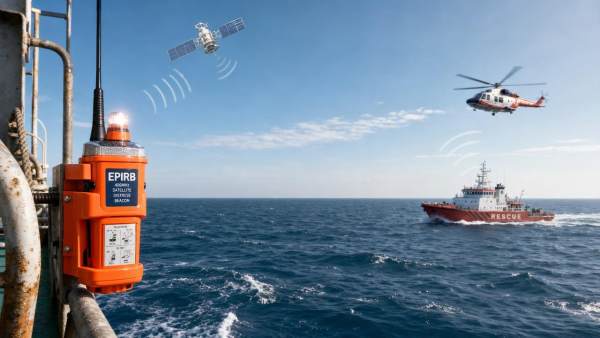
For safety managers and quality control teams operating in marine and fishery environments, understanding what EPIRB emergency beacons actually improve at sea is essential to risk reduction and compliance.
Beyond sending distress alerts, these devices improve response speed, survivability, location accuracy, and incident traceability across fishing fleets, support vessels, and offshore operations.
In regulated maritime environments, that practical value matters more than marketing language. The real question is not whether a beacon exists, but what performance it improves when conditions worsen.
What do EPIRB emergency beacons actually do during a real offshore emergency?
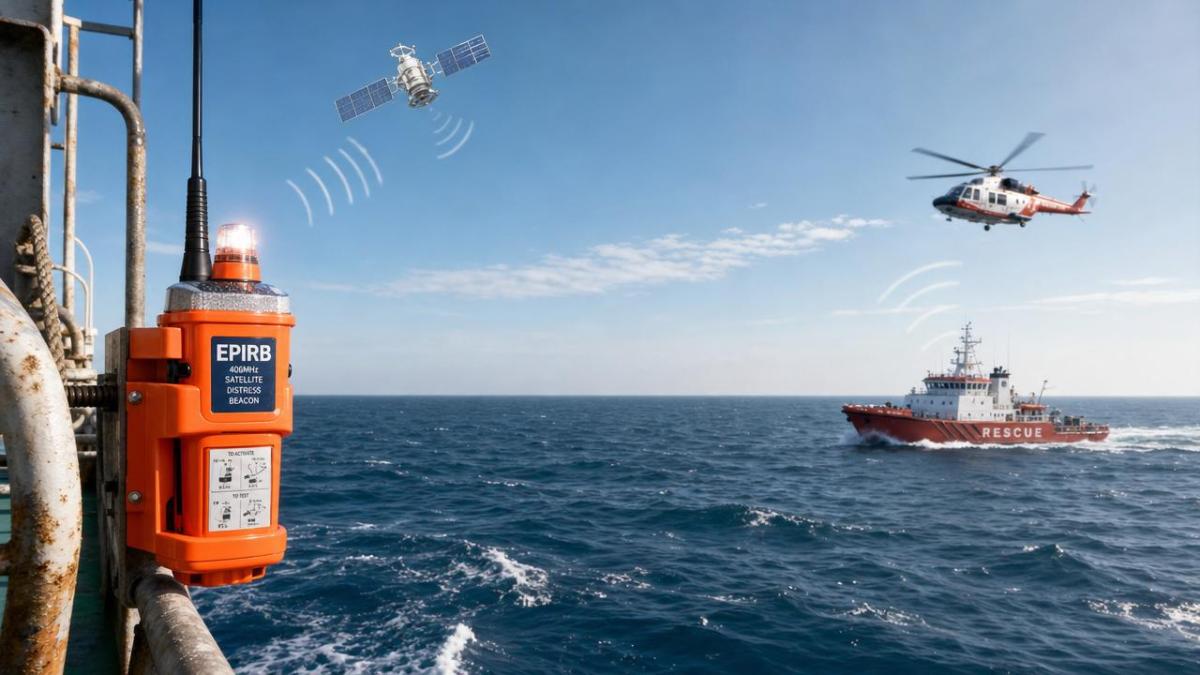
EPIRB emergency beacons are designed to alert global search and rescue networks when a vessel faces grave and imminent danger.
When activated, the beacon transmits a coded distress signal through satellite systems, typically on 406 MHz, to authorities responsible for rescue coordination.
Many models also include GNSS positioning. That allows rescuers to receive a far more precise distress location than older analog systems.
Some units float free automatically if a vessel sinks. Others require manual activation, which makes placement, drills, and inspection procedures especially important.
The key improvement is not only communication. It is the ability to trigger a recognized, traceable, and internationally routed emergency signal without relying on voice contact.
In rough weather, fire, flooding, or capsize conditions, crews may lose power, radios, or navigation equipment. EPIRB emergency beacons provide a separate emergency pathway.
How do EPIRB emergency beacons improve survival outcomes at sea?
Survival offshore often depends on minutes saved, search area reduced, and confusion eliminated. That is where EPIRB emergency beacons create measurable safety improvement.
Faster rescue initiation
A registered beacon transmits vessel identity and emergency data quickly. Rescue centers can begin verification and dispatch sooner than with incomplete radio reports.
Smaller search zones
Integrated GPS or GNSS sharply reduces uncertainty. Search aircraft and rescue vessels can focus on a smaller area, especially critical in cold water exposure events.
Better continuity after abandonment
If a crew must abandon ship, the distress signal can continue even when the main vessel loses communications, power systems, or structural integrity.
Improved nighttime or low-visibility response
Severe weather, fog, and darkness make visual search difficult. Beacon location data helps guide rescuers long before survivors can be seen.
For fishing and aquaculture support operations, these improvements are especially relevant because voyages often occur in remote waters with variable weather and heavy deck activity.
Which marine operations benefit most from EPIRB emergency beacons?
Nearly any offshore operation benefits, but the degree of benefit depends on distance from shore, exposure risk, and communication redundancy.
- Commercial fishing vessels operating far from coastal rescue infrastructure
- Aquaculture service boats transferring feed, stock, or technicians offshore
- Research craft conducting environmental or biomass assessments
- Processing support vessels in rough seasonal waters
- Mixed-use industrial vessels working with small crews and long routes
In integrated primary industries, marine risk often connects to supply continuity. A delayed rescue can quickly become an environmental, operational, and legal incident.
EPIRB emergency beacons therefore improve more than onboard safety. They also support incident control, reporting discipline, and operational resilience.
How are EPIRB emergency beacons different from PLBs, AIS beacons, and marine radios?
This is one of the most searched decision questions. Different devices serve different roles, and confusion can create dangerous gaps in emergency planning.
The best safety architecture uses layered tools. EPIRB emergency beacons are not replacements for radios or AIS. They are the last-resort global alert backbone.
What should be checked before choosing or approving EPIRB emergency beacons?
Selection should focus on operational fit, certification, maintenance burden, and traceable emergency performance rather than price alone.
1. Regulatory approval and coding
Confirm compliance with relevant maritime carriage rules and coding requirements. Registration must be accurate, current, and tied to the right vessel details.
2. Float-free versus manual activation
A float-free unit may improve reliability in catastrophic sinking scenarios. Manual units can still perform well if mounting and drills are disciplined.
3. GNSS-enabled location performance
Choose models with integrated positioning where possible. Better coordinates generally mean faster rescue action and less search fuel, time, and uncertainty.
4. Battery life and replacement schedule
Battery compliance is not administrative trivia. Expired batteries undermine the exact scenario where EPIRB emergency beacons are supposed to perform without compromise.
5. Testing, inspection, and training
Verify self-test procedures, bracket condition, hydrostatic release dates, and crew familiarity. Poor readiness is a common failure point, even with approved equipment onboard.
What common mistakes reduce the value of EPIRB emergency beacons?
The device can be technically sound and still fail operationally. Most problems come from management gaps rather than hardware defects.
- Outdated registration after ownership, route, or contact changes
- Improper mounting that blocks release or access
- Missed battery or hydrostatic release replacement dates
- Assuming a handheld radio eliminates beacon need
- No emergency drill covering actual activation sequence
Another mistake is viewing EPIRB emergency beacons as compliance-only hardware. Their value appears during low-probability, high-consequence events where redundancy determines outcomes.
So, what do EPIRB emergency beacons improve at sea in measurable terms?
In practical terms, EPIRB emergency beacons improve emergency visibility, rescue coordination, search precision, and continuity of distress signaling during severe vessel incidents.
They also improve documentation discipline. Registration, inspection, and testing create a clearer safety record that supports internal audits and external compliance reviews.
For marine and fishery operations, the next step is straightforward: verify beacon type, registration status, service dates, installation method, and crew activation readiness.
If those five points are current, EPIRB emergency beacons can deliver their real value when offshore conditions stop being routine and start becoming critical.
Related Intelligence
- Commercial FishingWhat Should You Check in a Fishery Equipment Maintenance Contract?What should I look for in a fishery equipment maintenance contract? Explore coverage, response times, costs, records, safety, and biosecurity essentials.
- Commercial FishingDo commercial fishing vessels with hybrid diesel-electric propulsion reduce fuel cost per kg landed by more than 12%?Commercial fishing vessels with hybrid diesel-electric propulsion *can* cut fuel cost per kg landed by >12%—but only under precise operational and infrastructure conditions. Discover the real ROI.
- Commercial FishingHow to Choose Oyster Processing Equipment for Capacity, Hygiene, and Labor EfficiencyOyster processing equipment guide: compare capacity, hygienic design, and labor efficiency to build a reliable, scalable line and make smarter buying decisions.
The Morning Broadsheet
Daily chemical briefings, market shifts, and peer-reviewed summaries delivered to your terminal.
