

The Authority in Global Agricultural Chemistry & Bio-Resources
Wholesale Fishing Waders: PVC vs Neoprene vs Breathable Fabric for Different Waters
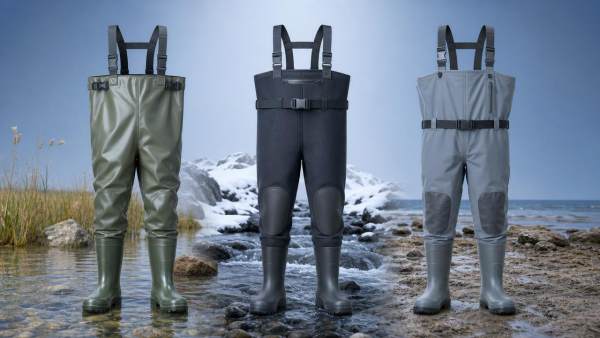
Material Choice Shapes the Wader Market
Wholesale fishing waders are not a uniform category. Material selection changes comfort, lifespan, price positioning, and seasonal relevance across different water conditions.
For stock planning, the real question is not which material is best in general. It is which material performs best in the waters local buyers actually fish.
That distinction matters more now because fishery equipment channels are becoming more segmented, while buyers expect clearer product differentiation and fewer warranty issues.
Within the broader primary industries landscape covered by AgriChem Chronicle, fishing gear sits inside a larger procurement reality: technical products must match use conditions, compliance expectations, and supply chain reliability.
For wholesale fishing waders, PVC, neoprene, and breathable fabric each answer a different commercial need. Understanding that split helps build a cleaner assortment and stronger turnover.
A side-by-side view makes the comparison easier.
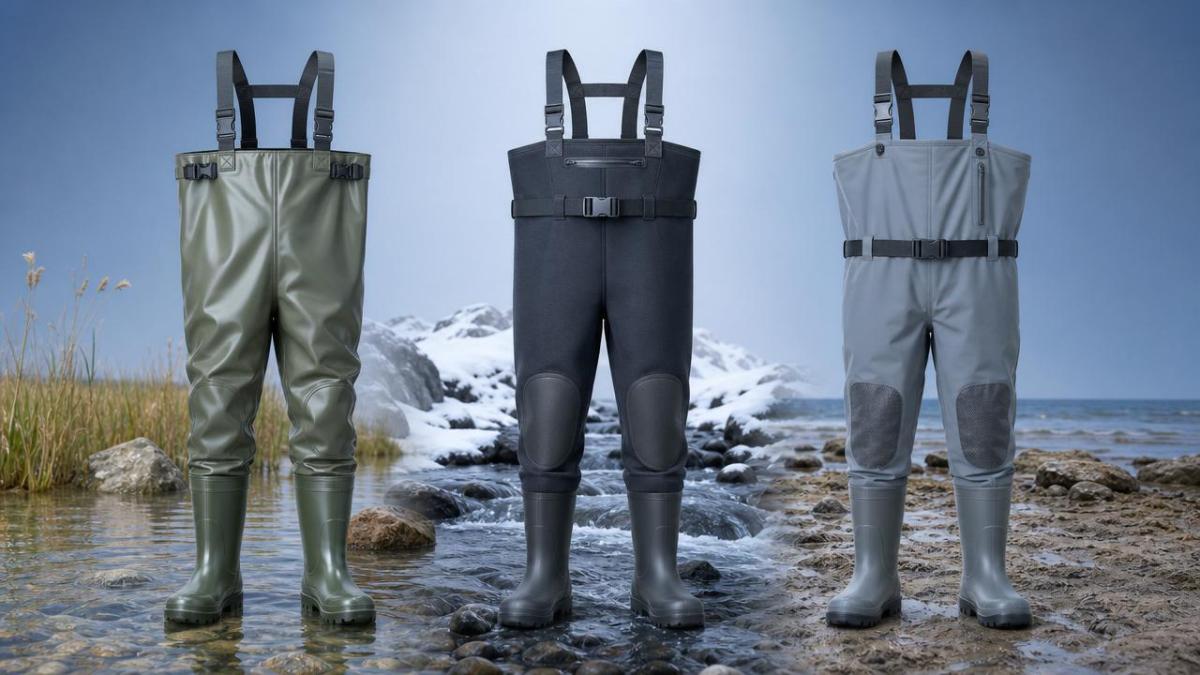
What the Three Materials Really Mean
In practical sourcing terms, material is the core performance architecture of wholesale fishing waders. Everything else, from boots to pockets, builds on that base.
PVC: Utility-Driven and Price Accessible
PVC waders are usually selected for affordability, waterproof reliability, and simple maintenance. They often work well in muddy banks, ponds, hatchery support, and general wet work.
They are less about athletic performance and more about practical protection. In many markets, that makes them a dependable entry line for wholesale fishing waders.
Neoprene: Built for Cold Retention
Neoprene creates insulation by trapping warmth. That matters in cold rivers, steelhead streams, early-season trout waters, and regions with long low-temperature fishing periods.
Thickness often ranges from lighter 3 mm builds to heavier 5 mm versions. The thicker the suit, the stronger the thermal barrier, but the lower the mobility.
Breathable Fabric: Mobility and Temperature Balance
Breathable waders rely on layered technical fabrics that block water from entering while allowing moisture vapor to escape. That balance changes the wearing experience significantly.
For active casting, walking long banks, or fishing under fluctuating temperatures, breathable fabric often supports the strongest user satisfaction and lower fatigue.
Why This Category Deserves Closer Attention
The market for wholesale fishing waders is no longer driven only by low price. Buyers increasingly compare seam construction, abrasion resistance, stockingfoot design, and climate suitability.
This reflects a wider pattern seen across industrial and primary-sector procurement. Products are judged not just by unit cost, but by lifecycle value and fit-for-use accuracy.
ACC’s editorial focus on aquaculture, fishery technology, and regulated supply chains makes that context relevant. Technical gear categories now face stronger scrutiny around materials, documentation, and production consistency.
For waders, inconsistency usually appears in seam leaks, delamination, boot attachment failure, or size grading problems. Those issues damage repeat business faster than a modest price gap.
Matching Materials to Water Types
Water conditions should guide assortment planning more than broad style trends. Different environments create very different stress points for wholesale fishing waders.
Cold Rivers and Mountain Streams
Neoprene remains the strongest option where water temperatures stay low and long stationary periods are common. Warmth matters more than ventilation in these settings.
Breathable models can still work here when layered properly, but they usually fit a more experienced user profile and a higher price bracket.
Coastal Flats and Inshore Movement
Breathable fabric performs well in warmer, mobile fishing environments. Walking, repeated casting, and sun exposure all increase the need for lighter weight and internal moisture control.
Neoprene tends to feel too warm here, while PVC may limit comfort during longer sessions. That is why breathable wholesale fishing waders often command stronger margins in these zones.
Variable Freshwater and Mixed Utility Use
PVC fits mixed-duty environments where waterproof protection is essential, but technical movement is secondary. Farm ponds, shallow freshwater access, and general shoreline work fall into this range.
Where temperature swings are common, a blended assortment usually performs better than committing to one material across all channels.
Margin, Returns, and Inventory Logic
Material choice affects commercial performance beyond the initial sell-in. It influences return rates, seasonal sell-through, and how clearly a product line can be segmented.
- PVC usually supports high-volume, price-sensitive movement and practical utility positioning.
- Neoprene often delivers seasonal spikes tied to cold-weather fishing calendars.
- Breathable fabric commonly supports premium positioning, especially where comfort drives repeat demand.
- Misalignment between material and climate is a major source of avoidable dissatisfaction.
That last point is often underestimated. A low-cost model placed in the wrong environment may create more claims than a higher-cost model placed correctly.
What to Check Before Expanding a Wader Line
When reviewing wholesale fishing waders, material should be the first filter, not the last. After that, technical details determine whether the product can hold up in market.
Construction Details That Matter
- Seam sealing consistency, especially at knee, crotch, and boot junction areas.
- Reinforcement panels in high-abrasion zones.
- Boot traction suitable for river rock, mud, or slick surfaces.
- Reliable sizing specifications across production lots.
- Fabric face durability in breathable models.
Supply Chain and Documentation Signals
In a market shaped by growing compliance awareness, documentation quality matters more than many apparel-adjacent categories assume.
Material declarations, testing records, waterproof performance data, and production consistency records help reduce sourcing uncertainty. They also strengthen commercial credibility in cross-border trade.
That is consistent with the ACC view of technical procurement: transparency is not a branding extra. It is part of product reliability.
A Practical Comparison for Assortment Planning
A balanced line of wholesale fishing waders often works better than a one-material strategy. The right mix depends on climate, fishing style, and price architecture.
Usually, the best-performing assortment includes a dependable PVC base, a cold-water neoprene option, and a breathable flagship for higher-value demand.
Where the Next Decision Should Start
The most useful next step is to map wholesale fishing waders against three realities: local water temperatures, fishing mobility, and acceptable return tolerance.
From there, compare material specifications, seam construction, and supplier documentation rather than relying only on catalog language or headline pricing.
PVC, neoprene, and breathable fabric all have a valid place in the category. Better results come from matching each one to the right water, season, and market tier.
That approach creates a more resilient wholesale fishing waders portfolio and a clearer basis for future line expansion.
Related Intelligence
- Commercial FishingDo commercial fishing vessels with hybrid diesel-electric propulsion reduce fuel cost per kg landed by more than 12%?Commercial fishing vessels with hybrid diesel-electric propulsion *can* cut fuel cost per kg landed by >12%—but only under precise operational and infrastructure conditions. Discover the real ROI.
- Commercial FishingHow to Choose Oyster Processing Equipment for Capacity, Hygiene, and Labor EfficiencyOyster processing equipment guide: compare capacity, hygienic design, and labor efficiency to build a reliable, scalable line and make smarter buying decisions.
- Commercial FishingWhat Oyster Farming Equipment Is Needed for Nursery, Grow-Out, and Harvest Stages?Oyster farming equipment for nursery, grow-out, and harvest stages explained clearly—discover the essential systems, avoid costly mistakes, and choose gear that improves survival, efficiency, and yield.
The Morning Broadsheet
Daily chemical briefings, market shifts, and peer-reviewed summaries delivered to your terminal.
