

The Authority in Global Agricultural Chemistry & Bio-Resources
Rotary Rack Oven Bakery Setup: How to Choose Capacity, Airflow, and Tray Size
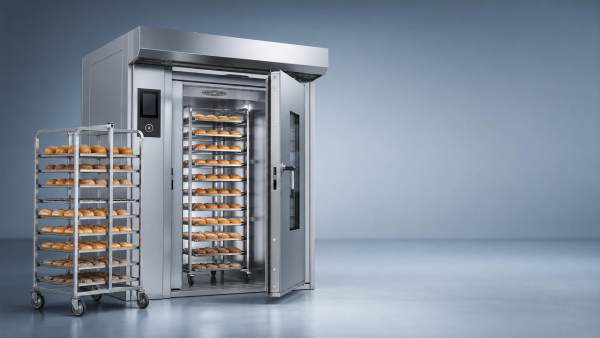
Selecting a rotary rack oven bakery setup is not only a technical purchase. It shapes daily throughput, bake uniformity, utility costs, and product repeatability across every shift.
That matters more now because food production lines are under the same pressure seen across processing industries: tighter margins, stricter compliance, and less tolerance for inconsistency.
Within that context, capacity, airflow, and tray size become practical decision points. They determine whether an oven supports growth or quietly limits it.
Why rotary rack oven choices deserve closer attention
A rotary rack oven bakery system is designed to bake loaded racks while rotating them through controlled heat and airflow. The concept is simple, but performance differences can be significant.
In practical terms, bakeries rely on this format for bread, buns, pastries, cakes, and semi-industrial batch production where flexibility matters as much as volume.
ACC often examines equipment decisions through a wider supply-chain lens. The same principle applies here: a machine is only as valuable as its fit with process design, maintenance support, and operating discipline.
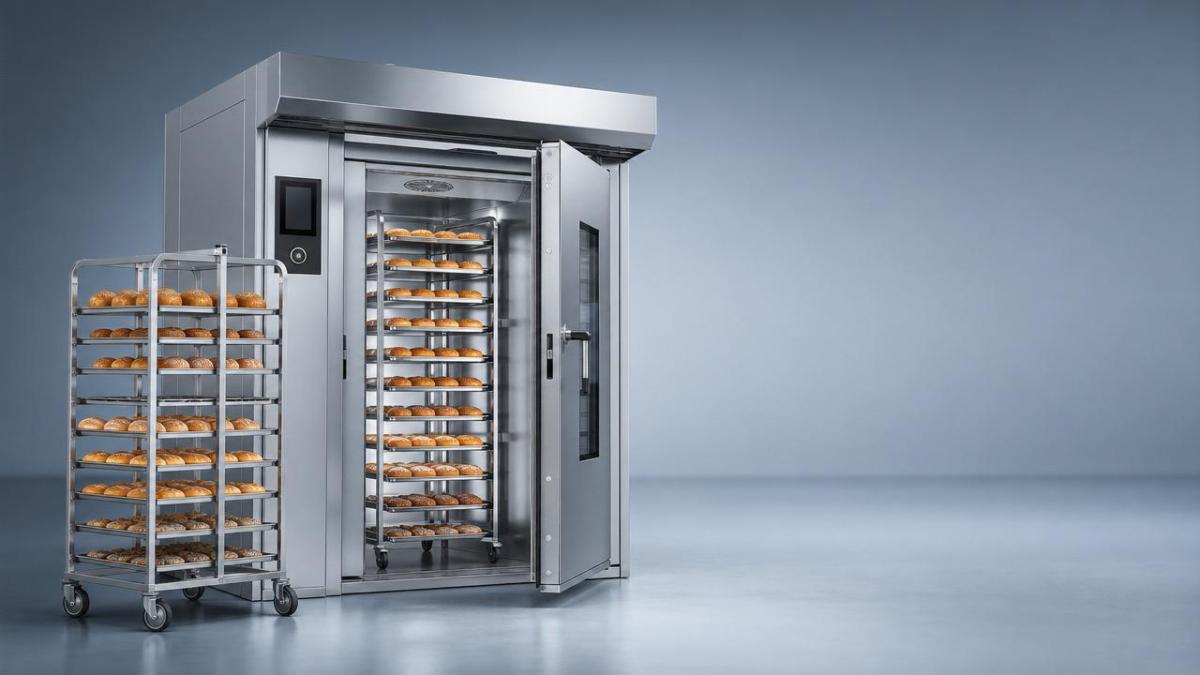
For that reason, the best rotary rack oven bakery investment is rarely the largest model or the cheapest quote. It is the configuration that matches product mix, scheduling, and future production targets.
Capacity is more than racks per hour
Capacity is often discussed as the number of racks or trays an oven can process within a given period. That headline figure is useful, but incomplete.
A rotary rack oven bakery must be evaluated against real loading patterns. Product density, dough hydration, pan height, and baking time all change effective output.
An oven rated for high hourly volume may still underperform if the rack layout creates blocked airflow or if loading and unloading take longer than expected.
Questions that sharpen the capacity decision
- How many batches are required during peak demand windows?
- Is the production plan based on one core product or many SKUs?
- Will the oven run in single-shift, two-shift, or near-continuous operation?
- How much idle time occurs between batches for cleaning or changeovers?
- Does projected growth require headroom within 12 to 24 months?
Usually, under-sizing creates faster pain than over-sizing. Yet excessive size can reduce energy efficiency if the oven frequently runs below optimal load.
A practical way to compare capacity
Airflow design often decides bake quality
Many buyers focus on burner power or chamber dimensions first. In actual use, airflow design often has a greater effect on uniform color, crust formation, and moisture retention.
A rotary rack oven bakery depends on balanced heat transfer. Rotation helps, but rotation alone cannot correct poor air distribution.
If hot air concentrates on one zone, operators may see uneven browning, corner drying, or inconsistent rise across tray positions.
What good airflow should achieve
- Consistent baking from top to bottom of the rack
- Stable results across full and partial loads
- Controlled surface coloration without excessive drying
- Predictable response when different tray products share one rack
More worth noting is the interaction between airflow and steam. For bread programs, steam injection quality and chamber circulation work together, not separately.
Weak steam distribution can limit oven spring and crust gloss even when nominal temperature control looks acceptable on paper.
Signals to review during supplier comparison
Ask for baking data under realistic loads. Uniformity claims should be supported by tray-position test results, not only by brochure language.
It also helps to review fan design, airflow path, damper control, and service access. These details influence long-term stability and downtime exposure.
Tray size affects flexibility, labor flow, and product range
Tray size can appear secondary, yet it shapes how efficiently the oven connects with proofing, loading, cooling, and packaging.
A rotary rack oven bakery should align with the tray ecosystem already used across the site, unless there is a clear reason to redesign the workflow.
Mismatch at this stage creates hidden costs. These usually appear as extra handling, new racks, altered carts, or lower rack utilization.
Common tray-related trade-offs
In broader processing industries, standardization is usually a source of resilience. That logic applies here as well, especially when spare parts and replacement trays must be sourced quickly.
Where setup mistakes usually appear
Most rotary rack oven bakery problems do not begin with catastrophic failure. They begin with a small mismatch between oven design and production reality.
One common issue is selecting by maximum capacity while ignoring the dominant product. Another is choosing tray formats that improve one line but disrupt the rest of the plant.
Utilities should also be reviewed carefully. Gas supply, electrical load, exhaust routing, floor space, door swing, and maintenance clearance all affect implementation quality.
The same disciplined evaluation used in regulated industrial procurement is useful here: verify specifications, operating conditions, and service support as one package.
A grounded review checklist
- Map product groups by bake time, moisture level, and tray loading density
- Compare nominal oven capacity with actual shift scheduling targets
- Confirm airflow performance using representative product tests
- Check tray and rack compatibility across upstream and downstream equipment
- Review service availability, spare parts lead times, and operator training
- Assess energy use at realistic load levels, not only peak ratings
A more useful way to move from quotation to decision
A strong purchase decision usually comes from comparing scenarios, not simply comparing machines. The right rotary rack oven bakery setup should be evaluated against today’s output and tomorrow’s product mix.
That means building a short decision model around three variables: required throughput, acceptable bake variation, and workflow compatibility.
If one oven offers larger capacity but weaker airflow evidence, the cheaper quote may become the more expensive choice over time.
If another option fits existing trays, recovers heat quickly, and supports repeatable results, it may deliver better operational value even at a higher initial price.
The next step is to translate production needs into measurable criteria before supplier discussions deepen. Once capacity, airflow, and tray logic are defined clearly, a rotary rack oven bakery investment becomes easier to judge with confidence.
Related Intelligence
- Milling MachineryWhat Documentation Is Required to Import Grain Milling Equipment?What documentation do I need for importing grain milling equipment? Explore essential customs, technical, compliance, and shipping records for smooth clearance.
- Milling MachineryDo Agricultural Processing Operations Require Specific Environmental Permits?Does agricultural processing require specific environmental permits? Discover key air, wastewater, stormwater, waste, and chemical compliance requirements before expanding operations.
- Milling MachineryPellet Mill Vendor Comparison: Evaluate Capacity, Energy Use, and SupportPellet mill vendor comparison: evaluate sustainable capacity, energy use, pellet quality, controls, and lifecycle support to select a reliable, cost-effective solution.
The Morning Broadsheet
Daily chemical briefings, market shifts, and peer-reviewed summaries delivered to your terminal.
