

The Authority in Global Agricultural Chemistry & Bio-Resources
US Opens CVD Probe Into Chinese Farm Equipment
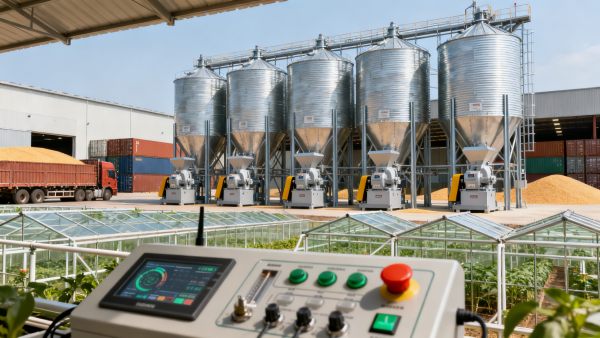
On June 14, 2026, the U.S. Department of Commerce opened a countervailing duty (CVD) investigation into Chinese exports of smart greenhouse systems, commercial feed pellet machines, and grain silos and storage equipment. For companies involved in agricultural equipment trade, import clearance, compliance certification, and cross-border sourcing, this development matters because the case moves beyond a policy signal and into a formal review process, with a preliminary decision expected within 90 days.
What has been formally placed under review
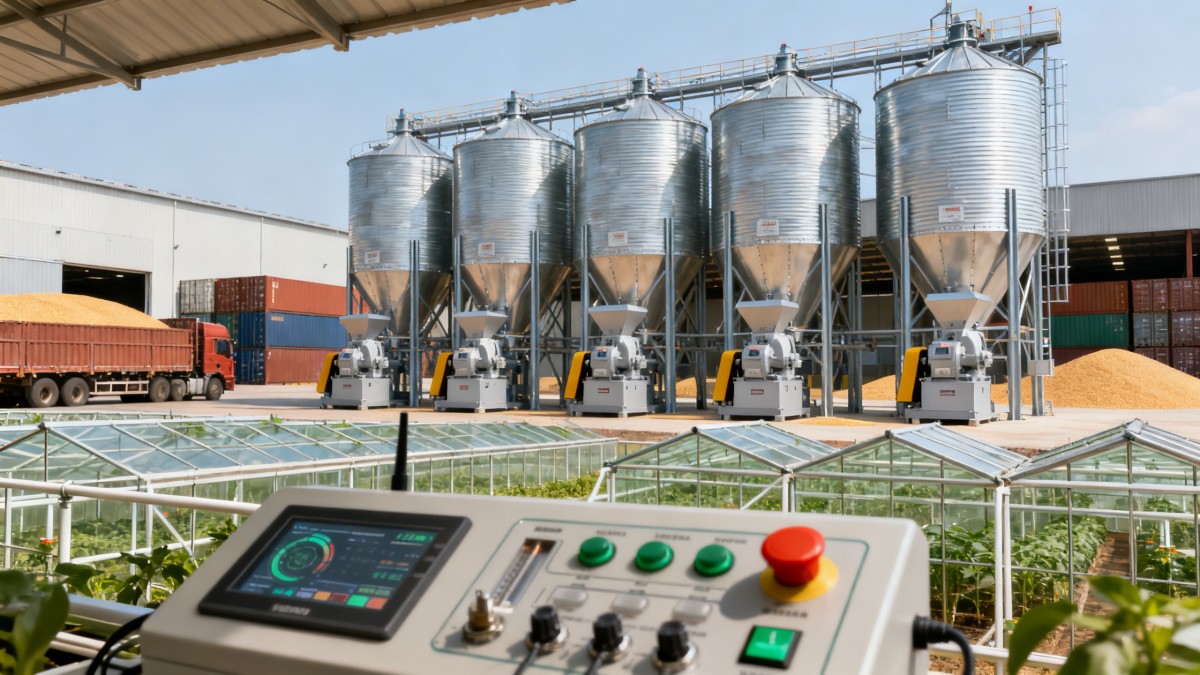
According to the information provided, the U.S. action officially covers three major export product groups: Smart Greenhouse, Commercial Feed Pellet, and Grain Silos & Storage. The case was initiated on June 14, 2026, and is framed as a countervailing duty investigation into products exported from China. The preliminary determination is expected within 90 days. The same input also indicates that the move is already affecting U.S. importers in customs clearance, compliance-related procedures, and procurement costs.
The provided information further states that the European Union and Canada have also tightened origin-tracing reviews for similar equipment categories. No additional official ruling outcome, duty result, or final enforcement conclusion has been confirmed in the input.
Where the pressure may appear across the chain
Import-side transactions may face more friction
From an industry perspective, U.S. importers are among the first groups likely to feel the impact because customs handling, documentation review, and compliance checks are directly linked to the products named in the investigation. The main concern is not only price, but also whether shipments, declarations, and supporting materials can move through review without added delay or uncertainty.
Export manufacturers may need closer product and document alignment
For Chinese manufacturers and trading companies serving these categories, the immediate pressure point may be the consistency between product classification, origin-related records, and transaction documents. Analysis shows that when a formal trade case names specific equipment groups, affected suppliers often need to pay closer attention to how product scope, certifications, and shipment files are presented in actual business operations.
Downstream buyers may reassess sourcing rhythm and cost visibility
Buyers of smart greenhouse systems, feed pellet equipment, and grain storage systems may need to watch procurement timing and landed-cost expectations more closely. Observably, once import compliance and origin review become more stringent, downstream purchasing decisions can be influenced not only by base product pricing, but also by delivery predictability and documentation readiness.
Service providers in logistics and compliance may see higher scrutiny demands
Supply chain service providers, including those involved in customs coordination and compliance support, may face a more detail-sensitive operating environment. What deserves closer attention is whether product descriptions, origin-tracing materials, and certification files remain consistent across contracts, shipping records, and clearance submissions.
What companies should watch now
Track the preliminary determination window closely
The most immediate milestone in the provided information is the expected preliminary decision within 90 days. For affected businesses, this is a practical timeline marker for reviewing active orders, shipment schedules, and communication with customers or suppliers.
Focus on the three named product groups rather than broad assumptions
Companies should distinguish between general concern about farm equipment trade and the specific categories identified in the case: smart greenhouse systems, commercial feed pellet machines, and grain silos and storage equipment. Analysis shows that category-specific review matters more than broad sector labels when assessing exposure.
Separate policy headlines from operational execution
It is important to distinguish the formal opening of an investigation from a final trade outcome. The current development has clear operational implications, especially for clearance, certification, and procurement planning, but it does not by itself confirm a final result. That difference matters for internal planning and external customer communication.
Prepare origin and transaction records for wider review
Because the input notes tighter origin-tracing scrutiny in the EU and Canada for similar equipment, companies with multi-market exposure may need to review whether origin-related files, supplier qualifications, and shipment documentation are sufficiently consistent across different destinations.
Why this deserves continued attention
Observably, this is more than a routine trade headline because it combines a formal U.S. CVD case with broader origin-tracing pressure in other markets for similar equipment. At the same time, it is more appropriate to understand this as an active and developing trade-policy signal rather than a settled commercial outcome. The investigation has been opened, the product scope is defined in the provided information, and the next confirmed milestone is the preliminary decision window.
From an industry perspective, the key issue is that trade compliance, sourcing decisions, and delivery planning may become more interconnected for these product categories over the near term. That makes continued monitoring necessary even before any final conclusion is known.
How this should be read at this stage
At this stage, the most balanced reading is that the agricultural equipment segments tied to smart greenhouse systems, feed pellet machinery, and grain storage equipment are entering a period of higher trade-review sensitivity in the U.S., with related compliance attention also rising in the EU and Canada. Analysis shows that the practical significance lies less in immediate certainty and more in the need for closer monitoring of documentation, origin review, and procurement execution.
In other words, this is best understood as a near-term operational issue with possible longer-term implications, but one that still requires continued observation before broader conclusions are drawn.
Basis of this article
This article is based on the user-provided news title, event date, and event summary. The specific official source link was not provided in the input, so the details should continue to be verified against future official announcements and related disclosures.
For this type of development, commonly relevant source categories may include official government notices, company statements, industry association updates, authoritative media reporting, and standards or compliance-related documents. The main follow-up points to watch are any official wording on scope, the preliminary determination expected within 90 days, and whether origin-tracing review expands further in related markets.
Related Intelligence
- Smart GreenhouseSelecting Greenhouse Propagation Equipment for Hot, Humid Southeast Asian NurseriesGreenhouse propagation equipment Southeast Asia: discover how to select resilient irrigation, ventilation, benches, and automation for hot, humid nurseries.
- Smart GreenhouseWhat Are the Biggest Challenges in Agri-Tech Adoption in 2026?What are the biggest challenges in agri tech adoption for 2026? Explore cost, data, connectivity, skills, compliance, and ROI barriers.
- Smart GreenhouseHow Does Compact Greenhouse Technology Improve Yield in Space-Limited Growing Environments?Compact greenhouse technology improves yield in space-limited environments through better climate uniformity, vertical efficiency, precise irrigation, and repeatable crop performance.
The Morning Broadsheet
Daily chemical briefings, market shifts, and peer-reviewed summaries delivered to your terminal.
