

The Authority in Global Agricultural Chemistry & Bio-Resources
Aquaculture Modules for RAS: What to Include for Filtration, Oxygen, and Monitoring
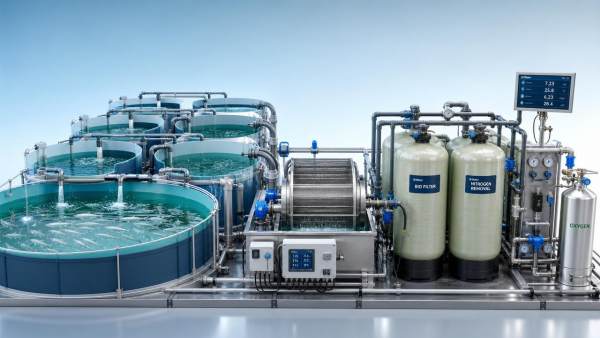
Aquaculture Modules for RAS: What to Include for Filtration, Oxygen, and Monitoring
Selecting the right aquaculture modules is critical when designing a reliable RAS project.
The real challenge is integration, not just equipment selection.
Filtration, oxygen delivery, and monitoring must work as one system.
If one module underperforms, water quality, fish health, and operating cost all suffer.
That is why practical aquaculture modules should be chosen around process stability, compliance, and expansion plans.
In a modern RAS, every module affects another.
A stronger solids removal train reduces oxygen demand.
Better monitoring shortens response time when loads change.
This article breaks down what to include in aquaculture modules for filtration, oxygen, and monitoring, with a focus on performance you can actually manage.
Start with a system view of aquaculture modules
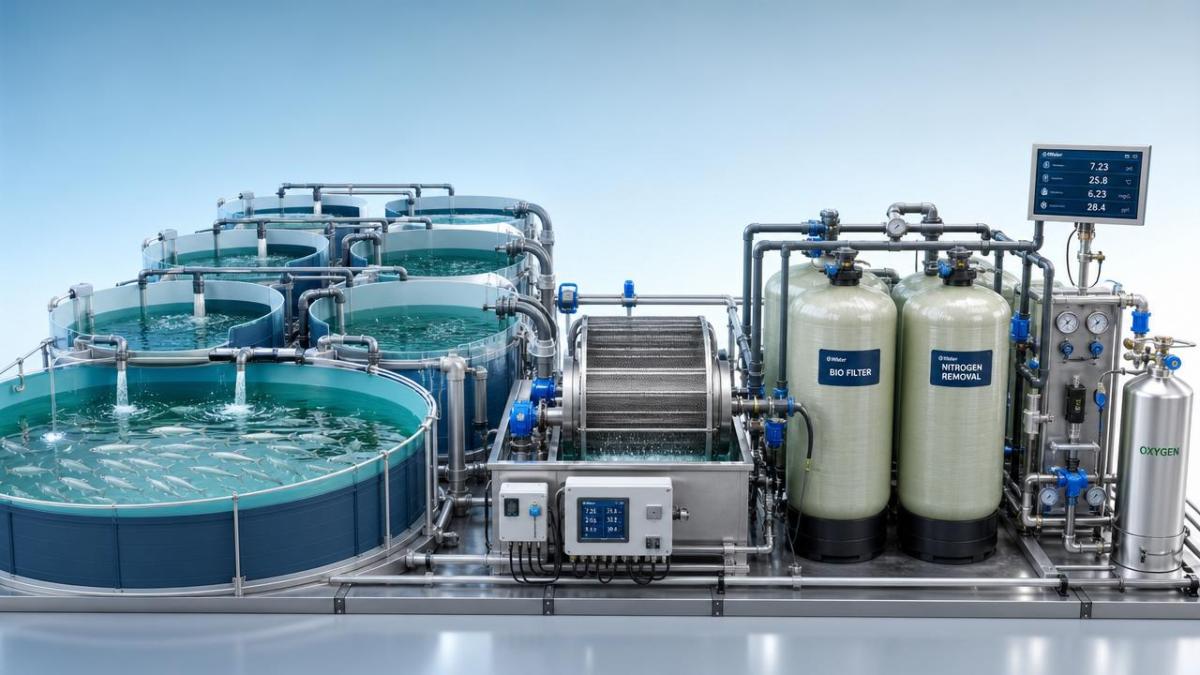
Before specifying equipment, define the biological load and operating strategy.
That includes stocking density, target species, feed rate, water turnover, and harvest profile.
These factors determine how your aquaculture modules should be sized and connected.
In practice, many RAS issues begin with isolated purchasing decisions.
A filter may look efficient on paper, yet create head loss that weakens overall circulation.
An oxygen skid may meet peak demand, yet fail during maintenance or biomass spikes.
A complete module strategy should answer five questions:
- What waste load must the system remove every hour?
- How much oxygen is needed at normal and peak biomass?
- Which parameters require real-time monitoring?
- Where are the failure points and backup paths?
- How easily can aquaculture modules scale in phase two?
Once those answers are clear, module selection becomes far more precise.
Filtration aquaculture modules that protect water quality
Filtration is the backbone of most aquaculture modules in RAS.
It removes solids, controls ammonia conversion conditions, and helps stabilize the whole loop.
A good design usually combines mechanical and biological treatment.
Mechanical filtration modules
Start with fast solids capture close to the culture tanks.
This reduces particle breakdown and prevents dissolved waste from rising too quickly.
- Drum filters for continuous fine solids separation
- Settling units or swirl separators for heavier particles
- Sludge collection and discharge lines for easier waste handling
- Redundant pumps where downtime risk is high
The key point is response speed.
Mechanical aquaculture modules should remove waste before it becomes a biological burden.
Biological filtration modules
Biofiltration handles ammonia and nitrite, which are central risks in intensive RAS.
Common aquaculture modules include moving bed biofilm reactors and fixed media systems.
The best choice depends on temperature, salinity, loading rate, and maintenance capacity.
What matters most is stable nitrification under realistic operating swings.
That means avoiding aggressive undersizing to save capital.
A strained biofilter often creates hidden costs through slower growth and higher mortalities.
Polishing and support filtration
Depending on species and water source, support aquaculture modules may also include:
- Foam fractionation for fine organics
- UV or ozone treatment for pathogen control
- Degassing towers for carbon dioxide removal
- Make-up water conditioning units
These modules often decide whether the system remains stable at higher production intensity.
Oxygen aquaculture modules that match real biomass demand
Oxygen supply is not just a utility package.
In intensive farming, oxygen aquaculture modules directly shape feeding performance and survival margins.
The biggest mistake is sizing only for average demand.
Real systems face peaks during feeding, warm seasons, grading, and temporary circulation issues.
Core oxygenation components
- Oxygen cones or low head oxygenators for efficient transfer
- LOX storage or oxygen generator packages
- Distribution manifolds with pressure control
- Backup oxygen banks for emergency response
- Flow meters and dissolved oxygen feedback points
Well-designed aquaculture modules also separate base-load and emergency oxygen functions.
That approach improves resilience during power loss or maintenance.
Why oxygen and degassing must be designed together
High dissolved oxygen alone does not guarantee healthy culture conditions.
Carbon dioxide accumulation can reduce fish performance even when oxygen readings seem acceptable.
That is why oxygen aquaculture modules should be paired with effective degassing capacity.
In actual projects, this pairing often makes the difference between stable growth and chronic stress.
Monitoring aquaculture modules that support fast decisions
Monitoring aquaculture modules turn data into control.
Without them, even strong filtration and oxygen packages are harder to manage.
The goal is not collecting every possible signal.
The goal is tracking the variables that change outcomes.
Parameters that should be monitored continuously
- Dissolved oxygen
- Temperature
- pH
- ORP where ozone is used
- Water level and flow status
- Pump and blower operating condition
For ammonia, nitrite, nitrate, and alkalinity, measurement frequency depends on automation level and risk profile.
Still, these values should be built into standard operating review.
Control architecture matters
Monitoring aquaculture modules should connect sensors, alarms, and operating logic.
A basic dashboard is not enough for critical systems.
You need alarm thresholds, escalation paths, remote access, and data logging.
This is especially important for multi-tank operations or sites with lean staffing.
From a project perspective, sensor placement deserves as much attention as sensor brand.
Bad placement produces clean-looking data that misses real process stress.
How to choose aquaculture modules for compliance and scalability
The strongest aquaculture modules are not only efficient on day one.
They remain manageable under audits, expansion, and operating change.
That means procurement should look beyond equipment catalogs.
Selection criteria that hold up in real projects
- Materials compatible with water chemistry and cleaning practices
- Documented performance curves under comparable load conditions
- Local service access and spare parts availability
- Redundancy for life-support functions
- Controls that integrate with plant-wide automation
- Expansion paths without major process redesign
This also aligns with stricter environmental and operational expectations.
As regulations tighten, traceable operating data and predictable treatment performance matter more.
That is another reason integrated aquaculture modules outperform piecemeal upgrades.
A practical module checklist before procurement
Before final approval, run each module through a short decision checklist.
- Confirm the design biomass, feed load, and peak oxygen demand.
- Check that filtration aquaculture modules handle both steady and shock loads.
- Verify oxygen modules include backup supply and fail-safe control.
- Review monitoring points for real process visibility, not convenience alone.
- Test whether aquaculture modules can be isolated for maintenance.
- Assess spare parts, service response, and commissioning support.
- Validate data logging for compliance and performance analysis.
This kind of review saves time later, especially when the project moves from design assumptions to live production.
Conclusion
The best aquaculture modules for RAS are not simply the most advanced units.
They are the modules that fit the biology, the control strategy, and the operational reality.
When filtration, oxygen, and monitoring are specified as an integrated package, water quality becomes easier to control.
Fish performance becomes more predictable, and expansion becomes less risky.
If you are planning a new RAS or upgrading an existing one, start by mapping the interaction between aquaculture modules before comparing equipment brands.
That step usually leads to better procurement decisions, cleaner commissioning, and stronger long-term output.
Related Intelligence
- RAS SystemsHow to Select an Ammonia Water Quality Sensor for Aquaculture SystemsAmmonia water quality sensor selection guide for aquaculture: compare technologies, accuracy, salinity compatibility, maintenance, and integration for reliable monitoring.
- RAS SystemsDo UV water treatment systems eliminate chlorine-resistant pathogens in aquaculture recirculation?UV water treatment systems can inactivate chlorine-resistant pathogens like Cryptosporidium in aquaculture RAS—when properly engineered, validated, and maintained.
- RAS SystemsSelecting Pure Oxygen Systems for High-Density Aquaculture and RAS OperationsPure oxygen systems aquaculture buyers can compare for high-density RAS: optimize DO stability, transfer efficiency, controls, redundancy, and fish welfare.
The Morning Broadsheet
Daily chemical briefings, market shifts, and peer-reviewed summaries delivered to your terminal.
