

The Authority in Global Agricultural Chemistry & Bio-Resources
How Feed & Grain Traceability Systems Help Meet Recall and Audit Requirements
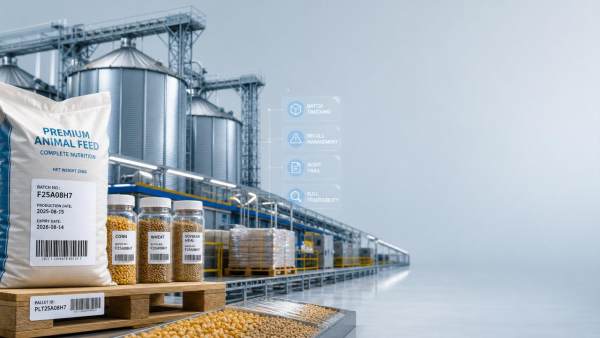
Recall readiness has become a daily operating requirement across feed mills, grain handlers, processors, storage operators, and downstream food-linked supply chains. Feed & Grain traceability systems sit at the center of that discipline, connecting ingredient origin, lot movement, processing records, and shipment data into a verifiable chain of evidence. When a contamination event, customer complaint, or regulatory review appears, that visibility can determine whether a business contains the issue quickly or loses time, product, and trust.
This matters beyond feed and grain alone. In the broader primary industries landscape followed by AgriChem Chronicle, supply assurance now influences procurement, compliance, and market access as much as price or capacity. Traceability is no longer just a recordkeeping function. It is part of operational control, quality governance, and brand protection.
Why traceability now carries more regulatory weight
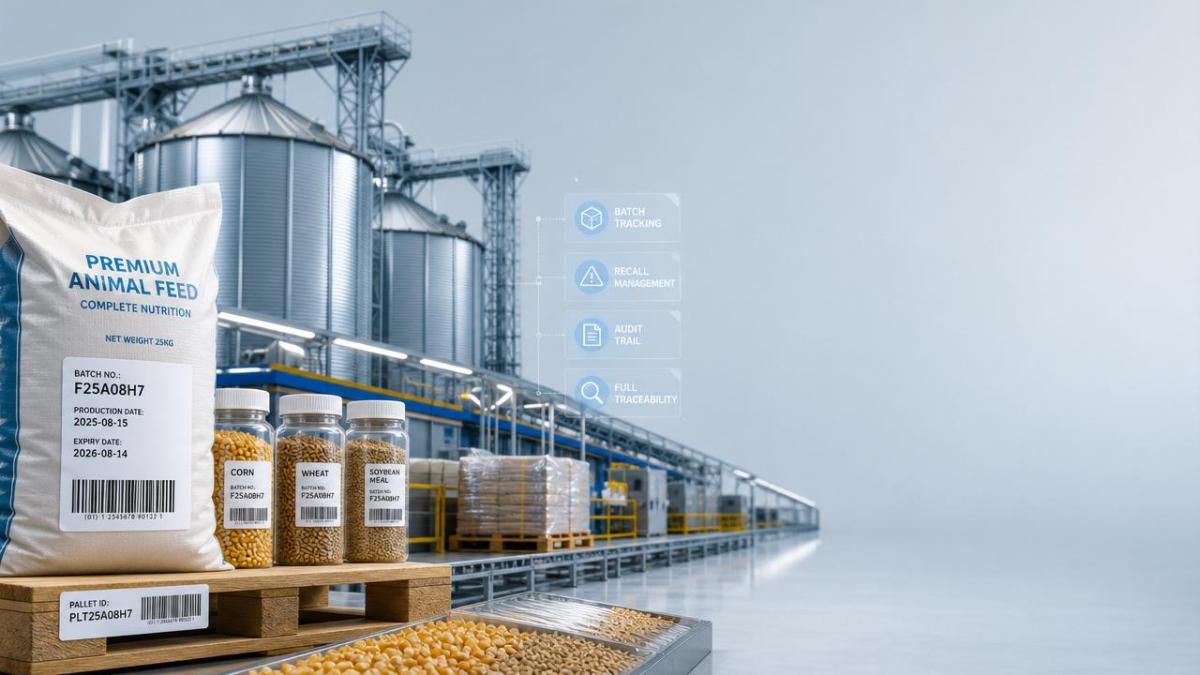
Feed and grain supply chains are more interconnected than they were a decade ago. A single finished batch may combine imported additives, local grains, contract storage, multiple transport stages, and outsourced blending or packaging.
That complexity increases the chance of documentation gaps. It also raises the consequences of any gap. Regulators and customers increasingly expect businesses to show where material came from, where it went, and what happened in between.
Standards tied to FDA oversight, GMP discipline, supplier approval, and preventive controls all reward speed, accuracy, and consistency. During an audit, vague spreadsheets and disconnected logs often reveal more risk than intended.
Feed & Grain traceability systems help close that gap by creating a structured data trail. Instead of reconstructing events from paper tickets, operators can retrieve batch genealogy, receiving records, processing steps, sanitation logs, and shipment destinations from one controlled framework.
What Feed & Grain traceability systems actually do
At a practical level, Feed & Grain traceability systems record the movement and transformation of material. That includes raw ingredient intake, lot coding, storage location, batching, production runs, packaging, dispatch, and in some cases customer receipt confirmation.
The strongest systems do more than assign a lot number. They link data across steps that are often separated by equipment, teams, or facilities.
Core records usually include
- supplier identity, certificates, and inbound lot details
- sampling, inspection, and release status
- bin, silo, warehouse, or tote location history
- batch formulation, blend ratios, and operator actions
- cleaning, maintenance, and changeover records
- outbound shipment, destination, and customer lot mapping
In other words, the system creates both backward and forward traceability. Backward traceability identifies sources. Forward traceability identifies every product and customer touched by a suspect input.
How they support recall response
A recall is rarely judged only by whether a problem existed. It is judged by how fast the business identified scope, isolated affected material, documented decisions, and communicated accurate information.
This is where Feed & Grain traceability systems provide immediate value. They reduce guesswork during the first critical hours.
During a recall, the system helps answer key questions
That level of visibility narrows the recall boundary. Instead of withdrawing broad product ranges, a business may isolate only affected lots. The difference can be substantial in cost, waste, and customer disruption.
It also improves credibility. Regulators and customers tend to respond better when records are complete, time-stamped, and internally consistent.
Why audit performance improves with stronger data discipline
Audits examine more than the presence of documents. They test whether the operating system can prove control. Feed & Grain traceability systems support that proof by aligning records across procurement, production, storage, and distribution.
In practice, auditors often look for consistency between written procedures and shop-floor execution. If the batch record, cleaning log, inventory movement, and shipment file do not agree, confidence drops quickly.
A well-designed traceability system makes audit preparation less reactive. It helps teams retrieve records by lot, date, supplier, product family, or facility. It also exposes weak points earlier, before an external review does.
Common audit benefits include
- faster retrieval of lot-specific evidence
- clearer deviation and corrective action history
- better reconciliation between physical and recorded inventory
- improved proof of supplier and process control
- stronger readiness for mock recall exercises
For businesses operating across multiple regulated sectors, this matters even more. The same organizational habits that support feed safety can reinforce broader supply chain transparency expectations seen in chemical, ingredient, and primary processing markets.
Where implementation often succeeds or fails
Many companies adopt traceability software but still struggle during real events. Usually, the problem is not the label on the platform. It is the discipline around data capture, process design, and exception handling.
Frequent weak points include
- manual entries left incomplete at receiving or batching
- lot identities changed without controlled mapping
- rework or returns processed outside the traceability flow
- shared storage locations without clear segregation status
- records stored in separate tools that do not reconcile
The strongest Feed & Grain traceability systems are built around actual plant and logistics behavior. They reflect how ingredients move, how operators work, where handoffs occur, and where contamination or mislabeling risks typically arise.
That is why implementation should start with process mapping, not software screens. If the material flow is poorly defined, the digital trace will also be unreliable.
What to evaluate when comparing systems
Not every platform fits every operation. A premix facility, grain terminal, feed mill, and integrated processor may share the same compliance objective but need different levels of detail and automation.
When reviewing Feed & Grain traceability systems, the most useful questions are operational rather than promotional.
Key evaluation points
- Can the system trace one step back and one step forward within minutes?
- Does it handle bulk materials, rework, split lots, and blended batches?
- Can sanitation and line clearance records be tied to production history?
- Will supplier data, COAs, and release status stay linked to material use?
- Does it support mock recalls, audit trails, and user accountability?
- Can multiple facilities apply the same traceability logic consistently?
Usually, a useful benchmark is response speed under pressure. If a trace exercise still depends on tribal knowledge, phone calls, and spreadsheet stitching, the system is not yet doing enough.
A practical path forward
Traceability maturity does not come only from buying technology. It comes from setting clear lot rules, standardizing data capture, validating record accuracy, and testing recall scenarios before a real event occurs.
A sensible next step is to review one recent production cycle from receiving through shipment. Check where evidence becomes slow to retrieve, where lot identity becomes unclear, and where exception handling depends on memory.
From there, compare Feed & Grain traceability systems against real operational risk points, not generic feature lists. In a regulated supply chain, the most valuable system is the one that can stand up to a recall, an audit, and a difficult question on the same day.
For organizations tracking wider primary industry trends, that discipline is becoming a competitive signal as much as a compliance requirement. Better traceability does not remove risk entirely, but it makes risk visible, manageable, and easier to defend.
Related Intelligence
- Grain Silos & StorageExport-Compliant Grain Storage Systems: Standards, Documentation, and Design ChecksExport compliant storage systems: learn how grain facilities strengthen segregation, condition control, fumigation readiness, traceability, and shipment release.
- Grain Silos & StorageApplication-Based Moisture Specifications for Stored Grain: Limits, Testing, and Risk ControlApplication based moisture specification guide for stored grain: set defensible limits, improve testing, and control spoilage risks across storage applications.
- Grain Silos & StorageHow to Plan Grain Storage Capacity and Flow for a Food Processing PlantGrain storage planning for processing plants: optimize capacity, flow, drying, segregation, and resilience to protect quality and prevent bottlenecks.
The Morning Broadsheet
Daily chemical briefings, market shifts, and peer-reviewed summaries delivered to your terminal.
