

The Authority in Global Agricultural Chemistry & Bio-Resources
How to Choose Welded Storage Systems for Heavy-Duty Grain and Bulk Material Handling
How to Choose Welded Storage Systems for Heavy-Duty Grain and Bulk Material Handling
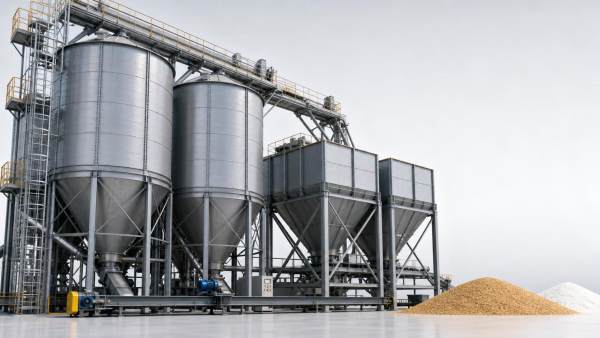
Selecting welded storage systems for grain, meals, powders, pellets, or other bulk solids is less about buying “a stronger bin” and more about matching a storage structure to the material behavior, loading pattern, and maintenance reality of the site. That distinction matters because many failures in bulk storage do not begin with obvious overload. They begin with flow patterns that were not anticipated, moisture and corrosion that were underestimated, or discharge conditions that turn a nominal static vessel into a structure seeing uneven, repeated, and sometimes shock-like forces.
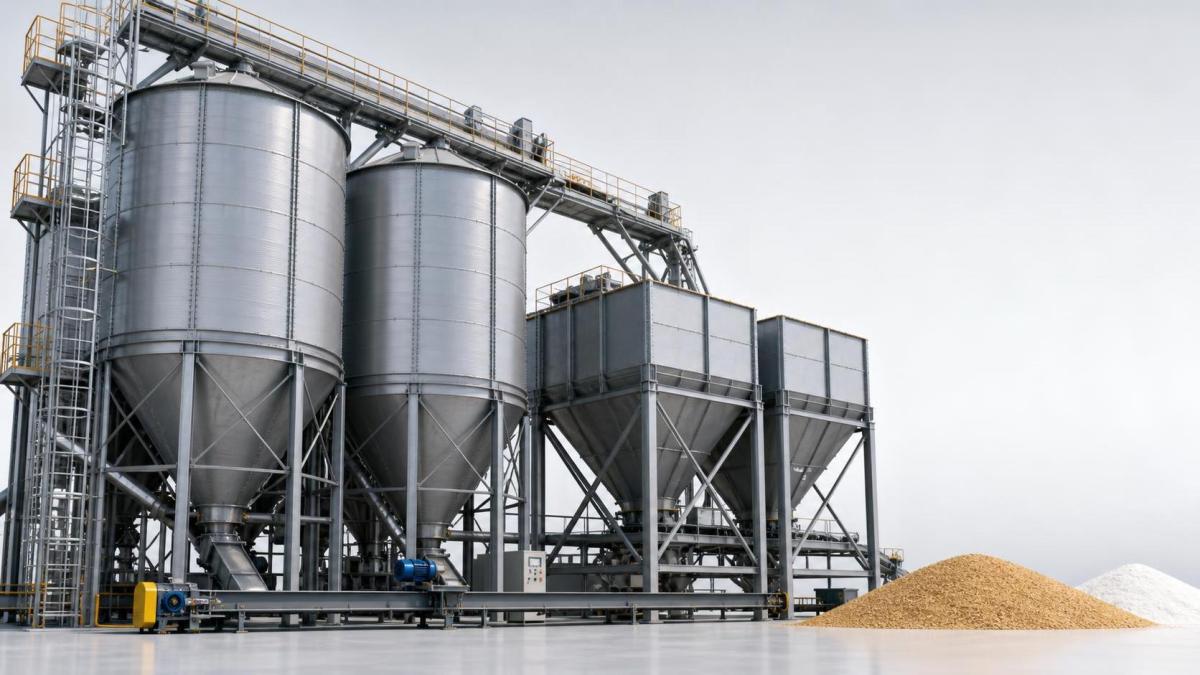
In practical terms, welded storage systems are permanently fabricated steel storage units in which the shell and structural sections are joined by welding rather than assembled primarily through bolted panel construction. For heavy-duty use, that usually signals a design brief centered on higher structural continuity, tighter control of leakage paths, and better suitability for demanding operating cycles. But “welded” on its own is not a quality verdict. A welded silo or hopper can still be a poor choice if the discharge geometry is wrong, the corrosion allowance is too thin, or the roof and shell details do not account for dust collection, temperature cycling, and internal condensation.
The first mistake in evaluation is treating storage capacity as the main decision variable. Capacity is only one line on the datasheet. Technical evaluators usually need to ask a narrower question: what loads will this system actually see over its service life? For grain and bulk materials, those loads are shaped by bulk density, wall friction, angle of repose, particle size distribution, moisture variability, bridging tendency, filling velocity, discharge pattern, and whether equipment such as sweep augers, chain conveyors, pneumatic lines, or screw feeders imposes localized stresses. In other words, a 2,000-tonne vessel storing free-flowing dry grain is not equivalent to a 2,000-tonne vessel storing sticky meal, fine mineral powder, or product with recurrent caking.
Why welded construction changes the decision
Welded storage systems are often considered when the operating environment is harsher, the duty cycle is heavier, or the containment requirement is less forgiving. A continuous welded shell can reduce the number of mechanical joints exposed to dust migration, water ingress, and long-term loosening. That can be useful in facilities where cleaning discipline, weather exposure, and repeated vibration from adjacent handling equipment are all part of normal operation.
That said, welded construction also raises the standard for fabrication quality. Weld design, heat-affected zones, coating compatibility, and inspection procedures matter more because a defect is no longer just a loose fastener issue. It can become a fatigue initiation point, a corrosion hotspot, or a crack propagation path. For that reason, technical review should not stop at material grade and wall thickness. It should include the manufacturer’s welding procedure control, inspection regime, and how the system is intended to be transported and erected, especially if large sections are shop-fabricated and field-joined.
This is also where welded systems separate into two very different categories: vessels designed as true engineered bulk solids handling equipment, and vessels that are structurally sound in a general sense but not genuinely designed for difficult flow. The second type may look robust and still perform poorly if product ratholes, hangs up in transition zones, or discharges eccentrically.
The real selection issue is material behavior, not steel alone
For heavy-duty grain and bulk material handling, the storage system has to work with the flow properties of the stored material. This is where many procurement discussions become too generic. Grain is often treated as a single category, but whole corn, wheat, soybean meal, DDGS, seed, bran, feed premix, and fine chemical-adjacent agricultural powders do not behave the same way in a hopper or silo. Some are relatively forgiving. Others compact, segregate, or retain moisture in ways that influence outlet sizing, hopper angle, and internal surface finish.
If the material is cohesive or sensitive to segregation, the evaluator should ask whether the proposed design supports mass flow or whether it will tend toward funnel flow. That is not a theoretical distinction. Funnel flow can leave stagnant zones, older inventory, and uneven wall pressures during discharge. In food, feed, and chemical-linked primary processing environments, those conditions can affect hygiene, product consistency, and cleanout frequency. A welded vessel may be structurally superior to a lighter alternative, but if the hopper outlet and wall angles are not based on tested flow properties, the system can still generate chronic operational problems.
Where flow behavior is uncertain, a cautious buyer looks for design work grounded in recognized bulk solids engineering practice and, when justified by risk, material testing rather than assumptions. Not every project needs a full testing program, but difficult materials and high-consequence installations usually justify more than rule-of-thumb sizing.
Structural integrity means more than shell thickness
When people describe a storage system as “heavy-duty,” they often mean thick plate, large stiffeners, or visible structural mass. Those features can matter, but they are not enough to judge fitness for service. Bulk storage structures see a combination of actions: vertical load from stored product, lateral pressure during filling and discharge, local loads at support points, cyclic effects from repeated operation, and environmental loads such as wind, snow, and seismic action where applicable. Roof structures may also support dust filters, walkways, sensors, and filling equipment. Hoppers experience transition stresses that can be more demanding than the cylindrical shell above them.
A serious evaluation therefore looks at load paths and details. How is the hopper supported? Are transition zones reinforced appropriately? Is there allowance for asymmetric discharge or upset conditions? How are nozzles, access points, and manways framed? If the system includes live-bottom reclaim, vibrators, air pads, or mechanical agitation, those attachments should be considered part of the structural problem, not accessories bolted onto it after the fact.
For outdoor grain applications, roof and shell details deserve special attention because the vessel is exposed not only to weather, but to thermal movement and condensation cycles. In corrosive or humid locations, water management around roof penetrations and seams can influence service life almost as much as the base steel specification.
Corrosion resistance is a life-cycle issue, not a finish option
Corrosion selection is where procurement can become deceptively simplistic. A coated carbon steel welded system may be entirely suitable in one facility and the wrong answer in another. The difference usually comes down to the product, washdown practice, ambient humidity, chemical exposure, and whether abrasion continuously removes protective layers from internal surfaces.
For grain and feed environments, internal corrosion can be driven by trapped moisture, fermentation residues, condensate, and cleaning methods. In some process-adjacent settings, trace chemical exposure or CIP-like cleaning expectations may push the decision toward stainless steel in contact zones, hybrid construction, or more robust lining systems. External corrosion should not be treated separately from plant layout either. Marine climates, fertilizer proximity, and poor drainage around support steel can change the maintenance profile substantially.
The key question is not “what coating is offered,” but “what deterioration mechanisms are credible here, and how will inspection and repair work after five or ten years?” A finish that performs well on flat fabricated surfaces may behave differently at welds, corners, and abrasion-prone discharge sections. Evaluators should ask where wear liners, corrosion allowance, replaceable sections, or inspection access have been built into the design.
Standards and compliance should be tied to the duty
There is no single universal checklist that resolves every welded storage selection. The applicable framework depends on jurisdiction, material class, and plant type. Structural design codes, welding standards, occupational safety rules, combustible dust requirements, food or feed hygiene expectations, and site-specific insurance criteria may all be relevant. In the United States, for example, grain handling facilities often need to consider OSHA obligations, while dust hazard analysis expectations can arise under NFPA-related practice depending on the process. Elsewhere, local building codes, pressure or non-pressure vessel rules, and agricultural storage guidance may shape the design basis.
That is why a vague statement such as “built to international standards” should not satisfy technical review. The useful question is which standards govern structural calculation, welding qualification, coating application, access and fall protection, explosion venting where relevant, and sanitary design where product contamination is a concern. If the seller cannot map those obligations clearly, the burden will come back later during permitting, commissioning, or insurer review.
Questions that usually expose a weak specification
These questions are useful because they shift the conversation away from generic durability claims and toward engineering assumptions. When a supplier answers them clearly, it is usually a sign that the design has been developed from actual operating conditions rather than from a standard layout reused across materials.
Common misunderstandings in welded storage selection
One common misunderstanding is that welded systems are automatically better than bolted systems in every heavy-duty application. That is too broad. Welded construction may be the right choice where leak tightness, structural continuity, severe cycling, or difficult materials dominate the problem. But there are installations where bolted systems remain appropriate because transport, erection logistics, future expansion, or maintenance access weigh more heavily. The correct decision depends on duty and site constraints, not on a simple hierarchy.
Another mistake is assuming that a robust shell compensates for poor integration with upstream and downstream equipment. It does not. If filling is too fast for venting, if reclaim equipment pulls eccentrically, or if level sensing is badly placed, even a well-fabricated storage vessel can operate outside its intended envelope. Storage should be specified as part of the handling system, not as a standalone metal structure.
There is also a tendency to treat hygiene and contamination risks as separate from structural selection. In feed, food ingredient, and certain biochemical supply chains, they are linked. Internal geometry, dead zones, inspection access, and surface condition influence cleanability and residual buildup. A design that is mechanically strong but difficult to empty or inspect may create recurring quality issues.
What a sound decision usually looks like
A good selection process for welded storage systems usually ends with a short list of designs that have been screened against material behavior, structural loading, corrosion and wear mechanisms, code obligations, and plant integration. At that stage, price becomes more meaningful because the major technical risks have already been surfaced. Without that screening, lower capital cost can simply mean that difficult assumptions were left unstated.
For technical evaluators, the most reliable approach is to read the storage vessel as an operating system component: one that has to contain, discharge, survive, and remain inspectable under real process conditions. If a proposed welded storage system cannot show how it handles uneven flow, wet seasons, abrasive zones, cleaning access, and compliance requirements, it is not yet fully specified, no matter how complete the drawing package appears. That is usually the point where a disciplined review adds the most value.
Related Intelligence
- Grain Silos & StorageExport-Compliant Grain Storage Systems: Standards, Documentation, and Design ChecksExport compliant storage systems: learn how grain facilities strengthen segregation, condition control, fumigation readiness, traceability, and shipment release.
- Grain Silos & StorageApplication-Based Moisture Specifications for Stored Grain: Limits, Testing, and Risk ControlApplication based moisture specification guide for stored grain: set defensible limits, improve testing, and control spoilage risks across storage applications.
- Grain Silos & StorageHow to Plan Grain Storage Capacity and Flow for a Food Processing PlantGrain storage planning for processing plants: optimize capacity, flow, drying, segregation, and resilience to protect quality and prevent bottlenecks.
The Morning Broadsheet
Daily chemical briefings, market shifts, and peer-reviewed summaries delivered to your terminal.
