

The Authority in Global Agricultural Chemistry & Bio-Resources
Suez Transit Window Cut as Red Sea Disruption Delays Silo Shipments

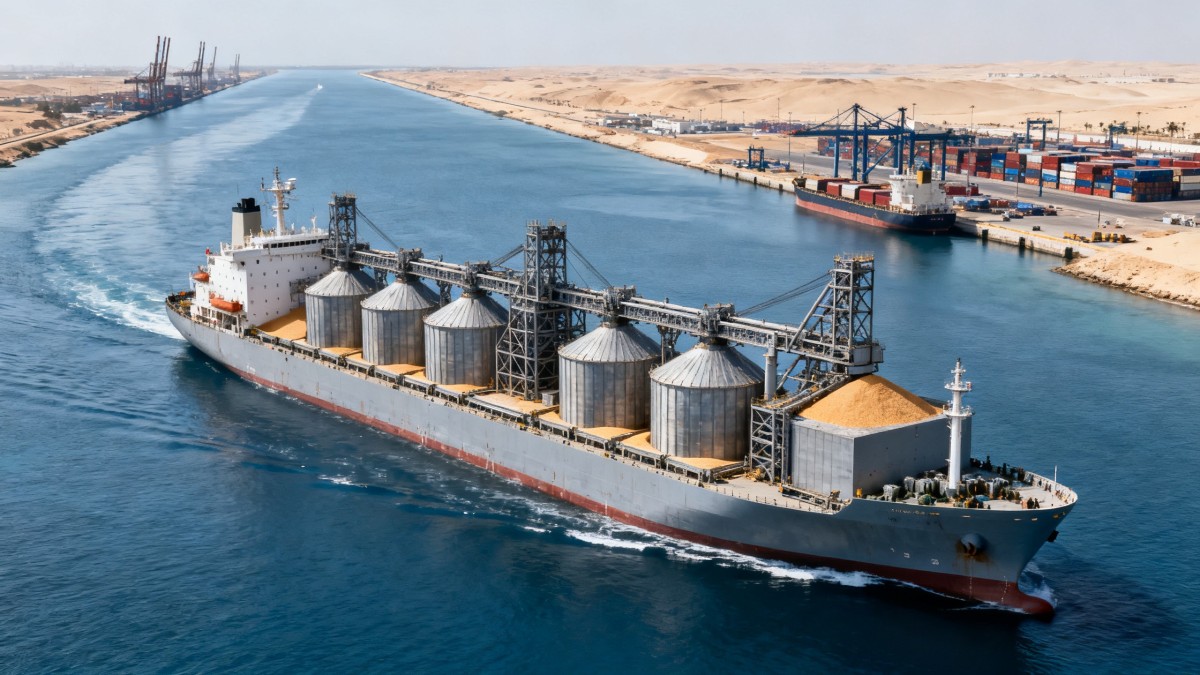
On July 13, 2026, a new disruption in the Red Sea translated into an immediate operating rule change for vessel transit through the Suez Canal: the Suez Canal Authority temporarily tightened the passage window to 48 hours per day. For the Grain Silos & Storage equipment trade, this matters less as a headline shipping event than as a direct execution issue affecting export delivery, contract performance, procurement timing, and documentation review. The reported drop in Asia-Europe liner schedule reliability and the average 22-day delay for complete silo system shipments from major Chinese ports indicate that manufacturers, exporters, buyers, and logistics service providers now need to reassess delivery assumptions already embedded in orders and project schedules.
What Has Changed in the Transit Environment
According to a joint notice referenced from IMO and Clarksons Research, a new round of navigation disruption occurred in the Red Sea on July 13, 2026. Following that event, the Suez Canal Authority temporarily narrowed the vessel transit window to 48 hours per day. The same update states that schedule reliability on the Asia-Europe liner route fell to 51%.
The reported effect on large Grain Silos & Storage equipment is already visible in ocean delivery performance. Complete silo system shipments departing from major Chinese ports are currently showing an average voyage delay of 22 days. The input information also states that some orders have entered renegotiation after force majeure clauses were triggered.
Where the Pressure Appears Across the Supply Chain
Export deliveries are exposed first at the contract execution stage
For equipment manufacturers and export sellers, the main exposure is not only longer transit time but the mismatch between contracted delivery assumptions and actual vessel movement. From an industry perspective, this can affect shipment scheduling, notice obligations to buyers, and the handling of delivery-related clauses in export contracts. What deserves closer attention is whether shipping delays begin to alter the documentary timeline linked to dispatch confirmation, delivery milestones, or acceptance arrangements.
Buyers and project procurement teams face timing and coordination risk
For procurement-side participants, especially those purchasing complete Grain Silos & Storage systems, the issue is likely to appear in project sequencing rather than in freight alone. A 22-day average delay can affect installation windows, site readiness coordination, and downstream handover planning. Analysis shows that buyers should pay closer attention to whether tender files, purchase orders, or technical delivery schedules need updated wording when shipping uncertainty becomes more persistent under changed canal transit conditions.
Logistics and supply chain service providers will need tighter exception handling
For freight forwarders, shipping coordinators, and other supply chain service providers, the temporary restriction of canal transit windows creates a more compressed operating environment. The practical pressure point is the management of revised sailing expectations, delay notifications, and contract support records where force majeure discussions have started. Observably, the value of these service providers shifts from basic transport execution toward traceable communication and document support around schedule disruption.
What Companies Should Watch Now
Review delivery language against actual shipping conditions
Analysis shows that companies involved in exporting or buying complete silo systems should review whether existing delivery commitments still align with current shipping conditions. Where orders are already under discussion because of force majeure clauses, the immediate focus is less on broad legal interpretation and more on whether delivery terms, notice procedures, and acceptance timing are documented clearly enough for renegotiation.
Check whether trade documents and bid files need practical updates
Where shipment timing is material to performance, businesses should closely examine commercial documents, technical schedules, and tender materials that reference lead times or dispatch assumptions. The current information does not establish a uniform execution standard beyond the reported disruption and delay, so it is more appropriate to treat this as a prompt for document review rather than as evidence of a settled new trade norm.
Monitor follow-up wording from relevant authorities and market channels
What deserves closer attention is whether later official language, carrier notices, or project-side contractual instructions begin to reflect this tighter transit arrangement more explicitly. The current development may influence how parties describe shipping risk, but the input does not provide detailed implementation rules. Companies should therefore watch for later clarification in execution language rather than assume a fully stabilized operating framework.
Prepare for after-sales and project coordination knock-on effects
For suppliers and service teams, longer ocean transit can also affect installation coordination, commissioning support, and customer communication after dispatch. Observably, the more integrated the shipment is as a complete equipment system, the more important it becomes to keep technical files, packing-related records, and delivery communication aligned in case project timelines need to be re-sequenced.
How This Signal Should Be Read
Analysis shows that this development is best understood as an execution-level rule signal rather than a fully settled long-term trade framework. The temporary tightening of the Suez Canal transit window is a concrete operating change, and the reported delay to Grain Silos & Storage shipments shows that the effect is already moving beyond abstract route risk into delivery performance. At the same time, the available facts do not establish how long the arrangement will remain in place or how broadly counterparties will standardize their response in contracts, tenders, or compliance review.
From an industry perspective, the immediate value of this update lies in its warning function: logistics disruption has now intersected with contract execution and shipment planning in a way that can affect equipment projects directly. That makes continued observation necessary, especially where order delivery dates, buyer acceptance timing, or force majeure language are commercially sensitive.
What the Market Can Reasonably Conclude at This Stage
The current event should be read as a material but still developing shipping rule change with direct implications for the delivery of large Grain Silos & Storage systems. The confirmed facts support a cautious conclusion: transit conditions have tightened, liner reliability has weakened, average shipment delays have lengthened, and some orders are already being renegotiated. It is more appropriate to understand this as an active execution signal that requires contract, procurement, and delivery attention now, while broader market practice and follow-up interpretation still need to be watched.
Basis of This Article and What Still Needs Verification
This article is generated on the basis of the user-provided news title, event date, and event summary. For developments of this kind, relevant source categories typically include official notices, regulator or canal authority statements, trade and customs information, industry association updates, standard-setting documents, and reporting from authoritative maritime or trade media. A specific official source link was not provided in the input, so further verification remains necessary. What still needs ongoing review includes any later official clarification, the practical wording used in contract and tender documents, evolving force majeure treatment, market feedback from supply chain participants, and how companies are implementing delivery and documentation adjustments in response.
Related Intelligence
- Grain Silos & StorageHow Modular Feed and Grain Systems Support Scalable Storage and Processing ExpansionModular feed and grain systems enable smarter, scalable expansion across storage, conveying, processing, and loadout. Discover how to eliminate bottlenecks, protect future capacity, and keep operations moving.
- Grain Silos & StorageHow to Size a Grain Pre-Cleaner for Capacity, Crop Type, and Impurity LoadGrain pre cleaner machine sizing guide: match capacity, crop type, moisture, and impurity load to improve flow, separation quality, and downstream performance.
- Grain Silos & StorageHow Can You Verify That a Grain Handling System Meets Export Standards?How do I know if a grain handling system meets export standards? Explore practical checks for traceability, sanitation, quality control, and export-ready compliance.
The Morning Broadsheet
Daily chemical briefings, market shifts, and peer-reviewed summaries delivered to your terminal.
