

The Authority in Global Agricultural Chemistry & Bio-Resources
India Tightens Feed Pellet Import Filings
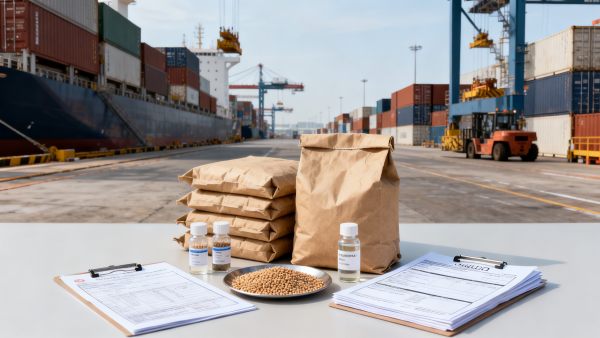
India's Ministry of Agriculture & Farmers Welfare brought a new feed import requirement into effect on July 12, 2026, requiring commercial feed pellet importers to complete added compliance filings before customs clearance. For exporters, importers, testing partners, and supply chain teams handling shipments into India, the immediate point of attention is not only the new documentation itself, but also the compressed filing window and the absence of a transition period.
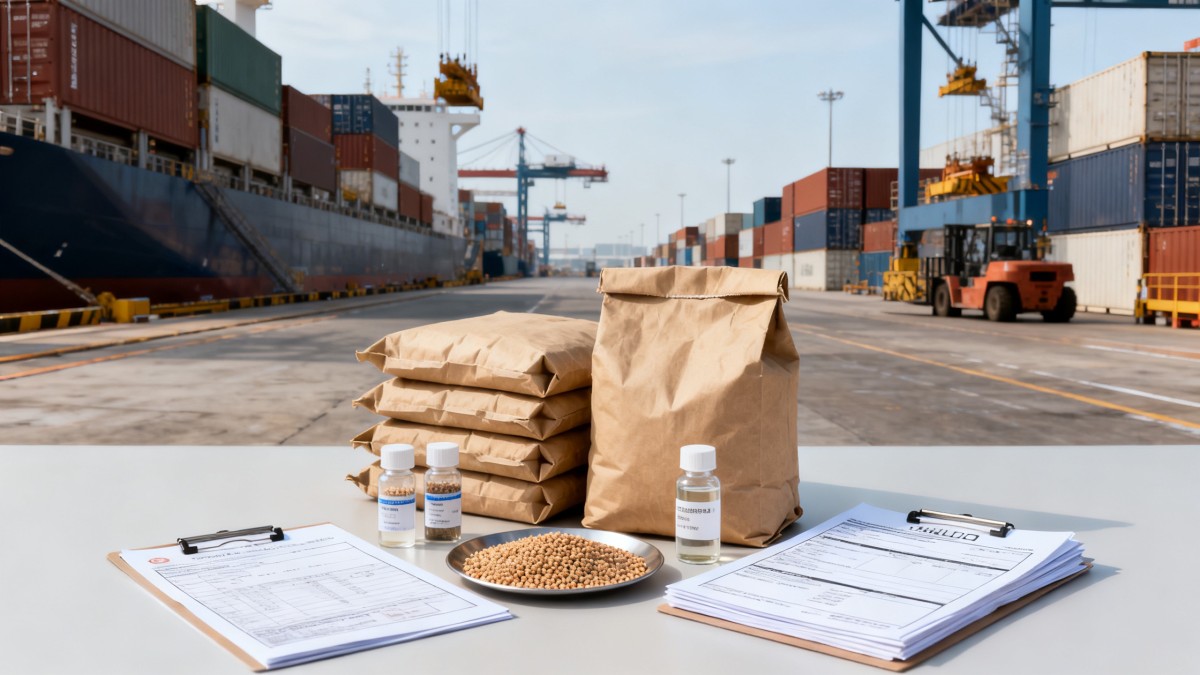
What the new filing rule requires
According to the information provided, the MoA&FW order F.12(1)/2026/FeedReg took effect on July 12, 2026. Under this requirement, all importers of Commercial Feed Pellet must submit documents to the Indian Feed Inspection Authority (IFIL) 72 hours before customs clearance.
The required submission must include manufacturing plant documentation tied to GMP+ international certification, together with a dual testing report covering Salmonella and mycotoxins. The testing report must be issued by a laboratory recognized in India.
The measure took effect without a transition period. Based on the provided summary, this directly affects document delivery timing and third-party testing arrangements for Chinese feed pellet exporters.
Where the operational pressure is likely to appear
Export documentation moves closer to the shipment timeline
From an industry perspective, direct trading companies are likely to feel the first impact in document preparation and submission sequencing. Because the filing must be completed 72 hours before customs clearance, the practical issue is whether GMP+-related factory documents and locally recognized testing reports can be assembled in time for each shipment flow.
Import-side coordination becomes more compliance-sensitive
For importers and purchasing teams serving the Indian market, the new rule may affect customs preparation, supplier coordination, and handover timing between exporter and importer. What deserves closer attention is whether all required materials are aligned before clearance scheduling, since there is no transition window built into the rule described in the input.
Testing and compliance service partners gain a more central role
Supply chain service providers and third-party testing partners may also face a more time-sensitive role. Analysis shows that the requirement for Salmonella and mycotoxin reports from India-recognized laboratories could make laboratory coordination a more important part of shipment planning, especially where exporters had previously relied on different testing paths.
What companies should watch now
Check whether current factory files match the filing expectation
Companies involved in exports to India should review whether their existing manufacturing plant records can be presented in a way that clearly supports GMP+ certification requirements referenced in the rule. The issue here is not general certification awareness, but whether the file set is ready for use within the new customs-linked timetable.
Reassess testing arrangements tied to India-recognized laboratories
Observably, the testing requirement changes the practical route for compliance. Businesses should pay close attention to how Salmonella and mycotoxin testing will be obtained through laboratories recognized in India, and whether that process affects booking, sampling, document turnaround, or shipment release timing.
Review lead times with importers and logistics counterparts
Because the filing must be completed before customs clearance and there is no transition period, exporters, importers, and logistics coordinators should examine whether current lead times still work under the new rule. What deserves closer attention is the alignment between document readiness and actual shipment milestones.
Follow any later official clarification closely
Analysis shows that a rule taking effect immediately can leave room for later operational clarification. Companies should therefore distinguish between the confirmed requirement already described in the order summary and any later clarifications on implementation details that may emerge through official channels.
Why this matters beyond a single document change
As an editorial observation, this development is better understood as an immediate compliance change with broader signaling value. The confirmed fact is the new filing obligation itself. The broader signal, based on observation rather than confirmed expansion, is that feed import access may increasingly depend on tighter alignment between certification records, local testing recognition, and pre-clearance timing.
At this stage, it would be premature to treat the measure as a complete long-term regulatory shift across all related products or markets. However, it is reasonable to view it as a rule change that could reshape day-to-day execution for companies already trading Commercial Feed Pellet into India.
How the market should read this development
For now, the most balanced reading is that this is a short-term operational change with potentially longer-term compliance implications. The rule is already effective, so the immediate issue is execution. At the same time, the industry still needs to watch whether further clarifications, implementation patterns, or related requirements emerge from the same regulatory direction.
Basis of this article
This article is based on the user-provided news title, event date, and event summary concerning India's new import filing requirement for Commercial Feed Pellet. Source types commonly relevant to this kind of update may include official government notices, company disclosures, industry association releases, authoritative media coverage, and standards-related documents.
No specific official source link was provided in the input, so the exact source document link remains to be verified on an ongoing basis. Continued attention should focus on any subsequent official clarification, implementation guidance, or related compliance updates connected to order F.12(1)/2026/FeedReg.
Related Intelligence
- Commercial Feed PelletHow to Build a Sanitary Feed Production Plan That Reduces Cross-ContaminationSanitary feed production planning: reduce cross-contamination with smarter sequencing, validated flushing, material segregation, and traceable sanitation controls.
- Commercial Feed PelletFeed Pellet Mill Sourcing: How to Vet Suppliers for Capacity, Quality, and SupportFeed pellet mill sourcing made smarter: vet suppliers for proven capacity, pellet quality, lifecycle cost, factory controls, commissioning, and reliable after-sales support.
- Commercial Feed PelletFeed Production System Price Trends: Cost Drivers and Budgeting for New LinesFeed production systems price trend insights: compare cost drivers, automation, utilities, compliance, and total ownership costs to budget smarter for new feed lines.
The Morning Broadsheet
Daily chemical briefings, market shifts, and peer-reviewed summaries delivered to your terminal.
