

The Authority in Global Agricultural Chemistry & Bio-Resources
What Oyster Farming Equipment Is Needed for Nursery, Grow-Out, and Harvest Stages?
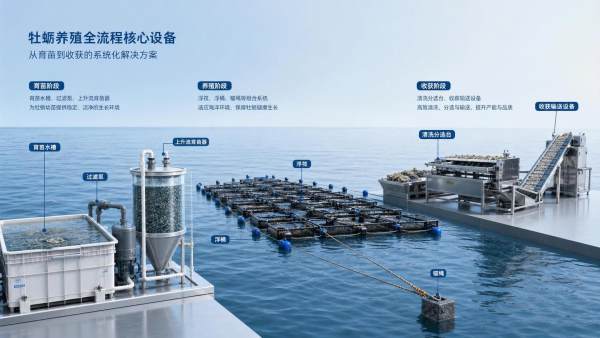
Why does oyster farming equipment change so much from nursery to harvest?
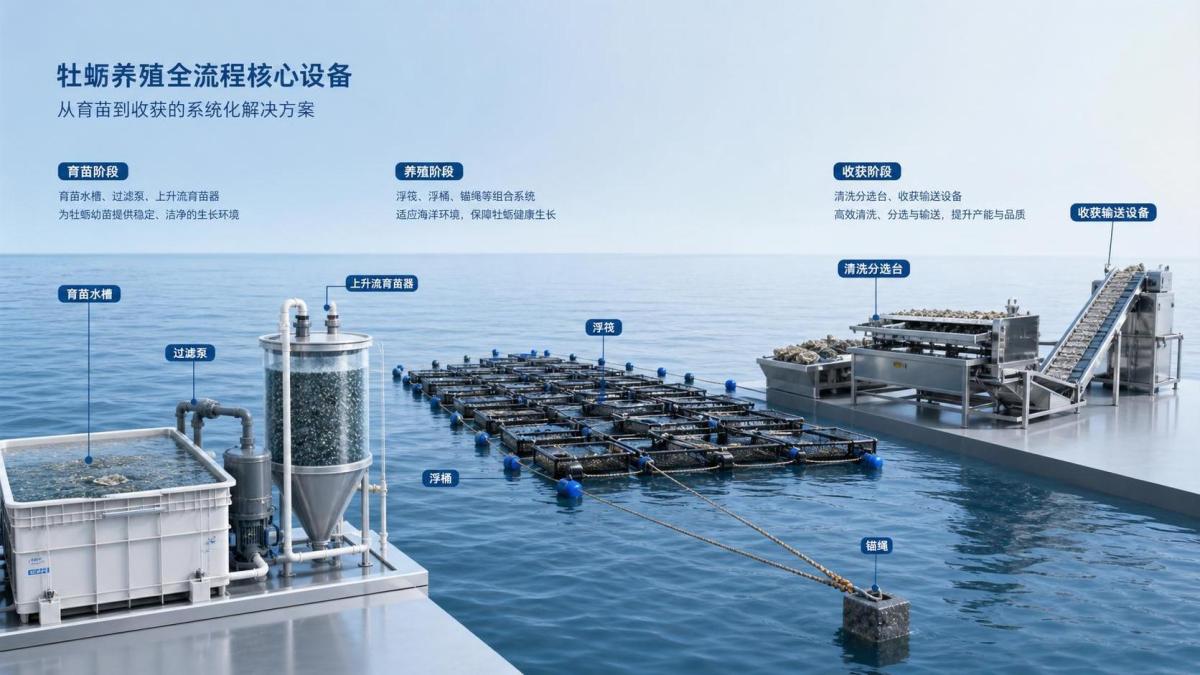
Oyster farming equipment is never one fixed package. Each stage solves a different biological and operational problem.
In the nursery phase, the main goal is survival. Small oysters need stable water quality, gentle handling, and protection from clogging and stress.
During grow-out, the focus shifts toward space efficiency, fouling control, and consistent grading. At harvest, speed, cleanliness, and shell condition become more important.
That is why oyster farming equipment usually includes tanks, pumps, filters, upwellers, cages, floats, grading tools, washing systems, and harvesting gear rather than one universal machine.
In practical terms, equipment decisions affect mortality, labor hours, fuel use, and marketable yield. A weak nursery setup can erase the benefits of an efficient harvest line.
This stage-by-stage view is also how technical journals such as AgriChem Chronicle frame aquaculture machinery analysis: not as isolated products, but as linked systems shaped by biology, compliance, and supply chain reliability.
What equipment is usually essential in the nursery stage?
Nursery systems handle fragile seed, so the most important oyster farming equipment here is the equipment that stabilizes water and reduces physical shock.
A common setup starts with hatchery or nursery tanks. These tanks must be easy to clean and sized for predictable flow rates.
Water delivery equipment comes next. Pumps, valves, hoses, and flow controls need steady output because young oysters respond badly to sudden variation.
Filtration is equally important. Most operators use a combination of screens, sand filters, and sometimes UV treatment to reduce suspended solids and biological risk.
Upwellers or downwellers are often the core nursery units. They move nutrient-rich water through seed containers, helping spat feed without being buried in waste.
Spat bags, mesh trays, and seed silos are also standard. The correct mesh size matters because it must hold small seed securely while keeping water exchange high.
Monitoring tools should not be treated as optional. Thermometers, dissolved oxygen meters, salinity meters, and pH testing devices give early warnings before losses become visible.
- Nursery tanks for controlled holding and cleaning access
- Pumps and plumbing for stable circulation
- Filters and UV units for cleaner intake water
- Upwellers, downwellers, or seed silos for early growth
- Mesh containers matched to spat size
- Basic water quality instruments for daily control
If one rule matters most here, it is this: choose nursery equipment for consistency, not maximum throughput on paper.
When oysters move into grow-out, what equipment becomes most important?
Grow-out equipment depends on whether the farm uses bottom culture, off-bottom culture, floating systems, or longlines. The hardware changes, but the operational questions stay similar.
Most grow-out oyster farming equipment is built around containment, buoyancy, anchoring, and access for maintenance. Oysters are larger now, but they still need regular handling.
For off-bottom systems, growers often use floating cages, oyster baskets, lantern nets, or adjustable bags mounted on racks. These improve water flow and simplify inspection.
For floating culture, drums, pontoons, or purpose-built floats support the structure. Longlines, ropes, clips, and anchor systems hold the site in position under changing tides and weather.
Grading equipment becomes much more valuable at this stage. Seed that grows unevenly creates density problems, reduces shell shape consistency, and complicates final harvest timing.
Washing and tumbling tools are also common. They remove fouling, reduce clustering, and can help produce stronger shells in some culture methods.
A simple comparison table makes the equipment logic easier to see.
The better approach is to match grow-out equipment to wave energy, tidal range, biofouling pressure, and labor availability rather than copying another site’s layout.
What does harvest-stage oyster farming equipment actually include?
Harvest systems are often underestimated. People think of harvest as simply pulling oysters from the water, but the equipment chain is broader than that.
The first category is lifting and retrieval equipment. Depending on the farm model, this may include winches, davits, hydraulic haulers, workboats, cranes, or simple mechanical lifts.
The second category is post-retrieval handling. Conveyors, sorting tables, graders, and shell washing units help maintain throughput while reducing breakage and unnecessary manual handling.
The third category is transport and storage. Food-grade bins, deck containers, harvest totes, and insulated holding solutions matter because shellfish quality can decline quickly after retrieval.
Some operations also add culling knives, count tables, de-clumping tools, and barcode or lot-tracking systems. That becomes more relevant where traceability rules are strict.
In reality, good harvest oyster farming equipment is less about one powerful machine and more about preserving shell integrity and keeping the handling sequence clean, fast, and documented.
How do you choose the right oyster farming equipment without overbuying?
A useful starting point is to ask what limits production today. It may be seed survival, grading time, fouling labor, vessel access, or harvest bottlenecks.
That answer usually points to the equipment category that deserves attention first. Buying a larger grader will not solve poor nursery flow control.
The next step is checking site conditions. Salinity range, current speed, storm exposure, sediment load, and local maintenance capacity all influence equipment life.
Materials matter too. Stainless steel, HDPE, coated metal, and marine-grade plastics each have different corrosion, cleaning, and replacement profiles.
In many cases, modular equipment is the safer choice. It allows staged expansion and avoids locking the operation into oversized infrastructure.
Documentation should also be part of the decision. Reliable suppliers provide technical data, maintenance intervals, load ratings, and material specifications, not just sales claims.
- Define the current production bottleneck
- Match equipment to site conditions and culture method
- Compare cleaning, repair, and replacement needs
- Check compatibility with existing boats and labor routines
- Review traceability and regulatory handling requirements
This is one reason sector-focused intelligence matters. In regulated primary industries, the equipment decision is rarely just mechanical. It also touches compliance, documentation, and supplier transparency.
What mistakes are most common when comparing oyster farming equipment?
One common mistake is comparing equipment only by upfront price. Lower-cost gear can become expensive if it fouls faster, fails in rough weather, or needs more labor.
Another mistake is ignoring transition points between stages. Nursery containers, grow-out baskets, and harvest tools should work as a sequence, not as unrelated purchases.
It is also easy to underestimate handling stress. Equipment that moves oysters quickly but causes shell damage or size mixing may reduce final value.
Maintenance access deserves more attention than it usually gets. A clever design on paper can become inefficient if crews cannot clean or repair it easily on site.
Finally, some buyers overlook data quality. In a market where supply chains are increasingly audited, vague claims about capacity or materials are a real risk signal.
A more reliable comparison looks at survival impact, labor reduction, cleaning frequency, expected service life, and traceable technical documentation together.
So what should be reviewed before building an equipment shortlist?
Start with the production map. Identify where nursery ends, where grow-out density peaks, and where harvest handling slows down.
Then list the oyster farming equipment already in use and note incompatibilities, repair frequency, and labor-heavy steps. That often reveals hidden costs more clearly than a catalog does.
It also helps to separate essential equipment from useful upgrades. Water control, containment, grading, and safe handling usually come before automation extras.
If the goal is sound research or procurement planning, compare not only machine features but also technical support, replacement lead times, and documentation depth.
The most practical next move is to build a stage-based checklist for nursery, grow-out, and harvest, then score each item by operational need, risk reduction, and maintenance burden.
That approach keeps equipment selection grounded in production reality and makes it easier to judge which oyster farming equipment will genuinely improve survival, efficiency, and harvest quality.
Related Intelligence
- Commercial FishingDo commercial fishing vessels with hybrid diesel-electric propulsion reduce fuel cost per kg landed by more than 12%?Commercial fishing vessels with hybrid diesel-electric propulsion *can* cut fuel cost per kg landed by >12%—but only under precise operational and infrastructure conditions. Discover the real ROI.
- Commercial FishingHow to Choose Oyster Processing Equipment for Capacity, Hygiene, and Labor EfficiencyOyster processing equipment guide: compare capacity, hygienic design, and labor efficiency to build a reliable, scalable line and make smarter buying decisions.
- Commercial FishingWhat Oyster Farming Equipment Is Needed for Nursery, Grow-Out, and Harvest Stages?Oyster farming equipment for nursery, grow-out, and harvest stages explained clearly—discover the essential systems, avoid costly mistakes, and choose gear that improves survival, efficiency, and yield.
The Morning Broadsheet
Daily chemical briefings, market shifts, and peer-reviewed summaries delivered to your terminal.
