

The Authority in Global Agricultural Chemistry & Bio-Resources
Maitake Mushroom Extract Uses, Active Compounds, and Quality Specs Explained
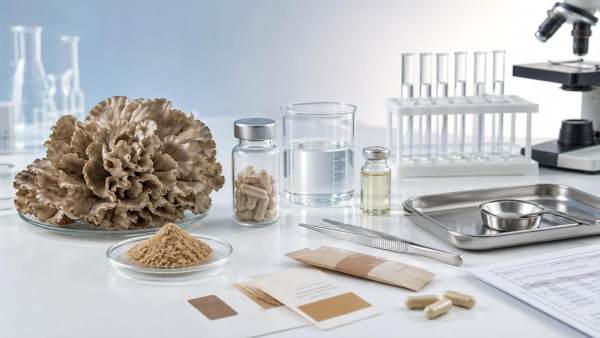
Maitake mushroom extract sits at the intersection of botanical ingredients, fine chemicals, and regulated supply chains. Interest has grown because its bioactive profile is better understood today, while buyers now expect clearer quality data, tighter traceability, and more consistent performance across nutraceutical, functional food, and formulation uses.
That shift matters in a market where natural extracts are no longer judged by marketing language alone. For a material such as maitake mushroom extract, commercial value depends on how well its active fractions are characterized, how reliably they are manufactured, and whether specifications actually reflect intended end use.
Why maitake extract is drawing closer technical review
Maitake, commonly identified as Grifola frondosa, has a long history in food and traditional use. Extract form changes the discussion. It concentrates selected fractions and introduces process variables that can affect potency, solubility, stability, and compliance status.
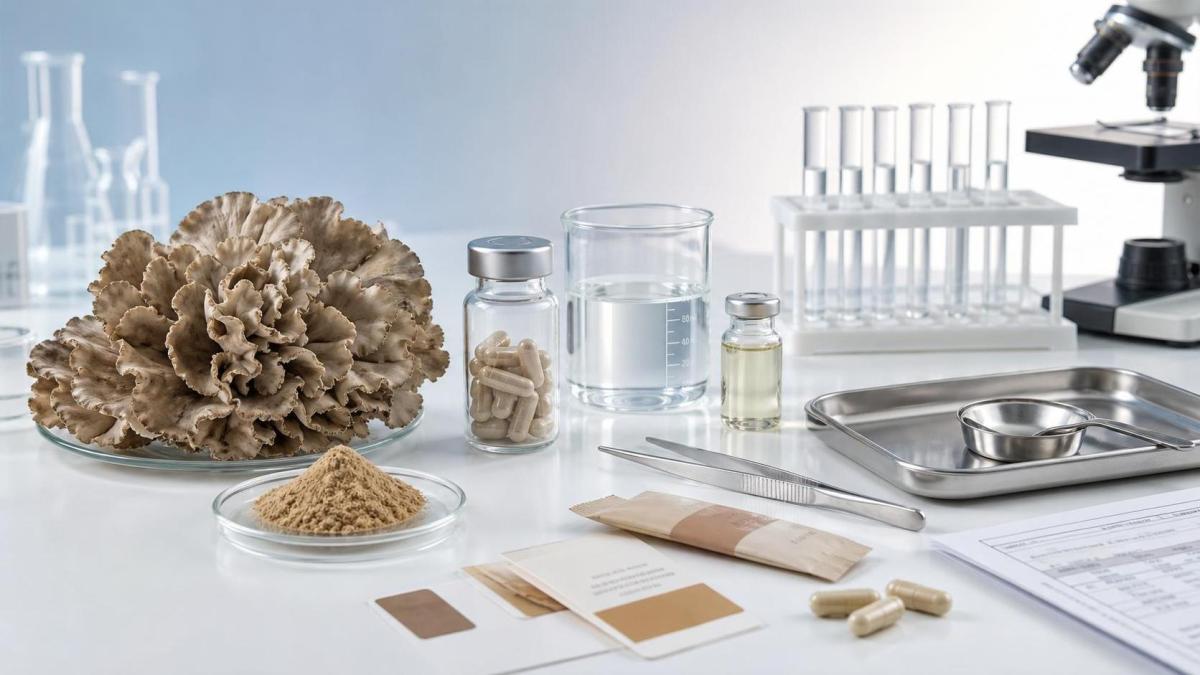
In practical terms, technical review now goes beyond species identity. The critical questions involve raw material origin, extraction method, marker strategy, contaminant control, and batch reproducibility. These are the same themes that shape evaluation across bio-extracts and ingredient markets covered by AgriChem Chronicle.
Another reason for attention is category overlap. Maitake mushroom extract can appear in capsules, tablets, beverage powders, sachets, premixes, and blended immune support formulas. Each format creates different demands for particle size, hygroscopicity, taste masking, and microbial limits.
What maitake mushroom extract usually contains
The term is broad. Some materials are simple dried fruiting body powders. Others are water extracts enriched for polysaccharides. More specialized versions may combine fruiting body and mycelial fractions, or standardize toward specific beta-glucan levels.
The most discussed active compounds are beta-glucans, especially branched polysaccharides associated with maitake’s immune-related interest. These are not all chemically identical, and extraction conditions can change their structure and measurable content.
Researchers also examine alpha-glucans, glycoproteins, protein-bound polysaccharides, phenolic constituents, and minor sterol-related compounds such as ergosterol. Their relevance varies by application. In many commercial settings, beta-glucan remains the primary decision marker, but it should not be treated as the only quality signal.
Active compounds and what they indicate
A recurring mistake is equating higher extract ratio with better performance. A 10:1 or 20:1 claim may sound strong, yet ratio alone says little without moisture, ash, polysaccharide assay, and extraction solvent details.
Where maitake mushroom extract is used
The most established use sits in nutraceutical and dietary supplement formulations. Here, maitake mushroom extract is commonly positioned within immune support, wellness blends, and mushroom complex products.
Functional food applications are also expanding. Powdered forms can be used in drink mixes, nutrition bars, sachets, and dry blend systems, provided formulators account for taste, dispersibility, and label constraints.
In some markets, the ingredient is reviewed as part of broader botanical portfolios connected to fine chemicals, standardized extracts, and evidence-backed bioactive systems. That context makes technical documentation more important than simple origin claims.
Common commercial scenarios
- Single-ingredient capsules requiring stable beta-glucan specification and clean microbial profile.
- Multi-mushroom blends where identity testing must distinguish maitake from reishi, shiitake, or lion’s mane.
- Functional beverage premixes where water solubility and sediment behavior affect product acceptance.
- Private-label formulas needing documentation aligned with local regulatory and labeling rules.
From an industry perspective, the extract’s relevance is not limited to consumer branding. It is increasingly part of technical sourcing discussions about analytical methods, specification harmonization, and cross-border compliance.
Quality specifications that deserve closer attention
A robust specification sheet for maitake mushroom extract should be readable as a manufacturing control document, not just a sales summary. The essential items usually include identity, assay, appearance, loss on drying, ash, particle size, solvent statement, and contaminant limits.
Beta-glucan testing deserves special care. Assay methods differ, and some methods struggle to separate beta-glucans from other carbohydrate fractions. A reported number is useful only when the analytical basis is clear and consistently applied across lots.
Heavy metals and pesticide residues can be decisive because mushrooms may bioaccumulate environmental contaminants. Lead, cadmium, arsenic, and mercury limits should be aligned with destination market expectations, not just origin-country minimums.
Microbiological quality is equally important. Total plate count, yeast and mold, coliforms, E. coli, and Salmonella status must match the intended dosage form and downstream processing conditions.
A practical specification checklist
Process variables that shape consistency
Not all variation comes from the laboratory. Cultivation substrate, harvest timing, fruiting body maturity, drying temperature, and extraction duration can all influence the final profile of maitake mushroom extract.
Water extraction is common for polysaccharide-focused products. However, concentration steps, spray drying conditions, and carrier use can change flowability and assay results. When carriers are included, the specification should state them clearly.
Traceability is becoming a stronger market signal. In regulated or quality-sensitive channels, the preferred supplier profile increasingly includes batch coding that links cultivation lot, processing date, and analytical release records.
This is where editorial scrutiny from platforms such as ACC becomes relevant. In bio-extract markets, trust is built when manufacturing claims, analytical data, and compliance statements support one another without gaps.
How to assess fit for a real application
The right maitake mushroom extract depends on the formulation target. A capsule project may prioritize assay strength and microbial control. A drink powder may need better dispersibility and a lighter sensory impact, even at a lower extract concentration.
It also helps to separate marketing language from technical suitability. “Premium,” “concentrated,” and “full spectrum” are not decision standards. Valid decisions rely on test methods, specification ranges, stability expectations, and market-specific documentation.
- Match the extract format to the dosage form and process environment.
- Confirm whether assay values are measured on an as-is or dry basis.
- Check if fruiting body, mycelium, or blended source material is used.
- Review contaminant limits against the destination market, not generic norms.
- Request recent batch data instead of relying only on a master specification.
A disciplined review process usually reveals whether a promising sample is also a reliable commercial ingredient. That distinction becomes more important as mushroom-derived ingredients move further into mainstream health and functional product pipelines.
A clear next step for evaluation
Maitake mushroom extract is best understood as a technically variable ingredient with meaningful commercial potential. Its value does not rest on name recognition alone, but on the alignment between active compounds, processing controls, and end-use requirements.
The most useful next move is to build a comparison framework before sourcing decisions advance. Start with intended application, define the required assay and safety thresholds, then compare suppliers on analytical transparency, traceability depth, and batch-to-batch consistency.
That approach turns maitake mushroom extract from a broad category claim into a measurable ingredient decision, which is exactly where stronger outcomes usually begin.
Related Intelligence
- Botanical ExtractsChoosing Botanical Extracts for Pharmaceuticals: Potency, Purity, and ComplianceBotanical extracts for pharmaceuticals: learn how to assess potency, purity, traceability, and GMP compliance for confident, regulatory-ready supplier selection.
- Botanical ExtractsBotanical Extracts Market Outlook: Supply, Pricing, and Buyer RisksBotanical extracts market insights on supply, pricing, quality control, and buyer risks—compare suppliers confidently and protect your sourcing strategy.
- Botanical ExtractsEurope Botanical Extracts Market: Key Growth Drivers, Risks, and OpportunitiesEurope botanical extracts market insights: explore growth drivers, regulatory risks, supply-chain challenges, and scalable opportunities for compliant, high-value ingredients.
The Morning Broadsheet
Daily chemical briefings, market shifts, and peer-reviewed summaries delivered to your terminal.
