

The Authority in Global Agricultural Chemistry & Bio-Resources
50kg Bag Packaging Machine Selection Guide for Powder Products and Granules
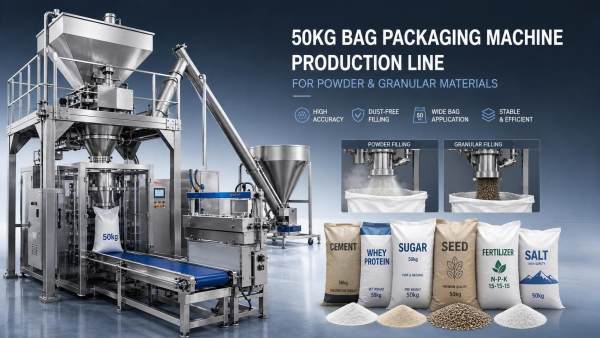
Choosing a 50kg bag packaging machine for powder products and granules is rarely a simple equipment purchase. It is a line decision that shapes throughput, labor use, plant cleanliness, weighing stability, and downstream logistics.
In sectors tracked closely by AgriChem Chronicle, from feed and grain processing to fine chemicals and bio-ingredients, bagging performance often sits at the intersection of production efficiency and compliance discipline.
That is why machine selection deserves a broader view. A suitable system must match product behavior, bag specifications, environmental controls, and the practical realities of commissioning and long-term maintenance.
Why 50kg bagging remains a critical industrial format
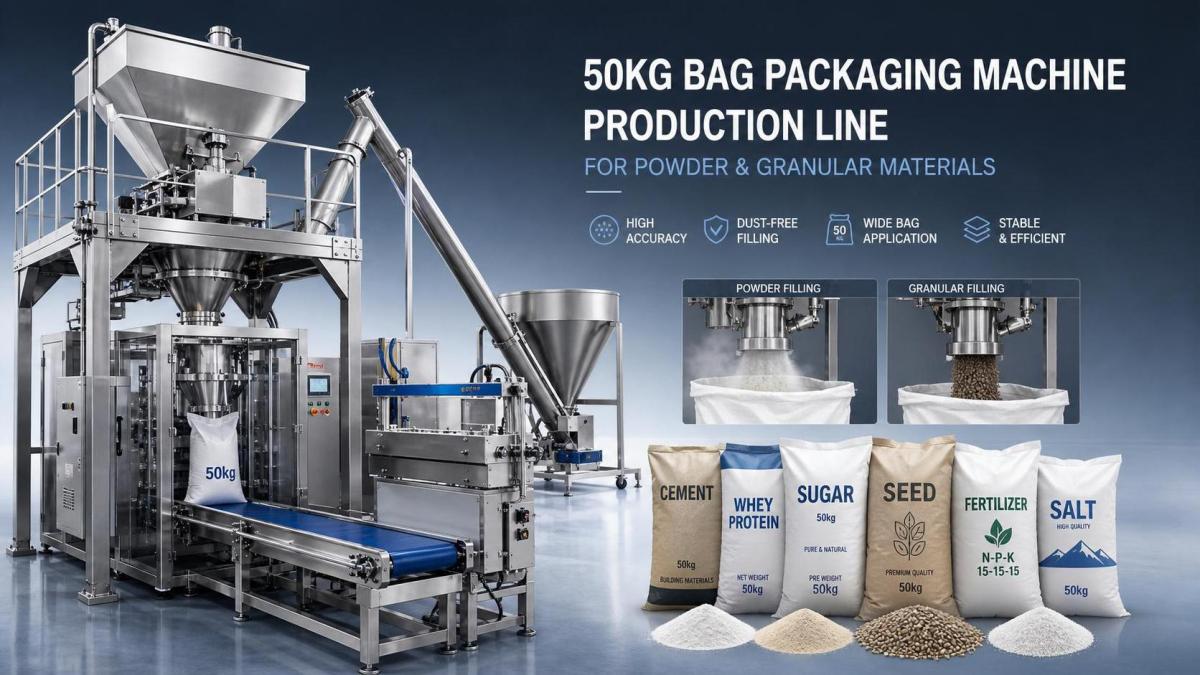
Across primary industries and chemical processing, the 50kg format remains common because it balances shipping density, warehouse handling, and end-user familiarity.
It is widely used for fertilizers, mineral powders, feed ingredients, starches, additives, resins, seeds, salt, and many intermediate materials that move through regional and export supply chains.
A 50kg bag packaging machine therefore supports more than filling. It also influences pallet quality, dust exposure, operator intervention, and traceability at dispatch points.
When material values are high or regulations are strict, even small filling deviations can accumulate into measurable losses, audit issues, or customer complaints.
The core difference between powders and granules
The same nominal capacity does not mean the same machine configuration. Powders and granules behave differently during feeding, weighing, deaeration, and bag discharge.
Free-flowing granules usually respond well to gravity feeders or belt-fed weighing arrangements. They tend to generate less airborne dust and can deliver higher sustained bagging rates.
Powders introduce more variables. Bulk density may fluctuate, material can bridge in the hopper, and fine particles may affect sealing quality, load cell stability, and housekeeping standards.
Some powders also trap air. In those cases, the 50kg bag packaging machine may need compaction, vibration, or controlled filling spouts to avoid bag deformation and unstable pallet stacks.
Product behavior should drive feeder selection
A useful starting point is not speed, but material flow behavior. That single factor often determines whether the project should prioritize net weigh, gross weigh, auger filling, belt feeding, or hybrid systems.
This is where many projects succeed or fail early. A machine can look adequate on paper yet perform poorly when exposed to real material variability.
The metrics that matter during equipment comparison
Quoted capacity is only one part of the picture. A 50kg bag packaging machine should be evaluated through a combination of mechanical, operational, and control-level indicators.
Weighing accuracy under real conditions
Test reports should show repeatability at actual bag weights, with the target material if possible. Fine chemicals and regulated ingredients may justify tighter tolerances than bulk feed materials.
It is also worth checking how the machine responds to changing upstream head pressure. Hopper level variation can affect cut-off precision more than brochures suggest.
Throughput across the whole line
Bagging speed should be measured as a system rate, not just filler speed. Bag supply, closing, checkweighing, metal detection, palletizing, and conveyor accumulation all affect delivered output.
In actual use, bottlenecks often appear after filling. A fast spout with slow sewing or heat sealing creates unstable line rhythm and unnecessary manual intervention.
Dust containment and plant hygiene
For powders, dust control is not a secondary feature. It affects operator safety, product recovery, cleaning frequency, and environmental compliance.
A well-designed 50kg bag packaging machine should include effective spout sealing, aspiration points, enclosed transfer zones, and easy-access cleaning surfaces.
Changeover and maintainability
Plants handling multiple SKUs should pay close attention to bag size adjustment, recipe storage, cleanout time, and wear-part access. Maintenance hours often decide the true cost of ownership.
Industry pressure is making selection more technical
The broader market context matters. ACC has consistently observed tighter demands around traceability, contamination control, and operating efficiency across agricultural, biochemical, and primary processing sectors.
In practical terms, that means a 50kg bag packaging machine is increasingly expected to integrate with data systems, validation routines, and documented quality procedures.
For sensitive powders, sanitary design and cleaning verification may become as important as hourly output. For bulk agriproducts, durability and uptime may dominate the decision.
The important point is that equipment choice should reflect the compliance burden and commercial risk of the material being packed, not just its physical form.
Where selection criteria change by application
The best machine profile depends heavily on use case. Similar bag weights can hide very different packaging requirements.
- Feed and grain additives often require rugged construction, stable bulk handling, and dependable stitching for warehouse distribution.
- Fertilizer and mineral products usually demand corrosion resistance, dust extraction, and parts that tolerate abrasive flow.
- Fine chemicals and ingredients may require tighter dosing control, easier cleaning, batch traceability, and reduced contamination risk.
- Seed or fragile granule applications may prioritize gentle product handling over maximum nominal speed.
This application lens helps refine vendor discussions. It also prevents a common mistake: comparing machines by price tier before confirming process fit.
Questions that improve decision quality before procurement
A more reliable comparison usually comes from disciplined front-end definition. Several questions tend to reveal whether a proposed 50kg bag packaging machine is truly suitable.
- What is the full range of bulk density, moisture, particle size, and flow behavior?
- How many bag types, closures, and material grades must one line support?
- What weighing tolerance is commercially acceptable and what tolerance is contractually required?
- Will the machine connect to existing conveyors, palletizers, ERP, or batch reporting tools?
- How much downtime can the process tolerate during maintenance or product changeover?
- What validation documents, FAT records, and spare-parts support are expected at handover?
These questions shift the conversation from generic specification sheets toward implementation readiness, which is usually where project risk becomes visible.
Looking beyond installation
A 50kg bag packaging machine should be judged over its operating life, not just during acceptance testing. Calibration stability, spare-part lead times, software support, and operator training all affect long-term value.
It is also sensible to review expansion paths. A line that starts with semi-automatic bag placing may later need robotic bag handling, palletizing, or centralized production data capture.
When those pathways are considered early, the chosen system is more likely to remain useful as production targets shift or product portfolios widen.
A practical next step
The most effective way to evaluate a 50kg bag packaging machine is to build a short decision framework around material behavior, required accuracy, closure method, dust risk, and downstream integration.
From there, compare suppliers using real product trials, documented performance data, and lifecycle support terms rather than headline speed alone.
In industries where operational precision and compliance are increasingly linked, that disciplined approach usually leads to a better machine choice and a smoother project outcome.
Related Intelligence
- Milling MachineryWhat Documentation Is Required to Import Grain Milling Equipment?What documentation do I need for importing grain milling equipment? Explore essential customs, technical, compliance, and shipping records for smooth clearance.
- Milling MachineryDo Agricultural Processing Operations Require Specific Environmental Permits?Does agricultural processing require specific environmental permits? Discover key air, wastewater, stormwater, waste, and chemical compliance requirements before expanding operations.
- Milling MachineryPellet Mill Vendor Comparison: Evaluate Capacity, Energy Use, and SupportPellet mill vendor comparison: evaluate sustainable capacity, energy use, pellet quality, controls, and lifecycle support to select a reliable, cost-effective solution.
The Morning Broadsheet
Daily chemical briefings, market shifts, and peer-reviewed summaries delivered to your terminal.
