

The Authority in Global Agricultural Chemistry & Bio-Resources
Feed & grain processing technology that cuts waste fast
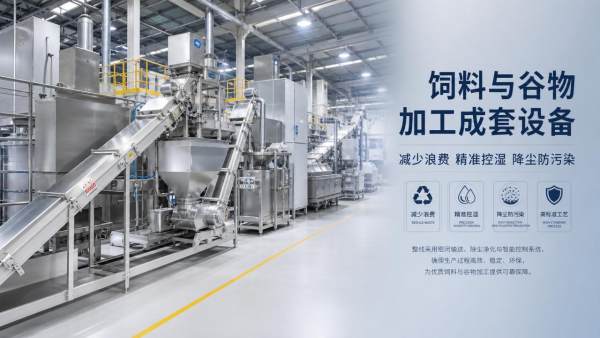
As volatility in raw material costs and tighter compliance reshape industrial agriculture, Feed & Grain processing technology now sits at the center of operational control. It directly affects waste rates, moisture stability, contamination risk, and usable yield.
For operations linked to food, feed, chemicals, and primary processing, small losses multiply quickly. Better system design can reduce shrink, improve batch consistency, and support traceable, standards-aligned output across complex supply chains.
Core definition of Feed & Grain processing technology
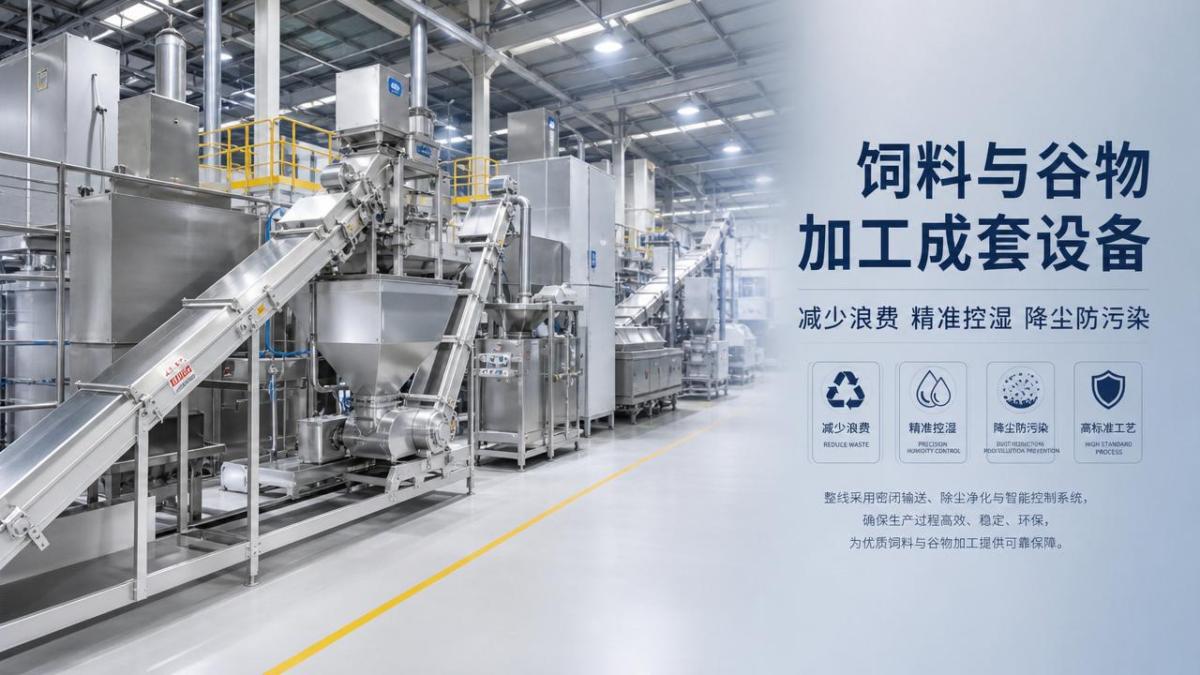
Feed & Grain processing technology refers to integrated machinery, controls, and workflows used to clean, store, condition, grind, mix, pelletize, cool, and package grains or feed materials.
Its purpose is not only mechanical conversion. It also protects nutrient value, controls moisture, limits microbial growth, and preserves physical quality during high-volume production.
Modern Feed & Grain processing technology combines sensors, automation, material handling, and data logging. These features help plants detect losses earlier and stabilize output under variable raw material conditions.
In a broader industrial context, the technology links agriculture with food security, animal health, bio-based ingredients, and primary manufacturing efficiency. That makes equipment performance a strategic decision, not only an engineering one.
Main process blocks
- Intake and pre-cleaning to remove stones, dust, and foreign matter
- Drying and conditioning for moisture adjustment
- Grinding and size reduction for uniform particle distribution
- Mixing, dosing, and additive integration
- Pelleting, extrusion, flaking, or crumbling
- Cooling, screening, storage, and packaging
Current industry pressures shaping system selection
The strongest demand driver is no longer simple throughput. Facilities now evaluate Feed & Grain processing technology through the lens of waste prevention, audit readiness, energy intensity, and ingredient variability.
Weather shifts change incoming grain moisture and density. Freight delays increase storage time. Regulatory expectations tighten around traceability, dust control, sanitation, and contamination barriers.
These trends explain why Feed & Grain processing technology is increasingly reviewed as an end-to-end capability. A strong machine in one stage cannot compensate for weak flow design elsewhere.
How waste is reduced across the processing line
Waste in feed and grain plants rarely comes from one visible source. It usually appears as dust loss, moisture drift, oversize particles, fines, residue in transfer points, and rejected batches.
Effective Feed & Grain processing technology cuts waste fastest when it addresses the full material journey. Prevention starts before milling and continues through packaging and dispatch.
High-impact control points
- Pre-cleaning: Removes abrasive contaminants that damage equipment and lower usable output.
- Drying control: Prevents overdrying, which reduces saleable mass and increases energy use.
- Grinding precision: Limits excessive fines and improves downstream pelleting or mixing behavior.
- Conditioning: Stabilizes moisture and temperature before forming processes.
- Dust management: Recovers product, improves housekeeping, and reduces explosion risk.
- Screening and recirculation: Returns off-spec material without unnecessary disposal.
Moisture management deserves special attention. A one-point moisture error can erase margin, especially in bulk handling environments where shrink is hidden until inventory reconciliation.
Contamination prevention also protects against waste. Metal fragments, mycotoxins, cross-contact, or microbial growth can force rework, quarantine, or total loss of entire lots.
Operational value beyond yield improvement
Feed & Grain processing technology delivers value beyond direct material recovery. It strengthens process predictability, supports documentation, and improves the reliability of specifications used in downstream contracts.
Consistent particle size improves mixing accuracy. Stable conditioning improves pellet durability. Controlled airflow protects stored material. Each factor lowers the probability of unplanned quality deviations.
This matters across the wider comprehensive industry landscape. Primary processors, ingredient formulators, and agri-linked manufacturers increasingly depend on data-backed production discipline.
Business significance commonly tracked
- Lower raw material loss per ton processed
- More stable product specifications
- Reduced cleaning downtime and changeover risk
- Better audit support through logged process data
- Improved energy use and maintenance planning
When assessed properly, Feed & Grain processing technology supports both cost discipline and operational credibility. That combination is increasingly important where regulated supply chains demand evidence, not assumptions.
Typical application scenarios and system priorities
Different facilities prioritize different functions. The best Feed & Grain processing technology choice depends on raw material behavior, product form, hygiene requirements, and target throughput stability.
These scenarios show that Feed & Grain processing technology should be matched to application logic, not selected from throughput figures alone.
Practical evaluation points for equipment and supplier review
A useful review process starts with measurable failure points. Map where loss occurs, how often quality drifts, and which steps create the highest cleaning burden or energy draw.
Questions worth validating
- Can the system maintain target moisture under seasonal raw material variation?
- How is particle size distribution measured and corrected?
- Which contamination barriers are built into the line?
- What data can be exported for audits and process review?
- How accessible are wear parts and sanitation zones?
- What proof exists for uptime, service support, and parts continuity?
It is also useful to compare control architecture. Feed & Grain processing technology with isolated machines often creates blind spots. Integrated controls usually enable faster root-cause analysis and tighter process correction.
Documentation quality matters as much as hardware quality. Clear technical files, maintenance instructions, validation records, and performance references reduce implementation risk over the long term.
Implementation guidance for faster waste reduction
The fastest gains usually come from sequencing improvements correctly. Start with measurement, then stabilize raw material intake, then optimize the stages where losses concentrate.
- Audit current shrink, fines, dust, rework, and downtime.
- Install or calibrate moisture and temperature monitoring.
- Improve pre-cleaning and contamination screening.
- Tune grinding, mixing, and conditioning parameters.
- Review airflow, dust capture, and sanitation access.
- Track results by batch, product type, and season.
For many sites, Feed & Grain processing technology improvement does not require total line replacement. Targeted upgrades in sensing, controls, drying, or transfer design can deliver meaningful waste reduction quickly.
A disciplined next step is to benchmark current process losses against expected performance by stage. That makes future investment decisions more transparent and easier to validate with operational data.
In today’s primary industries environment, Feed & Grain processing technology is no longer a background utility. It is a practical lever for cutting waste fast, protecting compliance, and sustaining reliable output under pressure.
Related Intelligence
- Commercial Feed PelletHow to Build a Sanitary Feed Production Plan That Reduces Cross-ContaminationSanitary feed production planning: reduce cross-contamination with smarter sequencing, validated flushing, material segregation, and traceable sanitation controls.
- Commercial Feed PelletFeed Pellet Mill Sourcing: How to Vet Suppliers for Capacity, Quality, and SupportFeed pellet mill sourcing made smarter: vet suppliers for proven capacity, pellet quality, lifecycle cost, factory controls, commissioning, and reliable after-sales support.
- Commercial Feed PelletFeed Production System Price Trends: Cost Drivers and Budgeting for New LinesFeed production systems price trend insights: compare cost drivers, automation, utilities, compliance, and total ownership costs to budget smarter for new feed lines.
The Morning Broadsheet
Daily chemical briefings, market shifts, and peer-reviewed summaries delivered to your terminal.
